Common Spiders in California: ID Guide With Chart
The most common California spiders around homes are the common house spider, cellar spiders, yellow sac spiders, wolf spiders, false widows and the western black widow, with brown widows now widespread in Southern California cities. Most are harmless and eat insects. The western black widow is the main spider of medical concern in the state, while the brown recluse and hobo spider do not live in California. This guide covers the species you are most likely to see, how they differ across the state, house and big spiders, and how to keep them out.
The Most Common Types of Spiders in California
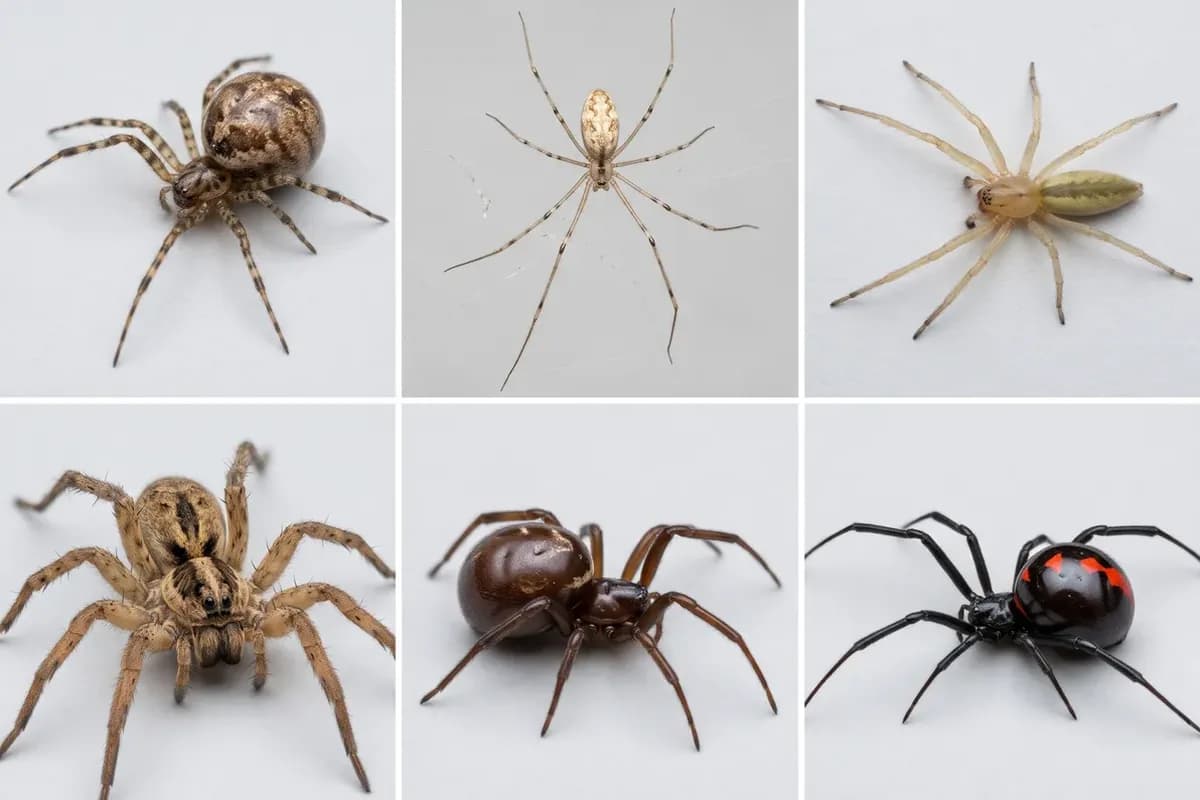
These are the spiders Californians report most often around homes and gardens, based on UC IPM and the University of California Riverside. UC IPM notes the marbled cellar spider arrived in the 1970s and has displaced the longbodied cellar spider in many areas.
| Spider | What it looks like | Where you find it | Concern |
|---|---|---|---|
| Common house spider | Small, mottled brown, round abdomen | Cobwebs in room corners and windows | Harmless |
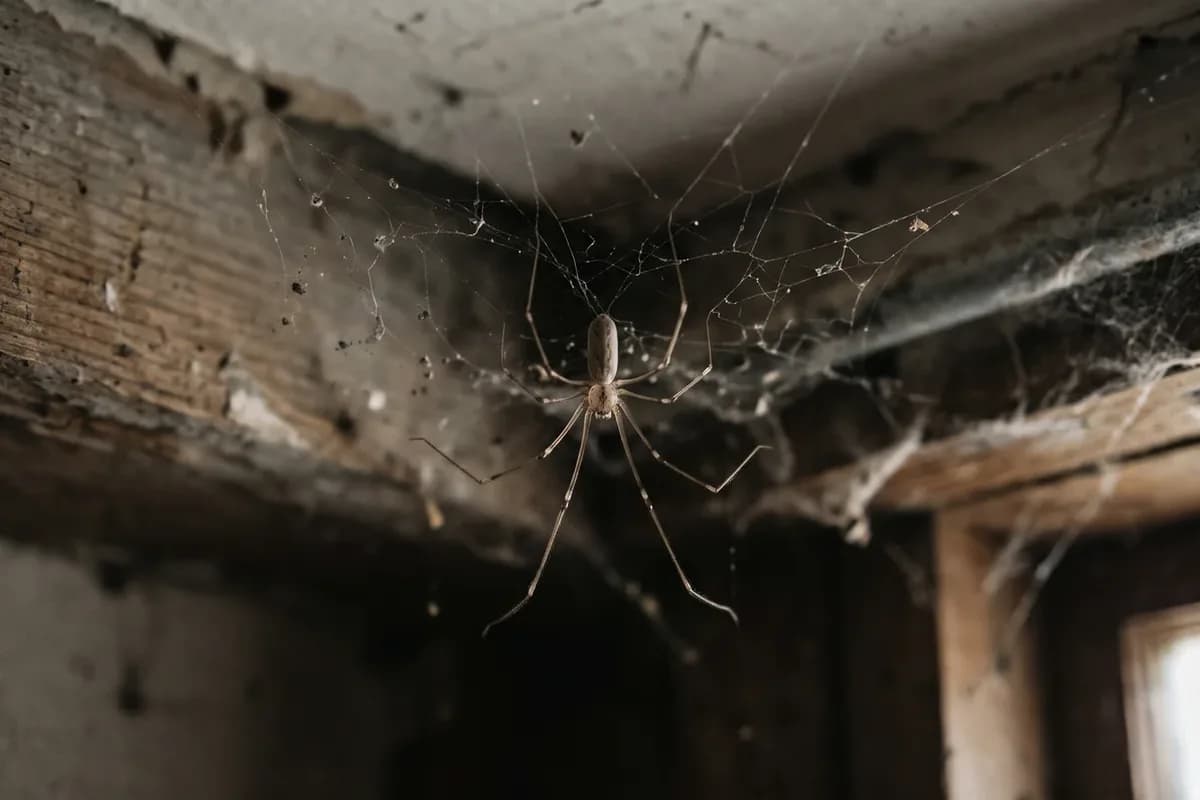
| Marbled cellar spider | Long thin legs, small body | Messy webs in corners and eaves | Harmless |
| Yellow sac spider | Pale yellow, darker stripe on the abdomen | Silk sacs in ceiling and wall corners | Painful bite, like a bee sting |
| Wolf spiders | Brown to tan, long hairy legs | Ground, wandering indoors | Harmless to most people |
| False black widow | Chocolate brown, round, no red marks | Bathrooms, cupboards, under furniture | Mild, like a wasp sting |
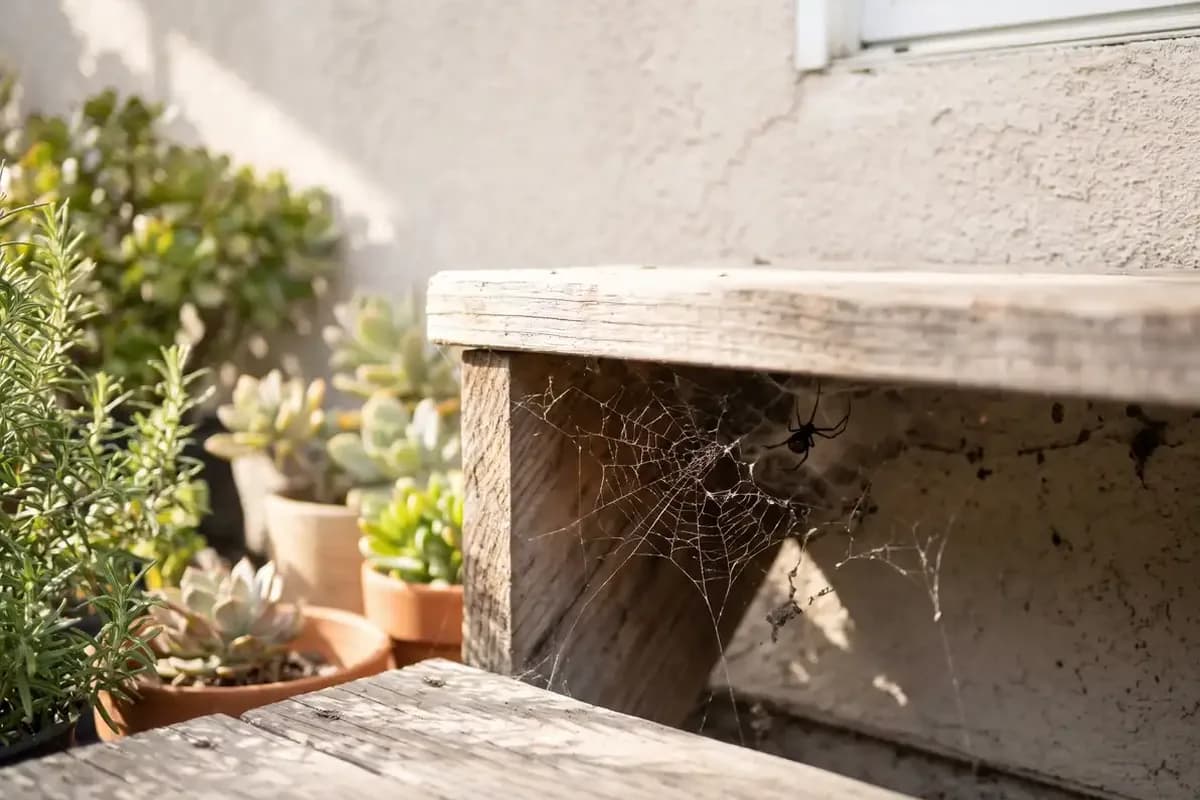
| Western black widow | Shiny black, red hourglass underneath | Holes, crevices and clutter outdoors | Medically important |
| Brown widow | Tan to brown, white stripes, black dots | Around homes, parks, yards | Much milder than black widow |
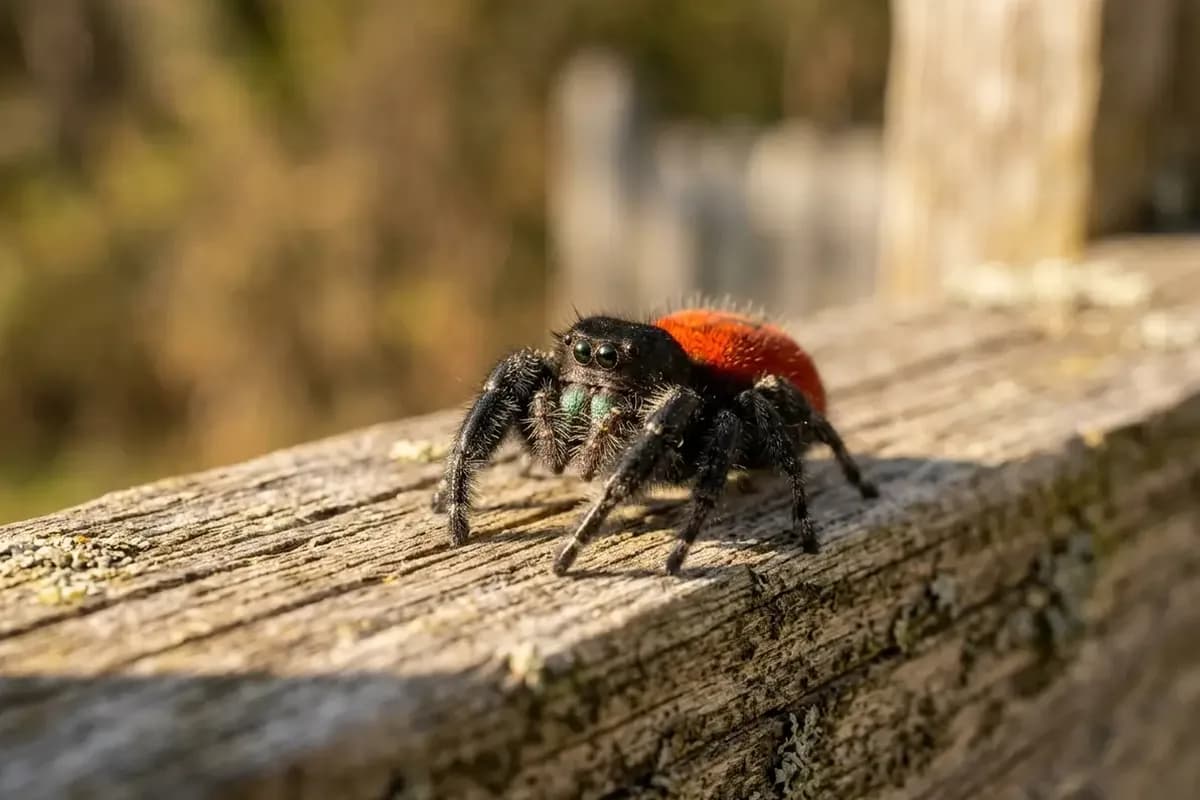
| Jumping spiders | Compact, hairy, big front eyes | Walls, plants, windows | Harmless |
| Funnel weavers | Brown, long spinnerets | Flat sheet webs near the ground | Harmless |
Spiders in Southern California vs Northern California
Most house and garden spiders live statewide, but a few species are more common in the south.
- Brown widows: UC IPM notes they were well established from Santa Barbara to the San Bernardino area by 2016, and are common in urban Los Angeles and San Diego. They appear to be displacing black widows in some urban areas.
- Noble false widow: found in Southern California since 2011, with a light tan pattern. Its bites are not considered medically significant.
- Western black widows: found across the state, especially common in desert areas and in Southern California mountains above 5,000 feet.
- Desert recluses: the native desert recluse lives in the southeastern deserts and is considered a minor concern.
In Northern California, the Bay Area, Sacramento and the Sierra foothills, the same common house spiders, cellar spiders, wolf spiders and funnel weavers make up most sightings.
House Spiders in California
The household spiders most often found inside California homes are common house spiders, cellar spiders, yellow sac spiders and false black widows.
- Common house spider: cobwebs in room corners and windows.
- Cellar spiders: long legged spiders in loose webs on ceilings, in garages and in basements.
- Yellow sac spider: hunts at night and rests by day in a small silk sac in ceiling corners or behind pictures and shelves.
- False black widow: common in Pacific Coast homes, especially bathrooms and cupboards, and is involved in more bites than true widows because it lives indoors.
- Domestic house spider: a brown funnel weaver about 1/4 to 1/2 inch long that is very common and often lives indoors.
Wolf spiders wander in but rarely stay. See our guide to the common house spider, and our guide to spider webs to tell these indoor spiders by their webs.
Big Spiders in California
The largest spiders Californians meet are tarantulas, large wolf spiders, giant crab spiders and big orb weavers.
- Tarantulas: large, hairy and slow moving, most often seen crossing roads and trails. A California tarantula bite is at worst similar to a bee sting.
- Giant crab spiders (huntsman spiders): large, fast spiders with hair tufts that make their leg tips look wide.
- Wolf spiders: large ground runners with eyes that reflect green at night under a flashlight.
- Orb weavers: large, round bodied spiders in wheel webs in gardens.
Size does not equal danger. The most medically important spider in the state, the western black widow, has a female body only about 1/2 inch (13 mm) long.
Which California Spiders Need Care?
Only one common spider in California is medically important: the western black widow. UC IPM describes it as the spider with the greatest potential envenomation threat to people in the western United States, though bites are rare and death is very unlikely with treatment.
- Black widow: only larger young and adult females can bite through skin.
- Brown widow: venomous but much milder, with most bites causing only pain at the site.
- Brown recluse: does not breed in California, and fewer than 20 verified specimens have been collected over several decades.
- Hobo spider: does not live in California.
See our guides to the black widow, brown recluse and hobo spider for details.
Safety note: this is general information, not medical advice. Call emergency services right away for trouble breathing or swelling of the face, lips or throat after a bite, and see a doctor for spreading pain, cramps or a stiff belly after a suspected black widow bite.
California Spiders by Colour
Colour is a quick first clue when you identify a spider by its markings, though it varies within species.
- Black: western black widow (shiny, red hourglass), false black widow (dark chocolate brown) and some jumping spiders.
- Brown: wolf spiders, funnel weavers, brown widows and common house spiders. A brown spider with spots is often a brown widow.
- Pale yellow or white: yellow sac spiders, light yellow with a slightly darker stripe. Small pale crab spiders also wait on flowers.
- Red or orange: red and black jumping spiders may bite if handled, usually without serious effects.
- Tan with stripes: brown widows and young western black widows, which are also tan with white stripes.
For brown spiders with dark markings, see our guide to the brown spider with black stripes.
Garden, Tree and Ground Spiders in California
Outdoors, Californians mostly meet funnel weavers on the ground, orb weavers in gardens and hunting spiders on shrubs and trees.
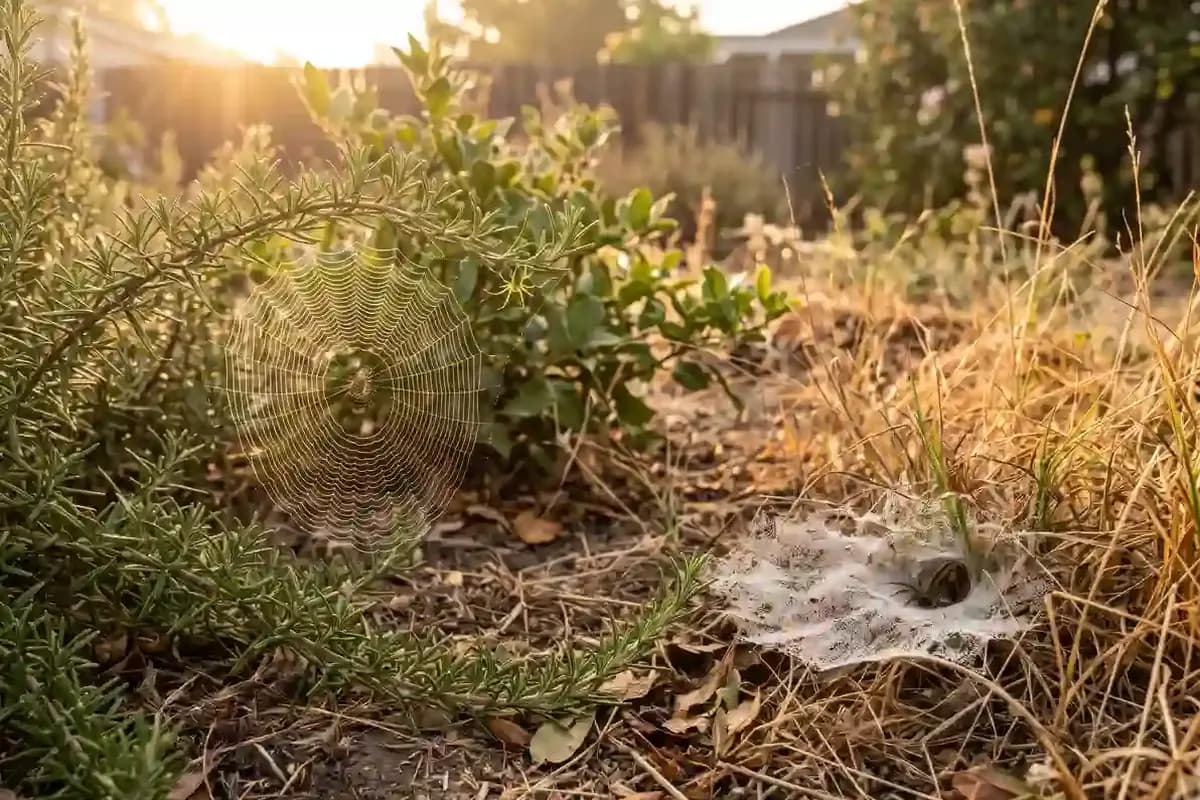
- Grass spiders and other funnel weavers: build flat, funnel shaped sheets near the ground that show up in morning dew. Dozens of native California funnel weavers resemble the hobo spider, and none is considered toxic.
- Orb weavers: Neoscona and others build wheel webs on plants and eaves.
- Tree and shrub spiders: lynx spiders and jumping spiders hunt on leaves and branches.
- Ground spiders: hunt on the ground rather than in webs.
These outdoor spiders control garden pests and rarely come indoors to stay.
Spiders by Area: San Diego, Los Angeles, Bakersfield and the High Desert
- San Diego, Los Angeles and Orange County: brown widows are well established in these urban areas, alongside common house spiders, cellar spiders and false widows.
- Bakersfield, Kern County and the southern San Joaquin Valley: local species include widows, the false black widow, the marbled cellar spider, several jumping spiders, orb weavers, lynx spiders and a giant crab spider.
- Bay Area, San Francisco, Sacramento and Lake Tahoe: the statewide house and garden species dominate, with funnel weavers and wolf spiders common in yards and cabins.
- High desert: western black widows are especially common, and the desert recluse lives in the southeastern deserts.
Wherever you are in the state, a clear photo of the spider is more reliable than location alone. Our Spider Identifier names it and gives a safety rating.
Why Are There So Many Spiders in Fall?
Spiders seem to appear everywhere in late summer and fall because many are full grown and on the move. UC IPM lists the main reasons spiders come indoors:
- Males wander in search of females.
- Burrowing spiders leave wet burrows when the rainy season starts.
- New construction displaces wolf spiders.
- Homes with more indoor insects attract more spiders.
How to Keep Spiders Out of Your Home
- Seal cracks in foundations and gaps around windows and doors, and repair screens.
- Vacuum corners, storage areas and under furniture regularly, including webs and egg sacs.
- Keep boxes off the floor and away from walls, and seal them with tape.
- Clear clutter, leaf litter and heavy plants from the foundation, and limit outdoor lights that draw insects.
- Wear gloves when moving firewood, boxes or outdoor clutter where widows hide.
UC IPM notes pesticides are generally not needed and that sprays give only temporary results without housekeeping.
Frequently Asked Questions
Sources and References
- University of California Statewide IPM Program. Spiders. Pest Notes.
- University of California Statewide IPM Program. Widow Spiders and Their Relatives. Pest Notes.
- University of California Statewide IPM Program. Brown Recluse and Other Recluse Spiders. Pest Notes.
- Vetter RS, UC Statewide IPM Program. Hobo Spider. Pest Notes, Publication 7488.
- University of California Riverside, Center for Invasive Species Research. How to Identify Brown Widow Spiders.
- Kloock CT, California State University, Bakersfield. Guide to Common Spiders of Bakersfield, California. 2020.