
Bed BugsIdentify Them, Spot the Signs and Get Rid of Them
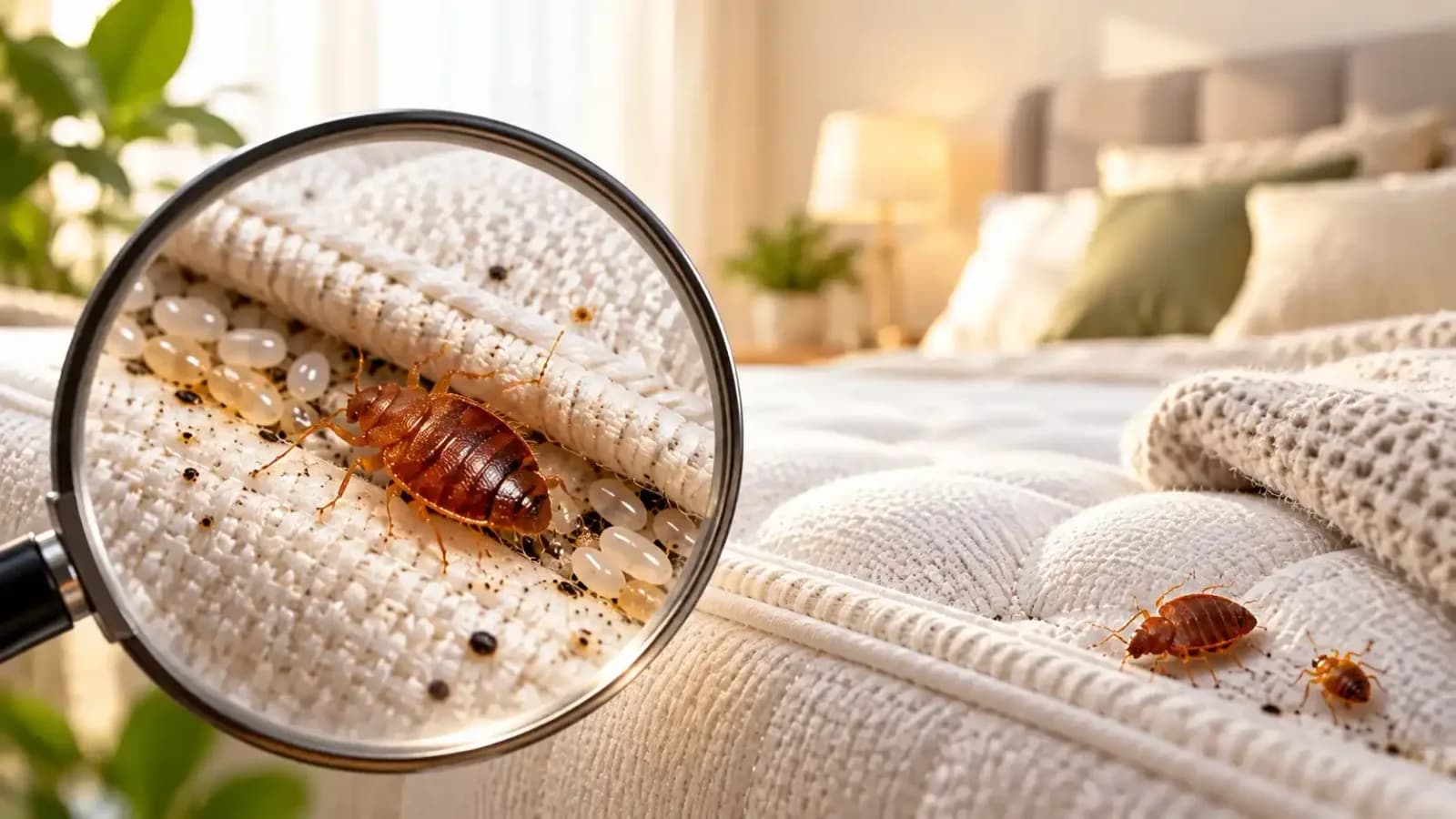
Bed bugs (also written bedbugs) are small, flat, reddish brown insects that feed only on blood, usually at night while people sleep. The common bed bug, Cimex lectularius, lives in homes, hotels and dormitories around the world, and having one is not a sign of a dirty home.
A bed bug infestation can be identified from a photo, confirmed by a few clear signs and removed with the right steps. This guide shows you what bed bugs look like, how to check for them, whether they are dangerous and how to get rid of them for good.
Bed Bug Identifier: Is This a Bed Bug?
The fastest way to identify a bed bug is to upload a clear photo to the free ScanaBug Bed Bug Identifier below. In seconds, it tells you whether you found an adult, a baby, an egg or a lookalike, and what to do next.
Upload a clear photo and get an instant answer: bed bug, baby bed bug, egg or a lookalike, plus what to do next. Free, no sign up.
Drop your bug photo here
or tap to upload from camera or gallery
Supports JPG, PNG, WEBP, HEIC (iPhone) · Max 10MB · Free · No sign-up required
📸 Photo tips
Use natural light, get within 10 to 15 cm (4 to 6 in), keep the whole bug in frame and add a coin or ruler for size. For stains or shells, photograph them close up too.
Photographed skin or bites instead of a bug? This looks like a job for a different tool — the hub does not analyze bites.
Try the Bug Bite Identifier →AI identification is a guide, not a guarantee. For a confirmed infestation, contact a licensed pest professional.
How to Use the Bed Bug Identifier
Using the identifier takes three quick steps.
Take a photo in good light
Get as close as your camera can focus, with the whole bug in the frame.
Upload it above
It is free, needs no sign up and runs in any phone browser — so there is no bed bug ID app to install.
Read your result
You get the verdict, the life stage, the closest lookalike and your next steps.
How do you identify a bed bug without a photo?
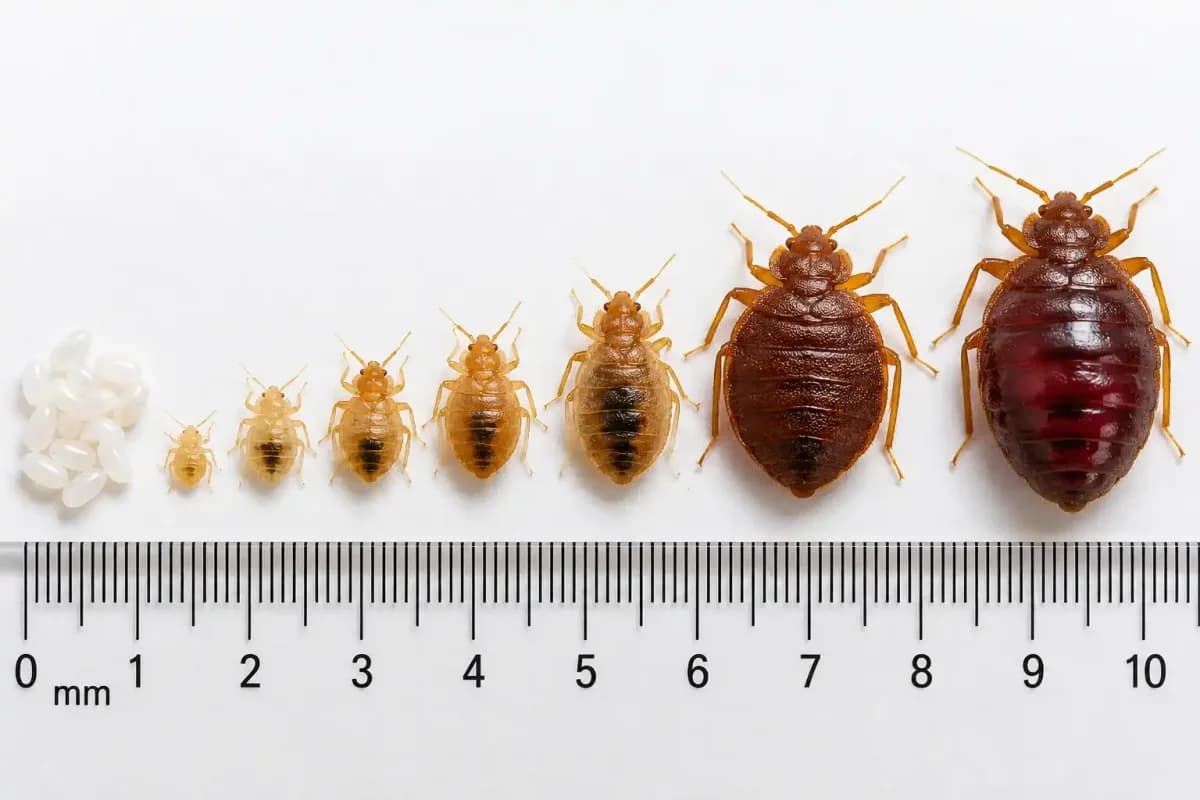
To recognize bed bugs by eye, look for an insect the size of an apple seed, 5 to 7 mm (3/16 to 1/4 in) long, with a flat oval body, rusty brown color and no wings. After feeding, the body swells and turns darker red. For real photos of every life stage, see our guide to what do bed bugs look like. If you have marks on your skin rather than a bug, use the Bug Bite Identifier instead.
What Are Bed Bugs?
Bed bugs are wingless insects in the family Cimicidae that survive only by drinking blood, mostly from people. They belong to the true bug order, Hemiptera, along with stink bugs and aphids.
The family includes around 100 species, but only two types of bed bugs commonly bite people:
Common bed bug
Cimex lectularius
Found worldwide, especially in temperate climates.
Tropical bed bug
Cimex hemipterus
Found mainly in warm tropical and subtropical regions, and spreading again in some areas.
Relatives such as bat bugs and swallow bugs feed mainly on bats and birds. These bed insects live wherever people sleep or rest: homes, hotels, dormitories, shelters, hospitals, buses and trains. Cases have risen in many countries over the last two decades, linked to more travel and to resistance against common insecticides. Cleanliness does not decide who gets them, and the CDC notes they turn up even in five star hotels.
| Feature | Quick facts |
|---|---|
| Scientific name | Cimex lectularius (common), Cimex hemipterus (tropical) |
| Family and order | Cimicidae, true bugs (Hemiptera) |
| Adult size | About 5 to 7 mm (3/16 to 1/4 in), like an apple seed |
| Color | Rusty brown, darker red and swollen after feeding |
| Wings | None, so they cannot fly or jump |
| Food | Blood only, mostly human |
| Active | Mostly at night |
| Eggs | About 1 mm, pearly white, hundreds per female over her life |
| Egg to adult | About one month in a warm room |
| Disease | Not known to spread disease to people |
What Do Bed Bugs Look Like?
An adult bed bug looks like a flat, oval, rusty brown seed with six legs, two short antennae and no wings. Unfed adults are paper thin, so they slip into cracks as narrow as a credit card. After a meal, they become rounder and darker red.
Signs of Bed Bugs
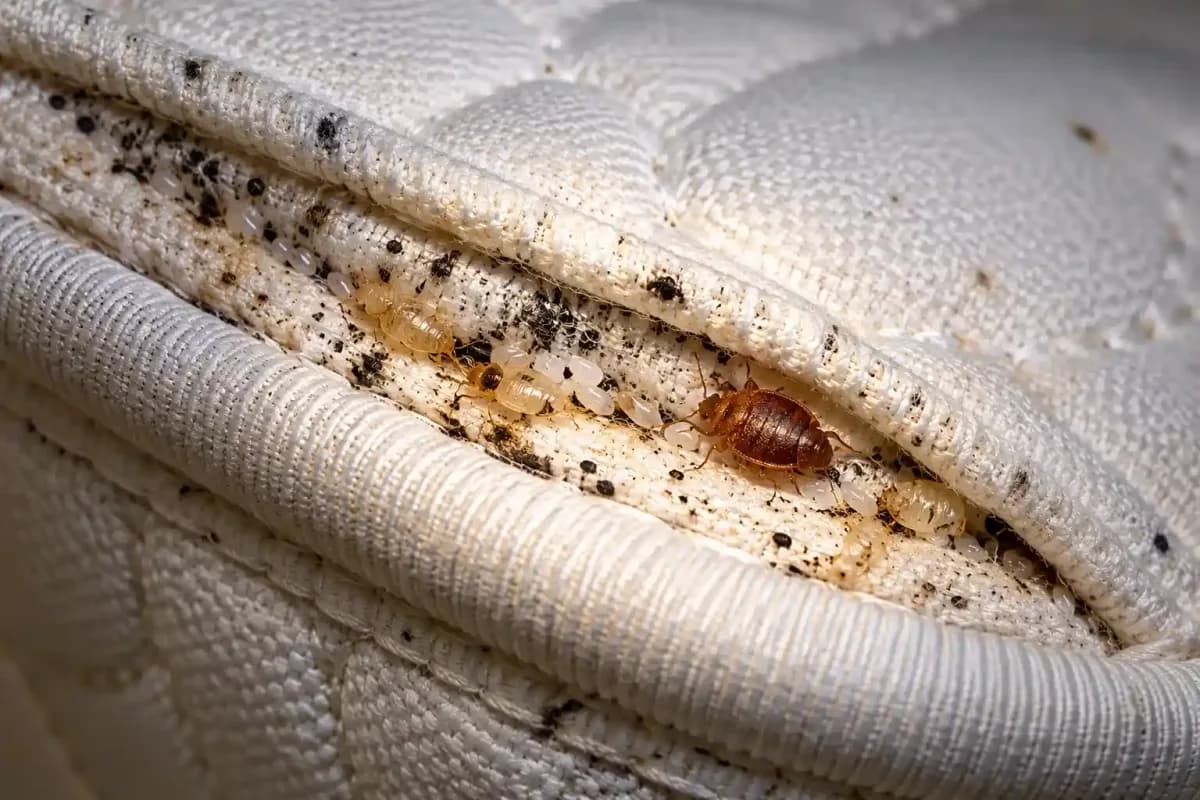
The most reliable signs of bed bugs are dark spots, blood stains, shed skins and the bugs themselves, usually within about 2.4 m (8 ft) of where people sleep. Look for these clues:
- 🩸Rusty or red stains on sheets and pillowcases, left by crushed bugs or by bites.
- ⚫Dark spots the size of a marker dot on mattress seams and the bed frame. This is bed bug poop, made of digested blood, and it smears like ink when wiped with a damp cloth.
- 🐚Shed skins, which look like pale yellow, empty copies of the bug. These bed bug shells build up as the young grow.
- ⚪Tiny white eggs and empty eggshells about 1 mm long in seams and cracks.
- 🐛Live bugs in mattress piping, box spring corners and headboard joints.
- 👃A musty, sweet smell in heavy infestations.
- 💤Bites in rows or clusters on skin left uncovered during sleep. Bites alone are never proof.
If you found one bed bug but no others, check nearby seams, furniture and baseboards before deciding it was a lone hitchhiker. Our checklist of the early signs of bed bugs explains each clue in detail.
Bed Bug Bites: A Clue, Not Proof
Bites are a clue but not proof, because fleas, mosquitoes, mites and some skin conditions cause very similar red, itchy bumps. Some people never react at all, so an infestation can go unnoticed for weeks. To compare marks, use the Bug Bite Identifier, which also covers flea bites vs bed bug bites. If you have no signs of bed bugs but you have bites, another insect or a skin condition is often the cause.
This information is for general education and is not medical advice.
Bugs That Look Like Bed Bugs
Several small household insects look like bed bugs, and mixing them up is a common reason treatments fail. These five cause the most confusion:
- ›Bat bugs: almost identical, with longer hairs behind the head. They usually point to bats in an attic or wall.
- ›Carpet beetles: round and hard shelled, with black, white and orange scales. Our carpet beetle identification guide explains carpet beetle vs bed bug differences.
- ›Baby cockroaches: longer and much faster, with very long antennae.
- ›Fleas: narrow from side to side and able to jump.
- ›Ticks: arachnids with eight legs.
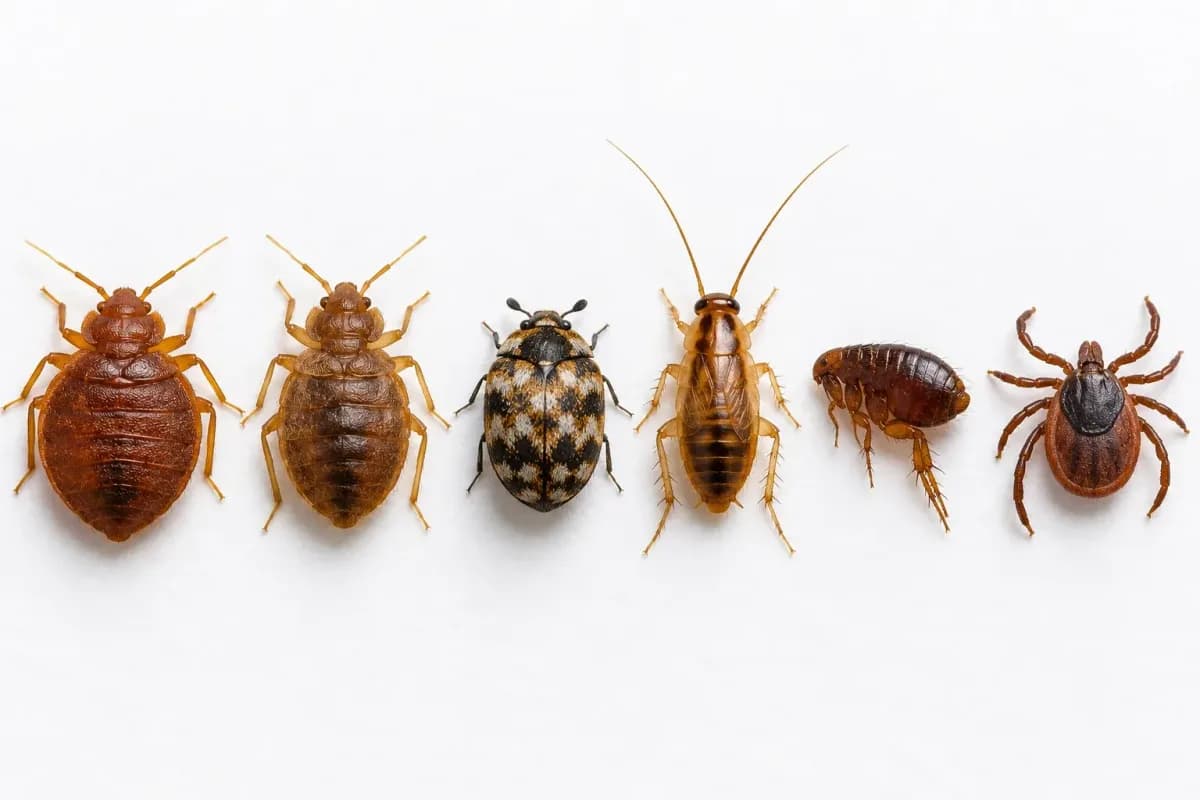
Tiny, fuzzy or pale larvae or bugs in bed are often carpet beetle larvae, booklice or spider beetles. The table sums up the quickest clues.
| Bug | Legs | Body shape | How it moves | Quick clue |
|---|---|---|---|---|
| Bed bug | 6 | Flat, oval, rusty brown | Crawls | Apple seed size, no wings |
| Bat bug | 6 | Nearly identical | Crawls | Longer hairs behind the head |
| Carpet beetle | 6 | Round, hard, patterned shell | Crawls and flies | Spotted black, white and orange |
| Baby cockroach | 6 | Long, narrow | Runs fast | Very long antennae |
| Flea | 6 | Thin from side to side | Jumps | Leaps when touched |
| Tick | 8 | Round or teardrop shaped | Crawls | Eight legs, no visible head section |
See all ten mixups in our guide to bugs that look like bed bugs, or browse commonly misidentified insects.
Not sure it is a bed bug?
Try our free Bed Bug Identifier. Upload a photo and get an instant answer: bed bug, baby bed bug, egg or a lookalike, with a harmless, caution or avoid safety rating.
How to Check for Bed Bugs
To check for bed bugs, start at the bed and work outward with a bright flashlight and a thin card, such as an old credit card, to scrape seams and cracks. Follow these four steps:
- 1Strip the bed and check mattress seams, tags, piping and the corners of the box spring.
- 2Inspect the bed frame and headboard, especially joints, screw holes and the wall directly behind it.
- 3Move outward to nightstands, sofa seams and cushions, curtain folds, carpet edges and outlet covers.
- 4Place interceptor traps under each bed leg and check them every week.
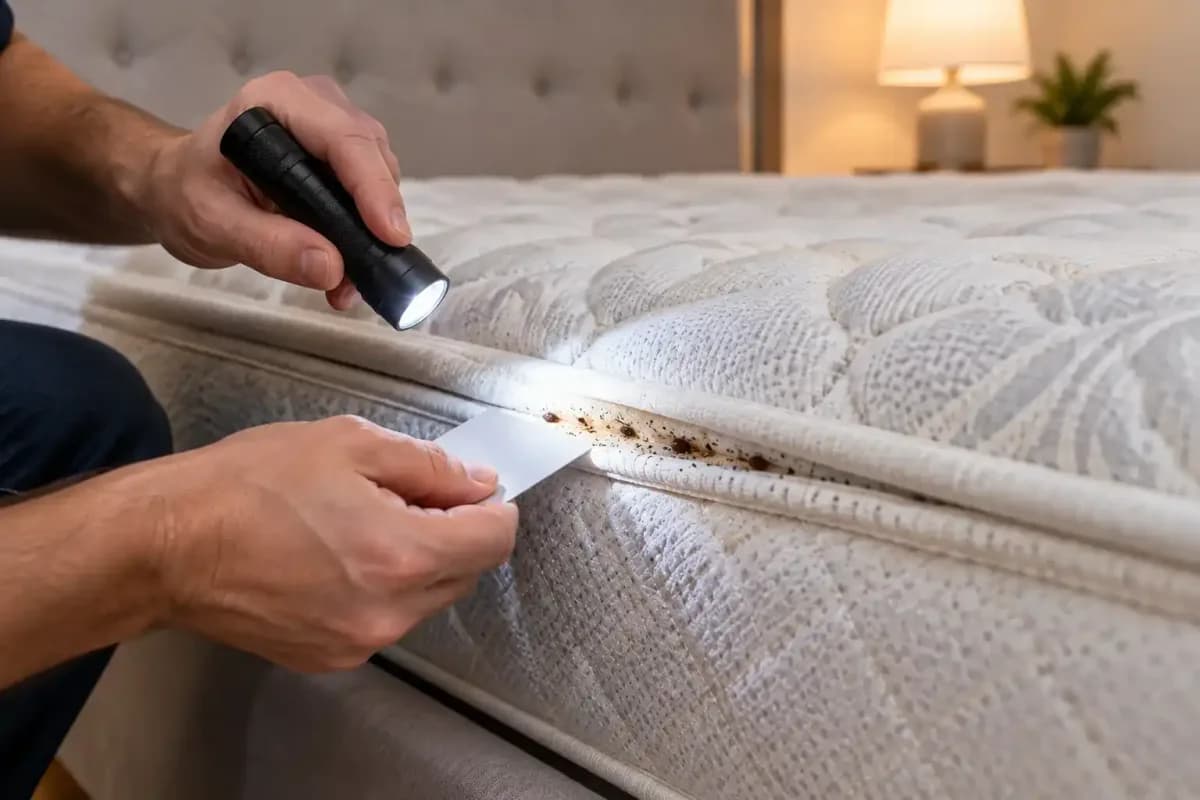
When you travel, check the headboard and mattress corners before you unpack, and keep your suitcase on the luggage rack. Bed bug traps and monitors help confirm small infestations, but they work best alongside a careful visual check. For a full room by room routine, see how to check your home for bugs.
Where Do Bed Bugs Come From, Hide and Spread?
Bed bugs come from other infested places, not from dirt, and they reach new homes by hitchhiking in luggage, clothing, used furniture and visitors' bags.
Once inside, they hide close to where people rest. Common hiding places include:
They spread on clothes, bags, towels and bedding, and sometimes in cars or shared laundry rooms. In apartments, they crawl between units through wall gaps and pipes, and the CDC reports they can travel more than 30 m (100 ft) in a night. Can bed bugs live in your hair? No. They are not built to cling to hair like lice, and they leave the skin after feeding. Can a dog get bed bugs? Pets can be bitten, but the bugs do not live on them and rarely ride on them.
Are Bed Bugs Dangerous?
Bed bugs are not dangerous in the way disease carrying insects are, because they are not known to spread disease to people. They can still affect health and daily life:
Itchy bites
Can last several days.
Allergic reactions
In some people, with larger welts. Severe reactions are rare.
Skin infections
From scratching bites open.
Sleep loss, anxiety and stress
Often the hardest part of a long infestation.
Can bed bugs make you sick? Not through infection, but get medical help if a bite becomes hot, painful or filled with pus, or if you develop a fever. Get emergency care right away for swelling of the face or throat or any trouble breathing. You can check a bite with the Bug Bite Identifier.
This information is for general education and is not medical advice.
How Bad Is a Bed Bug Infestation?
A bed bug infestation can range from a few bugs in one mattress seam to thousands spread through a whole building, and acting early makes it far easier to fix. Here is what each level usually looks like.
What you see
One or a few bugs, a few dark spots on one seam
What it usually means
Caught early and often limited to the bed
What you see
Bugs, droppings and shed skins on the bed frame and nearby furniture
What it usually means
Established and breeding, may be spreading
What you see
Bugs seen in daylight, on walls and curtains, with a musty smell
What it usually means
Widespread, likely in other rooms or units
Early action matters because numbers grow quickly. A female lays one or more eggs a day and several hundred in her lifetime. The eggs hatch in about a week, and the young can become egg laying adults in about a month in a warm room. A house with bed bugs can be treated at any level, but a severe infestation takes longer and usually needs a professional.
Bed Bug Behavior and Life Cycle
Do bed bugs fly? No. They have no wings, cannot jump and move only by crawling, at up to about 1.2 m (4 ft) per minute. They mostly come out in the dark, find people by body heat and the carbon dioxide in our breath, and feed for about 3 to 10 minutes. Like most crawling insects, bed bugs avoid water and prefer dry hiding places close to their food.
Their life cycle has three stages: egg, nymph and adult. Each nymph passes through five growth stages and needs a blood meal before every molt. How long do bed bugs live? Adults usually live several months, and longer in cool rooms. They can also survive for months between meals, so an empty room does not starve them out quickly.
How to Get Rid of Bed Bugs
To get rid of bed bugs, combine heat, careful cleaning and steady monitoring, because no single spray reaches every hiding spot. If you have bed bugs, what should you do first? Confirm and contain them before you treat. Follow this five step plan:
- 1Confirm it is bed bugs. Use the identifier above or keep a sample in a sealed bag.
- 2Contain them. Seal bedding and clothes in plastic bags, keep items out of other rooms and wrap any furniture before moving it.
- 3Use heat. Wash fabrics and dry them on high heat for at least 30 minutes. Bed bugs die when their bodies reach 45°C (113°F).
- 4Vacuum and steam. Vacuum seams and cracks, then empty the vacuum into a sealed bag outside right away. Steam treat seams slowly so the heat soaks in.
- 5Encase and monitor. Fit zippered encasements on the mattress and box spring, set interceptors under the bed legs and keep checking for several months.
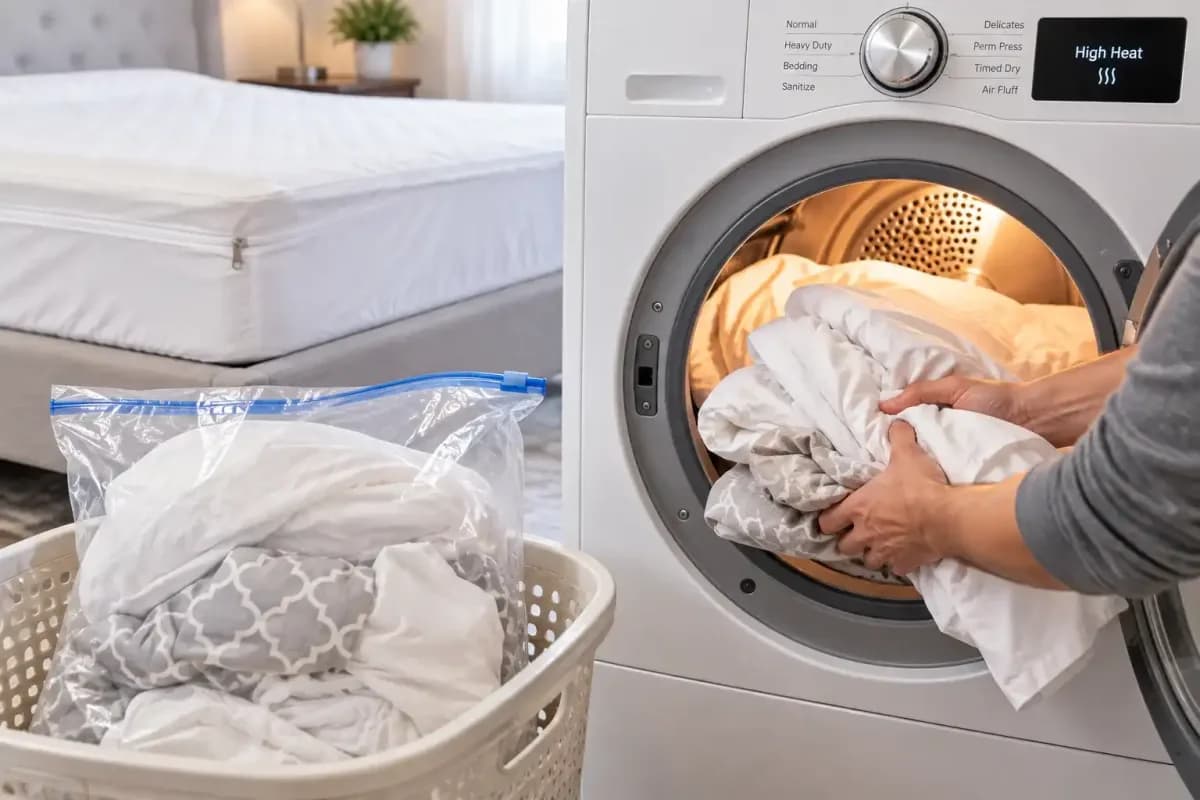
Our full guide on how to get rid of bed bugs walks through each step. The table shows which common methods help and which waste time.
| Method | Does it work? | Why |
|---|---|---|
| Hot dryer and steam | Yes | Heat kills every life stage, including eggs |
| Mattress encasements | Yes, as support | Traps bugs inside and removes hiding spots |
| Interceptor traps | Yes, for monitoring | Catch bugs climbing the bed legs |
| Bed bug spray used by the label | Partly | Helps in cracks, but many populations resist common products |
| Bug bombs and foggers | No | The mist does not reach hidden bugs and can spread them |
| Rubbing alcohol | No | Kills only on direct contact and is a fire risk |
Call a professional if the bugs have spread beyond the bed, you live in a shared building or you still find live bugs after a few weeks of careful work.
Professional Bed Bug Treatment and Cost
Professional treatment usually relies on insecticides, heat or a mix of both, and it is the most reliable choice for spread out or stubborn infestations. Here is how the main options compare:
Chemical treatment
Sprays and dusts placed in cracks and furniture, usually over two or three visits about two weeks apart.
Heat treatment
Special heaters warm the room to roughly 50 to 60°C (120 to 140°F) for several hours, often in one day. Many companies add a light chemical treatment because heat leaves no residue.
Bed bug treatment cost varies widely. In the United States, typical 2026 estimates range from a few hundred dollars for a single room to several thousand dollars for a whole home, with heat treatment at the higher end. Prices in other countries depend on local rates, home size and how severe the infestation is.
Treated but still seeing bugs?
Upload a photo to our free Bed Bug Identifier to check if it is a live bed bug, a shed skin or a harmless lookalike before you book another treatment.
How to Prevent Bed Bugs
The best way to prevent bed bugs is to stop them from hitching a ride into your home. These habits help most:
When traveling
Check the hotel bed before unpacking and put travel clothes straight into a hot dryer at home.
With secondhand furniture
Inspect every seam and joint, and never bring home mattresses or sofas left on the street.
In shared laundry rooms
Carry clothes in sealed bags and fold them at home, not on shared tables.
On your own bed
Use mattress and box spring encasements and keep the bed a few centimeters from the wall.
Bed Bugs in Rentals and Hotels: Your Rights
In many places, landlords must pay for treatment in rental homes, while tenants are expected to report problems quickly and help with preparation. Whether renters insurance covers bed bugs depends on your policy, and many standard policies exclude pest problems. Keep photos, dates and written reports of everything you find.
This information is general and is not legal advice. Rules vary by country and region.
Bed Bug FAQs
Still not sure what you found?
Upload a photo to the Bed Bug Identifier for a free, instant answer.
📷 Upload a PhotoSources and References
- US Environmental Protection Agency. Bed Bugs: Get Them Out and Keep Them Out.
- US Centers for Disease Control and Prevention. About Bed Bugs.
- NHS. Bedbugs. Page last reviewed 2026.
- Potter, M. F., University of Kentucky Entomology. Bed Bugs (Entfact 636).
- Jacob, J. and Pescatore, T., University of Kentucky Cooperative Extension. Reemergence of Bedbugs as Poultry Pests (ASC 250).
- Journal of Economic Entomology. Tropical bed bug (Cimex hemipterus) infestation and treatment program in dormitories. Volume 116, Issue 1, 2023.
- Smithsonian Institution, National Museum of Natural History. True Bugs, BugInfo.