Carpet Beetles: Complete Identification and Removal Guide
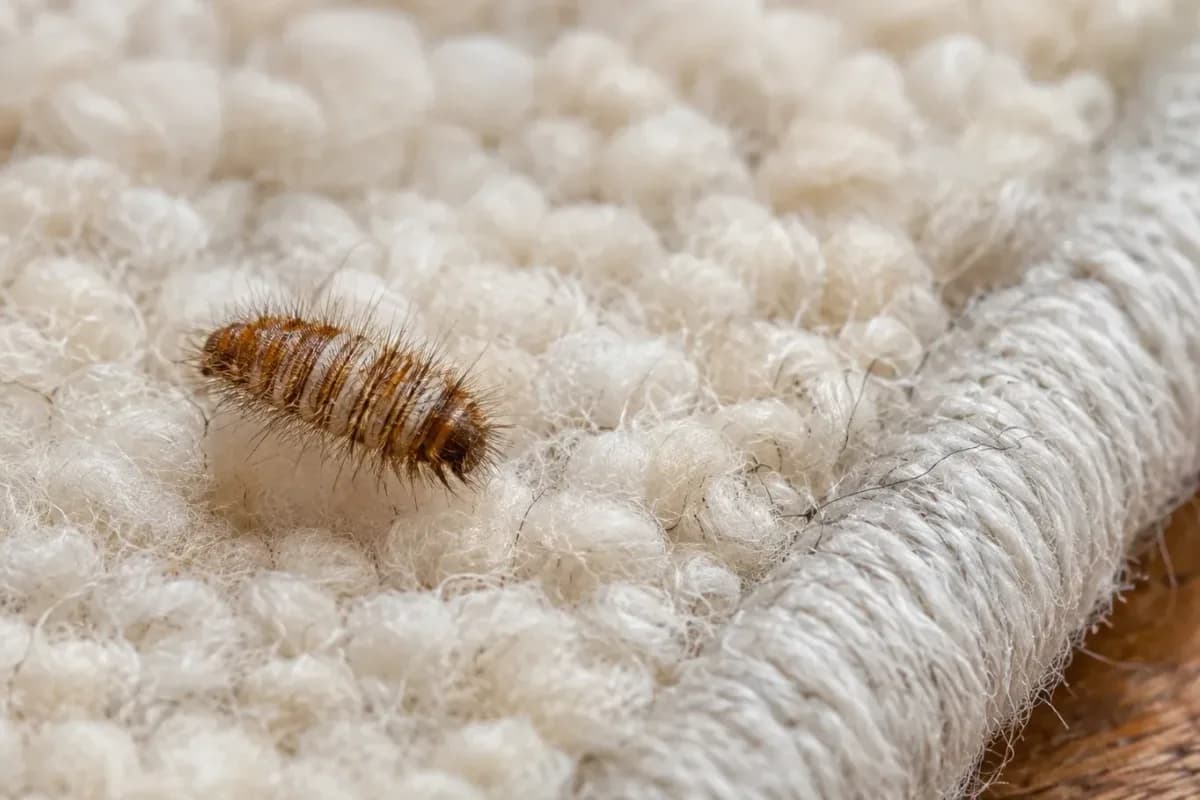
Carpet beetles are one of the most misidentified household insects, mainly because the larvae look nothing like the adult beetle and are often mistaken for bed bugs. This guide covers the full life cycle, the exact differences from bed bugs, and a complete removal process that finishes the job rather than a single quick tip.
Carpet Beetle Life Cycle: Egg, Larva, Pupa, Adult
A female carpet beetle lays 30 to 100 eggs directly on or near a fiber source such as wool, fur, or stored fabric. Eggs hatch within one to two weeks. The larval stage lasts anywhere from several months to over a year depending on temperature and food availability, which is why an infestation can go unnoticed for a long time before it is discovered. Larvae molt several times, shedding a pale bristly skin each time, before pupating and emerging as adults.
Adult carpet beetles are round, roughly 2 to 4mm, with mottled black, white, and orange scales on the wing covers. Adults feed on pollen outdoors and are often the first sign of an active infestation when they appear on windowsills trying to get back outside after emerging indoors.
Carpet Beetle Larvae vs Bed Bugs: How to Tell Them Apart
This is the single most valuable comparison in this guide, since the two are confused constantly and the correct response is completely different for each.
| Feature | Carpet beetle larva | Bed bug |
|---|---|---|
| Body | Oval, tapered, covered in visible bristly hairs | Flat, oval, smooth and hairless |
| Movement | Slow moving | Moves quickly |
| Feeds on | Wool, fur, and other natural fibers | Blood only |
| Color | Brown to golden | Reddish brown, darker after a blood meal |
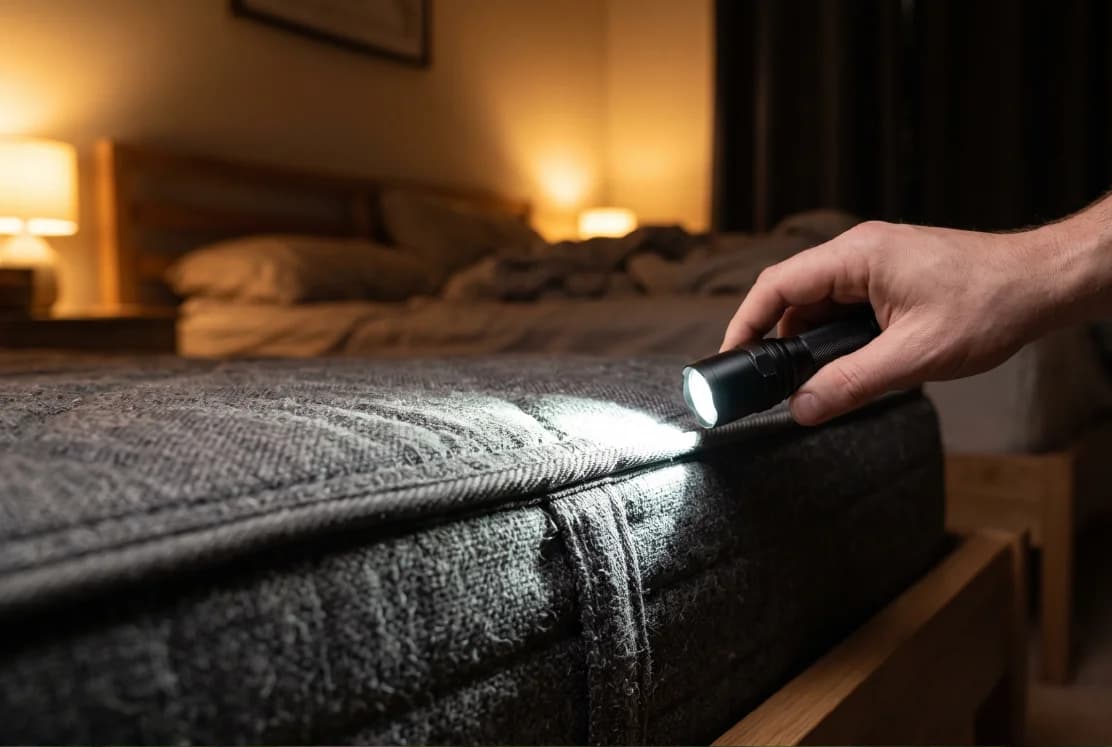
| Where found | Near wool and fur, carpet edges, closets | Mattress seams, bed frames, near where people sleep |
| Bite | Does not bite (hairs may irritate skin) | Bites skin to feed on blood |
Where Carpet Beetles Hide
- Wool, silk, and fur clothing or blankets in storage
- Carpet edges and under baseboards, especially in undisturbed rooms
- Air vents and duct openings, which larvae use to travel between rooms
- Bird or rodent nests in attics or wall cavities, an overlooked source since feathers and fur nearby give larvae a steady food supply
- Natural history or taxidermy collections, a well known risk in museum and collector settings
Step by Step Removal Process
Removing carpet beetles fully takes a consistent process over several weeks rather than a single treatment.
- Identify and isolate every infested item, checking wool, fur, and natural fiber items throughout the home, not just the room where beetles were first seen.
- Deep vacuum every carpet edge, baseboard, closet floor, and upholstered surface, then dispose of the vacuum bag or empty the canister outside immediately.
- Wash infested fabric items in hot water above 60 degrees Celsius, or dry clean items that cannot be washed at that temperature.
- Freeze small delicate items that cannot be washed or dry cleaned, sealed in a plastic bag, at freezing temperature for at least 72 hours.
- Set pheromone traps in affected rooms to monitor whether the population is declining over the following weeks.
- Seal obvious entry points such as gaps around window screens and vents, since adult beetles often enter from outside to lay eggs.
- Repeat vacuuming weekly for at least a month, since eggs already laid will continue hatching after the initial cleanup.
- Call a pest control professional if live larvae are still found after four to six weeks of consistent treatment, since a heavier infestation inside wall cavities or ductwork needs targeted treatment.
How to Prevent Carpet Beetles From Returning
Store wool, fur, and natural fiber items in sealed containers rather than open shelving, since this removes the easy access adult beetles need to lay eggs. Cedar blocks or lavender sachets are a mild deterrent, though they are not a substitute for sealed storage. A regular vacuuming routine, particularly along carpet edges and under furniture that rarely gets moved, catches a new problem early rather than letting it develop for months unnoticed.
Not sure if what you found is a carpet beetle or something else entirely? Upload a photo to the free AI Bug Identifier at the top of the homepage for a confirmed answer.
Frequently Asked Questions
Sources and References
- Penn State Extension. Carpet Beetles. extension.psu.edu
- Journal of Economic Entomology (2022). Volume 115, Issue 3. Carpet beetle infestation detection timelines in residential settings.