Boxelder Bugs: Identification and Why They Swarm
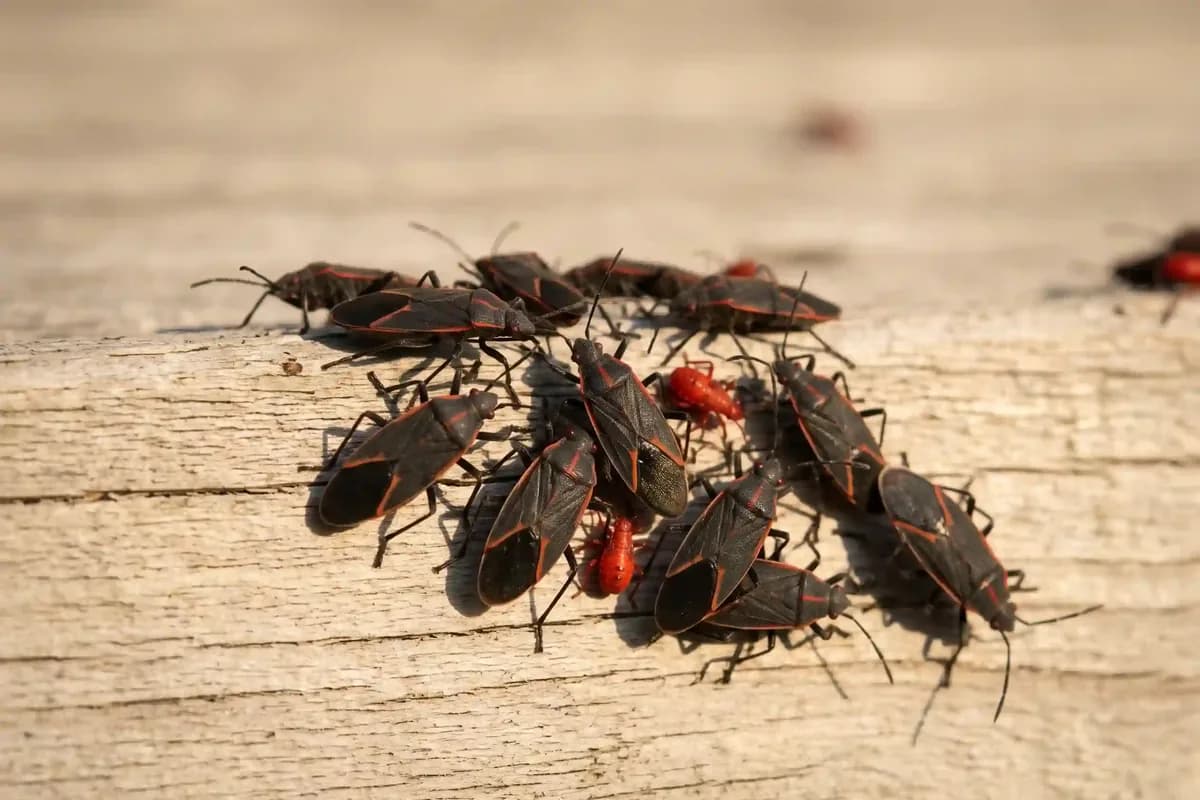
A boxelder bug is a flat, black insect about 1/2 inch (1.3 cm) long with thin red stripes behind the head, red edges on the wings and a red belly. Its scientific name is Boisea trivittata, and it is best known for gathering by the hundreds on sunny walls in fall before slipping inside for winter. These bugs do not bite people, damage homes or spread disease. This guide covers how to identify adults and nymphs, the lookalikes and how to keep them out.
What Does a Box Elder Bug Look Like?
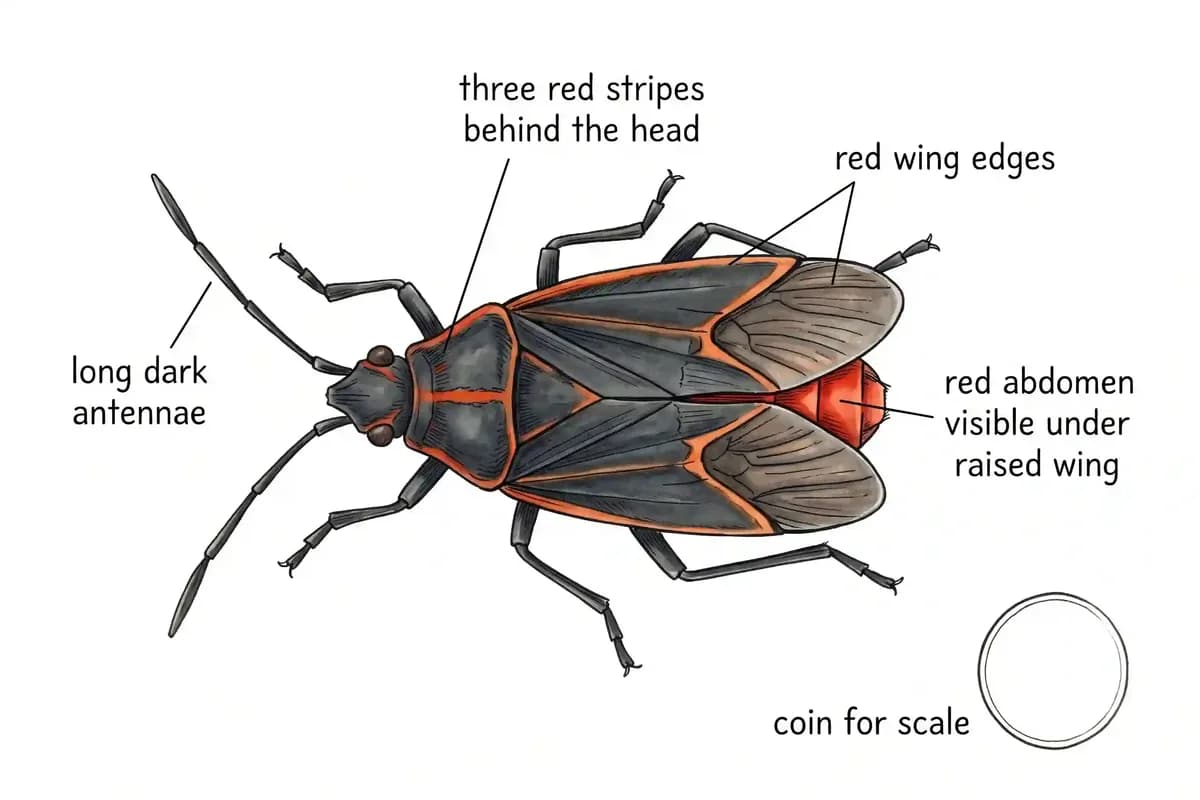
Look for a flat, oval, brownish black bug with three red lines behind the head and red borders on the wings.
- Size: the University of New Hampshire notes adults are about 1/2 inch (1.3 cm) long.
- Stripes: three red stripes on the area behind the head, one down the middle and one on each side.
- Wings: brownish black, with thin red edges. The wings fold flat and cross over the back.
- Belly: bright red under the wings, which you see when they fly.
- Antennae: long and dark.
They are true bugs, not beetles, even though many people call them box elder beetles or maple bugs. Like stink bugs, they feed with a straw like beak rather than chewing.
Nymphs and Eggs
The young, called nymphs, are smaller, wingless and much redder than the adults, so they often look like a different bug.
- Nymphs: the University of New Hampshire notes they are darker toward the head and have red abdomens. As they molt, they gain black wing pads and look more like the adults.
- Mixed groups: in late summer you may see red nymphs and black adults together on tree trunks and walls.
- Eggs: the University of New Hampshire notes females lay red eggs in cracks in boxelder bark and on top of leaves and other objects.
- Generations: adults that appear in midsummer can produce a second generation that matures in fall.
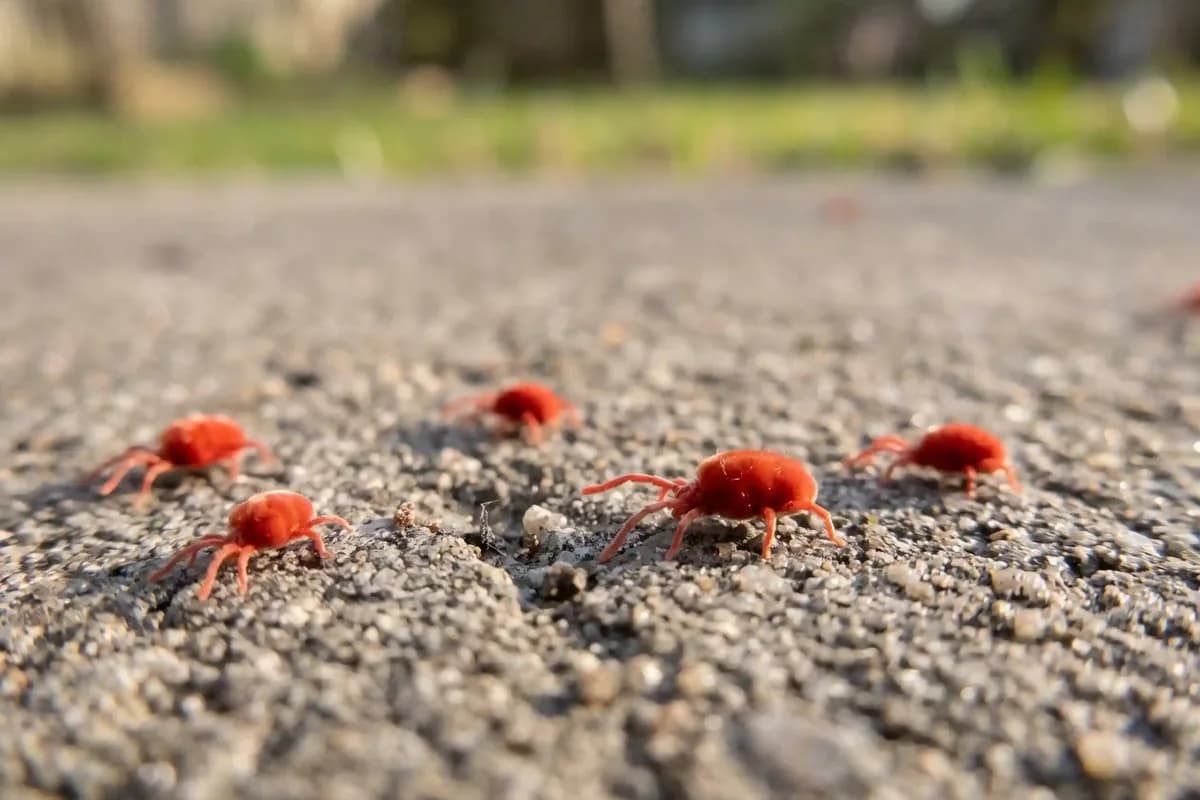
Small red bugs on a patio may be young boxelders, but they may also be mites. Our guide to tiny red bugs helps sort them out.
What Do They Eat?
They suck sap from the leaves, tender twigs and developing seeds of boxelder trees, mainly the seed bearing female trees.
- Other plants: the University of New Hampshire notes heavy numbers may also feed on ash and maple trees and on raspberry and strawberry fruit.
- Plant damage: feeding rarely harms healthy trees, so they are mainly a nuisance.
No boxelder trees nearby? They fly, so trees elsewhere in the neighbourhood can supply the bugs on your house.
Lookalikes: Red Shouldered Bug, Firebug and Milkweed Bug
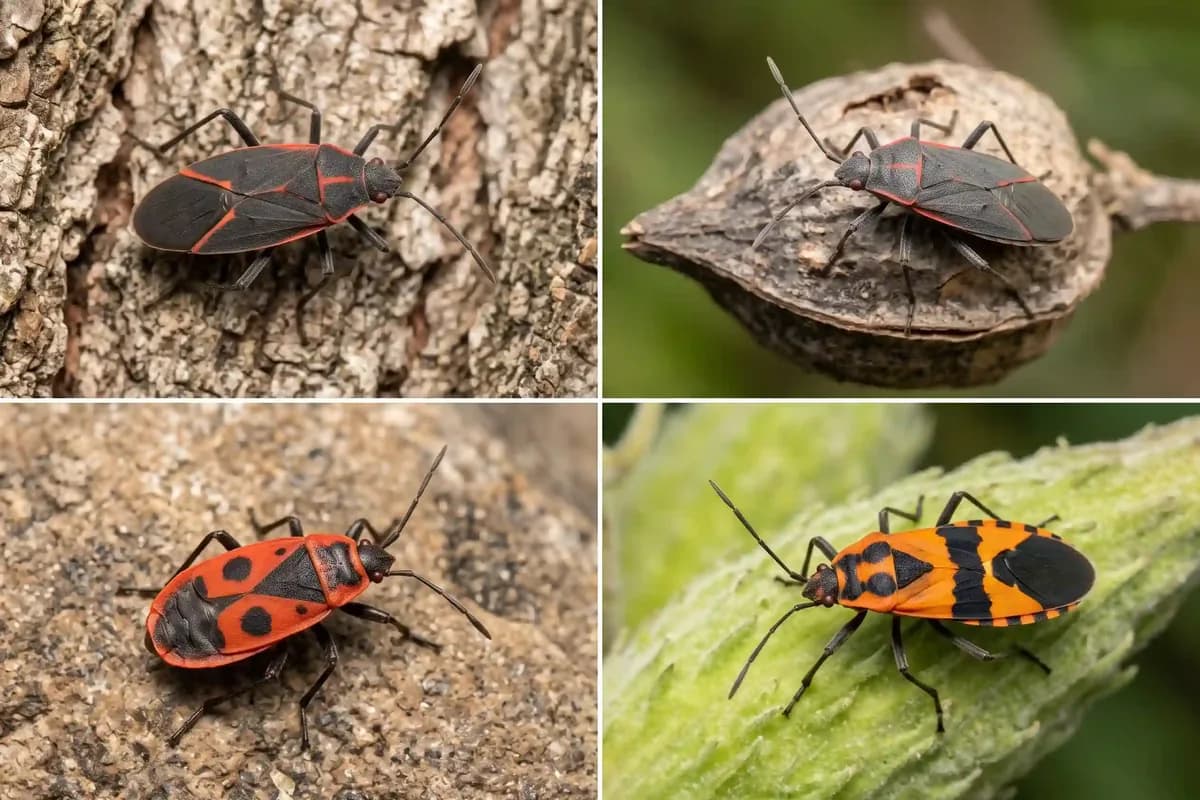
Several red and black bugs are easy to confuse with this species, and the stripes behind the head are the best clue.
| Bug | Size | Key difference |
|---|---|---|
| Boxelder bug | About 1/2 in (1.3 cm) | Three red stripes behind the head, red wing edges |
| Red shouldered bug (Jadera haematoloma) | 3/8 to 5/8 in (1 to 1.6 cm) | Red line only on each side of the shoulders, no centre stripe or red on the wings |
| Red firebug (Pyrrhocoris apterus) | 1/4 to 1/2 in (0.6 to 1.3 cm) | Mostly red, with two black spots on each wing and short wings |
| Large milkweed bug (Oncopeltus fasciatus) | Up to about 1/2 in (1.3 cm) | Orange and black, found on milkweed |
- Red shouldered bug: Kansas State University notes it feeds mainly on the seeds of goldenrain trees and lacks the centre red stripe and red wing markings of the boxelder.
- Firebug: Utah State University notes young firebug nymphs are easily confused with young boxelders. All firebug nymphs have a line of three black dots down the back.
- Fireflies: soft bodied beetles with a glowing tail, not true bugs.
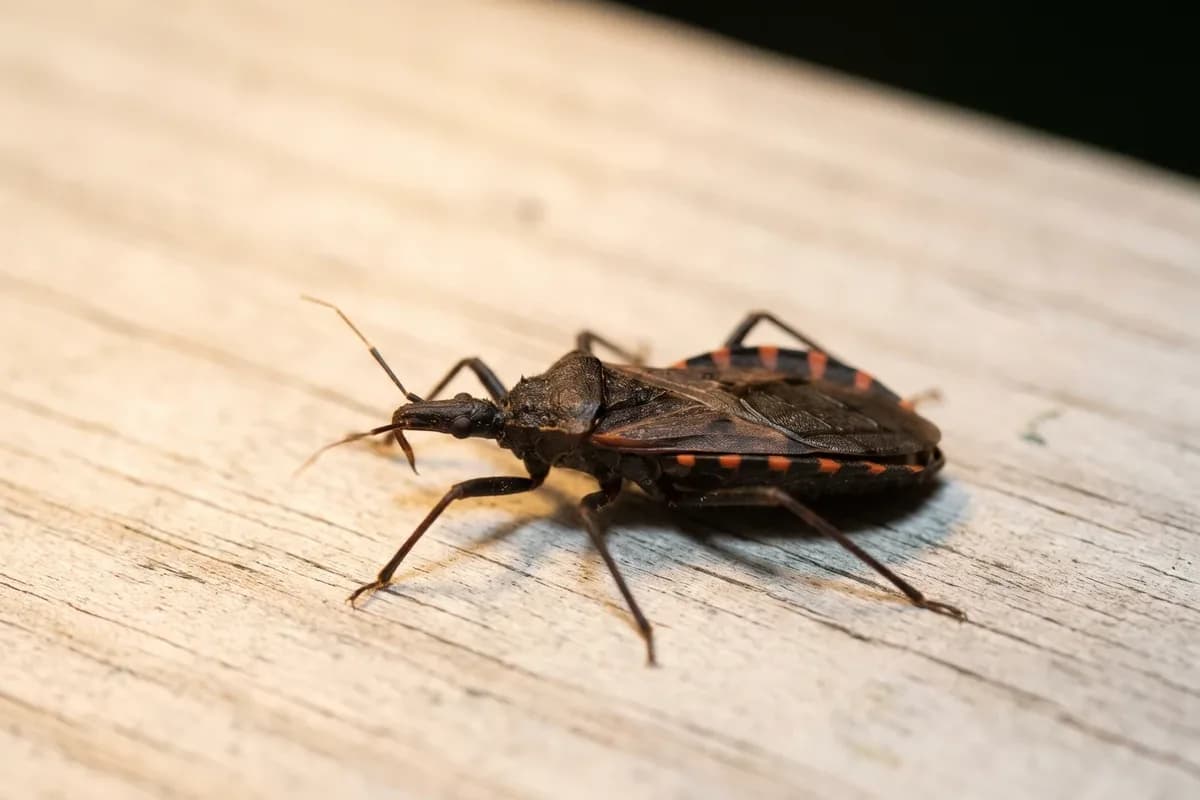
Do not confuse the large milkweed bug with the milkweed assassin, a predator covered in our assassin bug guide.
Why Do They Swarm on Houses?
In fall they look for a sheltered place to spend the winter, and warm, sunny house walls draw them in large numbers.
- Timing: the University of New Hampshire notes they gather on houses in fall, and the University of Minnesota notes they can show up indoors in fall, spring and sometimes on warm winter days.
- Sunny walls: they cluster where the sun warms the siding.
- Getting inside: they crawl into gaps around windows, doors, siding and vents, and hide in attics, cellars and other protected spots.
- Warm days: heat from the house or a sunny winter day can wake them, so they wander into living areas.
Stink bugs follow the same pattern. See our stink bug guide if your fall invaders are brown and shield shaped.
Are Boxelder Bugs Harmful?
No. The University of Minnesota notes they generally do not harm people or property, although large numbers are a nuisance.
- Bites: they are not known to bite people. Their beak is made for plant sap.
- Disease: they do not spread disease.
- Stains: the University of Minnesota notes they can stain surfaces, so avoid crushing them on curtains and walls.
- Food and fabric: they do not eat stored food, clothing or wood.
They are a nuisance, not a danger. The main goal is keeping them outside.
How to Keep Them Out
Seal the house before they arrive and remove the bugs by hand or vacuum rather than spraying.
- Seal early: the University of New Hampshire suggests sealing cracks and gaps before about September 10, before they start looking for shelter.
- Fix screens: repair window and door screens and fit door sweeps.
- Wash them off: wash clusters off walls and tree trunks with a forceful stream of water.
- Vacuum indoors: use a vacuum and empty the bag outdoors. Avoid crushing them on fabric.
- Skip sprays: the University of New Hampshire notes insecticide sprays are generally not recommended for these bugs.
Removing a female boxelder tree near the house can help, but bugs may still fly in from nearby trees. To confirm the species before you act, try the Bug Identifier.