Stink Bugs: How to Identify the Common Types
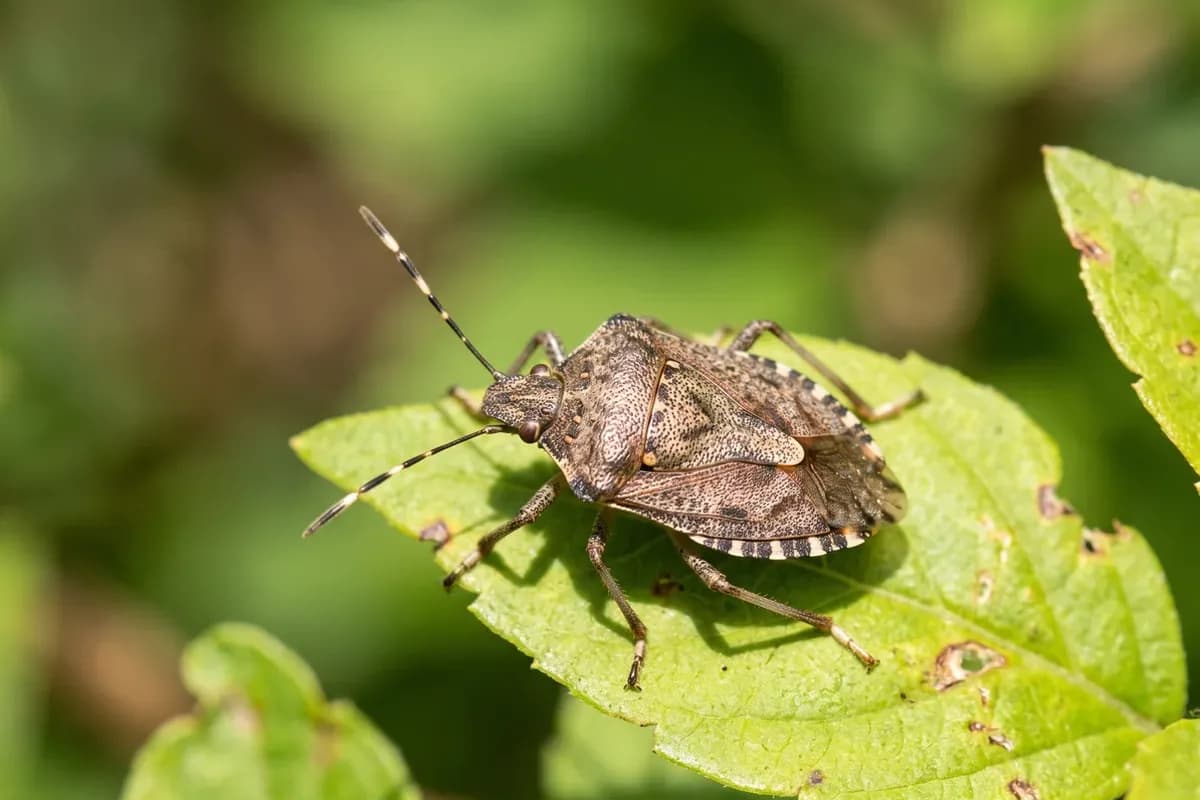
A stink bug is a shield shaped true bug, about 1/2 to 3/4 inch (1.3 to 1.9 cm) long, with a small triangle in the middle of its back, five segment antennae and glands that release a strong smell when it is disturbed. Most are brown, grey or green, and a few are brightly patterned. They belong to the family Pentatomidae, also called shield bugs. This guide shows how to recognise them, the main types including the brown marmorated, green and predatory species, whether they fly and which bugs look similar.
What Is a Stink Bug?
It is a plant feeding or predatory insect in the family Pentatomidae that defends itself with a bad smelling chemical.
- True bugs: they have a beak for sucking juices, not jaws for chewing.
- Shield bugs: the family name in many countries, from their shield shaped body.
- Why the name: North Carolina State University notes they release a mix of odour chemicals from glands in the thorax when threatened.
- Not beetles: they are often called beetles, but their wings overlap at the tips and they have a beak, unlike beetles.
Most types feed on plant sap, seeds and fruit. A few hunt other insects and are useful in gardens.
What Does a Stink Bug Look Like?
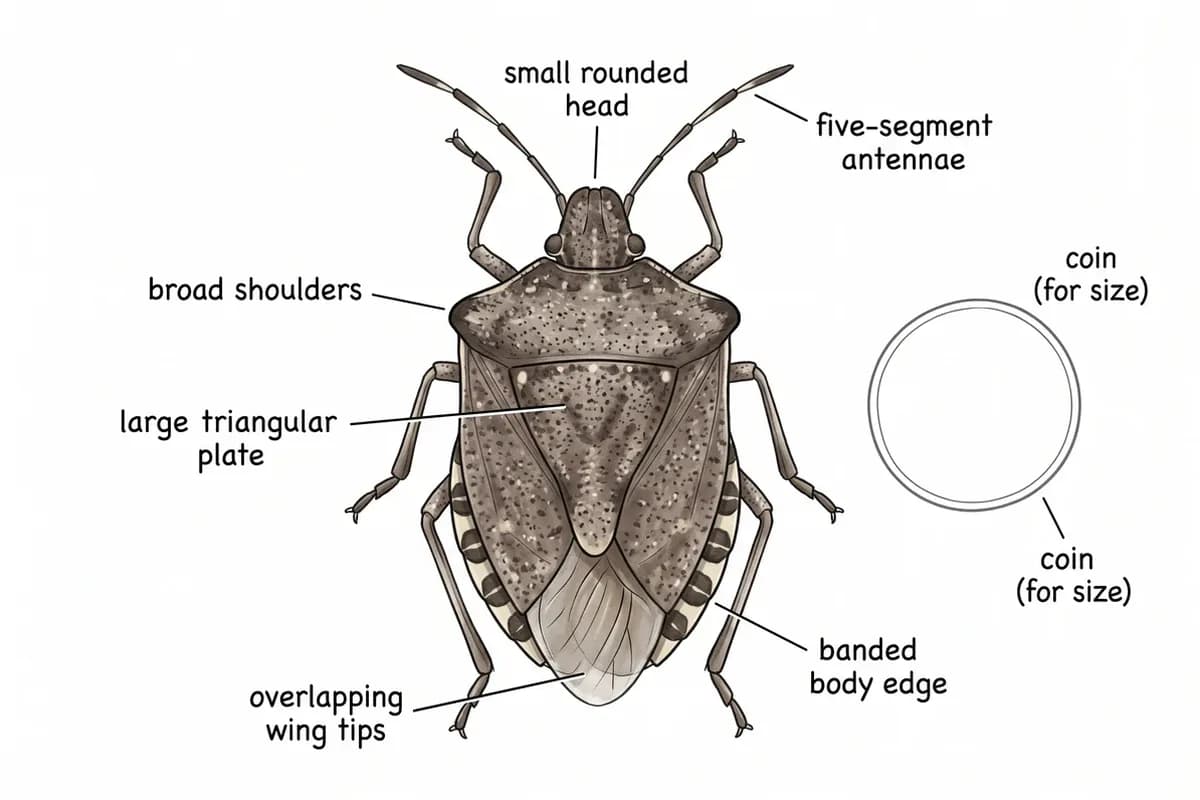
Look for a broad, flat body shaped like a shield, a small rounded head and a triangle (the scutellum) in the middle of the back.
- Shape: about as wide as it is long at the shoulders, narrowing to the rear.
- Triangle on the back: a large plate between the wings, pointing backward.
- Antennae: five segments, often banded in some species.
- Wings: the front half of each forewing is thick, the tip is thin and clear, and the tips overlap.
- Legs: six fairly short legs. They walk slowly and fly with a loud buzz.
- Size: most common types are about 1/2 to 3/4 inch (1.3 to 1.9 cm) long.
Brown Marmorated Stink Bug
This species (Halyomorpha halys) is the brown, invasive species most people find on walls and inside homes in autumn.
- Size: Penn State Extension notes adults are about 17 mm (0.66 in) long and nearly as wide.
- Colour: mottled brown on top and underneath.
- Key features: light bands on the antennae, dark bands on the rear wing tips and small coppery or bluish metallic dots on the head and shoulders.
- Habits: Penn State Extension notes adults gather on houses on warm autumn days and enter to spend the winter, without breeding indoors or damaging the building.
- Plant pest: it feeds on apples, peaches, peppers, tomatoes, beans, corn and many other plants.
It is native to East Asia and is considered invasive in North America and Europe. The short name BMSB is often used by gardeners and farmers.
Green and Other Common Types
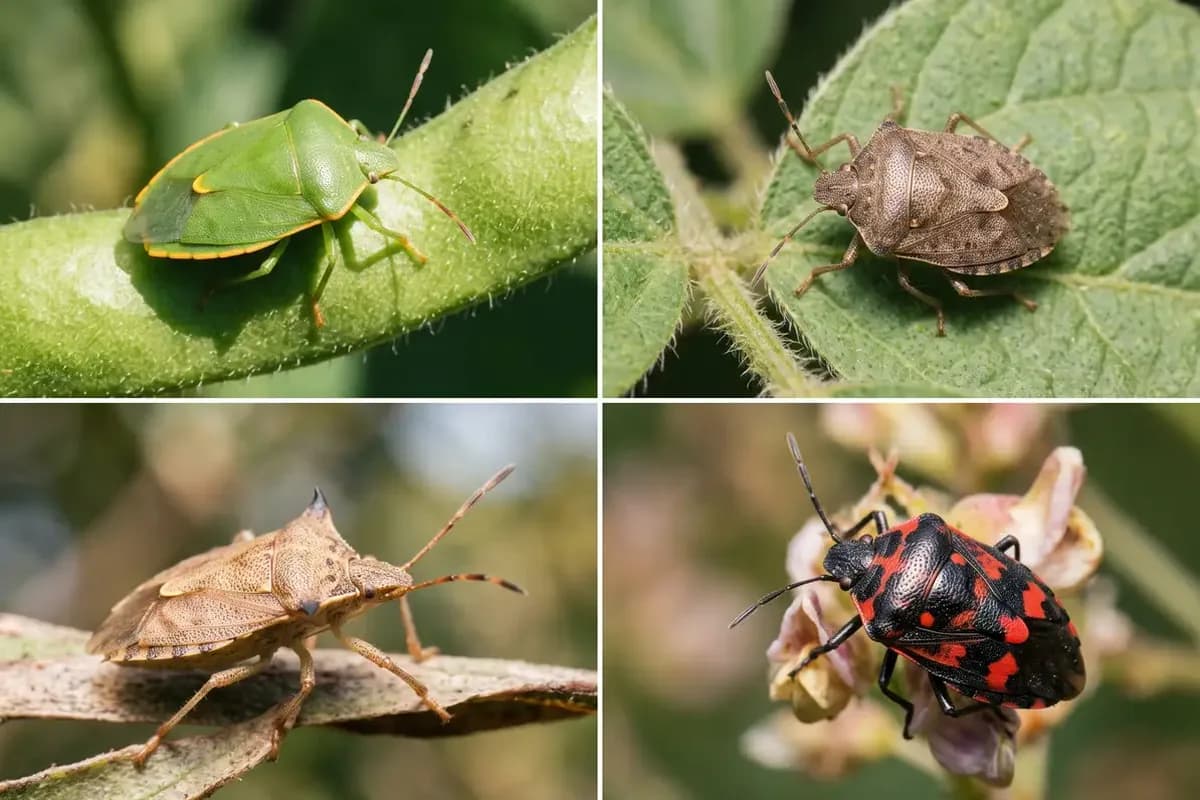
Many types differ mainly in colour, shoulder shape and markings. The University of Maryland describes these features for common Mid Atlantic species. Colour alone can mislead, because nymphs often look very different from adults of the same type. Other regions have their own colourful types, including red and black, orange and black and metallic species sometimes called jewel bugs.
| Type | Scientific name | Size | Key features | Feeds on |
|---|---|---|---|---|
| Green | Chinavia hilaris | 1/2 to 3/4 in (1.3 to 1.9 cm) | Light green with a narrow orange yellow edge | Plants and seeds |
| Southern green | Nezara viridula | 1/2 to 3/4 in (1.3 to 1.9 cm) | Light green, no orange edge | Plants and seeds |
| Brown | Euschistus servus | About 1/2 in (1.3 cm) | Dull brownish yellow | Plants and seeds |
| Spined soldier bug | Podisus maculiventris | 1/4 to 1/2 in (0.6 to 1.3 cm) | Light brown, sharp pointed shoulders | Other insects (predator) |
| Two spotted | Perillus bioculatus | Small | Black with yellow, orange or red marks | Other insects (predator) |
| Rough (tree) | Brochymena species | Medium | Rough, bark like brown body, toothed shoulders | Other insects (predator) |
Predatory Types Are Helpful
The spined soldier bug is a predator. The University of Florida notes it attacks about 90 kinds of insects, including caterpillars and beetle larvae, so it helps control garden pests. Its sharp, pointed shoulders tell it apart from plant feeding types.
Can Stink Bugs Fly?
Yes. Adults have full wings and fly well, often with a loud buzzing sound.
- Adults fly to sunny walls and windows in autumn looking for winter shelter.
- They also fly toward lights at night.
- Nymphs, the young stages, have no wings and can only crawl.
- At rest, the wings fold flat over the back, so the insect looks wingless until it takes off.
When Are They Most Noticeable?
They are most noticeable in late summer and autumn, when adults are fully grown and the brown marmorated type looks for winter shelter.
- Spring: adults that spent the winter sheltered become active and fly to plants to feed and lay eggs.
- Summer: nymphs and adults feed on fruit, vegetables and weeds in gardens and fields.
- Autumn: Penn State Extension notes that from September through October adults gather on houses and enter to overwinter.
- Winter: sheltering adults may wander out inside the home on warm days, often near windows and lights.
Other invaders also gather on sunny walls in late summer and autumn, including the spotted lanternfly in many eastern states. A quick photo helps tell them apart.
Nymphs and Young Bugs
Nymphs are smaller, rounder, wingless versions of the adult and go through five stages. The University of Maryland notes they look like small, oval adults.
- Young green types start black to brown and turn green with orange, black and pink markings as they grow.
- Southern green nymphs have rows of white spots on the back.
- Predatory nymphs are round and red and black when young.
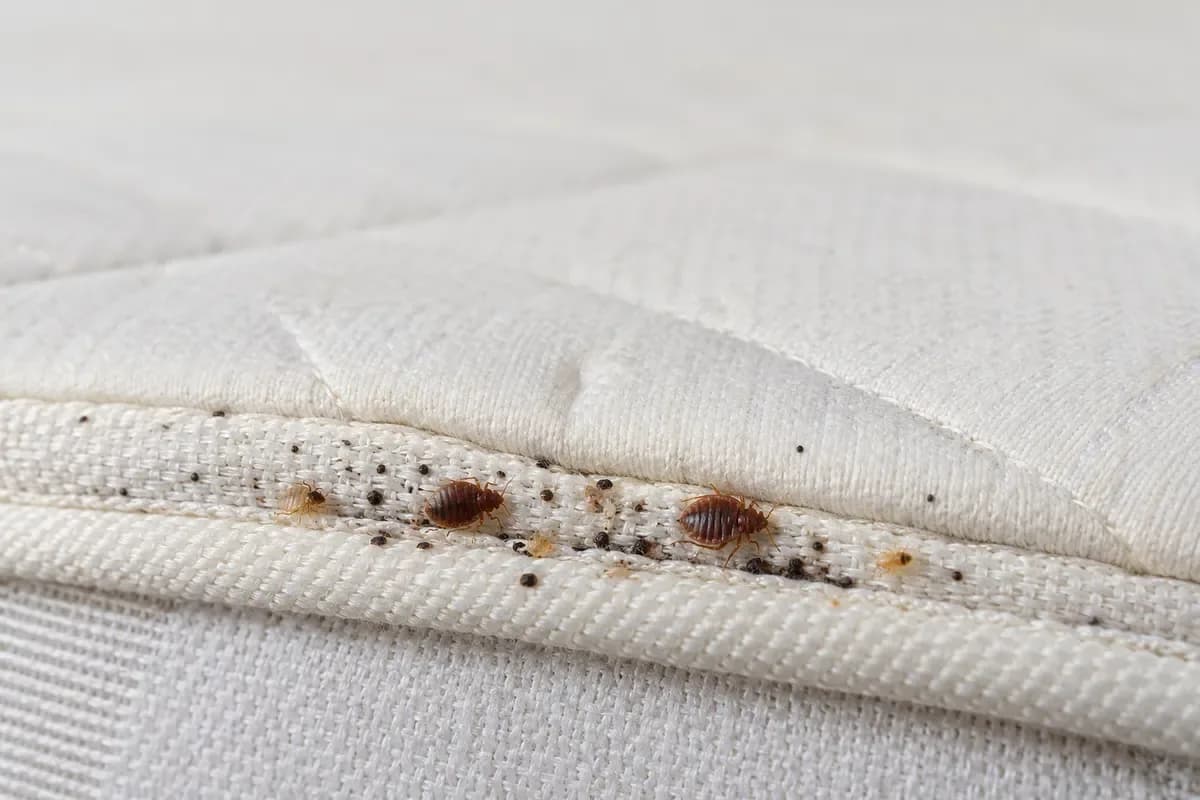
Nymphs are often mistaken for ladybirds, ticks or bed bugs because of their round shape. Unlike ticks and bed bugs, they live on plants, do not feed on blood and have the same five segment antennae as adults.
Where Do They Live?
They live worldwide wherever plants grow, and different types are common in different regions.
- Gardens and farms: on fruit, vegetables, beans, corn and weeds.
- Homes: the brown marmorated type moves into walls, attics and window frames in autumn.
- Warm regions: southern states and tropical countries have more green and colourful species.
- Woodland edges: predatory and rough bark coloured types often rest on tree trunks and shrubs, where they hunt other insects.
Smell, Bites and Lookalikes
They are harmless to people: they do not bite or sting, and their smell is unpleasant but not dangerous.
- Smell: released when crushed, handled or vacuumed.
- Skin: Penn State Extension notes crushing one on bare skin can irritate the skin in a small number of people.
- Other lookalikes: leaf footed bugs, boxelder bugs and some beetles.
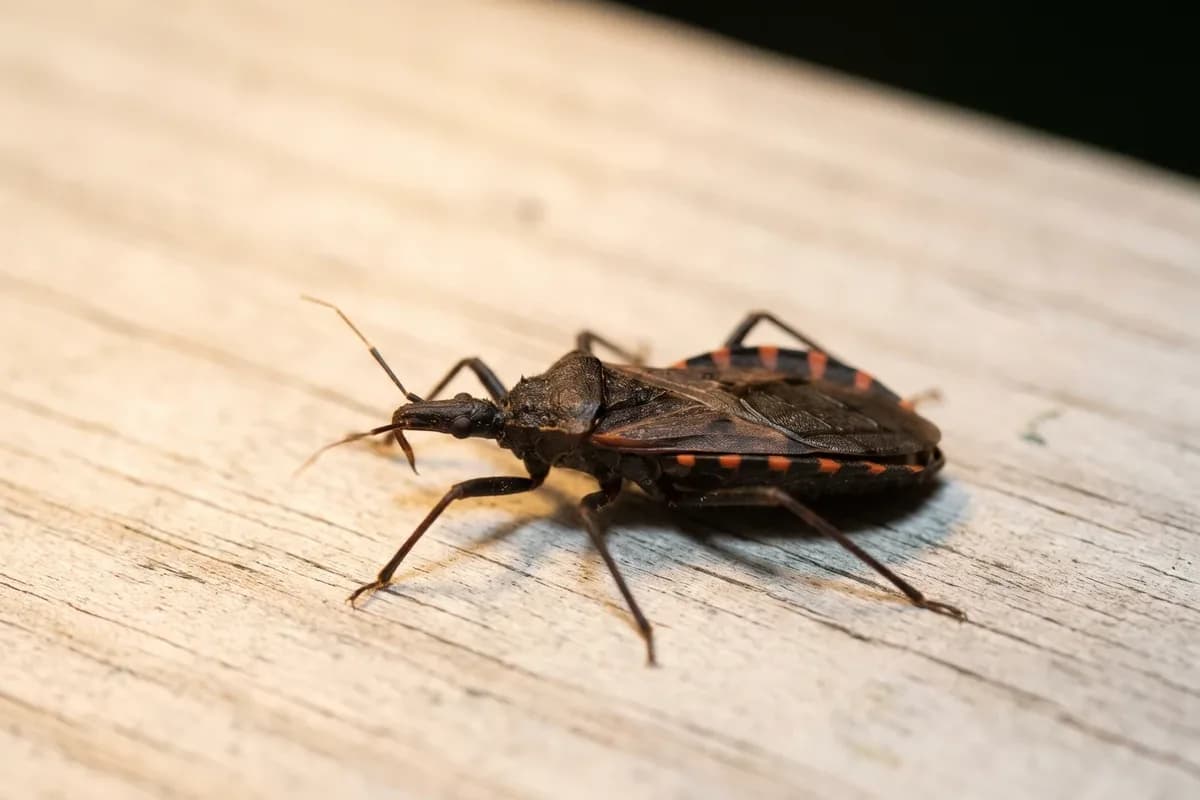
Kissing bugs look somewhat similar but have a long, cone shaped head and long legs, and they feed on blood. See our guide to the kissing bug. For whether these bugs bite, see the Bug Bite Identifier. To check a photo, use the Bug Identifier.
Not sure which stink bug you found, or whether it is a lookalike? Upload a clear photo to the free ScanaBug Bug Identifier for an instant ID with a safety rating.