Water Bug vs Cockroach: What You Really Found
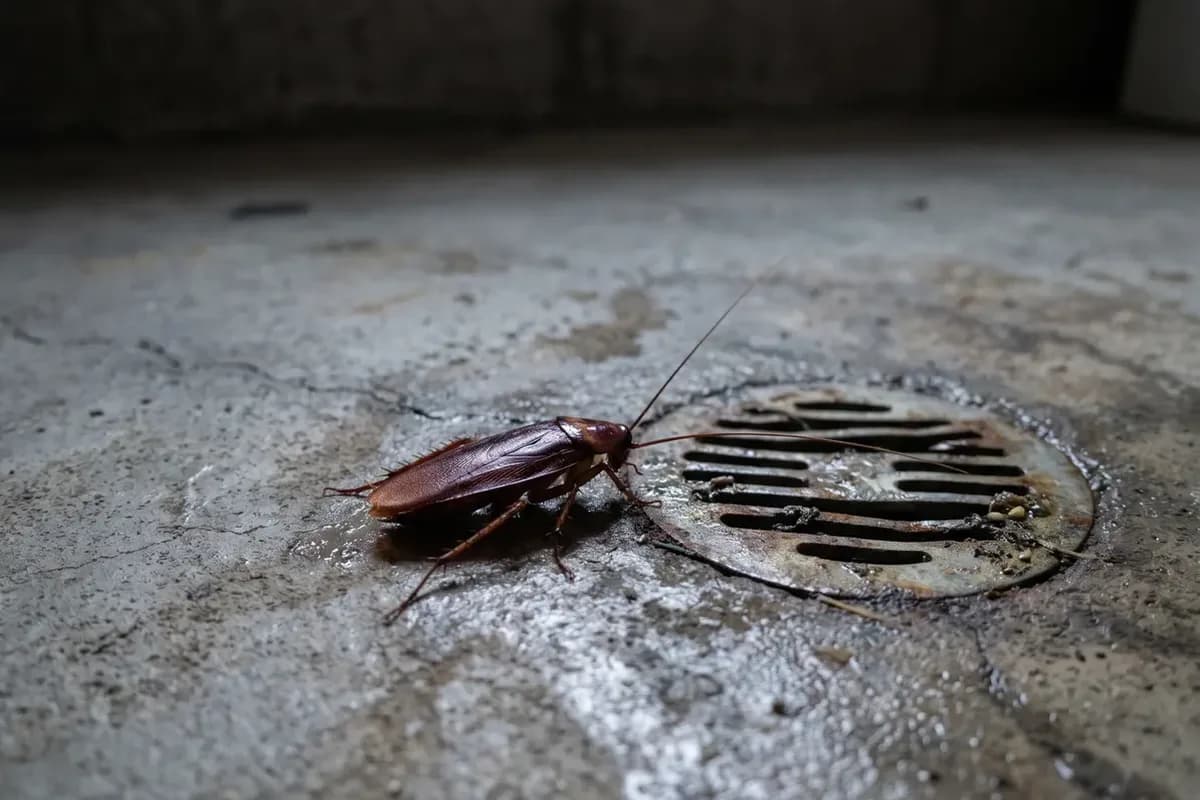
A water bug in your house is almost always a cockroach, usually the large reddish brown American cockroach or the shiny, nearly black oriental cockroach, which live in damp places such as basements, drains and sewers. Waterbug is a common name for these roaches, not a separate household pest. True aquatic bugs live in ponds and only rarely end up indoors. This guide explains what a house waterbug looks like, how to tell the cockroach types apart, where they come from and the signs of an infestation.
Which Bugs Do People Call Waterbugs?
People use the name for large, dark cockroaches that appear near water, especially in basements, bathrooms and kitchens.
- American cockroach: Texas A&M AgriLife notes it is also known as a waterbug or palmetto bug.
- Oriental cockroach: the University of California notes it is sometimes called a waterbug or black beetle.
- Smokybrown cockroach: a dark roach in warm, humid regions that may also get the name.
- True aquatic bugs: insects such as toe biters (Belostomatidae) live in ponds, not houses.
The name sticks because these roaches love moisture and often appear near drains, sinks, tubs and leaky pipes.
What Does a House Waterbug Look Like?
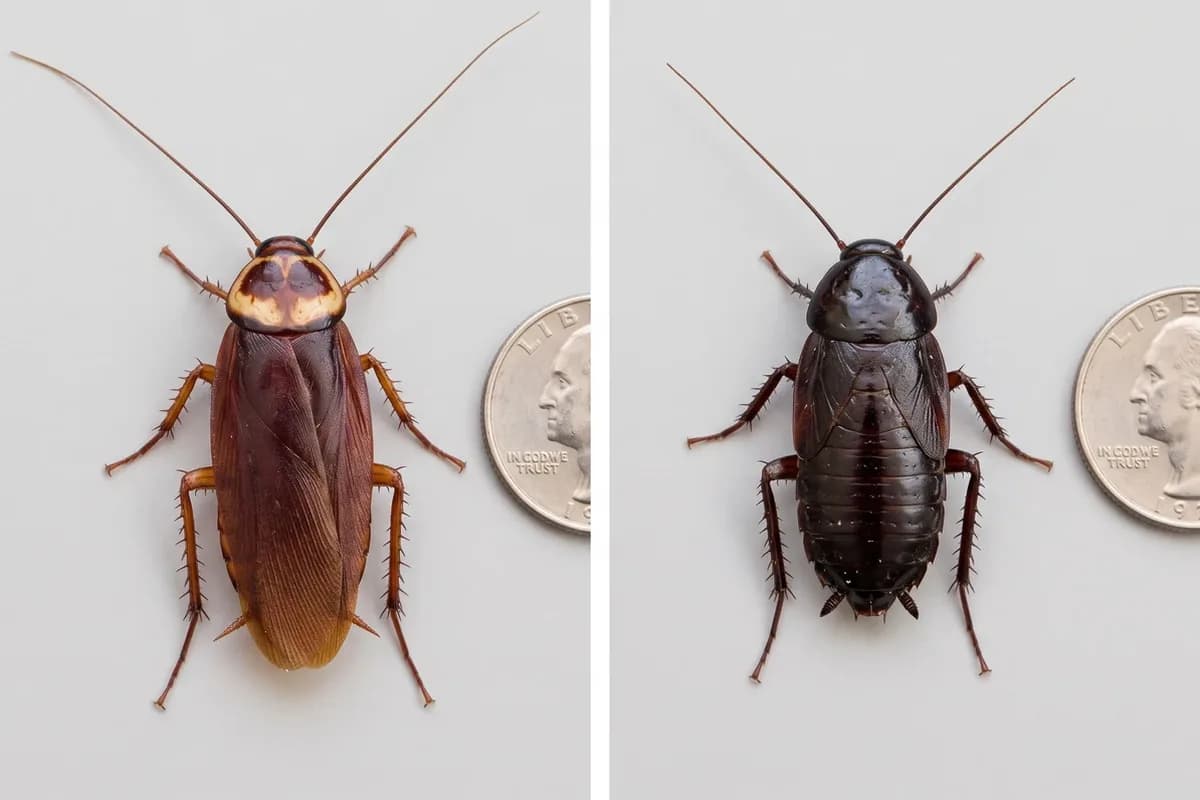
It looks like a large, flat, oval cockroach with long antennae, spiny legs and a shiny body, usually reddish brown or nearly black.
- Size: about 1 to 2 inches (2.5 to 5 cm) long, depending on the type.
- Shape: flat and oval, with the head tucked under a shield like plate.
- Antennae: long and thread like, often as long as the body.
- Legs: six spiny legs built for running.
- Wings: full wings on American cockroaches, short wings or wing pads on oriental cockroaches.
Water Bug vs Cockroach: Types Compared
The main household waterbugs are two cockroach types, and size, colour and wings tell them apart. Sizes are from the University of California, the University of Kentucky and the University of Maine. German cockroaches are smaller kitchen roaches and are rarely given the name.
| Feature | American | Oriental | German | Toe biter |
|---|---|---|---|---|
| Size | About 1.5 to 2 in (4 to 5 cm) | About 1 to 1.25 in (2.5 to 3 cm) | About 0.5 in (1.3 cm) | 2 to 4 in (5 to 10 cm) |
| Colour | Reddish brown, pale band behind the head | Shiny black or very dark brown | Light brown, two dark stripes behind the head | Brown, flat, with grasping front legs |
| Wings and flying | Full wings, can fly | Short wings, cannot fly | Full wings, rarely flies | Strong flier, drawn to lights |
| Where found | Basements, drains, sewers, warm humid areas | Cool, damp basements, drains, crawl spaces | Kitchens and bathrooms | Ponds, streams, sometimes near porch lights |
| Called a waterbug? | Yes, often | Yes, often | Rarely | Yes, it is a true aquatic bug |
Oriental and American Cockroaches
These are the two roaches most often given the name, and both prefer damp, dark places.
American Cockroach
- The largest common house roach. The University of Kentucky notes it is about 1 1/2 inches (4 cm) long, reddish brown, with a pale yellow band around the shield behind the head.
- Texas A&M AgriLife notes both males and females can fly.
- Lives in sewers, drains, basements, boiler rooms and, in warm months, yards and around bins.
Oriental Cockroach
- About 1 inch (2.5 cm) long and shiny black or dark brown.
- Females have very short wings, and males have wings covering about half the body, so neither flies.
- Lives in cool, damp places at ground level, such as floor drains, crawl spaces and cellars, and outdoors under stones and leaf litter.
Smokybrown and Other Regional Roaches
Smokybrown cockroaches, common in warm southern regions, are dark brown to black with full wings. Texas A&M AgriLife notes they live mostly outdoors in mulch, palm fronds, roof soffits and tree holes, and the University of California notes they often enter homes through the attic. In very humid places, several large roach types may all be called by the same local name, so a photo is the surest way to tell them apart.
True Aquatic Bugs Are Different
A toe biter (family Belostomatidae) is an aquatic insect, not a cockroach. The University of Maine notes it is 2 to 4 inches (5 to 10 cm) long and the largest true bug in the United States and Canada.
- Lives in ponds, lakes and slow streams, where it hunts insects, tadpoles and small fish.
- Has strong, grasping front legs and a short, sharp beak.
- Flies at night and is drawn to lights, so it can turn up near porches and parking lots.
- The University of Maine notes it can give a painful bite, which is why it is called a toe biter.
If a large bug with grasping front legs appears near a light, it is probably a toe biter. The Insect Identifier can confirm aquatic insects from a photo.
Where Do They Come From?
These roaches come from damp places nearby: sewers, drains, crawl spaces, basements and outdoor mulch, woodpiles and meter boxes.
- Drains and pipes: the University of California notes American cockroaches can enter ground floors through damaged pipes or drains.
- Outdoors: Texas A&M AgriLife notes they live in compost, mulch, woodpiles, hollow trees and underground water meters.
- Gaps: they crawl in under doors and through gaps around pipes and wires.
- Moisture: leaks, damp basements and standing water make homes more attractive.
Signs of a Water Bug Infestation
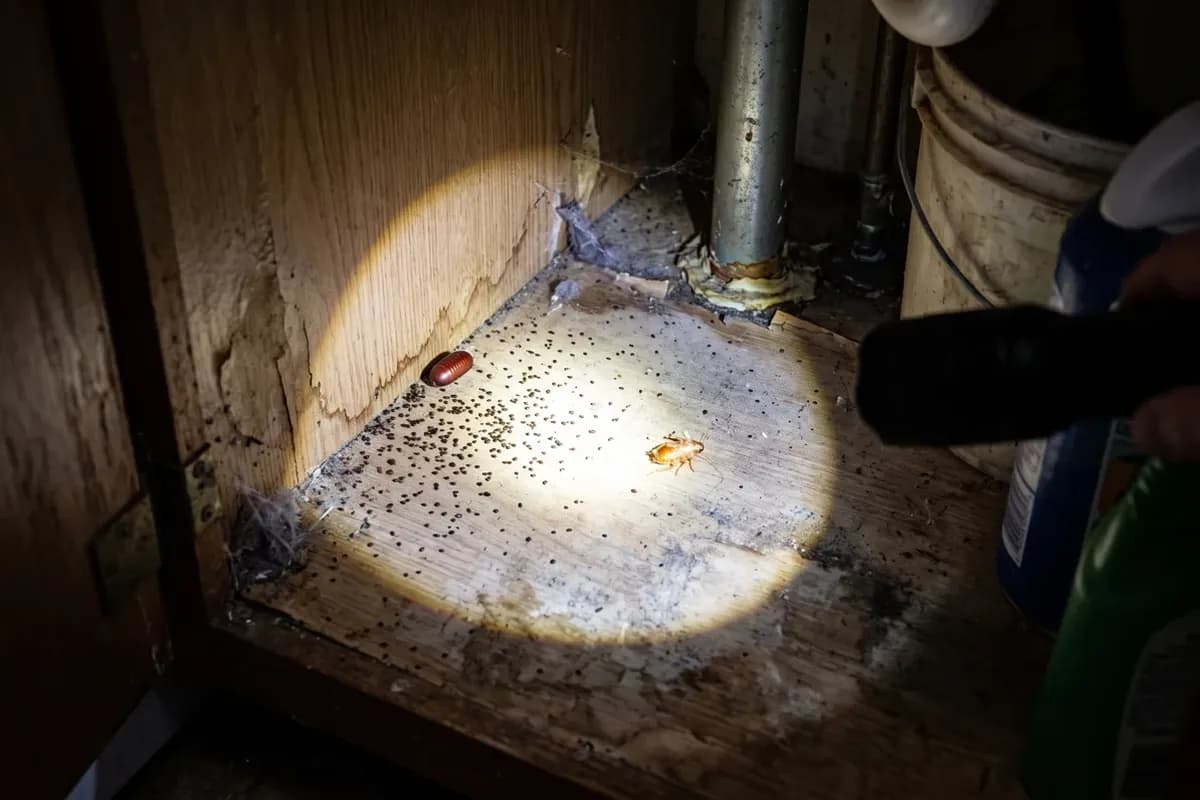
The main signs are droppings, egg cases, shed skins and roaches seen during the day.
- Droppings: small, dark specks that look like ground pepper, or dark smears where roaches rest.
- Egg cases: the University of Kentucky notes brown, bean shaped egg cases in hidden places.
- Shed skins: pale, empty skins left as nymphs grow.
- Daytime sightings: Texas A&M AgriLife notes seeing roaches in the day usually means a large population.
- Smell: a musty odour in heavy infestations.
Baby Roaches
Baby roaches, called nymphs, look like small, wingless adults and stay hidden in the same damp cracks as the adults. American cockroach nymphs are reddish brown, and oriental nymphs are dark. Finding nymphs means roaches are breeding indoors.
Are They Dangerous?
Household roaches do not bite people in normal circumstances, but cockroaches can spread germs and trigger allergies.
- Germs: the University of Kentucky notes they move from filth to food and can spread microbes that cause food poisoning.
- Allergies and asthma: their droppings and shed skins can trigger allergies and asthma, especially in children.
- Toe biters: can bite if handled, but they live in water and rarely meet people.
For other bugs that bite, see our Bug Bite Identifier.
How to Keep Them Out
- Fix leaks and reduce damp in basements and under sinks.
- Seal gaps around pipes, doors and windows, and fit door sweeps.
- Keep drains covered and clean, and run water in unused drains so traps do not dry out.
- Move mulch, woodpiles and leaf litter away from the walls of the house.
- Store food in sealed containers and clean up crumbs and spills.
- Use baits rather than sprays, following the label. The University of Kentucky notes foggers rarely reach hiding places.
A June bug is a beetle often mistaken for a roach. See our guide to the June bug. To check a photo, use the Bug Identifier.
Water bug or cockroach? Upload a clear photo to the free ScanaBug Bug Identifier for an instant ID with the likely species and a safety rating.