Bug Bite IdentifierFind Out What Bit You, How Dangerous It Is, and What to Do Next
Not sure what bit you? Take one photo to identify your bug bite. We match it against common insect bites, spider bites and stings, including mosquito, flea, tick, chigger, bee, wasp and fire ant, then show a Low to Emergency danger level and next steps.
14
Bite Types Covered
Seconds
Fast results
Free
No Sign Up
Identify Bug Bites by Picture or Use the Symptom Checker
The ScanaBug Bug Bite Identifier works from one clear photo of the bite or sting on your skin. It names the likely biter, gives a danger level and next steps, and runs free in any phone or computer browser with no app to download.
Drop a photo of your bite or sting mark
Clear, well-lit photos give the most accurate results
Supports JPG, PNG, WEBP, HEIC (iPhone) · Max 10MB · Free
Photos are sent to our AI provider to produce a result. Please crop to the affected skin and do not include faces. See our Privacy Policy.
How the Bug Bite Identifier Works in 3 Steps
Take a clear photo
Use daylight and hold the phone about 15 cm (6 in) from the skin. Include some skin around the bite.
Add the photo or use the Symptom Checker
No good photo? Answer short questions about the bite instead.
Read your result
See the likely bug, its danger level, simple first aid and when to see a doctor.
Results are a guide, not a diagnosis. Read our AI Use Disclosure to learn how results are made.
Types of Bug Bites: The Most Common Insect Bites and Stings
The most common types of bug bites come from mosquitoes, fleas, bed bugs, ticks, chiggers, biting flies and spiders, and the most common stings come from bees, wasps and fire ants. Different bug bites fall into three groups:
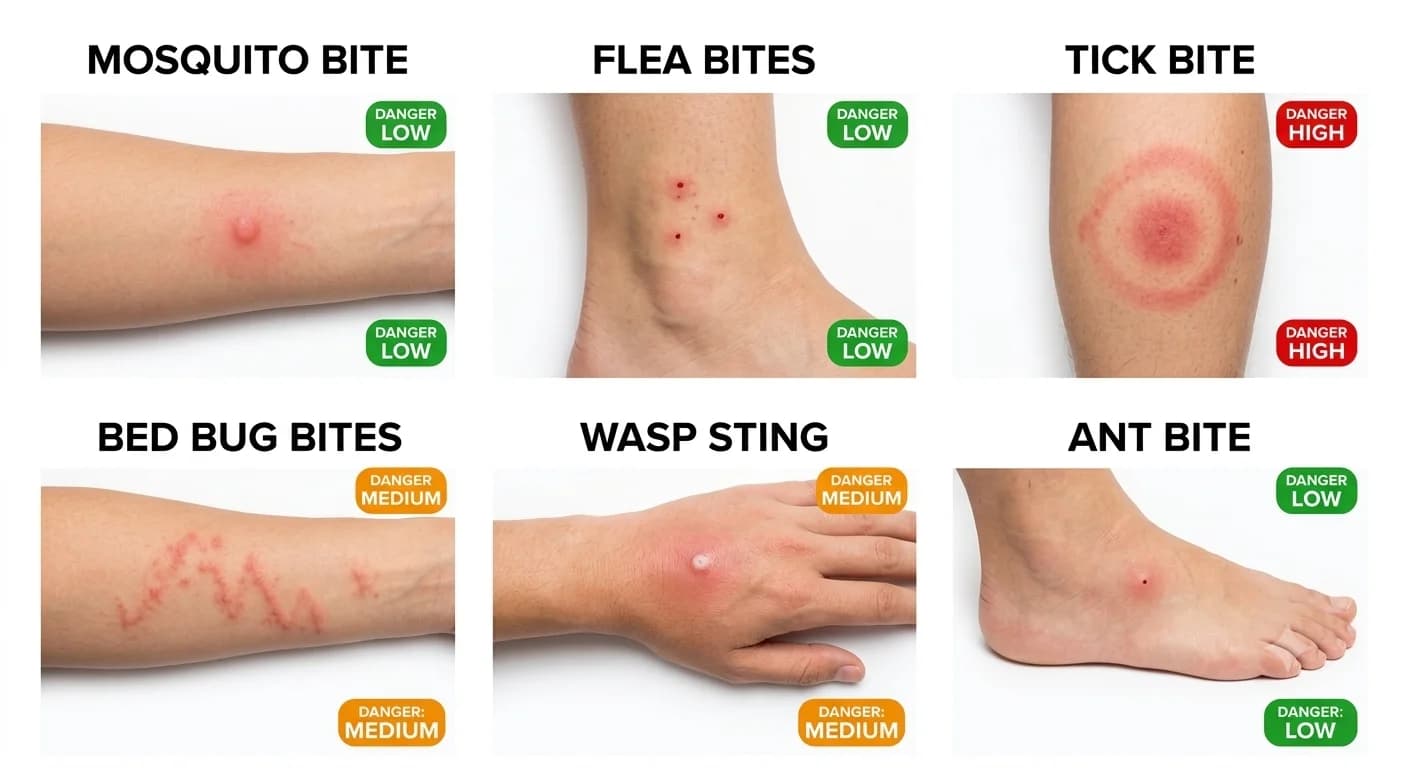
Insect bites from blood feeders mostly itch and fade within days, while stings hurt at once and carry a small risk of allergy. The chart below helps you match your bite to the right bug.
Types of Bug Bites Chart: Match Your Bite in Seconds
This bug bite chart lists 14 common bites and stings worldwide. Find the row that matches what you see, where it is and when the itch started, then check the danger level.
| Bug | What the bite looks like | Where on the body | Itch or pain starts | Danger level | See a doctor if |
|---|---|---|---|---|---|
| Mosquito | Single round, puffy bump with a pale center and red edge | Any uncovered skin | Within minutes | Low | Fever, rash or joint pain in the next 2 weeks |
| Flea | Tiny red dots in groups of 3 or 4, often with a red halo | Ankles, lower legs, waist | Within minutes | Low | Signs of infection from scratching |
| Bed bug | Red or dark welts in a line, zigzag or cluster, no center dot | Face, neck, arms, hands, shoulders | Hours to days later | Low | Large swelling or many bites with hives |
| Tick | Small red bump, tick may still be attached | Hairline, behind ears, armpits, groin, behind knees | Often no feeling | Low to High | Expanding ring rash, fever or aches within 30 days |
| Spider (most species) | One red bump, sometimes two tiny puncture marks | Hands, arms, legs | Mild sting at once | Low | Spreading redness, pus or fever |
| Chigger | Very itchy red bumps, some with a tiny bright red center | Sock line, waistband, behind knees, groin | A few hours later | Low | Itch lasting over 2 weeks or infection |
| Fire ant | Ring of stings that turn into white pustules within a day | Feet, ankles, legs | Burning pain at once | Medium | Many stings, hives or dizziness |
| Bee | Painful swollen spot, stinger often left in the skin | Hands, feet, face | Sharp pain at once | Medium | Swelling past the bite, hives, breathing trouble |
| Wasp or hornet | Red swollen spot with a white center, no stinger left | Hands, arms, face, neck | Sharp pain at once | Medium | Swelling of lips, tongue or throat |
| Horse fly or deer fly | Large painful red welt, may bleed a little | Arms, legs, neck | Sharp pain at once | Low to Medium | Spreading heat and redness |
| Biting midge (no see um) | Many tiny red spots close together | Face, arms, ankles | Within minutes, burning | Low | Infected scratches |
| Sand fly or black fly | Small red bumps, black fly bites may bleed and swell | Face, neck, ankles | Minutes to hours | Low to Medium | A sore that does not heal (sand fly regions) |
| Head lice | Small red bumps with intense scalp itch | Back of neck, behind ears, scalp | Days to weeks after lice arrive | Low | Scalp sores that ooze or crust |
| Black widow or brown recluse | Two marks with spreading pain, or a red ring with a pale center | Hands, arms, legs | Within 1 hour (widow), hours (recluse) | High to Emergency | Cramps, sweating, blister or darkening skin |
Not finding your bite? Add a photo to the Bug Bite Identifier above for a free match →
How to Identify Bug Bites: 3 Things to Check
To identify a bug bite, check three things: the bite pattern, where it is on your body and when the itch or pain started. Together these clues narrow most bites down to one or two bugs, even if you never saw what bit you.
Check 1: The bite pattern
The pattern is the fastest first clue. A single bump points to a mosquito, spider or sting, a tight group of 3 or 4 points to fleas, and a line or zigzag on skin bare in bed points to bed bugs.
Check 2: Where the bite is on your body
Body location rules out many bugs. Fleas bite low, around the ankles and lower legs, and chiggers bite where clothing presses, such as the waistband and sock line. Bed bugs bite skin left bare in bed, and ticks hide at the hairline and in skin folds.
Check 3: When the itch or pain started
Timing separates bites that look alike. Stings and fire ants hurt at once. Mosquito and flea bites itch within minutes. Chigger bites itch a few hours later. Bed bug bites can take one to several days to show, and tick bites often cause no feeling at all.
What Do Bug Bites Look Like?
Most bug bites look like small, raised red or dark bumps, but a few details give the biter away:
- A red circle or ring around it: a small halo is normal for mosquito and spider bites. A ring that grows past 5 cm (2 in) days after a tick bite can be erythema migrans, the classic Lyme disease rash.
- A white head or white center: fire ant stings form white pustules, and mosquito welts often have a pale middle.
- Raised, small or tiny bumps: raised bug bites close together usually come from mosquitoes, midges or fleas.
- A black dot in the middle: this is often a tick still attached or a bee stinger left behind.
- A hard bump: a normal local reaction, unless heat and redness spread.
- A blister: fire ants, strong mosquito reactions in children and early brown recluse bites can blister.
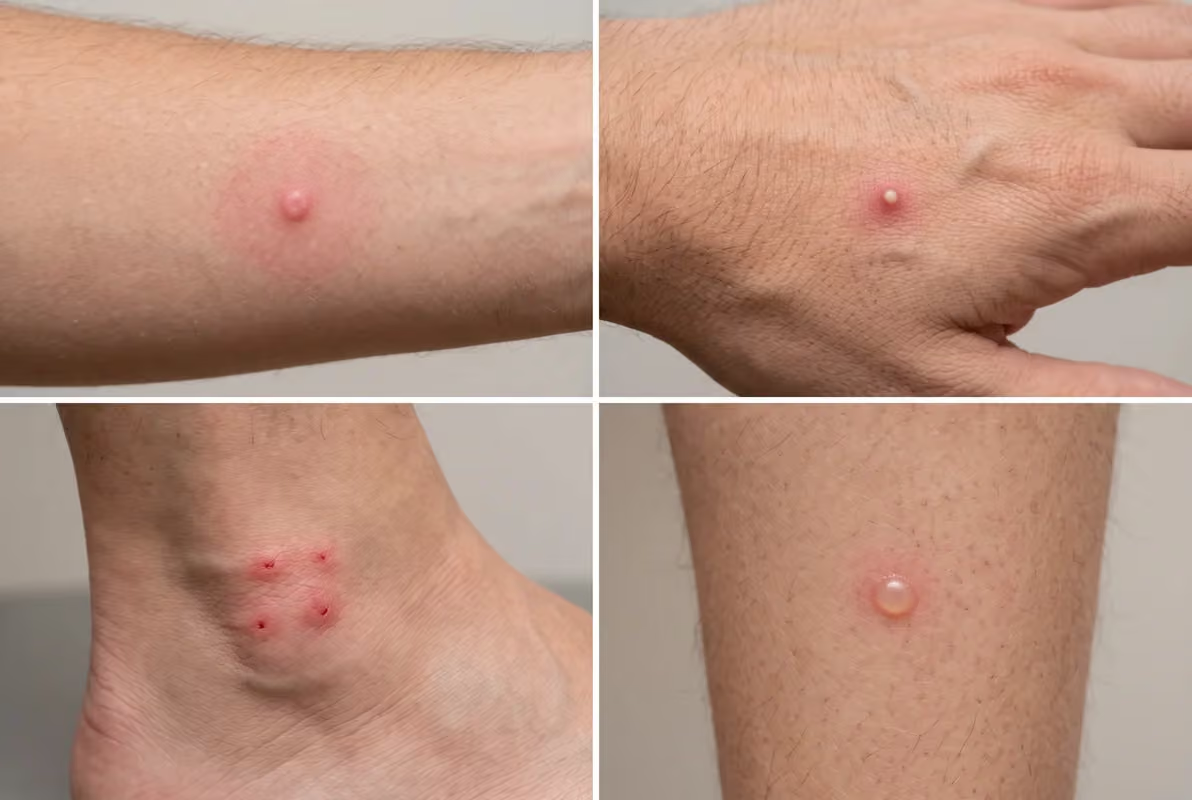
Still unsure after the 3 checks?
Add a clear photo of the bite to the tool at the top of this page.
What Bit Me? How to Tell What Kind of Bug Bite This Is
To work out what bit you, think about where you were in the day or two before the bite appeared. Each biter lives in a different setting, so the place is often the fastest clue.
| Where you were | Likely biter | Tell tale sign |
|---|---|---|
| In bed or on a sofa | Bed bugs | Rows of bites found in the morning |
| Around pets or on carpet | Fleas | Groups of tiny bites on the ankles |
| Long grass, woods or a hike | Ticks or chiggers | Attached tick, or itchy bumps at the sock line |
| Garden, picnic or near a nest | Bees, wasps or fire ants | Instant pain, swelling or pustules |
| Near water at dusk | Mosquitoes or biting midges | Many itchy bumps on bare skin |
| Beach or sandy ground | Sand flies or midges | Tiny red spots on legs and feet |
| Garage, shed or stored boxes | Spiders | One painful bump on a hand or arm |
Red bumps with no bugs in sight may not be bites. Hives, contact rashes and the hairs of carpet beetle larvae can look like bites on skin.
Identifying Insect Bites Pictures: What Each Bite Looks Like on Skin
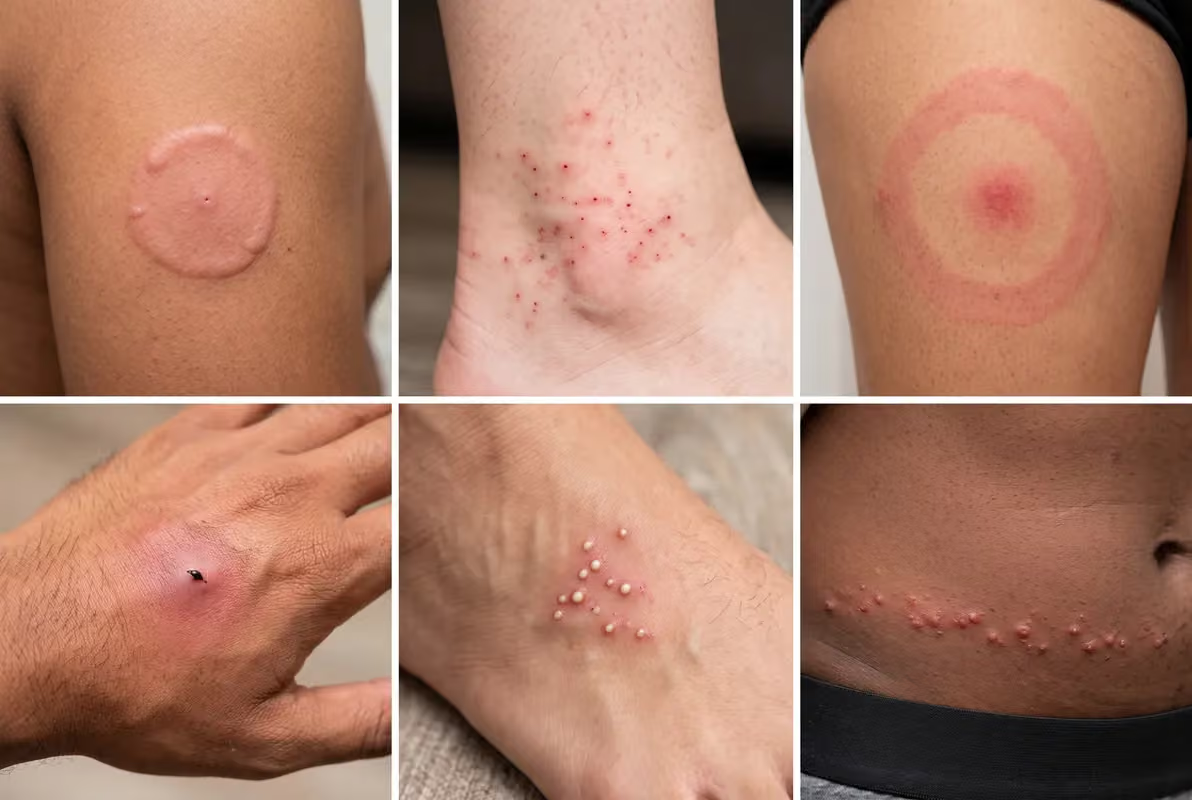
Each insect leaves a typical shape, size and spread on the skin, so a clear photo usually narrows it down. If you saw the bug itself, our Insect Identifier can name it from a photo.
Mosquito Bites
A mosquito bite is a round, puffy bump that appears within minutes and itches right away. It fades in a few days. Danger is Low, but in regions with dengue, malaria or West Nile virus, fever in the following two weeks needs a doctor.
Flea Bites
Flea bites show up as small red spots in tight groups, usually ringed by a red halo with a tiny dot at the center. They gather around the ankles and lower legs and itch at once. Most come from the cat flea (Ctenocephalides felis). Rated Low for danger.
Tick Bites and the Bullseye Rash
A tick bite is usually a small red bump, and the tick may still be attached. If a red ring spreads from the spot 3 to 30 days later, it can be the rash seen in about 70 to 80% of people with Lyme disease. Remove the tick with fine tweezers, pulling straight up, and see a doctor about any rash or fever.
Bee, Wasp and Hornet Stings
Identifying insect stings starts with pain: a sting hurts sharply at once, then swells into a red patch with a white center. A honey bee leaves its stinger behind, so scrape it out. Danger is Medium, and swelling of the face or throat is an emergency. See our guide to bee and wasp nests and stings.
Fire Ant Bites
Fire ants bite to hold on, then sting several times in a circle. The spots burn at once and turn into small white pustules within about a day. Do not pop them. This sting is rated Medium.
Chigger Bites
Chigger bites are very itchy red bumps where clothing presses on skin, such as the sock line, waistband and behind the knees. They come from tiny mite larvae (Trombiculidae). The itch starts a few hours later and can last up to two weeks. Risk to health is Low.
Biting Midges and No See Ums
Biting midges, often called no see ums, leave many tiny red spots close together with a burning itch. Bites happen near water or sand at dawn and dusk. The insects are only 1 to 3 mm (under 1/8 in) long, so most people never see them. Danger level: Low.
Can't match your bite to a picture?
Try our free Bug Bite Identifier. Upload a photo and get an instant answer with the likely bug, a Low to Emergency danger level and simple next steps.
Check My Bite →Bug Bites on Skin: Skin Tones, Babies and Children
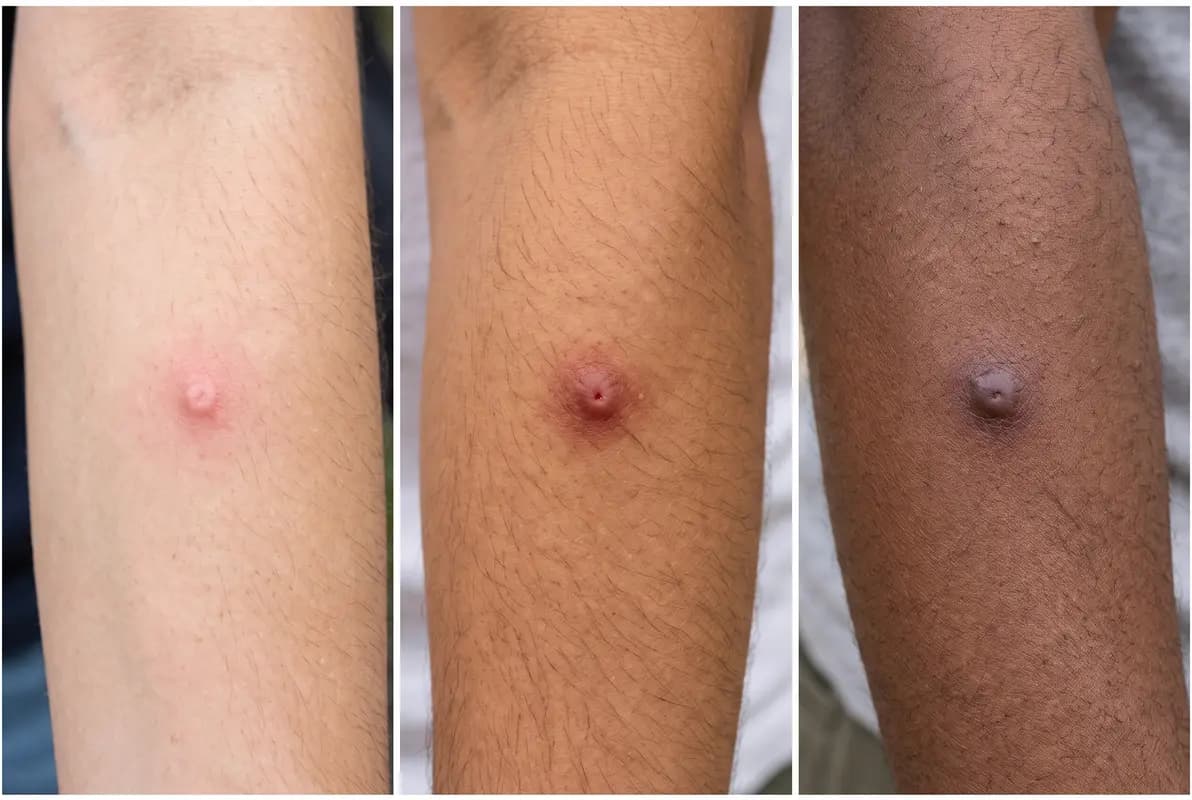
Bug bites on skin look different depending on skin tone and age, but the pattern and place stay the same, so use them before color.
Bug Bites on Different Skin Tones
On brown and black skin, bites can look purple, dark brown or grey instead of red. The NHS notes that a bite can be harder to see on darker skin but can still be felt as a raised, warm bump. After healing, a dark mark called hyperpigmentation may stay for weeks or months.
Bug Bites on Babies and Children
Children often swell more than adults. A large mosquito bite reaction on a toddler, called Skeeter syndrome, stays at the bite and is not an allergy emergency. Any bite on a baby under 1 year old should be checked by a doctor.
Bed Bug Bites: How to Identify Them
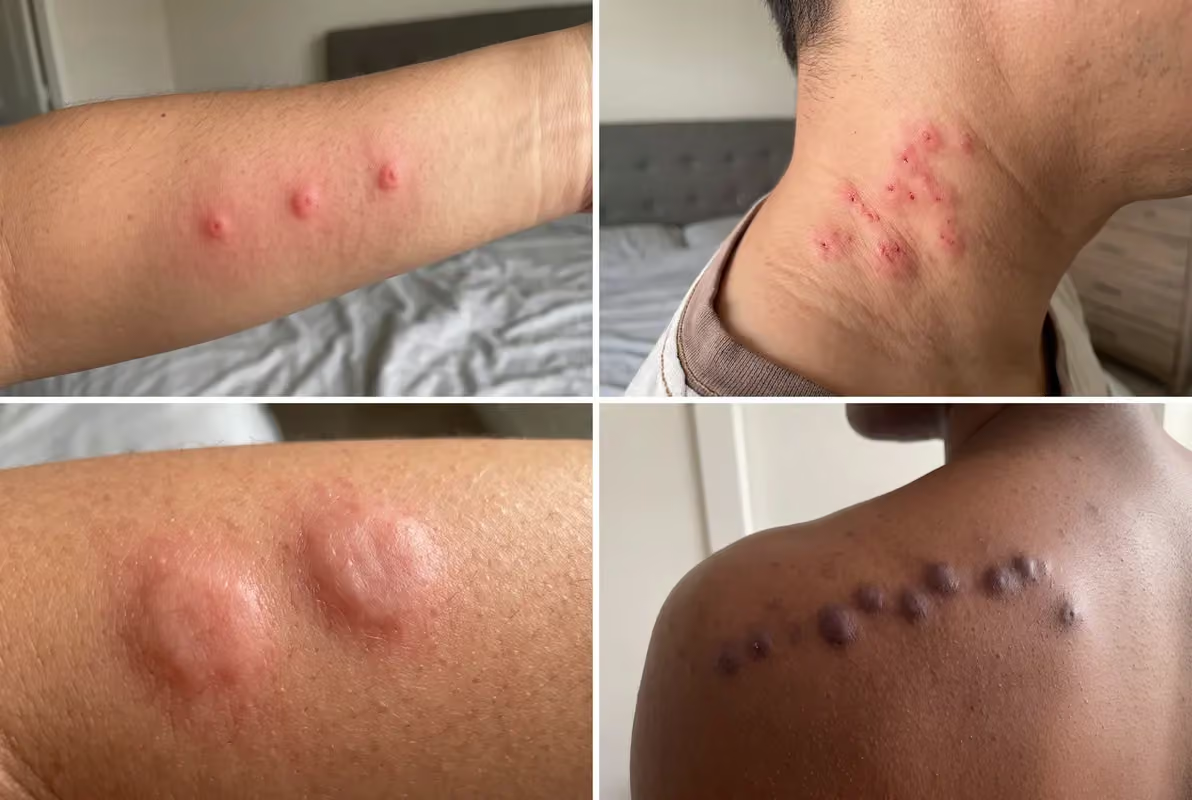
Bed bug bites are small, itchy red or dark welts in a line, zigzag or cluster on skin that was uncovered while you slept. The common bed bug (Cimex lectularius) feeds at night and injects a numbing agent, so the bite itself is painless. A bed bug bite looks a lot like other bites, so bites alone cannot prove an infestation. Our bed bug guide covers the bugs and how to remove them.
What Do Bed Bug Bites Look Like?
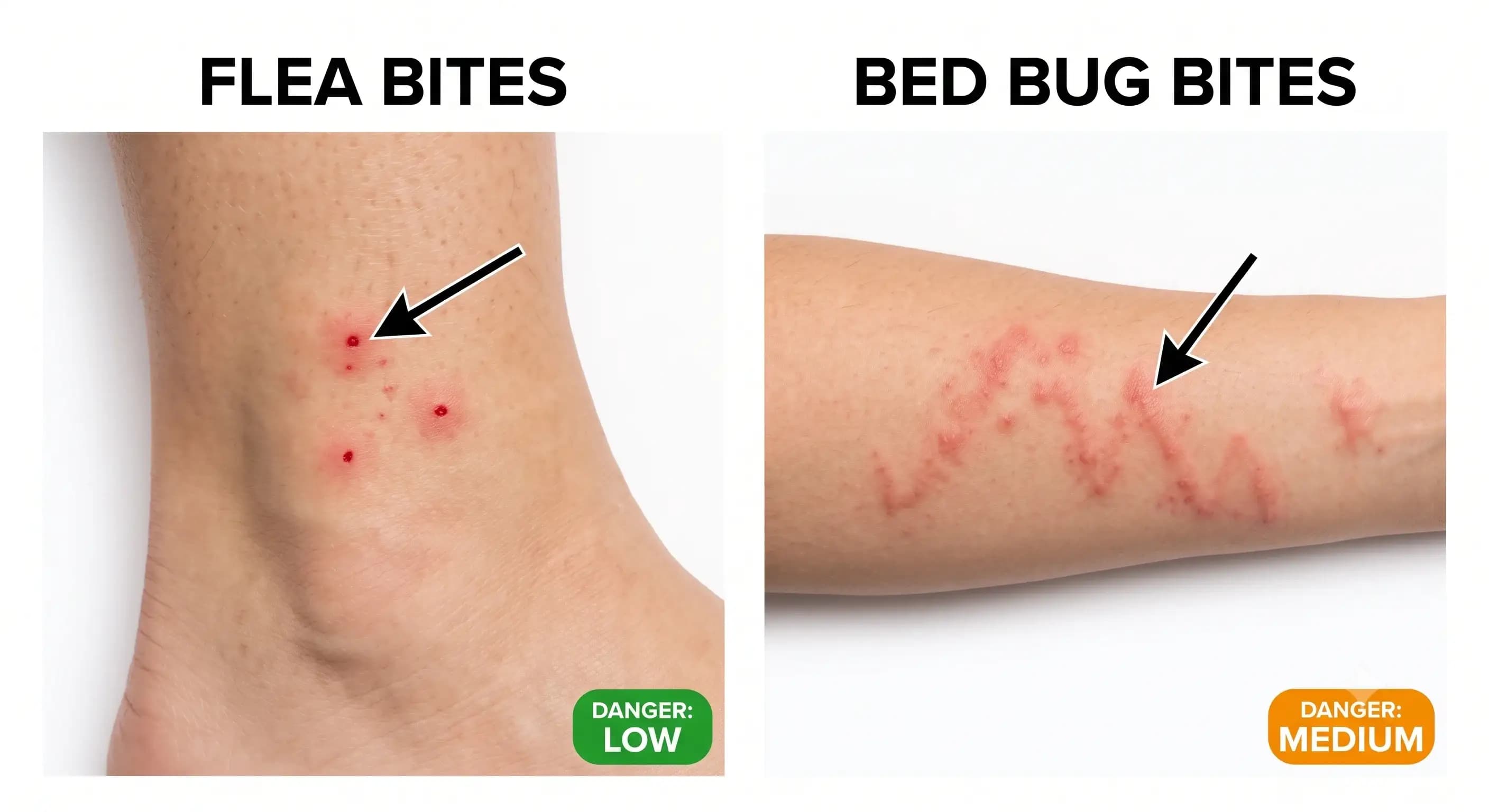
Bed bug bites look like raised red welts, often a few millimeters to about 1 cm (3/8 in) across, set in rows of 3 or more or in a tight zigzag. They appear on the face, neck, arms, hands and shoulders. Unlike flea bites, they have no clear dot in the middle.
Early Bed Bug Bites and Symptoms
Early bed bug bites often show nothing on day 1 or only faint pink spots. Bite marks can appear one to several days later, and in some people up to 14 days later, according to the CDC. Fresh bites itch most for a few days and fade over one to two weeks, and some people never react.
- •Do bed bug bites hurt? No. You will not feel the bite, but the welts can itch and burn later.
- •Can bed bugs bite through clothes? No. They bite bare skin, which is why bites gather on the neck, arms and hands.
Bed Bug Bites on Black Skin
Bed bug bites on black skin often look like small purple, dark brown or skin colored bumps rather than red ones. The line or cluster pattern is the same, and the itch is often the main sign. Dark marks can stay after healing.
Bed Bug Bites vs Flea and Mosquito Bites
The easiest way to tell a mosquito bite from a bed bug bite is timing and pattern: mosquito bites itch at once and appear alone, while bed bug bites show up hours or days later in rows.
| Feature | Bed bug bite | Flea bite | Mosquito bite |
|---|---|---|---|
| Pattern | Line, zigzag or cluster | Tight groups of 3 or 4 | Single, scattered |
| Location | Face, neck, arms, hands | Ankles and lower legs | Any bare skin |
| Center dot | No | Often yes | No |
| Itch starts | Hours to days later | Within minutes | Within minutes |
| When you get bitten | While asleep, indoors | Any time, near pets or carpet | Mostly dusk and night, often outdoors |
Found Bites? Confirm Bed Bugs Next
To confirm bed bugs, look for the bugs and their signs, not just bites. Check mattress seams, the bed frame and the headboard for tiny dark spots, pale shed skins and reddish brown bugs about 5 mm (3/16 in) long. See the signs of bed bugs and how to check your home for bugs.
Found a bug in your bed?
Try our free Bug Identifier. Upload a photo of the bug itself and get an instant ID with the species, its habitat and a harmless, caution or avoid safety rating.
Identify My Bug →Spider Bite Identification Chart: Is It Really a Spider Bite?
A true spider bite usually shows one red bump, sometimes with two tiny puncture marks, and mild swelling that settles within a few days. Many wounds blamed on spiders turn out to be skin infections or other insect bites. If you have a photo of it, try our Spider Identifier.
| Spider | Bite signs | Symptoms start | Danger level | What to do |
|---|---|---|---|---|
| Most house and garden spiders | Small red bump, mild pain or itch | At once | Low | Wash, cold compress, watch for infection |
| Wolf spider | Painful red bump with swelling | At once | Low | Home care, see a doctor if it spreads |
| Black widow (Latrodectus) | Two small marks, pain that spreads | Within about 1 hour | High to Emergency | Get medical care now |
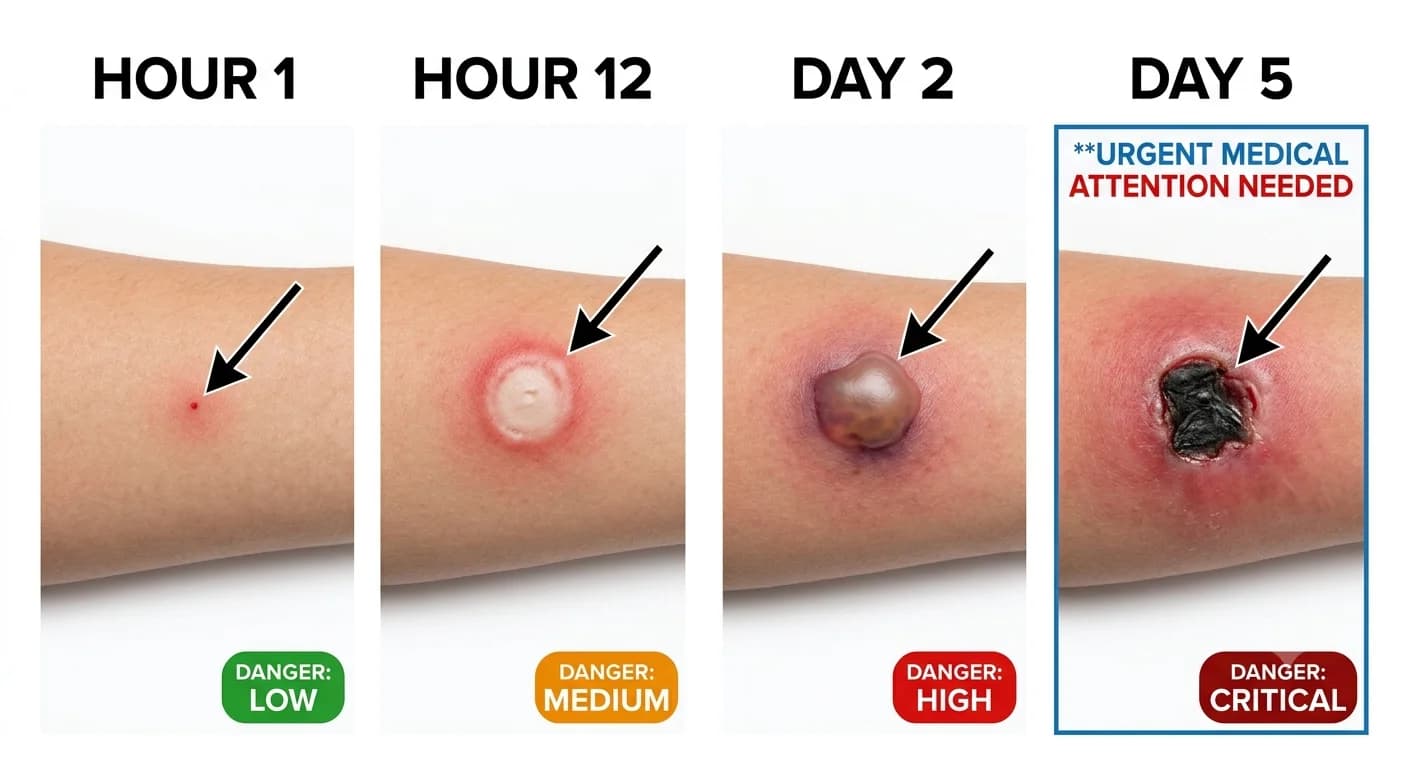
| Brown recluse (Loxosceles reclusa) | Mild sting, then a red ring with a pale or blue center | Hours | High | See a doctor within a day |
| Sydney funnel web (Atrax robustus), Australia | Severe pain, sweating, twitching | Minutes | Emergency | Pressure bandage, keep still, call 000 |
Black Widow Bite: Pain, Cramps and Numbness
A black widow bite causes pain that spreads from the bite to the belly, chest or back, often with muscle cramps, sweating and nausea. Some people feel numbness or tingling near the bite. Any suspected black widow bite with spreading symptoms needs emergency care.
Brown Recluse Bite: How It Changes Over Days
A brown recluse bite often starts as a mild sting or nothing at all. Within hours a red ring can form around a pale or bluish center, sometimes with a blister. In some cases the venom damages the skin and leaves an open sore. See a doctor early if the center darkens or the area keeps spreading.
Australia: a suspected Sydney funnel web bite is a medical emergency. Apply a firm pressure bandage, keep the person still and call 000.
Saw the spider that bit you?
Try our free Spider Identifier. Send a photo of the spider and see whether it is a harmless house spider or one that needs caution.
Identify My Spider →Bug Bite Symptoms: When a Bite Is Dangerous
Most bug bite symptoms are a small itchy bump that fades in days. A bite becomes dangerous when it causes an allergic reaction, gets infected or passes on a disease. Our results use this danger scale:
Low
A red, itchy bump that stays at the bite and settles in a few days.
Medium
Swelling that spreads past the bite or lasts more than 48 hours, or many stings at once.
High
Signs of infection, a rash or fever after a tick bite, or spreading pain after a spider bite.
Emergency
Signs of a severe allergic reaction (anaphylaxis).
First Aid for Mild Bug Bites and Stings
- ✓Move away from the insect, and scrape out any bee stinger with a card edge.
- ✓Wash the bite with soap and water.
- ✓Hold a cold compress on it for about 10 minutes to ease swelling.
- ✓For itch, an oral antihistamine or a mild hydrocortisone cream can help. Follow the product label.
- ✓Try not to scratch, since broken skin can get infected.
This information is for general education and is not medical advice.
Call 911, 999 or 112 now if you have:
- ⛔Swelling of the lips, tongue or throat
- ⛔Trouble breathing or swallowing
- ⛔A fast heartbeat with dizziness
- ⛔Fainting or confusion
- ⛔Hives spreading across the body after a sting
Use an epinephrine auto injector if you have one.
See a doctor within 24 hours if you have:
- ⚠️A red ring rash or fever after a tick bite
- ⚠️Redness, heat or swelling that keeps spreading
- ⚠️Pus or red streaks from the bite
- ⚠️Spreading pain or cramps after a spider bite
- ⚠️Many stings at once
- ⚠️Any bite on a baby under 1 year old
Saw the Bug That Bit You? Identify It Directly
If you saw the bug, identifying it gives a surer answer than the bite alone.
Bug Identifier
Names insects, spiders and household bugs from one photo, with a safety rating.
Identify the Bug →Spider Identifier
Tells harmless house spiders apart from black widows, brown recluses and other medically important species.
Identify the Spider →Insect Identifier
Identifies biting insects such as midges, sand flies, horse flies and fire ants.
Identify the Insect →Bug Bite Identifier FAQs
Still Wondering What Bit You?
Add a clear bite photo and get a danger level in seconds.
Drop a photo of your bite or sting mark
Clear, well-lit photos give the most accurate results
Supports JPG, PNG, WEBP, HEIC (iPhone) · Max 10MB · Free
Medical Disclaimer
This tool is for informational and educational purposes only and is not a substitute for professional medical advice, diagnosis or treatment. If you have severe symptoms such as trouble breathing, throat swelling, a racing heartbeat or fainting, call emergency services (911, 999 or 112) right away. Read our full medical notice.
Sources and References
- Centers for Disease Control and Prevention. Signs and Symptoms of Untreated Lyme Disease.
- Centers for Disease Control and Prevention. About Bed Bugs.
- University of California Statewide IPM Program. Bed Bugs: Pest Notes.
- NHS. Insect Bites and Stings.
- American Academy of Allergy, Asthma and Immunology. Stinging Insect Allergy.
- CDC National Institute for Occupational Safety and Health. Venomous Spiders at Work.
- Vetter RS, Isbister GK. Medical Aspects of Spider Bites. Annual Review of Entomology, 2008.
- Australian Museum. Sydney Funnel-web Spider.
- Ohio State University Extension. Chiggers.
- World Health Organization. Vector-borne Diseases.