Kissing Bug: Identification, Pictures and Size
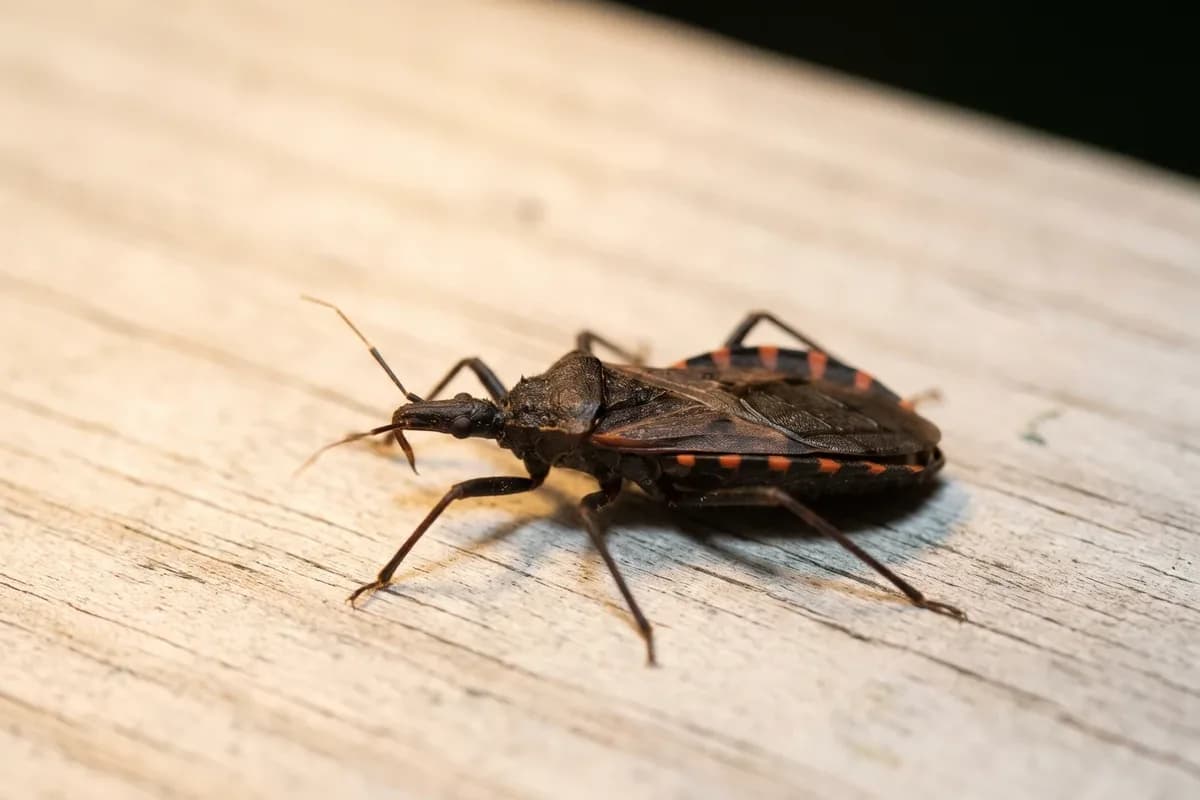
A kissing bug is a dark brown to black, blood feeding insect about 1/2 to 1 inch (1.3 to 2.5 cm) long, with a narrow cone shaped head, long thin legs and a band of orange or red stripes around the flat edge of its body. These insects belong to a group called triatomine bugs, also known as conenose bugs, and 11 kinds live in the United States. This guide shows how to recognise adults, nymphs and eggs, whether they fly, what signs they leave in a home and which insects look similar.
What Is a Kissing Bug?
It is a triatomine bug, a member of the assassin bug family (Reduviidae), that feeds on the blood of animals and people, usually at night.
- Other names: conenose bug, triatomine bug, kiss bug and, in Spanish, chinche besucona.
- How many kinds: Penn State Extension notes more than 150 species worldwide, with 11 in the United States, mostly in the Southwest.
- Most common in the East: the eastern conenose (Triatoma sanguisuga).
- Habits: Texas A&M AgriLife notes they are mostly active at night and are drawn to outdoor lights.
Why Is It Called That?
The nickname comes from its habit of biting sleeping people on the face, near the lips and eyes, where skin is exposed. The name describes where it bites, not anything gentle about it. The other name, conenose bug, comes from the long, pointed shape of its head.
How to Identify a Kissing Bug
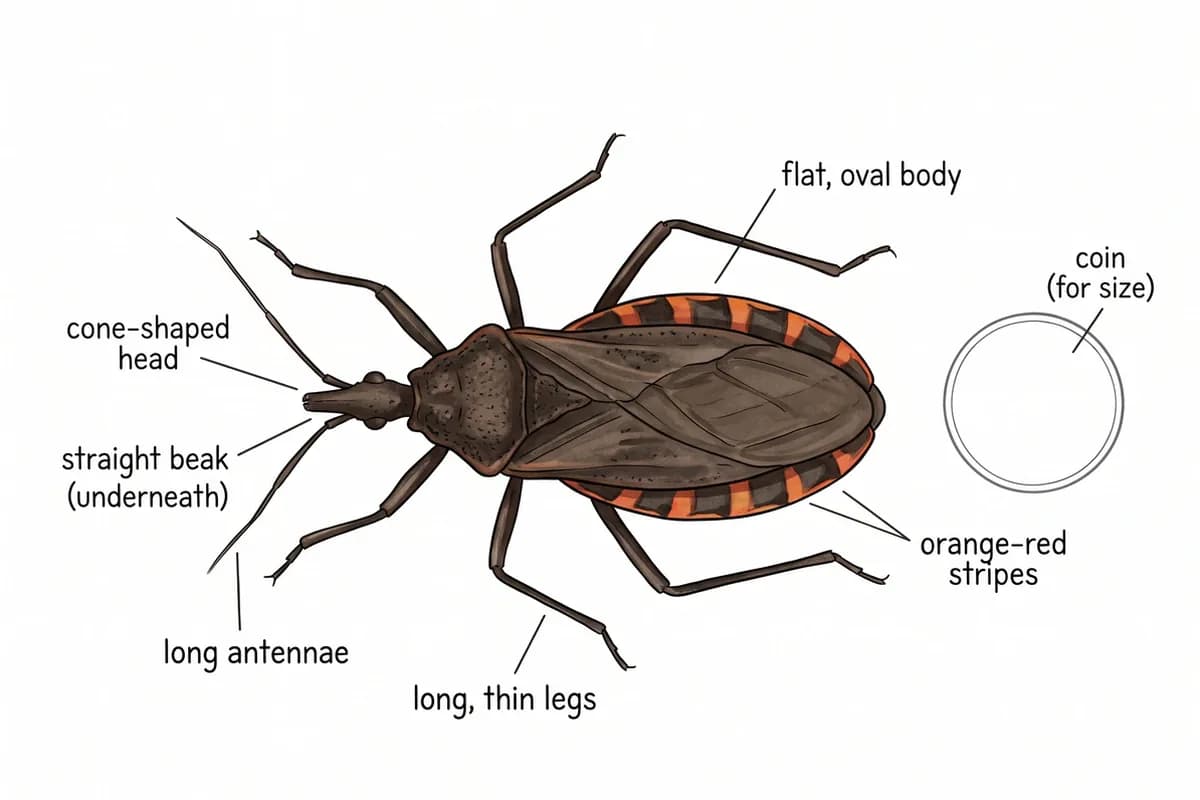
Look for four features together: a long, narrow, cone shaped head, long thin legs, a flat, oval body and a row of orange, red or yellow stripes along the edge of the abdomen.
- Head: narrow and stretched forward in front of the round eyes, like a cone.
- Beak: a straight, thin mouthpart tucked under the head when resting.
- Body colour: dark brown to black on top.
- Edge stripes: the University of Maryland notes the eastern species has six red orange stripes along each side of the abdomen.
- Antennae: long and thin, attached near the tip of the head.
- Underside: the belly is dark, often with paler markings along the sides.
Males and Females
Texas A&M AgriLife notes that males have a rounded rear end, while females have a pointed tip used for laying eggs. Both sexes look the same from above, so the rear end is the easiest place to check. Both males and females feed on blood.
How Big Are They? Size and Pictures
Adult triatomine bugs are about 1/2 to 1 inch (1.3 to 2.5 cm) long from the tip of the head to the end of the body, according to Texas A&M AgriLife. Penn State Extension notes the eastern conenose is about 16 to 21 mm (0.6 to 0.8 in).
For comparison, a large adult is about as long as a US quarter is wide (about 2.4 cm). Size alone does not identify one, because many harmless bugs are similar in size.
| Stage or feature | Size | What it looks like |
|---|---|---|
| Egg | Very small, oval | Pale oval eggs laid in hiding places |
| Young nymph | A few millimetres | Small, wingless, rounded, dark or reddish |
| Older nymph | Up to adult length | Larger, wingless, with wing pads starting to show |
| Adult (eastern conenose) | About 16 to 21 mm (0.6 to 0.8 in) | Dark with red orange edge stripes, wings folded flat |
| Adult (largest US kinds) | Up to about 2.5 cm (1 in) | Same shape, larger body |
Nymphs and Eggs
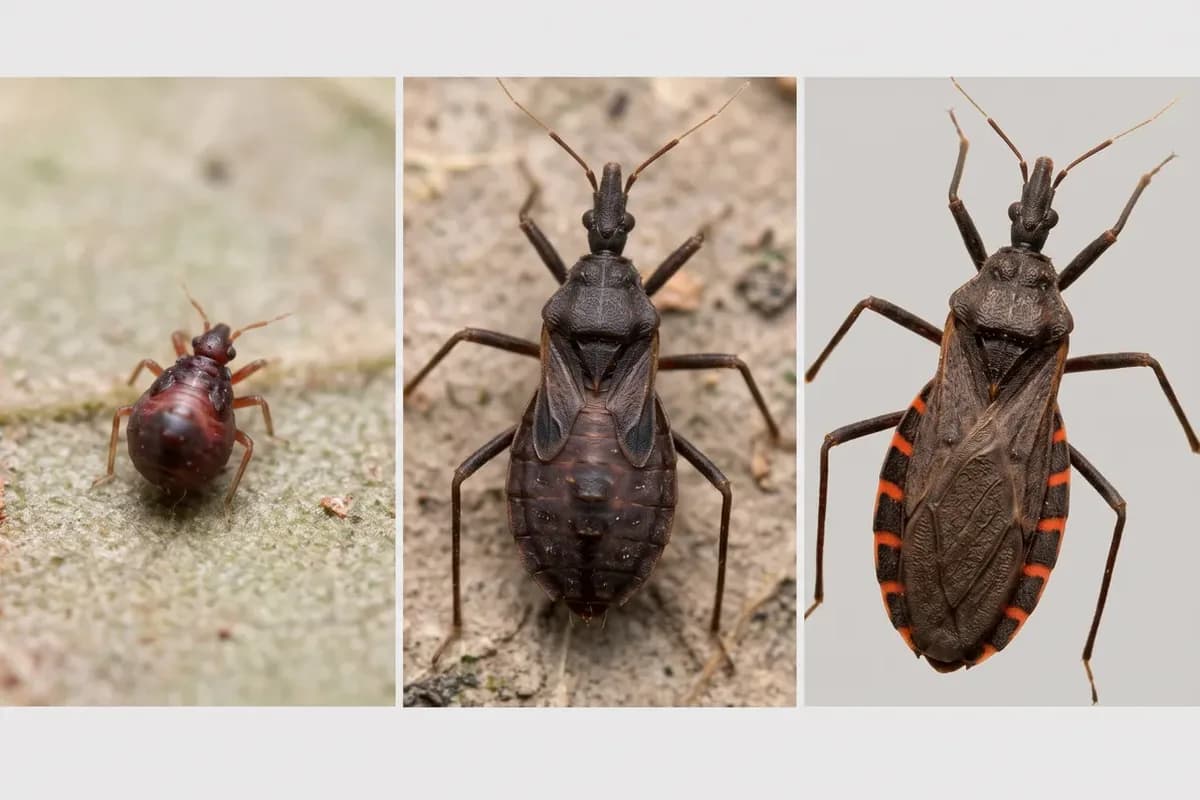
Baby conenose bugs, called nymphs, look like small, wingless adults. Texas A&M AgriLife notes they hatch from small oval eggs and pass through five nymph stages before becoming adults.
- Young nymphs: tiny, round and often reddish or dark, with no wings.
- Older nymphs: longer and darker, with the cone shaped head already visible and small wing pads.
- Feeding: nymphs also feed on blood, from the first stage onward.
- Life span: Texas A&M AgriLife notes that some kinds can live up to two years.
Shed skins left by growing nymphs in a pet bed, under furniture or near an animal nest can be a sign that these bugs are breeding nearby.
Can Kissing Bugs Fly?
Yes, adults can fly. Nymphs cannot, because they do not have full wings.
- Adults fly mostly at night and are drawn to porch lights and lit windows.
- Flying adults often enter homes through gaps around doors, windows and screens.
- When resting, the wings lie flat over the back, so the bug can look wingless at first glance.
- The edge stripes on the abdomen stay visible on both sides of the folded wings.
Seeing an adult near a light does not mean there is an indoor infestation. Finding nymphs or many adults indoors is more of a concern.
Droppings and Signs in the Home
The main signs are the bugs themselves, shed nymph skins and small dark droppings near where people or pets sleep.
- Where to look: cracks near beds, under mattresses, in pet beds and kennels, and in wall gaps.
- Outdoors: under porches, in woodpiles, rock piles and in rodent or other animal nests.
- Pets: Texas A&M AgriLife notes the bugs are attracted to the heat and smells of places with many dogs, such as kennels.
- Droppings: the parasite that causes Chagas disease is carried in their droppings, not their saliva, so never touch droppings or the bugs with bare hands.
If you find one, Texas A&M AgriLife advises using a glove or plastic bag to move it into a sealed container, freezing it and noting the date and place. Some labs and health departments accept bugs for testing.
How to Photograph a Bug for Identification
A clear photo is the fastest way to confirm what you found, whether you send it to an expert or use an ID tool.
- Keep the bug in a sealed clear container or bag. Do not hold it with bare hands.
- Take the photo in good daylight or under a bright lamp, without flash glare.
- Photograph the top view first, filling most of the frame with the bug.
- Add a side view that shows the shape of the head and the edge of the body.
- Place a coin or ruler beside it for size.
These views show the features experts use: the cone shaped head, the striped body edge and the leg shape. Keep the container sealed until the bug has been identified.
Where Do Triatomine Bugs Live?
They live across the Americas, from the southern half of the United States to South America. Texas A&M AgriLife notes they have been found in 29 US states, with the most species in Texas, New Mexico and Arizona.
- Eastern US: the eastern conenose is the main species, and Penn State Extension notes Pennsylvania is near the northern edge of its range.
- Latin America: many species live in Mexico, Central America and South America, including Triatoma infestans.
- Habitat: dry, sheltered places near animal hosts, such as nests, burrows, woodpiles and kennels.
- Indoors: they may hide in cracks near beds, behind furniture and in pet sleeping areas, close to the people and animals they feed on.
Bugs That Look Similar
Several insects look similar, but the cone shaped head and the striped body edge help tell them apart.
- Wheel bugs: large grey assassin bugs with a cog like crest on the back. Penn State Extension notes they bite painfully if handled.
- Masked hunters and black corsairs: dark assassin bugs without the red edge stripes.
- Leaf footed bugs: have flattened, leaf like expansions on the hind legs.
- Boxelder bugs: the University of Maryland notes their red markings run along the wing edges, not the abdomen.
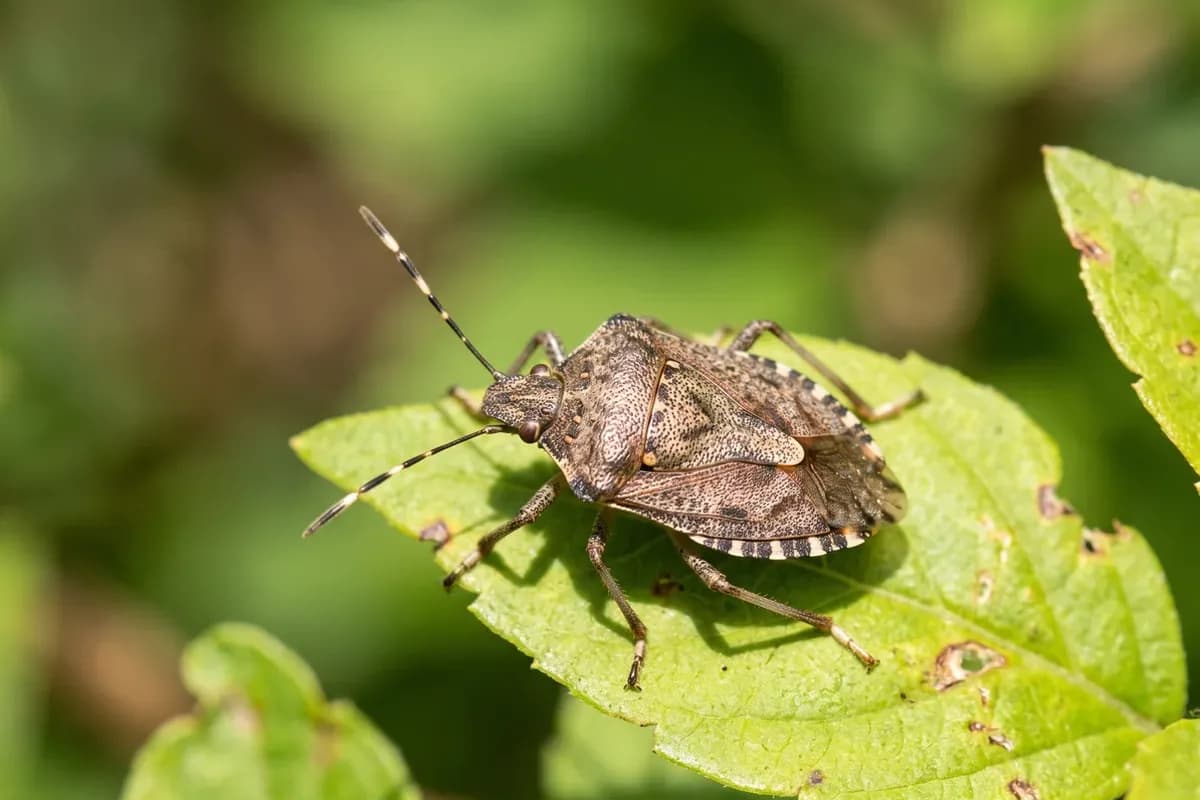
Stink bugs are also mistaken for them, but they are wide and shield shaped with a short, rounded head. See our guide to the stink bug. You can also check a photo with the Bug Identifier, which compares your picture with common lookalikes.
Are Triatomine Bugs Dangerous?
Triatomine bugs can carry the parasite that causes Chagas disease, but the risk for most people in the United States is low. Penn State Extension notes that the risk of Chagas disease for most Americans is small.
- The parasite spreads through the droppings, not the bite itself.
- Most bites are painless and cause a small red, itchy bump.
- The CDC notes Chagas is mainly spread in rural areas of Mexico, Central America and South America.
For bite pictures, symptoms and when to see a doctor, see our Bug Bite Identifier. This information is for general education and is not medical advice.
How to Keep Them Out
- Seal cracks and gaps around doors, windows, roofs and pipes.
- Repair window screens and add door sweeps.
- Move woodpiles, rock piles and brush away from the house.
- Keep pets indoors at night and clean pet beds often.
- Reduce outdoor lights near doors, or use yellow bulbs, which attract fewer insects.
Think you found a kissing bug? Do not handle it with bare hands. Seal it in a container and upload a photo to the free ScanaBug Bug Identifier for an instant ID with a safety rating.