Spotted Lanternfly: Identification and Map
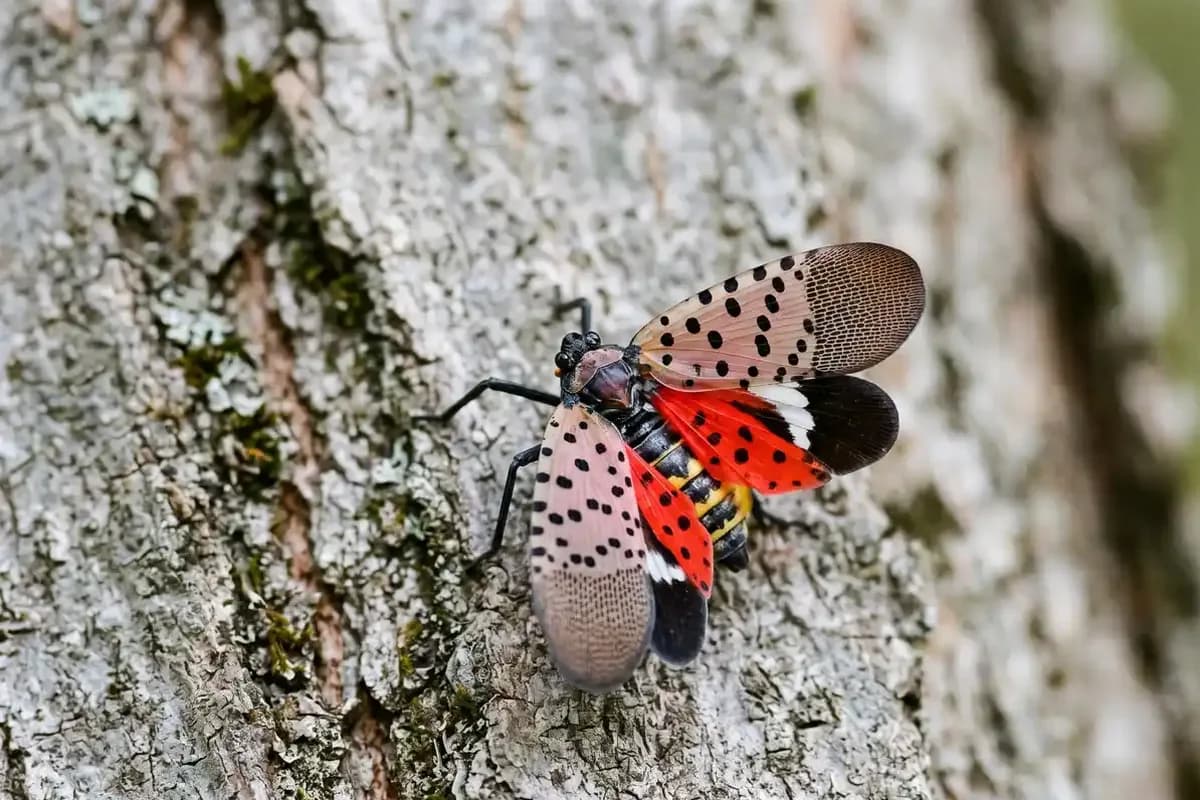
A spotted lanternfly is an invasive planthopper about 1 inch (2.5 cm) long with greyish brown forewings covered in black spots and bright red hind wings with black spots and a white band, which flash when it jumps or flies. Its scientific name is Lycorma delicatula. It is native to Asia and was first found in the United States in Pennsylvania in 2014, and it has since spread to many other states. This guide shows how to identify adults, nymphs and egg masses, where it has spread, which insects look similar and what to do if you find one.
What Is a Lanternfly?
A lanternfly is a planthopper, a sap sucking insect related to cicadas and leafhoppers. Despite the name, it is not a true fly and not a moth.
- Scientific name: Lycorma delicatula.
- Other names: lantern fly, lantern bug, Chinese lantern fly and spotted lantern bug. Some people call it a lantern moth because of its colourful wings.
- Where it came from: the USDA notes it is native to Asia and likely arrived in the United States on goods shipped from overseas.
- What it eats: plant sap. The USDA notes it feeds on more than 70 kinds of plants, including grapevines, hops, fruit trees and hardwood trees.
Penn State Extension notes that it does not bite or sting people. The harm it causes is to plants, not to people or pets.
How to Identify Adult Spotted Lanternflies
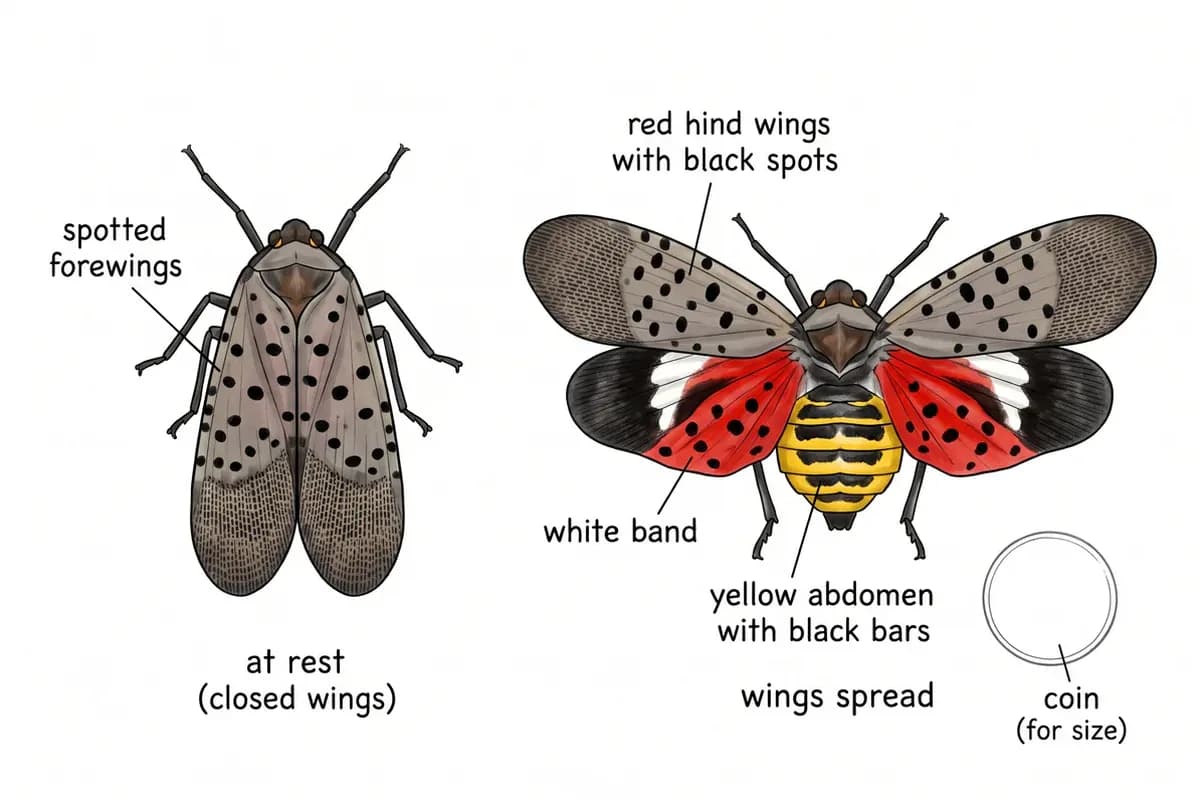
Adults are about 1 inch (2.5 cm) long and 1/2 inch (1.3 cm) wide, with spotted forewings that hide bright red hind wings at rest.
- Forewings: the USDA describes them as brown with black spots at the front and a speckled band at the rear.
- Hind wings: scarlet red with black spots at the front and white and black bars at the rear. They show when the insect opens its wings.
- Abdomen: yellow with black bars.
- Head and legs: black.
- Behaviour: adults jump more than they fly and often gather in groups on tree trunks.
At rest, an adult looks like a greyish, spotted wedge on the bark. When it jumps or is disturbed, the red flash of the hind wings is the clearest clue. People sometimes search for a red lantern fly or red spotted lanternfly because of this colour.
Nymphs and Egg Masses
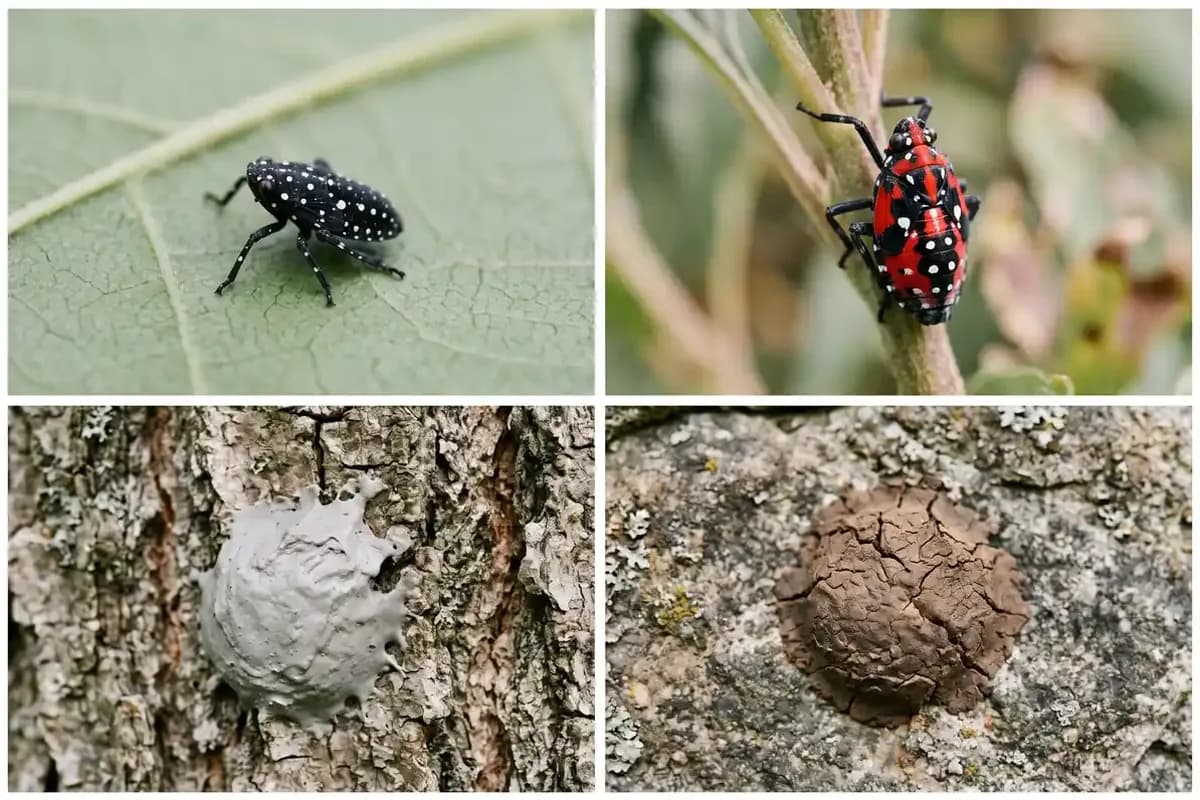
Young lanternflies, called nymphs, are wingless and change colour as they grow, and the eggs are laid in grey, putty like masses.
- Early nymphs: small, black with white spots.
- Late nymphs: larger and bright red with black and white markings before they become adults.
- Egg masses: the USDA notes each holds about 30 to 50 eggs and is about 1 inch (2.5 cm) long. New masses look like wet grey putty, then turn dull brown.
- Where eggs are laid: smooth surfaces such as tree bark, bricks, stones, fences, grills and vehicles, from autumn through spring.
Because egg masses are laid on outdoor items and vehicles, people can move the insect to new areas without knowing it.
Where Has the Lanternfly Spread?
The USDA reports that 19 states and the District of Columbia have some level of infestation, and the insect continues to spread.
- First found: Pennsylvania, 2014.
- How it spreads: by hitching rides on vehicles, outdoor equipment, firewood, stone and other goods, often as egg masses.
- Quarantine areas: Penn State Extension notes that all infested Pennsylvania counties are under state quarantine. Other states have their own rules for moving goods.
- Official maps: the USDA and state agriculture departments publish current maps of where the insect has been found.
Because the spread changes each year, check your state department of agriculture for the latest spotted lanternfly map and local rules.
Where to Look for Lanternflies
The best places to look are tree trunks, grapevines and the tree of heaven, the favourite host plant.
- Tree of heaven (Ailanthus altissima): the USDA calls it the preferred host and one of the best places to look. Its leaves are 1 to 4 feet (30 to 120 cm) long with many leaflets.
- Other hosts: maples, black walnut, grapevines and fruit trees.
- Sticky honeydew: the insects release a sugary liquid that coats leaves and surfaces below them and grows black sooty mould.
- Season: nymphs appear in spring and summer, adults in late summer and autumn, and egg masses in autumn through spring.
Lanternflies Around the Home
Around homes, lanternflies are mostly a nuisance: they gather in large numbers, jump onto people and leave sticky honeydew on surfaces.
- Decks and patios: honeydew dripping from trees above makes surfaces sticky, and black sooty mould grows on it.
- Cars and outdoor furniture: sticky spots and mould under infested trees, and adults or egg masses on parked cars.
- Walls and fences: adults gather on sunny walls and fences in late summer and autumn, much like the stink bug does before winter.
- Gardens: grapevines, maples and young trees can be weakened by heavy feeding.
Washing sticky surfaces with soapy water removes honeydew. Removing tree of heaven from a property reduces the favourite host. For walls covered in autumn invaders, compare it with the stink bug.
Lanternfly vs Lookalikes
Several moths and other insects are mistaken for adult lanternflies, but none has the same mix of spotted greyish forewings and red, black and white hind wings on a planthopper body.
| Insect | How it differs |
|---|---|
| Tiger moths | Furry body, often bold stripes or spots, rest with wings flat or tented, active at night |
| Giant leopard moth | White wings with black rings, much larger, fuzzy body |
| Bella moth | Pink or orange wings with white and black spots, slim moth body |
| Buck moth | Dark wings with a white band, hairy body, flies in autumn |
| Oak treehopper | Much smaller, with a raised horn on the back |
| Spotted lanternfly | Spotted grey brown forewings, red hind wings, yellow and black abdomen, jumps |
Virginia Tech Extension lists tiger moths, the bella moth, the hairy buck moth, the giant leopard moth and the oak treehopper among possible lookalikes. If you are unsure, the Bug Identifier can compare your photo with common insects.
Why Are Lanternflies Bad?
They are a problem because they weaken and can kill plants, especially grapevines and young trees, and their honeydew causes black mould.
- Feeding damage: large groups suck sap from trunks and branches. Penn State Extension notes they have killed grapevines, tree of heaven and black walnut saplings.
- Sooty mould: honeydew on leaves, decks, cars and outdoor furniture grows black mould.
- Farm and vineyard losses: vineyards and orchards are hit hardest.
- Not a threat to people: Penn State Extension notes they do not bite or sting.
For other sap sucking garden pests, see our garden insect guide.
What to Do If You Find One
In most areas, officials ask people to report sightings and destroy the insects and egg masses safely.
- Take a photo and note the location.
- Report it to your state department of agriculture or plant health office, especially in a new area. The USDA lists state contacts.
- Destroy egg masses: the USDA advises smashing them, or scraping them into a zip bag with hand sanitiser or rubbing alcohol, sealing it and throwing it away.
- Check before you travel: inspect vehicles, trailers and outdoor items before leaving infested areas, and close car windows when parked.
Not sure the spotted bug on your tree is a lanternfly? Upload a clear photo to the free ScanaBug Bug Identifier for an instant ID before you report or destroy it.