What Is a Palmetto Bug? Size, Flight and Eggs
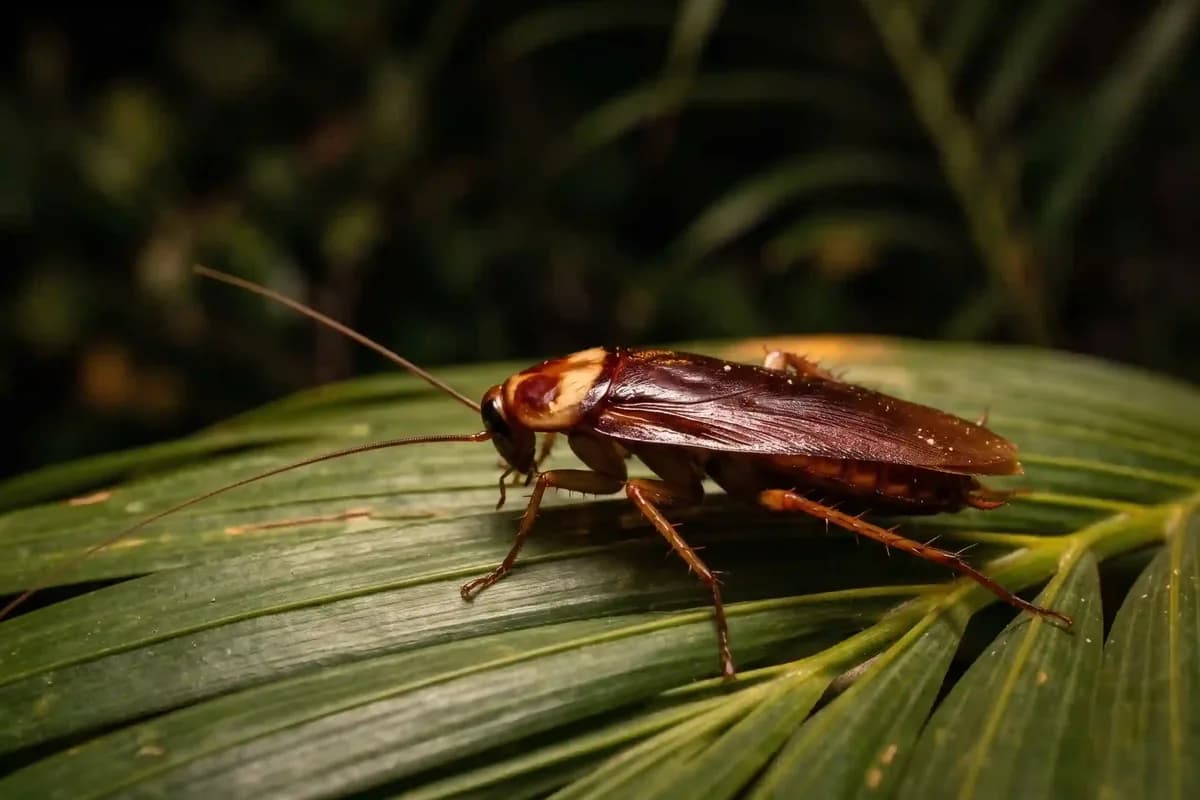
A palmetto bug is a large cockroach, a Southern nickname used mainly for the American cockroach and the Florida woods cockroach. These roaches are reddish brown to almost black and about 1 1/8 to 2 inches (3 to 5 cm) long, and they often live outdoors under palms, mulch and leaf litter before wandering inside. This guide explains which species carry the name, how big they get, whether they fly and what their eggs, babies and droppings look like.
Which Roaches Get This Name?
The name is not one species. It is a local nickname, heard most in the Southeast, for a few large roaches that live outdoors.
- American cockroach (Periplaneta americana): Texas A&M AgriLife notes this roach is also known as the waterbug or the palmetto bug. It is the large, reddish brown, winged one.
- Florida woods cockroach (Eurycotis floridana): the University of Florida lists it as one of the species commonly called palmetto bugs. It is dark and has only short wing pads.
- Other large outdoor roaches: the smokybrown cockroach, which lives mostly outdoors in the humid South, may also get the name.
So yes, it is a cockroach. In the Northeast and Midwest, people often call the same American cockroach a water bug instead. See our water bug guide for that name and the true aquatic insects that share it.
How to Identify One
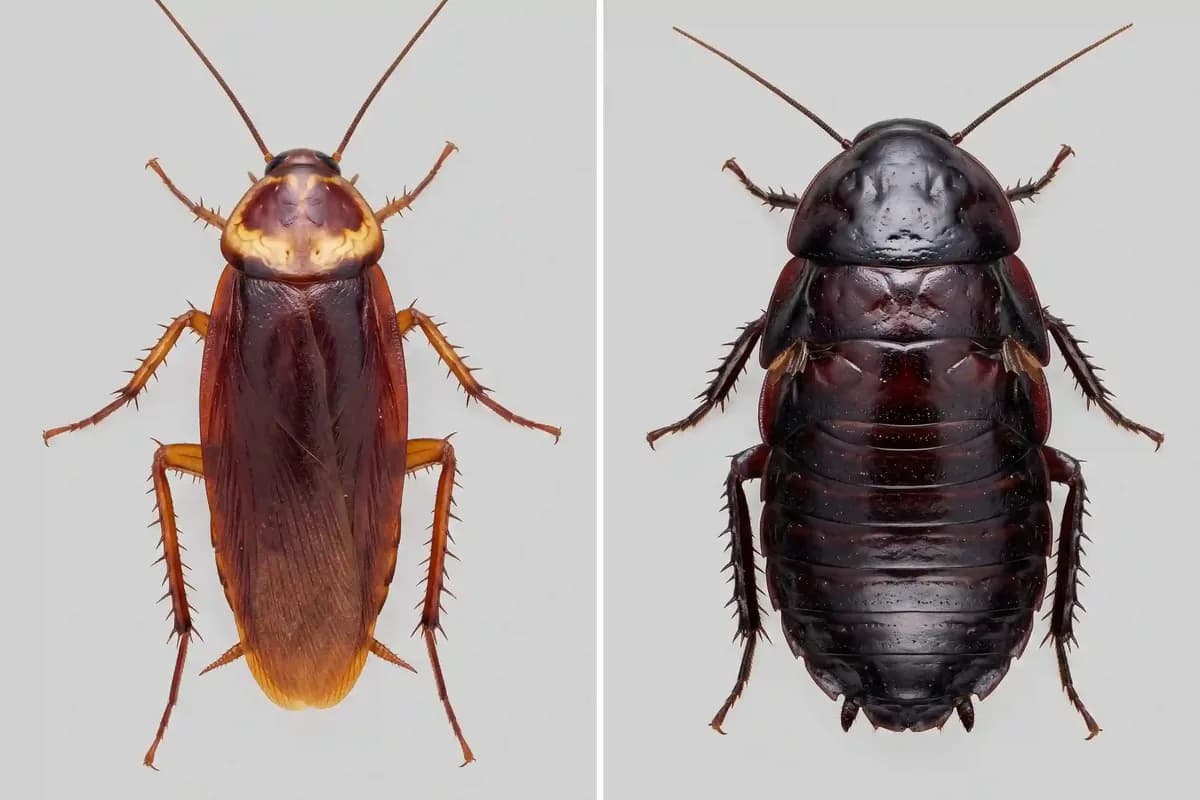
Most are big, flat, oval roaches with long antennae and spiny legs, and the colour and wings tell you which kind you have. Sizes are from Penn State Extension, the University of California and the University of Florida.
| Feature | American cockroach | Florida woods cockroach |
|---|---|---|
| Size | About 1 1/2 in (3.8 cm), up to about 2 in (5 cm) | 30 to 40 mm (1 1/8 to 1 9/16 in) |
| Colour | Reddish brown, pale yellow edges on the shield | Dark reddish brown to black |
| Wings | Full wings that cover the body | Short wing pads only |
| Can it fly? | Yes, both sexes are winged | No |
| Defence | Runs and hides | Releases a foul smelling fluid when disturbed |
| Range | Worldwide, common in the South | Florida and the coasts of AL, GA and MS |
How Big Do They Get?
Adults are usually about 1 1/2 inches (3.8 cm) long, and the largest American cockroaches reach about 2 inches (5 cm).
- American cockroach: Penn State Extension notes adults are about 1 1/2 inches (3.8 cm) long and the largest common roach in the region. The University of California notes they can reach about 2 inches (5 cm).
- Florida woods cockroach: the University of Florida notes adults are 30 to 40 mm (about 1 1/8 to 1 9/16 inches) long, with a broad, heavy body.
- The size of a hand? No. That is a common exaggeration. Long antennae and legs make them look bigger, but the body is only a couple of inches at most.
A roach that seems huge is almost always one of these species. Small brown roaches running around a kitchen are usually German cockroaches, a different and more serious indoor pest.
Do Palmetto Bugs Fly?
The American cockroach can fly and the Florida woods cockroach cannot.
- American cockroach: Penn State Extension notes both sexes are fully winged and can fly, though they rarely do in cooler northern areas.
- Florida woods cockroach: the University of Florida notes adults have only short wing pads and cannot fly. They rely on their smelly fluid for defence.
- Toward lights: a roach that flies at you at night is usually just heading for a light or escaping.
If the roach you found has wings covering its whole body, it can probably fly. If its back looks shiny and bare with small wing pads, it cannot.
Eggs, Babies and Lifespan
Females lay eggs inside a hard, brown capsule called an egg case and usually drop or glue it near food and shelter.
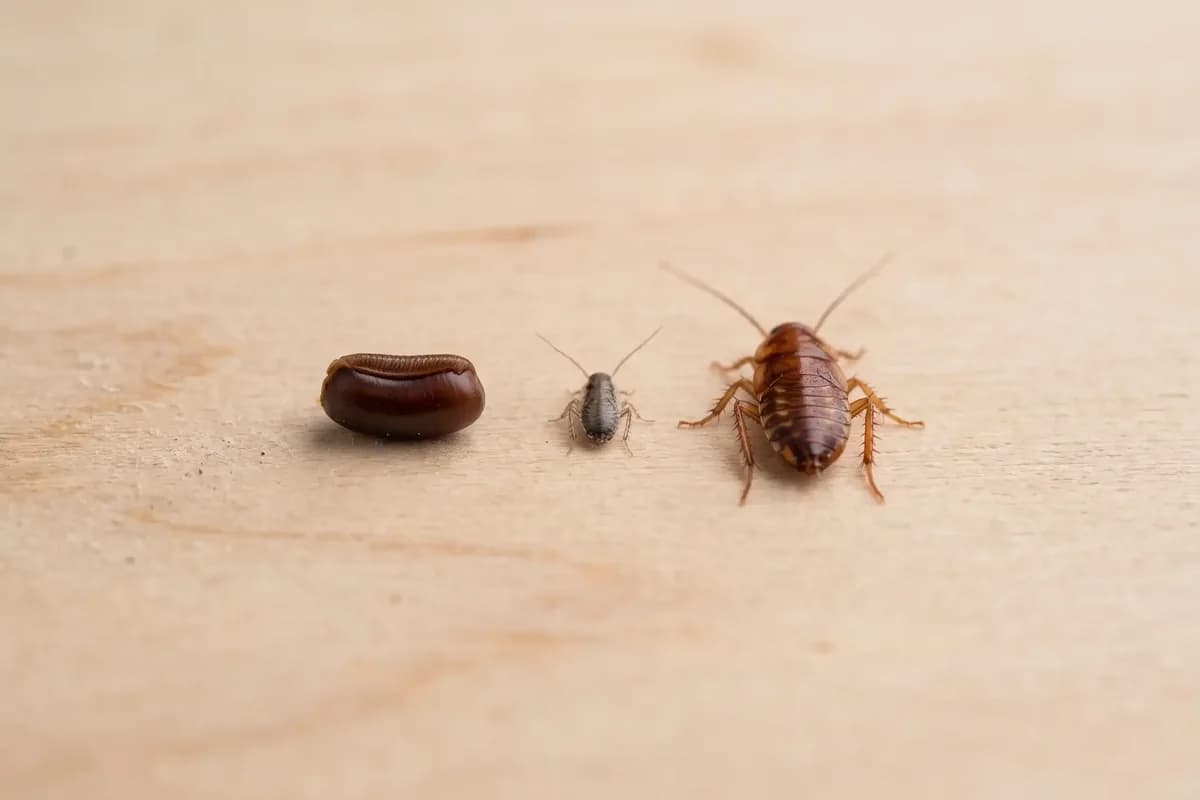
- American cockroach egg case: Penn State Extension notes it is dark brown, about 5/16 inch (8 mm) long and holds 14 to 16 eggs.
- Florida woods cockroach egg case: the University of Florida notes each one holds 20 to 24 eggs, and egg to adult takes about 150 days.
- Babies (nymphs): they look like small, wingless adults. Young American cockroach nymphs are greyish brown and turn reddish brown after a few molts.
- Lifespan: Penn State Extension notes an adult female American cockroach can live up to 15 months in good conditions.
Finding egg cases or several sizes of nymphs together means roaches are breeding nearby, not just visiting.
What Do Their Droppings Look Like?
Their poop looks like tiny, dark, cylinder shaped pellets, a bit like ground black pepper or coffee grounds.
- Where to look: along baseboards, under sinks, in cabinets, behind appliances and in dark corners.
- Size: the pellets are small and get larger as the roach grows.
- Smears: in damp spots, droppings can leave dark smudges.
- Why it matters: Penn State Extension notes their droppings and cast skins contain allergens that can trigger allergies and asthma in some people.
Clean droppings with a damp paper towel or a vacuum with a good filter rather than dry sweeping, which stirs up dust.
Insects Mistaken for These Roaches
A few large brown insects get called by this nickname by mistake, and the antennae and wing covers usually settle it.
- June beetles: stout and rounded, with short antennae ending in a small club and hard wing covers. Roaches have long, thread like antennae and a flat body.
- Giant water bugs: flat, brown aquatic insects with thick grasping front legs and a short beak. They live in ponds, not drains.
- Ground beetles: dark and shiny with hard wing covers, and they hunt other insects outdoors.
A June bug is a common beetle mixup. See our June bug guide. How these Southern roaches compare with the German and Oriental cockroach is covered in the water bug guide.
Why Are They in My House?
They come inside looking for water, food and shelter, especially after heavy rain or during hot, dry weather.
- Moisture: Penn State Extension notes American cockroaches favour dark, warm, damp places such as basements, crawl spaces, floor drains and sewers.
- Outdoor shelter: the University of Florida notes the Florida woods cockroach lives around homes in sheds, greenhouses and covers for water pumps.
- Gaps: they slip in under doors, around pipes and through vents.
One or two roaches that wandered in from outside are common in the South. Seeing them often, in daylight or in many sizes, suggests they are living indoors.
How to Keep Them Out
- Fix leaks and dry out damp areas under sinks and in crawl spaces.
- Seal gaps around pipes, doors and vents, and fit door sweeps.
- Keep mulch, firewood and leaf litter away from the walls.
- Store food in sealed containers and take out trash often.
- Use gel or station baits where you see activity. The University of Kentucky advises against foggers, which scatter roaches rather than kill them.
To confirm what you are dealing with before buying products, the Bug Identifier can name the roach from a photo, or try the Insect Identifier for other insect groups.
Frequently Asked Questions
Sources and References
- Penn State Extension. American Cockroaches.
- University of Florida IFAS. Florida Woods Cockroach, Eurycotis floridana. EDIS EENY514.
- Texas A&M AgriLife Extension. Cockroach Biology and Management.
- University of California Statewide IPM Program. Cockroaches.
- University of Kentucky Entomology. Cockroach Elimination in Homes and Apartments.