What Are These Tiny Red Bugs? Clover Mites and More
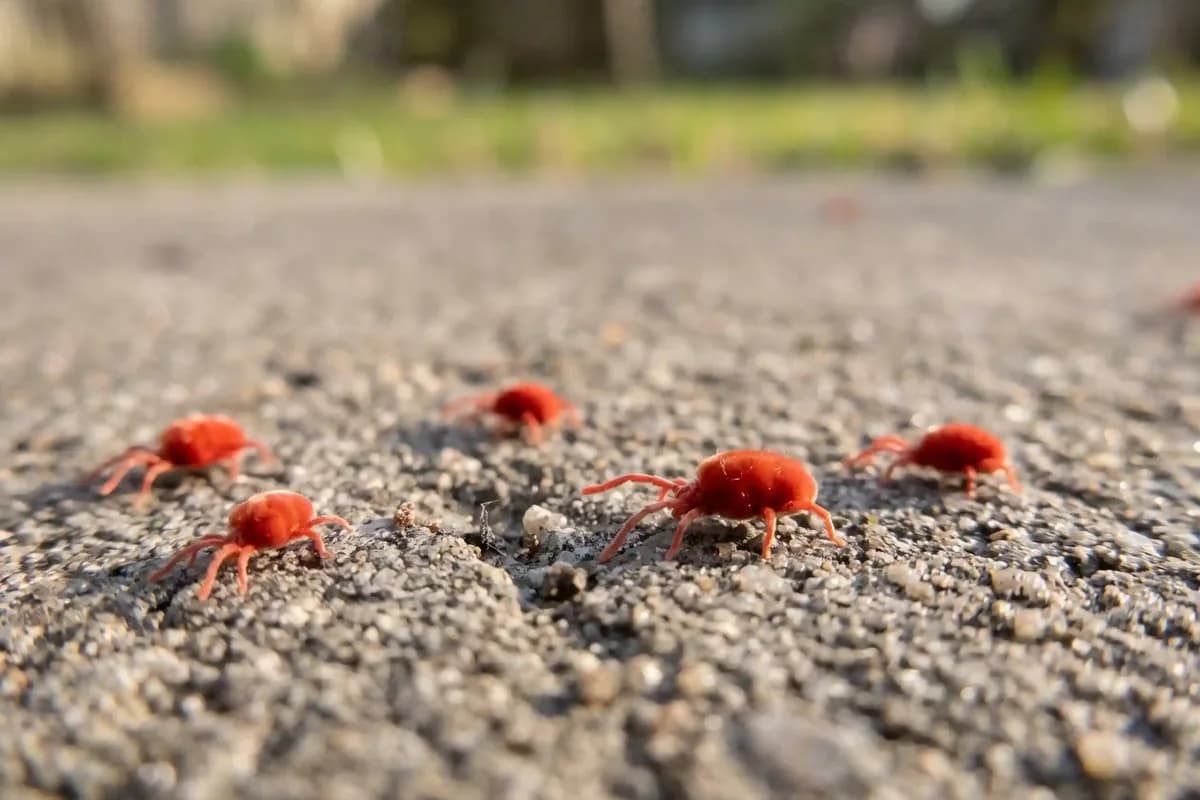
Tiny red bugs crawling on concrete, brick or window sills are most often clover mites, harmless plant feeding mites about the size of a period at the end of a sentence. Other common red specks are red velvet mites, chiggers and spider mites, and slightly larger red bugs on plants are often the young of boxelder bugs and their relatives. This guide shows how to tell them apart and which ones bite or damage plants.
Quick Guide to Small Red Bugs
Where you find them and how big they are usually tells you what they are. Mites have eight legs and are relatives of spiders, while the larger red and black bugs are insects with six legs.
| What you see | Likely culprit | Size | Bites? |
|---|---|---|---|
| Red dots on sunny concrete, walls or sills | Clover mites | Size of a period | No |
| Larger, plump, velvety red mites on soil in spring | Red velvet mites | Easy to see crawling | No |
| Itchy bumps after time in grass, bugs barely visible | Chiggers | Too small to see easily | Yes |
| Speckled, pale leaves with fine webbing | Spider mites | About 1/50 in (0.5 mm) | No |
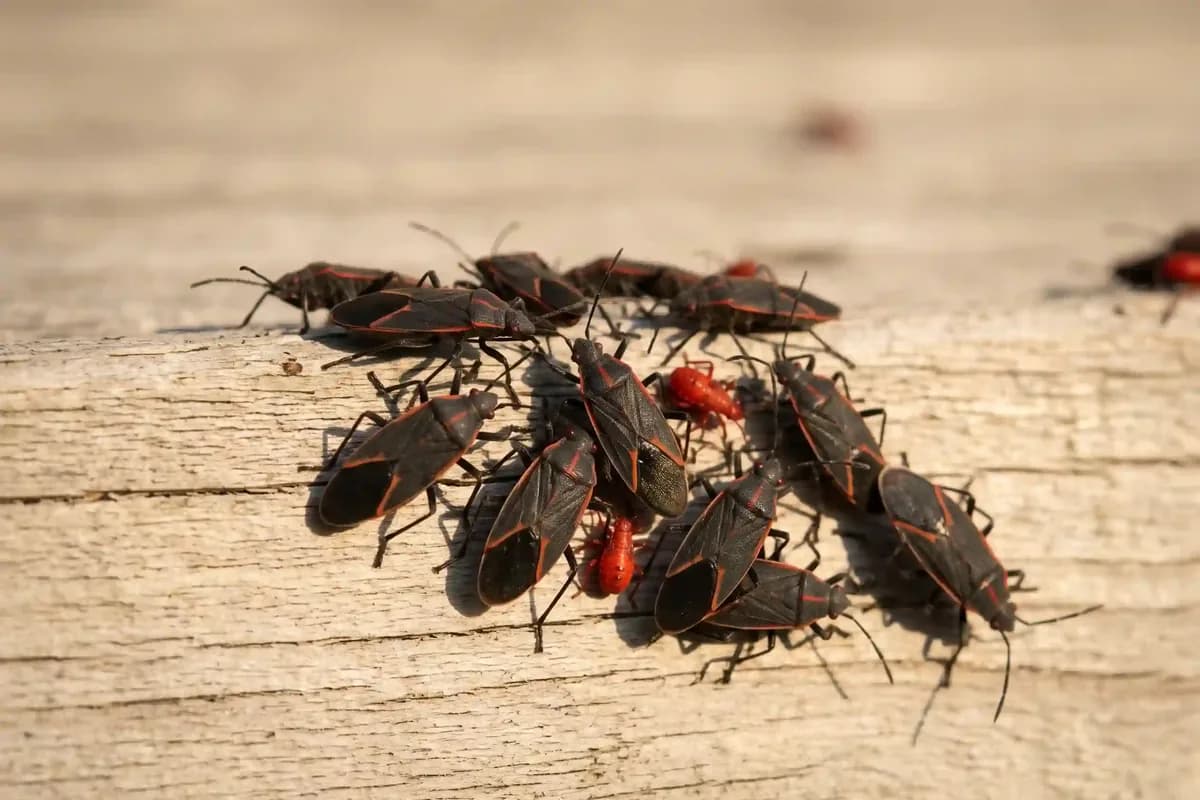
| Red and black bugs in groups on plants or siding | Boxelder nymphs, red shouldered bugs or firebugs | 1/4 to 1/2 in (6 to 13 mm) | No |
Tiny Red Bugs on Concrete: Clover Mites
Red specks on a sunny patio, sidewalk or foundation are almost always clover mites (Bryobia praetiosa), which feed on grass and clover nearby.
- Size: Utah State University notes they are about the size of a period.
- Colour: red, green or blackish, often with red or orange legs or markings.
- Long front legs: Utah State University notes the front pair of legs is extra long, a handy clue under a magnifier.
- Where: Colorado State University notes they gather on the south and west sides of buildings, the warm, sunny walls.
- When: cool months. Colorado State University notes they enter buildings from about October through early May.
- Red streaks: crushing them leaves red marks on walls, curtains and carpet.
They do not bite, spread disease or feed on houseplants or furniture. They are a nuisance, mainly because of the stains.
Tiny Red Bugs Inside the House
Small red specks on window sills, curtains and walls near sunny windows are usually clover mites that crawled in through tiny gaps.
- Do not crush them: vacuum them up instead to avoid red stains.
- Wipe gently: a damp cloth picks them up without smearing.
- Block entry: Utah State University suggests a sticky tape barrier on sills.
- Seal gaps: caulk around windows and the foundation.
They cannot feed on anything indoors, so stopping new ones from getting in is the main fix.
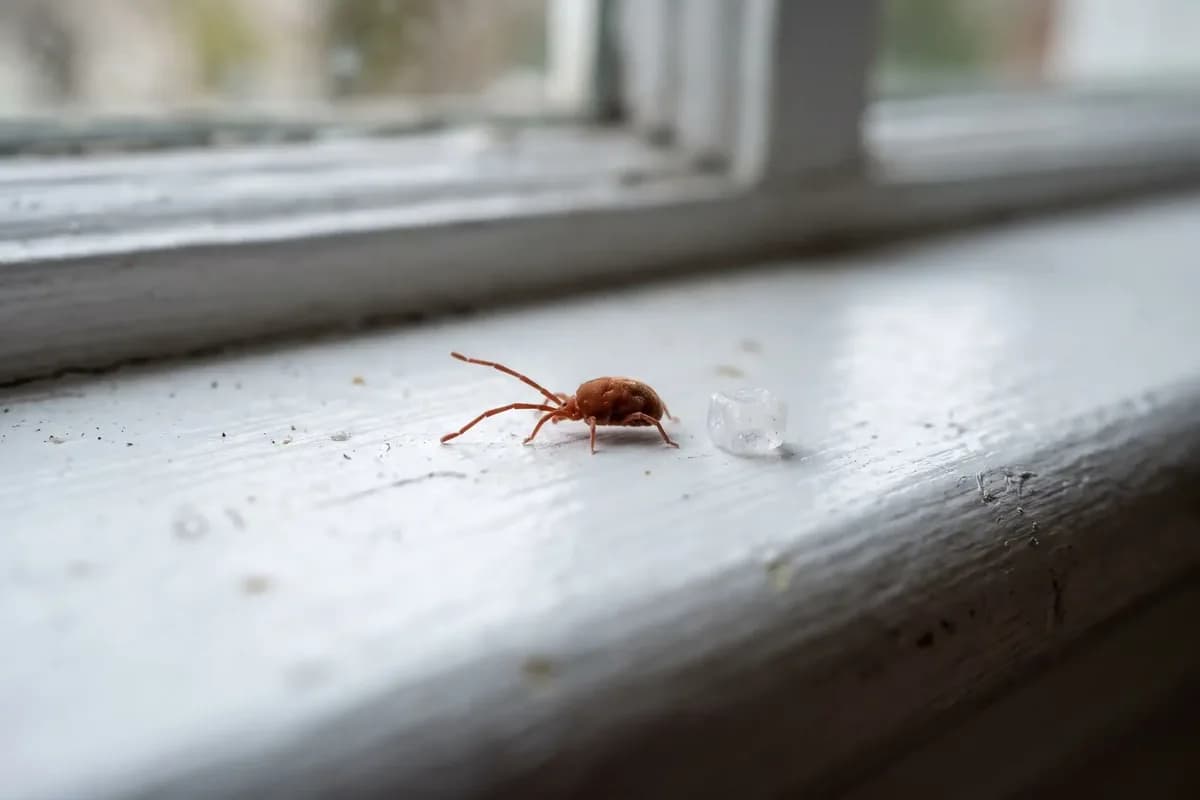
Red Mites That Are Not Clover Mites
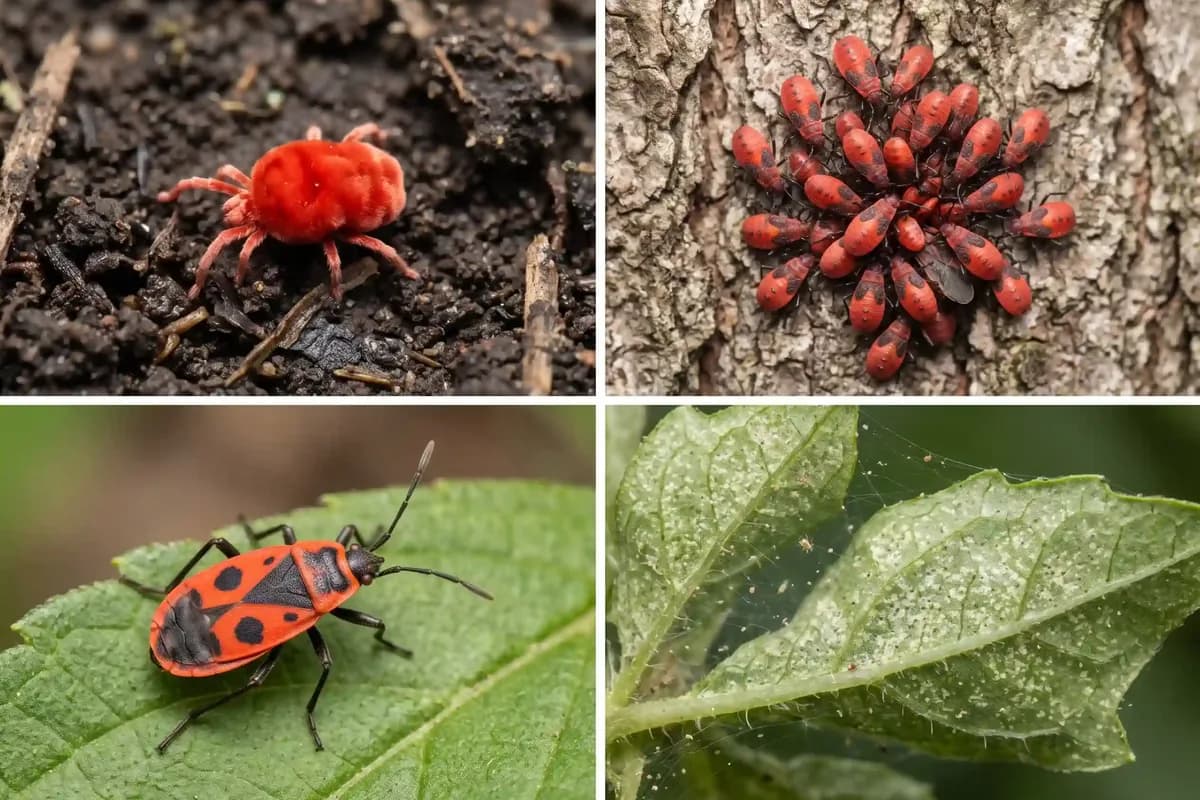
If the red mites are bigger and fuzzy, cause itchy bites or sit on plant leaves, you probably have one of these.
Red velvet mites
NC State Extension describes them as red, velvety mites that are very small but easy enough to see crawling about. Most of the year they live in soil and leaf litter, but in spring adults show up on patios, brick walls and other objects. They are not pests. The adults hunt tiny insects, and the larvae live as parasites on insects. People sometimes call them red velvet bugs.
Chiggers
Chiggers are the larvae of certain mites. The University of Maryland notes they are red to orange and so small they are hard to see without a magnifier. They live in grass, weeds and brush and bite people, causing very itchy red bumps, often around the sock line and waist. To check a rash, use the Bug Bite Identifier.
Spider mites
Spider mites feed on plant leaves. The University of Minnesota notes the common twospotted spider mite is about 1/50 inch (0.5 mm) long and yellow orange with two dark spots, though some kinds look reddish, which is why gardeners call them red spider mites. Damage shows as tiny pale speckles, bronzed leaves and fine webbing, especially in hot, dry weather. To check, hold white paper under a leaf and tap it: specks that start to crawl are mites.
Red Bugs in the Garden
Red insects about 1/4 to 1/2 inch (6 to 13 mm) long, often marked with black, are usually young true bugs that gather in groups.
- Boxelder bug nymphs: bright red with black, found on boxelder, maple and ash trees and on sunny house walls in fall.
- Red shouldered bugs: close lookalikes of boxelder bugs, covered in the same guide.
- Red firebugs: Utah State University notes they are 1/4 to 1/2 inch long, red with black spots, and often gather in large groups on plants and buildings.
These bugs feed on seeds and plant sap and are mainly a nuisance when they gather in large numbers. See our boxelder bug guide to tell these red and black bugs apart.
Are Tiny Red Bugs Harmful?
Most are harmless to people and pets. Chiggers are the main exception because they bite, and spider mites can hurt plants.
- Clover mites: harmless, but they leave red stains when crushed.
- Red velvet mites: harmless, and helpful predators of small pests.
- Chiggers: cause very itchy bites but are not known to spread disease in North America.
- Spider mites: do not bite people but can weaken and bronze plant leaves.
- Red and black true bugs: nuisance only. Crushed firebugs can stain fabric and smell bad.
Some tiny red specks are not insects or mites at all. If what you found has a clear two part body, eight legs and spins webs, it may be a small spider. Use the Spider Identifier to check. See a doctor for bites with spreading redness, swelling, fever or signs of infection. This is general education, not medical advice.
How to Keep Clover Mites Off Your Walls
The best fix is to remove the grass and clover they feed on next to the house.
- Plant free strip: Utah State University suggests a strip 3 to 5 feet (0.9 to 1.5 m) wide with no grass along the foundation.
- Use gravel or bare soil: clover mites do not cross this strip easily.
- Plant wisely: use flowers or shrubs they do not favour in that strip.
- Seal cracks: around windows, doors and the foundation.
Insecticides are rarely needed, since clover mites cause no damage. If you are unsure what you have, the Bug Identifier can name it from a close photo.
Frequently Asked Questions
Sources and References
- Utah State University Extension. Clover Mite.
- Colorado State University Extension. Clover Mites. PlantTalk Colorado.
- NC State Extension. Velvet Mites, Brick Mites or Patio Mites.
- University of Maryland Extension. Chiggers.
- University of Minnesota Extension. Twospotted Spider Mites in Home Gardens.
- Utah State University Extension. Red Firebug.