How to Identify an Assassin Bug: Types and Nymphs
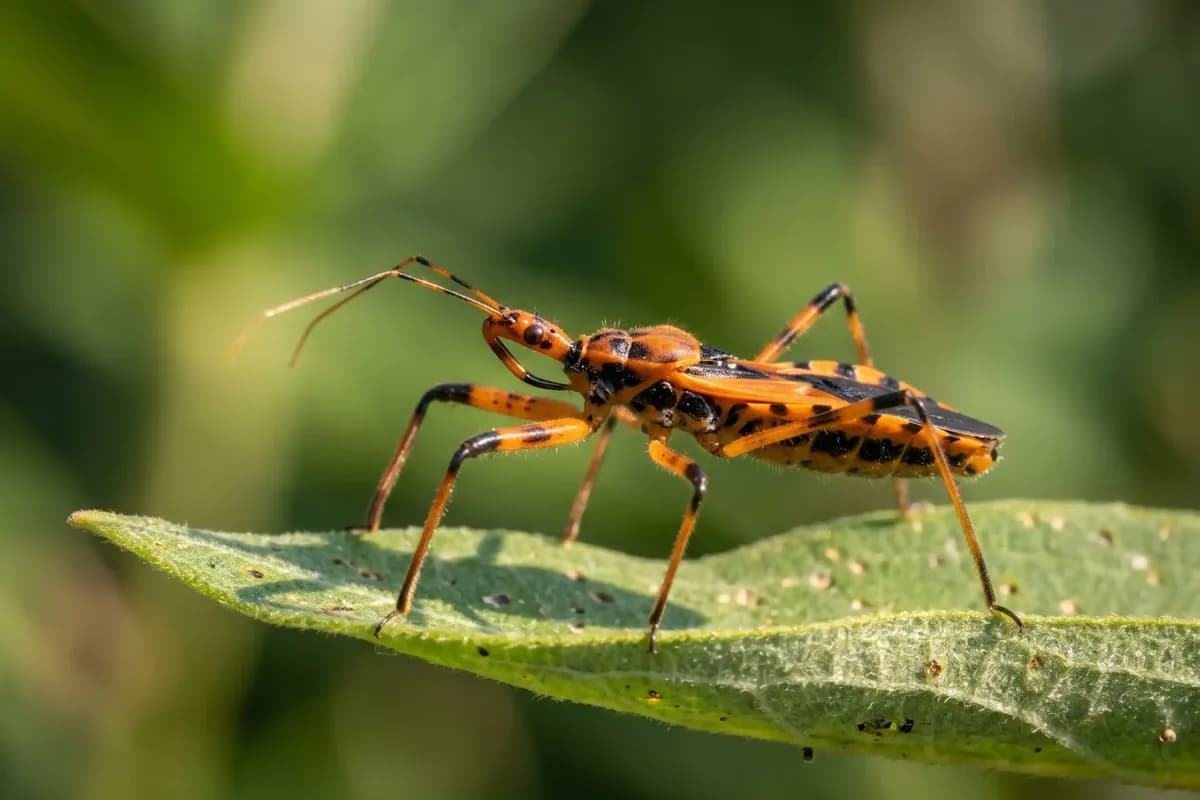
An assassin bug is a predatory true bug with a long, narrow head, a short curved beak tucked under the head and long legs, usually 1/2 to 1 1/2 inches (1.3 to 3.8 cm) long. These insects belong to the family Reduviidae, and Texas A&M AgriLife notes there are about 150 species in North America. Most are helpful garden predators, but they can bite hard if handled. This guide covers how to spot them, the common types, the nymphs and the bugs people mix them up with.
What Does an Assassin Bug Look Like?
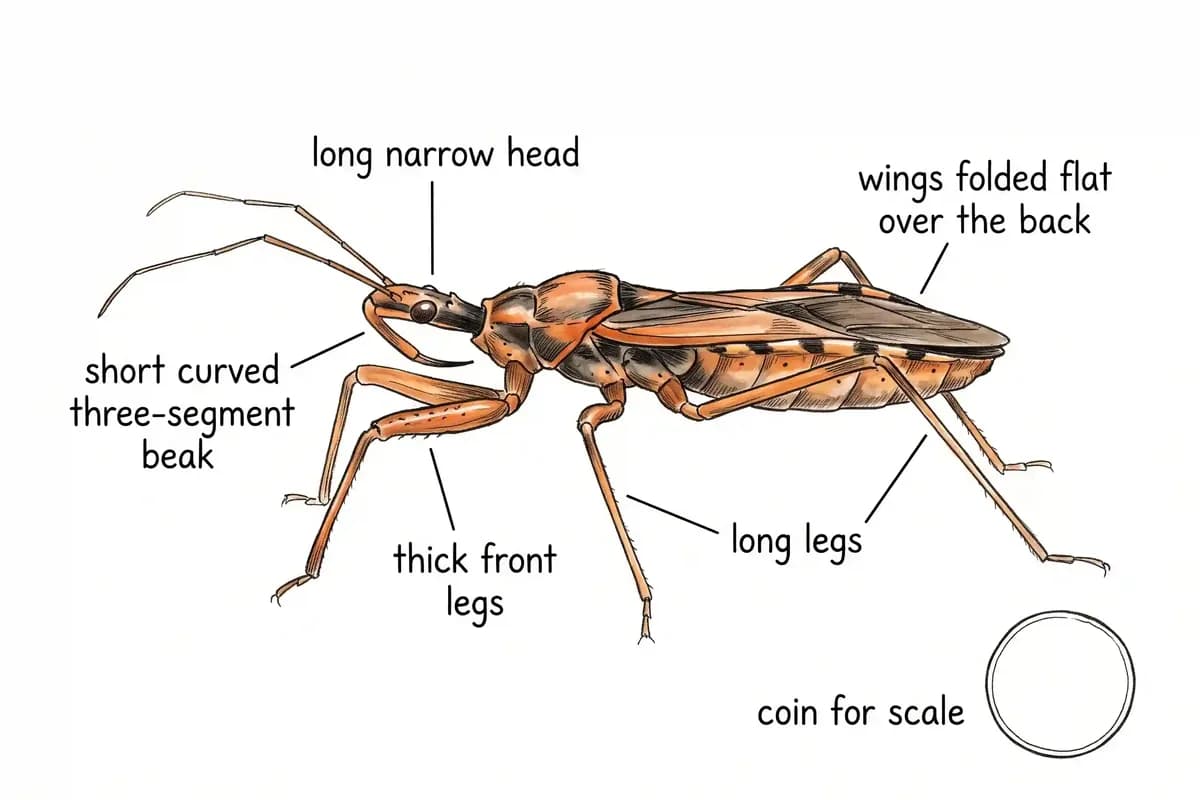
Look for a narrow head that sticks out like a neck, a thick, curved beak and long legs on a slim or oval body.
- Head: long and narrow, with a groove behind the eyes that makes it look like the head sits on a neck.
- Beak: the University of Kentucky notes the beak has three segments. It is short, stout and curves under the head, ready to swing forward.
- Size: most are 1/2 to 1 1/2 inches (1.3 to 3.8 cm) long.
- Legs: long, often with thick front legs for gripping prey.
- Colour: brown, black, grey, bright green or orange with black bands, depending on the species.
- Behaviour: slow and deliberate. They wait on flowers and leaves, then grab insects that come close.
They are not beetles, even though some people call them assassin beetles. Like stink bugs, they are true bugs, with piercing mouthparts and wings that fold flat over the back.
Common Types of Reduviids
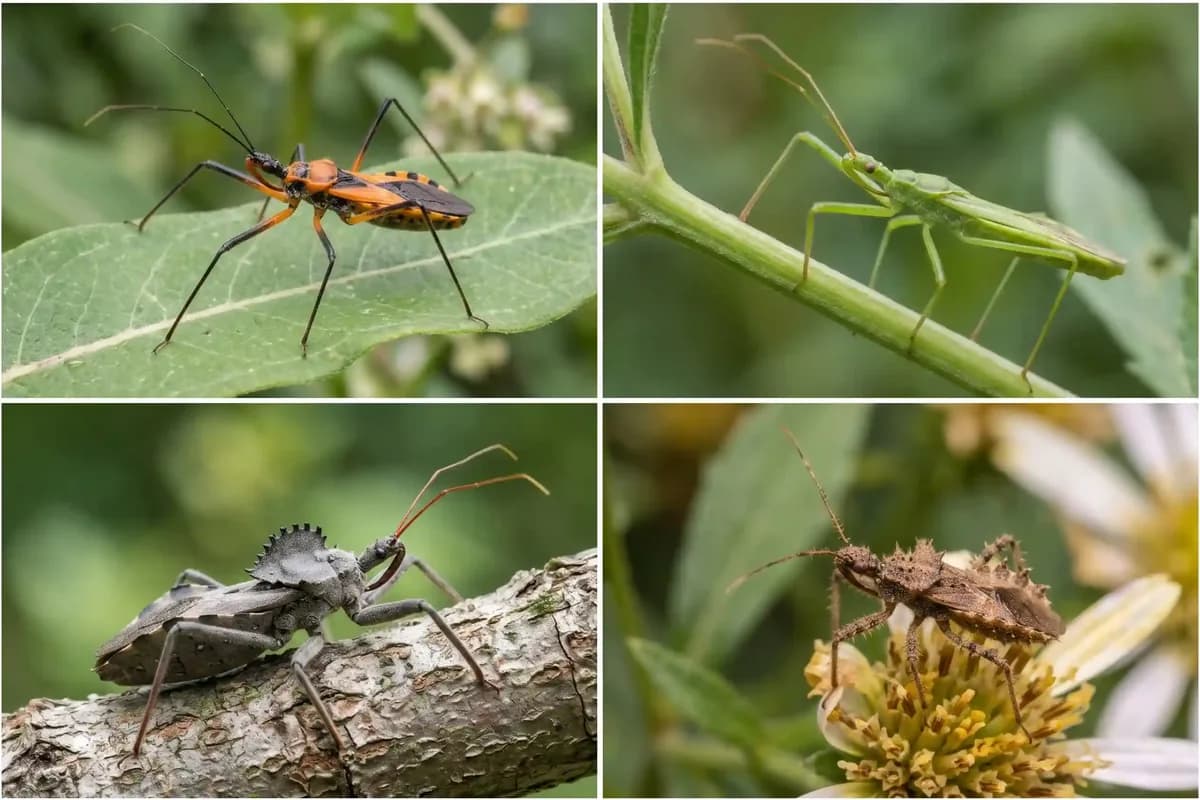
Several kinds turn up in gardens and on porches, and colour is the quickest clue. Sizes are approximate, from the University of Kentucky and Texas A&M AgriLife.
| Type | Scientific name | Size | Key features |
|---|---|---|---|
| Wheel bug | Arilus cristatus | About 1 1/4 in (3 cm) | Grey, with a raised crest like a cog wheel on the back |
| Milkweed assassin | Zelus longipes | Up to about 3/4 in (1.9 cm) | Orange or red with black bands, very long legs |
| Pale green assassin | Zelus luridus | About 3/4 in (1.9 cm) | Slender, bright green |
| Spined assassin | Sinea diadema | About 3/4 in (1.9 cm) | Brown, covered in small spines |
| Bee assassin | Apiomerus crassipes | Varies | Stout and dark with bright markings, waits on flowers |
| Orange assassin | Pselliopus species | About 1 in (2.5 cm) | Orange with black bands on the legs |
| Black corsair | Melanolestes species | Varies | Shiny black, often under stones and boards |
Milkweed and Pale Green Assassins
The milkweed assassin and the pale green assassin are the slim, long legged reduviids most people find on garden plants.
- Milkweed assassin (Zelus longipes): Texas A&M AgriLife names it among the common species. It is orange to red with black markings and very long legs.
- Pale green assassin: slender and bright green, so it blends into leaves. The University of Kentucky notes Zelus species are bright green and about 3/4 inch (1.9 cm) long.
- What they eat: caterpillars, flies, beetles, aphids and other soft insects.
Despite the name, the milkweed assassin does not feed on milkweed. It hunts on many plants. The large milkweed bug, by contrast, is a plant feeder that eats milkweed seeds.
What Do the Nymphs Look Like?
The nymphs look like small, wingless adults, often with brighter colours and very long, thin legs.
- Colour: Texas A&M AgriLife notes nymphs are often brightly coloured. Many are red, orange or green, so they stand out on leaves.
- Wings: none, only small wing pads that grow larger with each molt.
- Body shape: a narrow head and curved beak, the same as the adults.
- Behaviour: they already hunt, so you may see them holding small insects on leaves.
The biggest source of confusion is the young leaf footed bug, which is also red or orange with long legs. The comparison below shows how to tell them apart.
Reduviids vs Leaf Footed Bugs and Stink Bugs
Check the head and the beak first. A predator holds a short, curved beak under a narrow head, while plant feeders hold a long, straight beak flat along the belly.
| Feature | Reduviids | Leaf footed bugs | Stink bugs |
|---|---|---|---|
| Head | Long, narrow, with a neck | Short, small | Small, set into a shield |
| Beak | Short, curved, three segments | Long and straight along the belly | Long and straight along the belly |
| Hind legs | Slender | Adults have wide, flat, leaf like hind legs | Slender |
| Body | Slim or oval | Long and narrow | Wide, shield shaped |
| Food | Other insects | Plant sap, fruit and seeds | Mostly plants (a few predators) |
A few stink bugs, such as the spined soldier bug, hunt other insects too. See our stink bug guide for the common types. Squash bugs are close relatives of leaf footed bugs and also have the straight beak of a plant feeder.
Ambush Bugs, Close Relatives
Ambush bugs are small, chunky relatives that hide on flowers and grab visiting insects with thick front legs.
- Size: the University of Kentucky notes they are up to 1/2 inch (1.3 cm) long.
- Look: pale, blotchy colours that help them hide in blooms.
- Front legs: thick and grasping, similar to a praying mantis.
- Where: often on goldenrod and other late summer flowers.
Are Assassin Bugs Dangerous?
They are not aggressive, but they can bite if you pick them up or press them against your skin, and the bite is painful.
- Pain: Texas A&M AgriLife describes the bite as immediately and intensely painful.
- After the bite: pain, redness and swelling at the spot that usually fade over hours to a few days.
- Can they kill humans? Garden reduviids are not known to be deadly.
- Poisonous? No. They inject saliva to digest prey, but they are not poisonous to touch.
The important exception is the kissing bug, a blood feeding relative that can carry the parasite that causes Chagas disease. See our kissing bug guide. To avoid bites, wear gloves when gardening and move them with a stick or a jar. For help with a bite, use the Bug Bite Identifier. Seek medical care for a bite with spreading redness, signs of infection or swelling of the face or throat. This information is for general education and is not medical advice.
Are They Good for the Garden?
Yes. Most are beneficial predators that eat caterpillars, beetles, aphids and other pests.
- Leave them be: they rarely cause any harm to plants or people outdoors.
- Avoid broad sprays: insecticides kill these predators along with the pests.
- Indoors: one that wanders inside can be moved out in a jar.
Not sure if your bug is a helpful predator or a plant pest? Try the Bug Identifier with a clear photo of the head and beak.
Where Do They Live?
They live across North America in gardens, fields, woods and on porches, with the most species in warm southern states.
- Plants and flowers: milkweed, pale green and bee assassins wait on leaves and blooms.
- Trees and shrubs: wheel bugs hunt on trees and shrubs.
- Ground and debris: the black corsair hides under stones, boards and leaf litter.
- Homes: one may wander onto a porch or inside by accident, but they do not live or breed indoors.
Frequently Asked Questions
Sources and References
- Texas A&M AgriLife Extension. Wheel Bugs and Other Assassin Bugs. Insects in the City.
- University of Kentucky Entomology. Assassin Bugs & Ambush Bugs. Critter Files.
- NC State Extension. Eastern Leaf Footed Bug.
- University of Maryland Extension. Common Stink Bugs of the Mid Atlantic.
- Penn State Extension. Kissing Bugs.