What Is a Velvet Ant? The Red Cow Killer Explained
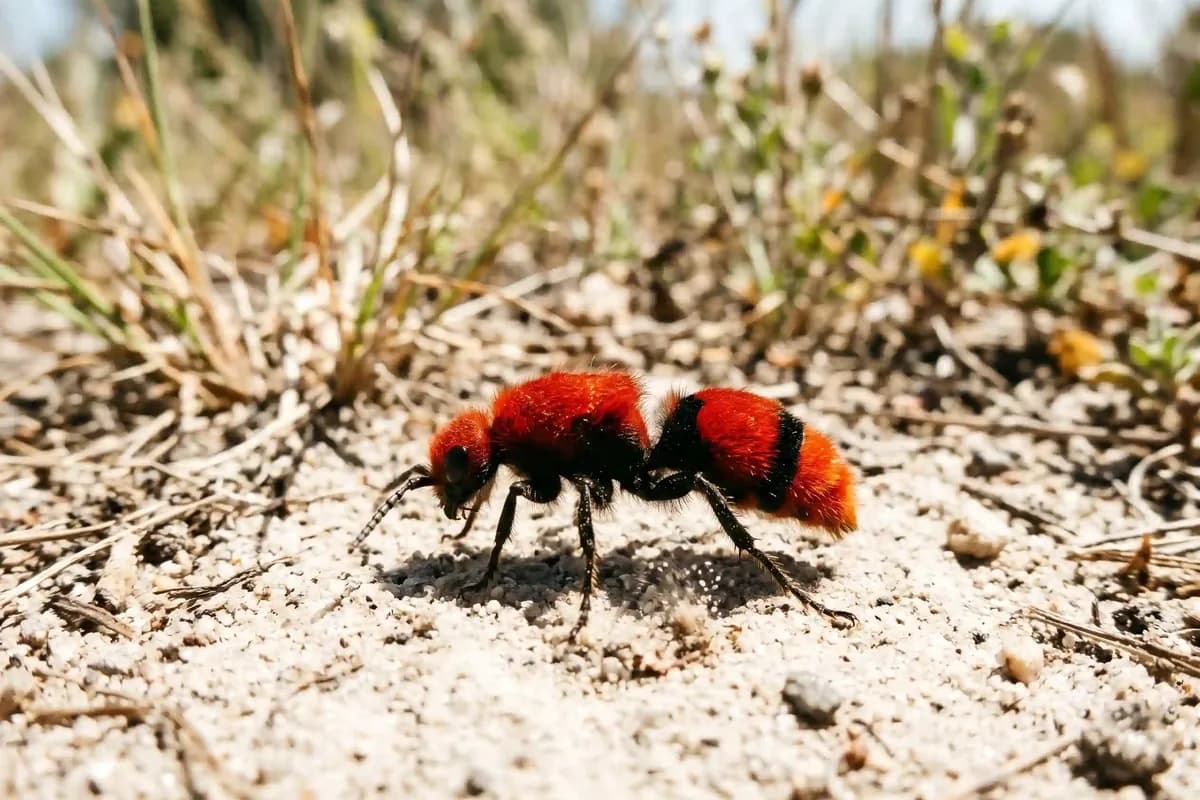
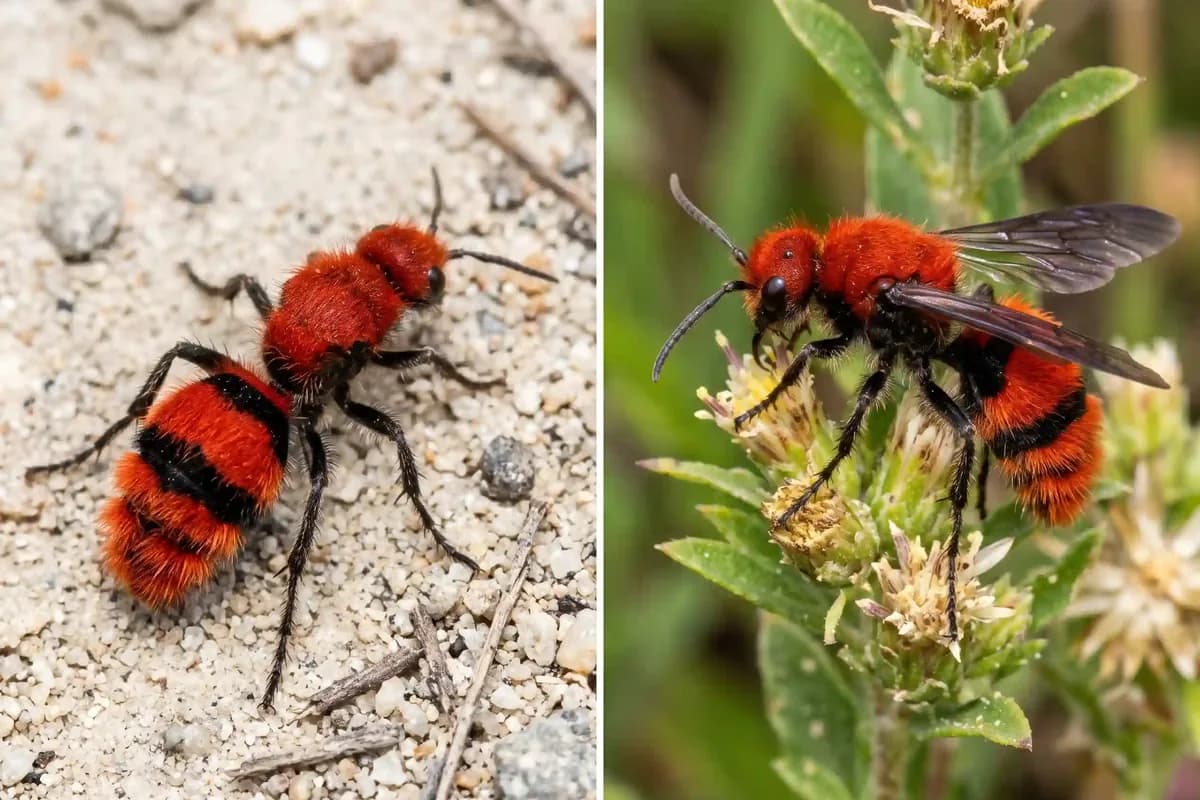
A velvet ant is not an ant at all. It is a wasp in the family Mutillidae, and the females are wingless, covered in bright, fuzzy hair and able to give a very painful sting. The best known is the red and black eastern species, nicknamed the cow killer, which grows to nearly 1 inch (2.5 cm) long. This guide explains how to identify one, why it has that name, how bad the sting is and what to do if you are stung.
A Wasp That Looks Like an Ant
These insects are solitary wasps. Only the females lack wings, which is why they look like large, hairy ants running over the ground.
- Family: Mutillidae. The Missouri Department of Conservation notes there are nearly 500 species in North America north of Mexico.
- Females: wingless their whole lives, and they are the ones that sting.
- Males: have wings, often dark, and look more like typical wasps. Clemson University notes males are harmless because they cannot sting.
- Solitary: they do not build nests or live in colonies like ants, bees or paper wasps.
Because males and females look so different, people often think they are two separate insects.
How to Identify a Red Velvet Ant
Look for a fuzzy, wingless insect with bright red, orange or yellow hair and black markings, running fast over sandy or bare ground. Sizes are from the Missouri Department of Conservation and Texas A&M AgriLife.
| Feature | What to look for |
|---|---|
| Size | About 1/2 to 1 1/4 in (1.3 to 3.2 cm), depending on species |
| Hair | Dense, velvety, often bright red or orange, also yellow in some species |
| Markings | Black bands or patches, black legs |
| Wings | None on females, dark wings on males |
| Body | Very hard and tough to crush |
| Movement | Runs quickly over the ground |
| Sound | Squeaks when handled |
- Eastern species (Dasymutilla occidentalis): the one called the cow killer. The University of Kentucky notes it is nearly 1 inch (2.5 cm) long, with bright red hair and black bands.
- Other kinds: Clemson University notes species mix black with red, yellow or orange, and that these wasps are most common in the Southwest.
Why Is It Called a Cow Killer?
The nickname comes from the sting, which is painful enough that people joked it could kill a cow. It cannot.
- No evidence: Clemson University notes there is no evidence a cow has ever been killed by one, and cows are rarely stung.
- Venom strength: the Missouri Department of Conservation notes a 1996 study found the venom less toxic than that of harvester ants and honey bees.
- Other names: cow ant, cow killer ant, red fuzzy ant and velvet wasp all refer to these insects.
The pain is real, but the danger to people and animals is low for anyone who is not allergic.
How Painful Is the Sting?
Very painful. The stinger is long, and the sting causes sharp, burning pain right away, but it is rarely dangerous.
- Who stings: only females, and only when picked up, trapped or stepped on with bare feet.
- Pain: the University of Kentucky and Texas A&M AgriLife both describe it as very painful.
- Swelling: redness and swelling at the spot are common and usually ease over hours to a day or two.
- Allergies: as with any wasp sting, a person who is allergic can have a serious reaction.
For a sting that looks unusual, upload a photo to the Bug Bite Identifier.
What to Do if You Are Stung
Wash the area, cool it and watch for signs of an allergic reaction.
- Wash the sting with soap and water.
- Apply a cold pack wrapped in a cloth for 10 to 20 minutes at a time.
- Take an over the counter pain reliever such as ibuprofen or acetaminophen if needed, following the label.
- Use an oral antihistamine or a hydrocortisone cream for itching.
Call emergency services right away for trouble breathing, swelling of the face, lips or throat, dizziness or hives spreading across the body. This information is for general education and is not medical advice.
Where and When You Will See Them
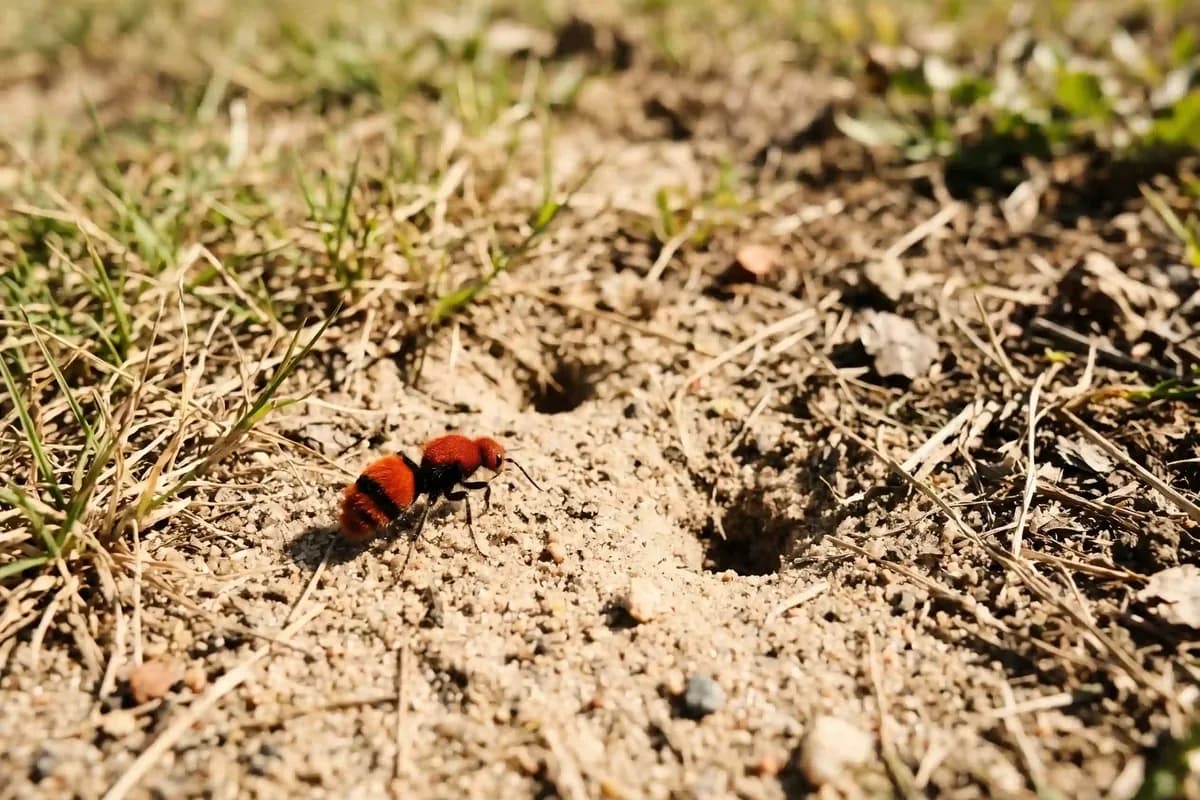
They live in open, dry, sunny places with sandy soil, and they are most active in summer.
- Habitat: the Missouri Department of Conservation notes they favour open, sandy areas such as lawns and cemeteries, where their host bees and wasps nest.
- Season: Clemson University notes they are common from about May through September in South Carolina, often in late afternoon.
- Range: found across much of the United States, with the most species in the Southwest.
- Life cycle: females enter the ground nests of other bees and wasps and lay eggs there. The young feed on the host larvae.
Adults feed on nectar. Children and pets are most likely to meet one in sandy play areas and bare patches of lawn.
Cow Killers vs Real Ants
True ants live in colonies and are seldom very hairy, while these wasps are fuzzy, solitary and usually seen alone.
- Hair: these wasps are thickly hairy. Most ants look shiny or only lightly hairy.
- Numbers: you usually see one at a time, not a trail or a mound.
- Stings: fire ants sting in groups and leave pus filled bumps.
If you cannot tell, a close photo in the Bug Identifier can sort it out.
Why Are They So Hard to Kill?
Their outer shell is extremely hard, so stepping on one or swatting it often does not crush it.
- Clemson University notes the tough body makes sprays and swatting largely ineffective.
- Texas A&M AgriLife notes the body is hard and strong.
- The best approach is to leave them alone or gently move one away with a shovel or jar. Wear shoes on sandy lawns in summer.