Bug Nests and Stings: Identify What's Living Near Your Home
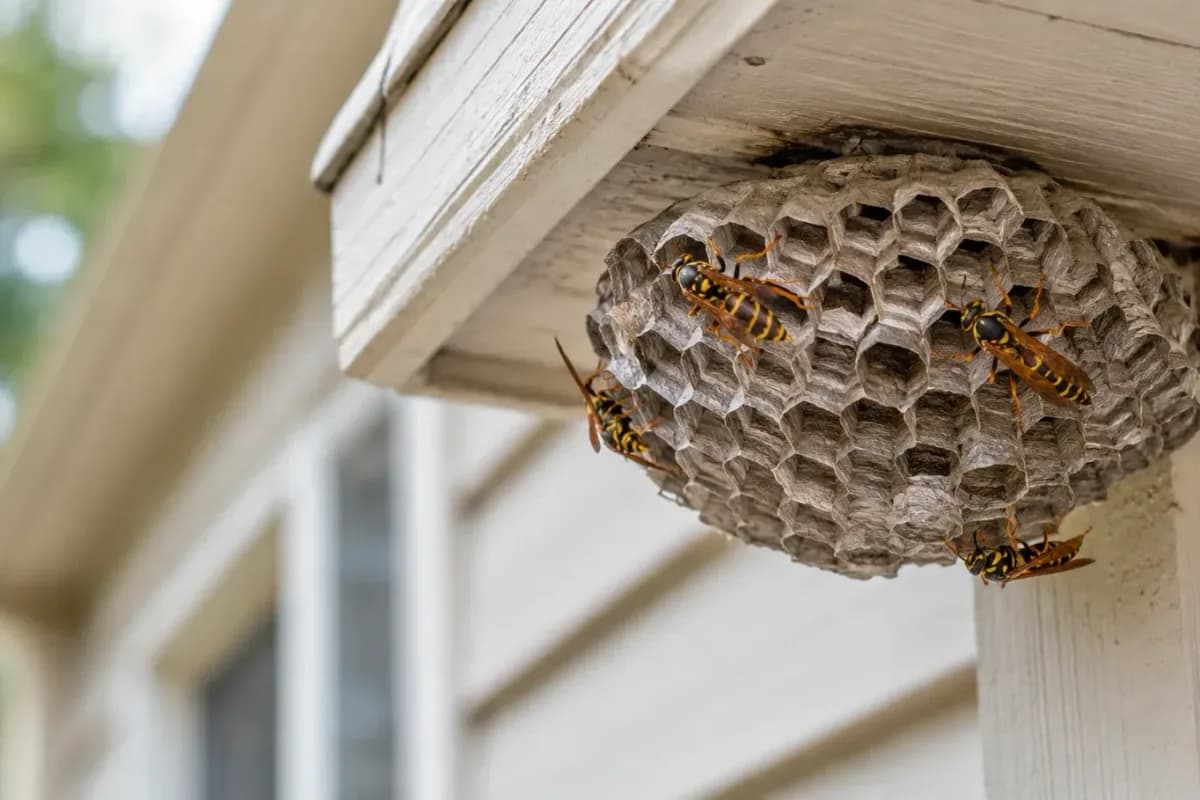
Finding a nest or getting stung raises the same question from two different directions: what built this, or what just stung me. Both are answered here by shape, location, and circumstance.
For what to actually do about a sting itself, including symptoms and treatment, the Bug Bite Identifier covers that in full detail with a photo based tool. This guide focuses only on identifying the insect responsible.
Identify a Nest by Shape and Location
Nest structure is one of the most reliable ways to identify which insect built it, often more reliable than trying to identify the insect itself while it is defending the nest.
| Nest appearance | Insect | Typical location |
|---|---|---|
| Open umbrella shaped comb, visible cells, no outer shell | Paper wasp | Under eaves, porch ceilings, railings |
| Fully enclosed grey papery ball with a single entry hole | Hornet | Trees, wall cavities, sheds |
| Visible waxy honeycomb, very large colony | Honeybee | Inside a cavity such as a hollow tree or wall space |
| A hole in the ground or a small soil mound | Ground nesting bee or wasp | Lawns, bare soil, banks |
Which Insect Stung You? Identify by Sting Circumstances
If you did not see what stung you, the circumstances of the sting itself narrow it down. A single sting while gardening or walking barefoot on grass most often comes from a bee or a ground nesting species disturbed underfoot. Multiple stings at once, especially near an underground nest or a wall cavity, points to wasps or hornets, which defend a colony as a group rather than acting alone.
A sting that left a visible stinger in the skin is almost always a bee, since bees lose their stinger and die after stinging, while wasps and hornets keep theirs and can sting more than once. Time of year matters too: wasp colonies are largest and most defensive in late summer, which is when most reported wasp stings occur.
| Sting circumstance | Most likely culprit |
|---|---|
| A single sting while gardening or barefoot on grass | Bee or a ground nesting species disturbed underfoot |
| Multiple stings at once near a nest or wall cavity | Wasps or hornets defending the colony as a group |
| A stinger left behind in the skin | A bee, since bees lose their stinger and wasps keep theirs |
| Stung in late summer | Most often a wasp, when colonies are largest and most defensive |
Aggressive Nest Situations: When to Call a Professional
A nest inside a wall cavity, roof space, or anywhere it cannot be safely observed from a distance should never be approached or sprayed directly. For a full breakdown of which pest situations need a professional versus which are safe to handle yourself, see the pest control decision guide on the homepage. A large hornet or wasp nest specifically adds one more rule beyond what that guide covers: never seal a single entry hole on an enclosed nest, since trapped insects will often find or create another way out, sometimes into the living space itself.
What to Do If You Were Stung
Move away from the area calmly rather than swatting, since sudden movement near a nest increases the chance of additional stings. For symptoms, home treatment, and the signs that mean a sting needs medical attention, the Bug Bite Identifier covers this fully, including a photo upload option if you want to confirm the exact species responsible.
Already stung and want to know if it needs treatment? The Bug Bite Identifier gives symptoms, danger level, and next steps in seconds.