How to Identify Flying Bugs in Your House
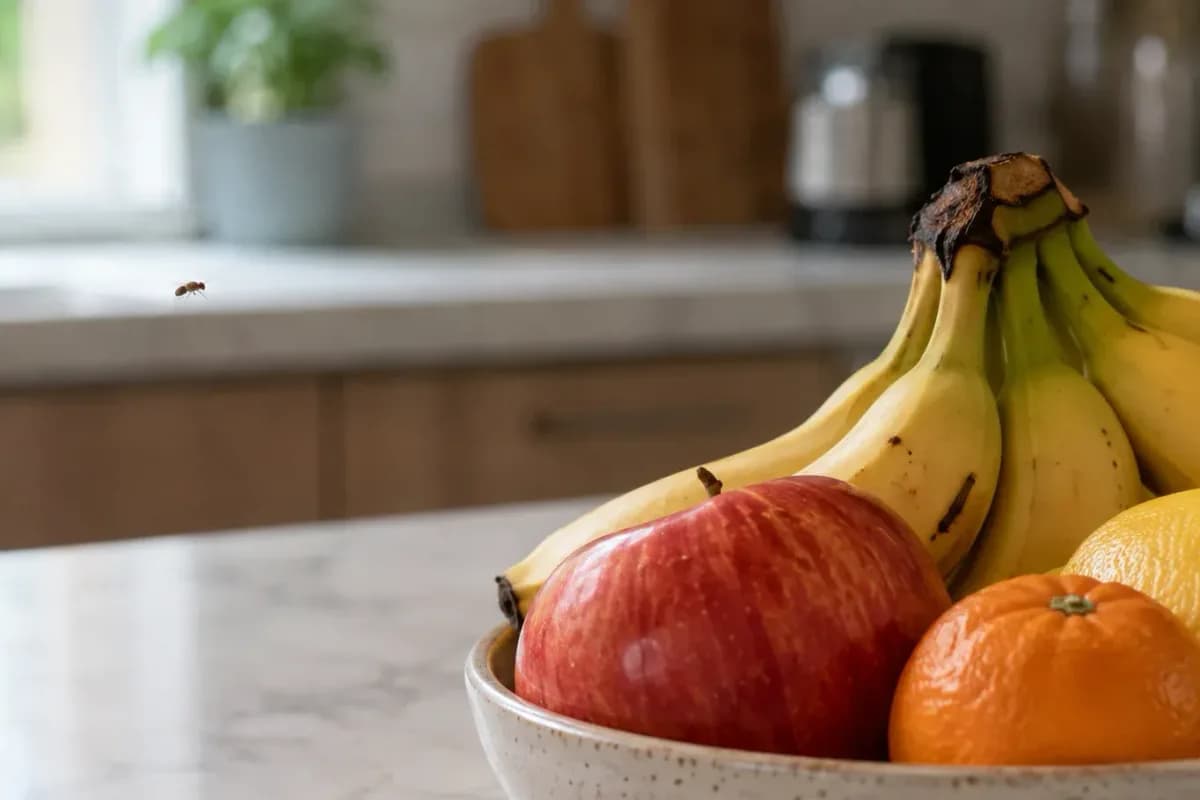
A small flying bug in the house is usually identified faster by where it hovers than by what it looks like up close. Fungus gnats stay near plant soil, fruit flies circle ripe fruit, drain flies sit still near drains, and moths show up near stored food or fabric at night. Match the location first, then confirm with the details below.
The Fastest Way to Tell Flying Bugs Apart: Where They Hover
Location narrows the answer before you even get a close look. A bug hovering over a houseplant, near a fruit bowl, sitting on a bathroom wall, or circling a kitchen light at night each points to a different species, since each one is drawn to a specific food or breeding source rather than moving randomly around the room.
| Where you see it | Most likely bug | Confirm by |
|---|---|---|
| Hovering over houseplant soil | Fungus gnat | Returns to the soil surface and rarely strays far |
| Circling a fruit bowl or recycling bin | Fruit fly | Visible red eyes at close range |
| Sitting still on a wall near a drain | Drain fly | Fuzzy, moth shaped wings; barely flies |
| Near the kitchen ceiling in the evening | Pantry (Indian meal) moth | Grey near the body, reddish bronze wing tips |
| Around stored wool or inside a closet | Clothes moth | Small, plain tan; avoids light |
| Came in through a window or door at night | Mosquito or a stray insect | A single sighting, usually gone within a day |
Fungus Gnats vs Fruit Flies: The Two Most Confused Flying Bugs
Fungus gnats and fruit flies get mixed up constantly because both are small, dark, and appear in kitchens where houseplants sit near fruit bowls. The fastest way to tell them apart is watching where each one actually goes. A fungus gnat returns to the soil surface of a houseplant and rarely strays far from it. A fruit fly orbits the fruit bowl or a recycling bin and has visible red eyes at close range, which a fungus gnat does not.
Fungus gnat larvae live in damp potting soil and feed on organic matter and fungus, which is why letting soil dry out fully between waterings solves most fungus gnat problems within two weeks. Fruit fly larvae develop inside overripe produce, so removing ripe fruit and washing the fruit bowl breaks their breeding cycle just as fast.
Moths in the House: Pantry Moths vs Clothes Moths vs Ones That Just Got In
A moth flying near a kitchen ceiling in the evening is almost always an Indian meal moth, identified by a two tone wing that is grey near the body and reddish bronze at the tip. This species breeds inside dry goods such as flour, cereal, and pasta, and finding one moving around the kitchen usually means checking pantry containers for silk webbing in the corners.
A moth found near stored wool clothing, natural fiber rugs, or closets is more likely a clothes moth, a smaller, plainer tan moth that rarely flies far from the fabric its larvae are feeding on. Clothes moths avoid light and are often only noticed when a stored item is pulled out and small moths scatter. A moth that simply flew in through an open window or door at night, drawn to a porch or indoor light, does not indicate an infestation at all and is usually gone within a day.
Mosquitoes and Midges Indoors: When It Matters
A mosquito or midge found indoors is usually just one that came in through an open door or a gap in a screen, and on its own does not indicate a breeding problem inside the home. Standing water nearby, such as a neglected plant saucer, a clogged gutter, or a pet water bowl left out for days, is the more likely source if mosquitoes keep appearing repeatedly rather than as a single sighting.
If you have already been bitten and want to confirm it was a mosquito rather than something else, the Bug Bite Identifier covers mosquito bite patterns, timing, and when a bite needs medical attention in full detail.
Are Mites Flying Bugs? Clearing Up a Common Mix Up
Mites are not flying bugs and most species have no wings at all. The confusion usually comes from clover mites, tiny reddish brown arachnids that cluster on windowsills and light colored walls in spring and autumn and are sometimes seen moving in large numbers, which can look from a distance like a small swarm. Clover mites do not fly, do not bite humans, and leave only a harmless red stain if crushed. If something is genuinely hovering or flying rather than crawling, it is an insect, not a mite, regardless of its size.
When a Flying Bug Means You Should Call Pest Control
A single flying bug almost never needs professional treatment. Repeated daily sightings of the same species in the same room, visible larvae in stored food, or moth damage to stored fabric are the signals worth acting on. For a full breakdown of which household bugs need a professional and which are safe to handle yourself, see the pest control decision guide on the homepage, which covers this in detail for every common household species.
Not sure which flying bug you have after checking the table above? Upload a photo to the free AI Bug Identifier at the top of the homepage for a confirmed species match in seconds.