What Insect Is This? 20 Commonly Misidentified Insects
Most insect misidentification happens in pairs. Someone sees one insect, assumes it is a different, usually more familiar or more alarming one, and the mix up spreads from there. This guide covers 20 of the most common confusion pairs, grouped by why people mix them up, with the one specific feature that actually tells each pair apart.
Insects Mistaken for Something More Dangerous Than They Are
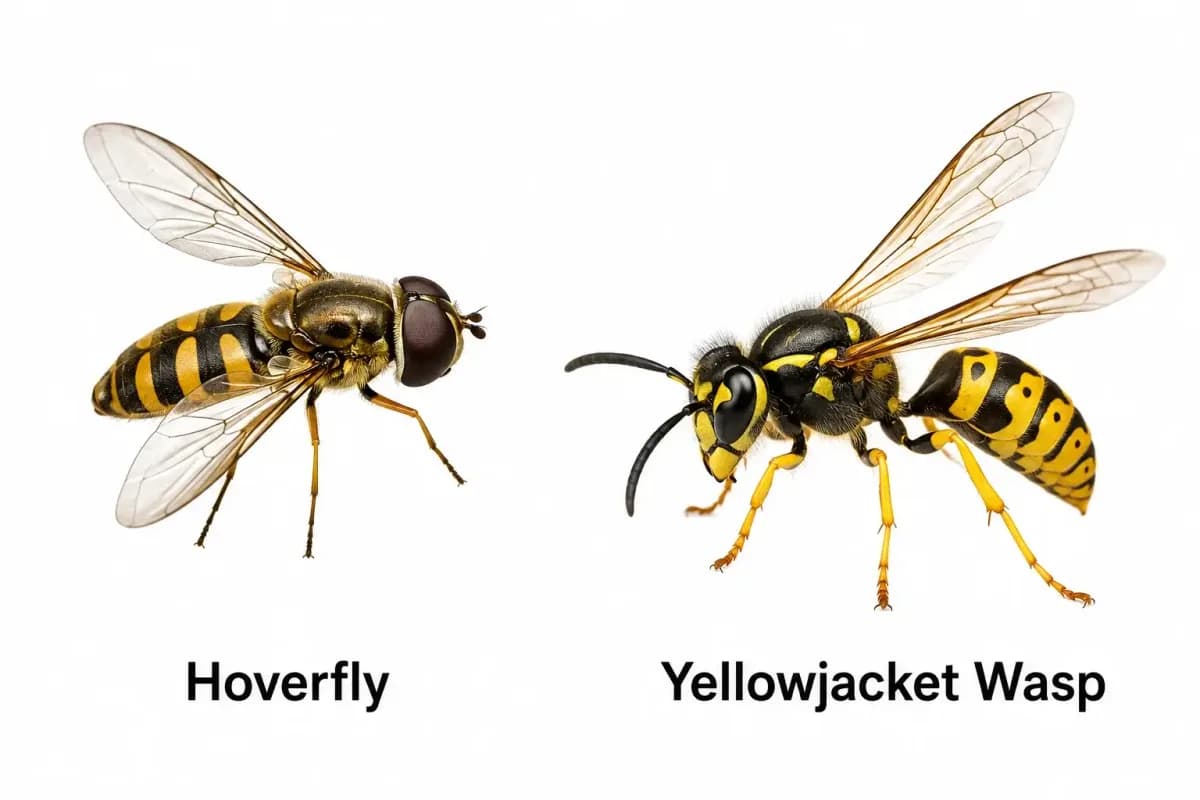
Hoverfly vs Wasp
A hoverfly has the same yellow and black banding as a wasp but only two wings instead of four, and it hovers motionless above a flower rather than landing to feed or defend a nest. Hoverflies cannot sting at all.
Click Beetle vs Something Venomous
Click beetles are dark, elongated, and make a sharp clicking sound when flipped onto their back, which is often mistaken for aggressive or threatening behavior. This clicking is simply how the beetle rights itself and has no connection to venom or biting risk.
Cicada Killer Wasp vs Murder Hornet
The cicada killer wasp is large, up to 5 centimeters, with a black and yellow pattern that triggers alarm due to unrelated media coverage of the much rarer Asian giant hornet. Cicada killers are solitary, not aggressive toward humans, and are found across most of North America, while the Asian giant hornet remains extremely limited in range.
Leaf Footed Bug vs Assassin Bug
Both have a similar elongated body shape, but the leaf footed bug has flattened, leaf shaped hind legs and feeds only on plants, while the assassin bug has a narrow curved beak used to hunt other insects and can deliver a painful defensive bite if handled.
Giant Water Bug vs Something Aggressive
Giant water bugs are large, flat, and can deliver a surprisingly painful bite if picked up, which fuels their alarming reputation. In practice they avoid humans entirely and only bite in self defense when directly handled.
Insects Mistaken for Each Other
Housefly vs Cluster Fly
Cluster flies are slightly larger than houseflies, move more sluggishly, and have fine golden hairs on the thorax visible up close. Houseflies move quickly and have a more striped thorax pattern.
Honeybee vs Yellowjacket
Honeybees are fuzzy with a rounder, golden brown body, while yellowjackets are smooth, glossy, and have a distinctly narrow waist. Honeybees die after stinging once, while yellowjackets can sting repeatedly.
Moth vs Butterfly at Rest
At rest, a butterfly typically holds its wings closed upward above its body, while a moth holds its wings flat or tented down over its back. Antennae are the more reliable feature: butterflies have thin, club tipped antennae, while moths have feathery or thread like antennae with no club.
Ladybird vs Asian Lady Beetle
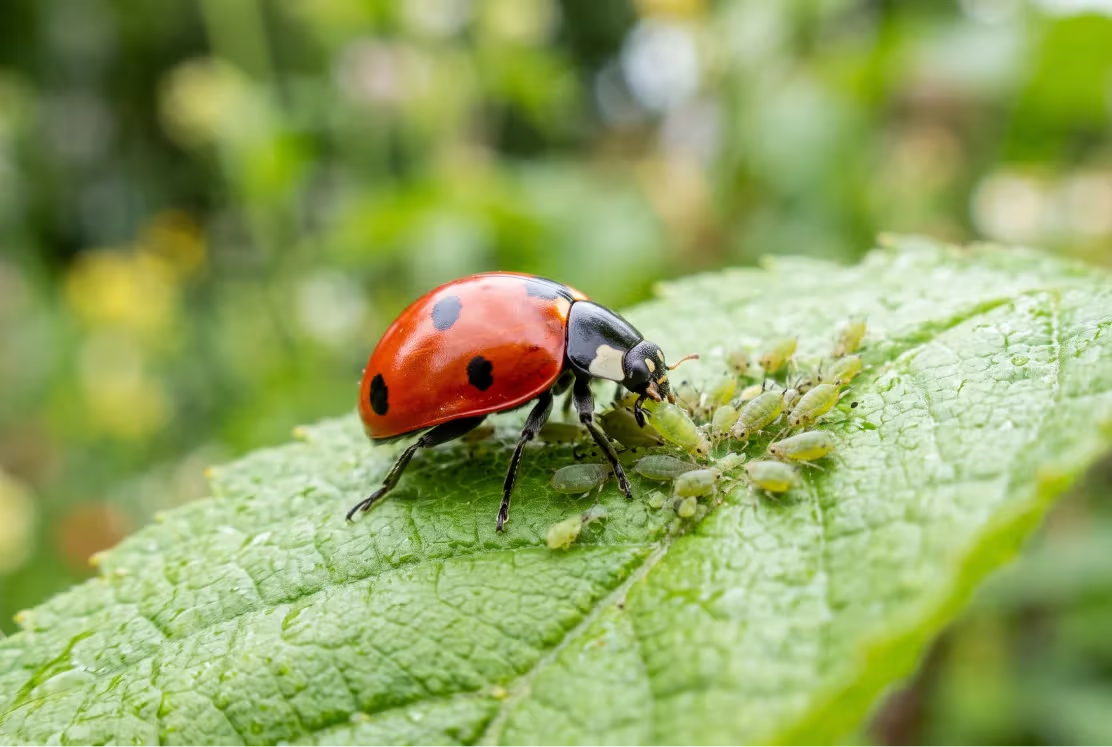
Both are round and spotted, but the Asian lady beetle has a small white M or W shaped marking behind the head that native ladybird species lack. Asian lady beetles also tend to gather indoors in large numbers during autumn, which native species rarely do.
Dragonfly vs Damselfly
At rest, a dragonfly holds its wings flat out to the sides, while a damselfly folds its wings up along its body. Damselflies also have a noticeably thinner, more delicate body overall.
Garden Insects Mistaken for Pests
Ground Beetle Mistaken for a Pest
Ground beetles are dark, glossy, and fast moving, often spotted at night and assumed to be a threat simply because of their quick movement. They are beneficial predators that hunt slugs and cutworms.
Lacewing Larva Mistaken for Something Harmful
Lacewing larvae are elongated with visible pincers and a slightly alarming appearance, sometimes called aphid lions. Despite the look, they are one of the most effective natural predators of aphids and mites in a garden.
Praying Mantis Nymph Mistaken for a Different Insect
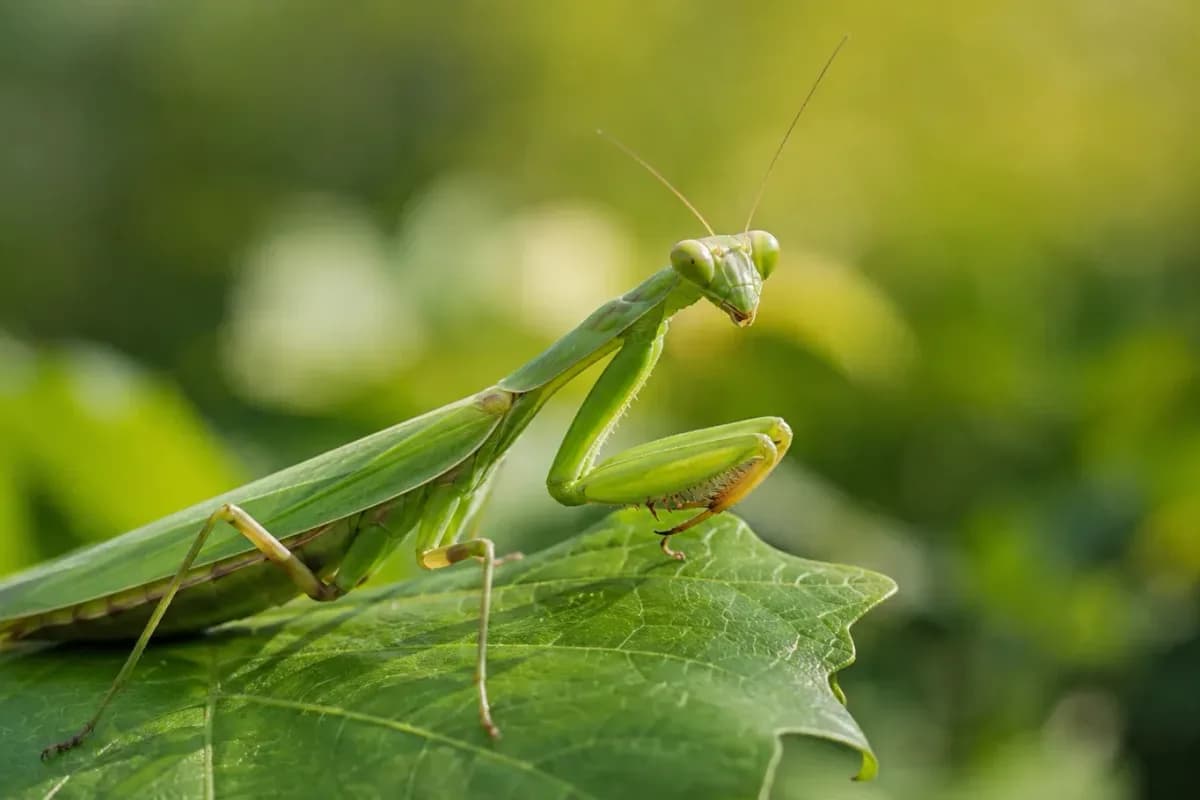
A young mantis nymph lacks wings entirely and can look more like an ant or a small unfamiliar bug than the adult mantis shape most people recognize. The distinctive folded front legs are still present even at this early stage and are the clearest identifying feature.
Assassin Bug Nymph
Nymphs are smaller, wingless, and often more brightly colored than the adult, which can make them harder to place in the same species. The narrow curved beak used for hunting is present from an early nymph stage onward.
Tachinid Fly Mistaken for a Housefly
Tachinid flies are bristly, slightly larger than a housefly, and parasitize garden pests such as caterpillars, making them beneficial rather than a nuisance. The dense bristles covering the body are the clearest way to tell them apart from a common housefly at a glance.
Insects Mistaken for Non Insects
Winged Termite vs Flying Ant
Termites have straight antennae, wings of equal length, and no narrowing at the waist. Flying ants have elbowed antennae, a front pair of wings visibly larger than the back pair, and a distinctly pinched waist.
Harvestman vs Spider
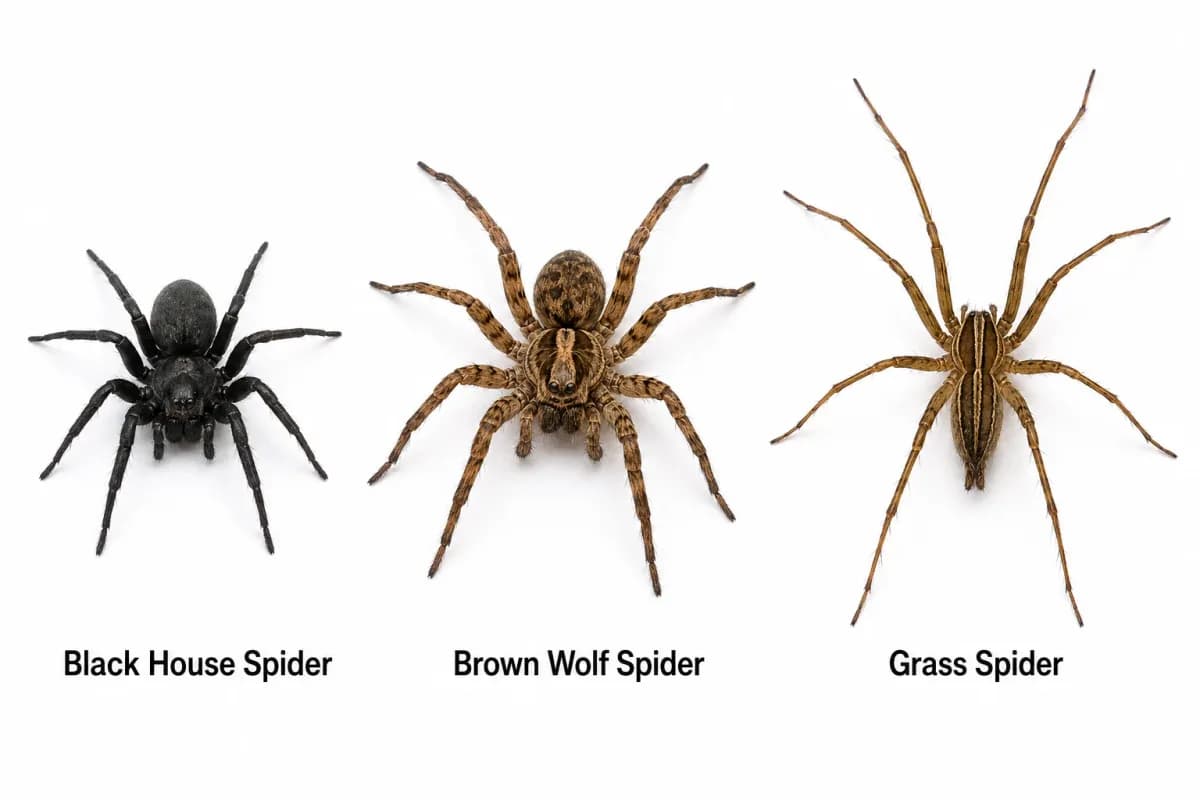
A harvestman, often called a daddy long legs, has a single fused, oval body section rather than the two separate sections a true spider has, and it has no venom glands or silk producing spinnerets at all.
Stick Insect vs a Twig
Stick insects are motionless for long periods and rely entirely on this camouflage, which is precisely why they are so often missed or mistaken for a genuine twig until they move. Checking for small compound eyes and paired legs along the body confirms it is an insect.
Antlion Larva vs Something Unidentifiable
The antlion larva has an unusual flattened, bristled body and large curved jaws, and lives buried at the bottom of a small conical pit in sandy soil, waiting to ambush ants. Its odd shape and the distinctive pit it builds are the two clearest identifying signs together.
Cicada vs an Unfamiliar Large Flying Insect
Cicadas are large, wide bodied, with prominent eyes set wide apart and clear, heavily veined wings. Their loud, continuous daytime buzzing, produced by a vibrating membrane in the abdomen rather than the wings, is often the first clue before the insect is even seen.
Still Not Sure What You Found?
Twenty pairs cannot cover every possible mix up. If your insect is not one of the ones above, upload a clear photo to the free AI Bug Identifier at the top of the homepage for a confirmed species match in seconds, or use the Insect Identifier for a fuller breakdown including habitat and life stage.
Confused about a spider rather than an insect specifically? The Spider Identifier covers spider versus insect look alike pairs in more depth.