How Long Do Praying Mantises Live?
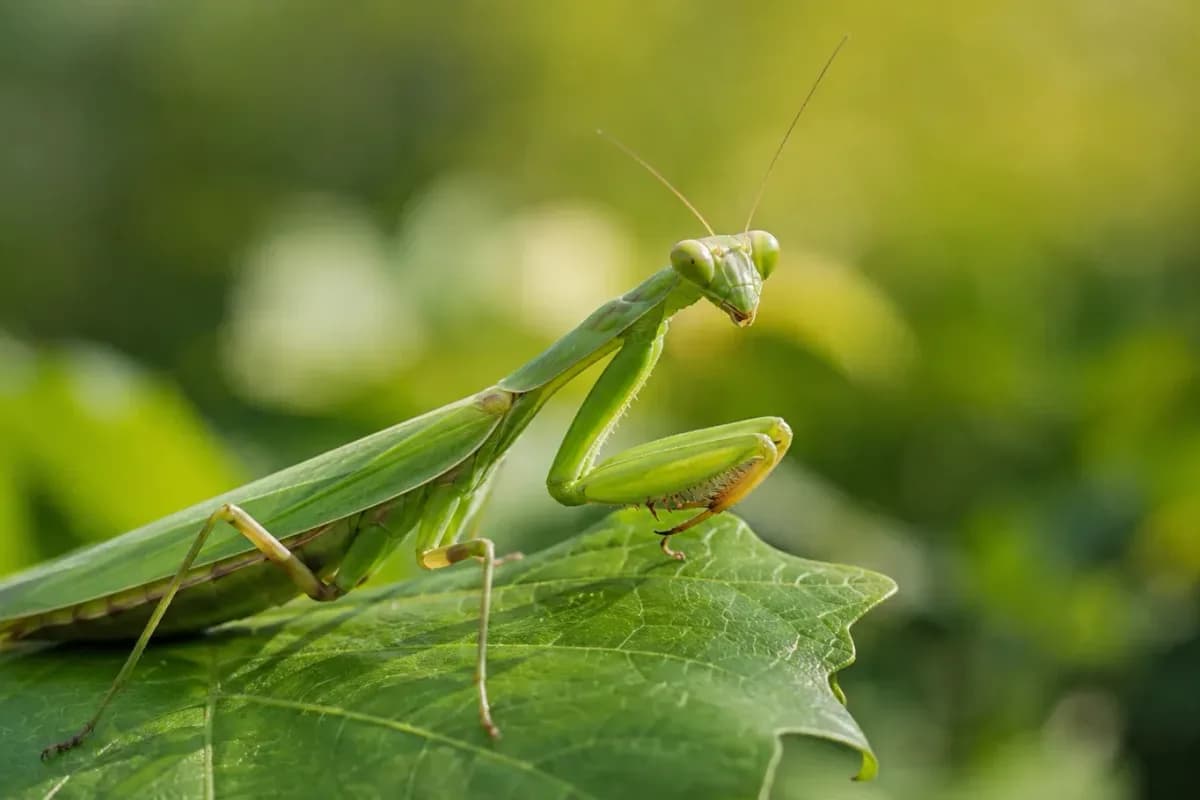
A praying mantis lives 10 to 12 months on average in the wild, spanning egg, nymph, and adult stages, though the exact length depends heavily on species, temperature, and food availability. Captive mantises with steady food and no predators sometimes live slightly longer than wild ones. The full picture across each life stage explains why the answer is rarely a single simple number.
Praying Mantis Lifespan by Life Stage
| Life stage | Typical duration |
|---|---|
| Egg (inside the ootheca) | A few weeks to several months, often overwintering |
| Nymph | Several weeks to a few months, across 5 to 10 molts |
| Adult | Typically 4 to 8 weeks, sometimes 3 to 4 months in larger species |
Egg stage: several months, often overwintering
A female mantis lays her eggs inside a foam like case called an ootheca, which hardens to protect the eggs through winter in temperate climates. This stage can last anywhere from a few weeks in warm regions to several months where the eggs overwinter before hatching in spring.
Nymph stage: several weeks to a few months
Nymphs hatch looking like miniature wingless adults and grow through a series of molts, typically 5 to 10 depending on species, over several weeks to a few months. Each molt is a vulnerable period, and nymph mortality from predation is high, which is part of why a single female lays so many eggs at once.
Adult stage: typically 4 to 8 weeks, sometimes longer
Adult mantises usually live 4 to 8 weeks after their final molt, though some larger species live closer to 3 to 4 months as adults under favorable conditions. Males generally have a shorter adult lifespan than females, partly due to the mating behavior covered below and partly due to smaller body size and lower energy reserves overall.
Do Female Mantises Really Eat the Male After Mating?
Sexual cannibalism does occur in some mantis species, but it is less common and less certain than popular reference to it suggests. Observations under laboratory conditions, where a hungry female has no other food source and cannot escape, show much higher rates of this behavior than field studies of wild mantis populations, where the male often successfully mates and leaves. When it does happen, it can provide the female with a nutritional boost that benefits egg production, which is the most likely evolutionary explanation, but it is not a guaranteed or universal outcome of mating for every species or every encounter.
What Shortens or Extends a Mantis's Lifespan
- Temperature: consistently warm conditions speed up growth and shorten overall lifespan, while cooler conditions slow development and can extend it
- Food availability: a mantis with steady access to prey grows faster and reaches adulthood sooner, but adults with abundant food also tend to live longer once mature
- Predation: birds, spiders, and other predators are the leading cause of death at the nymph stage specifically, well before natural lifespan limits are reached
- Captivity versus wild conditions: removing predation risk and providing consistent food are the two biggest factors that let captive mantises sometimes outlive wild members of the same species
How Long Do Pet or Captive Praying Mantises Live Compared to Wild Ones
A mantis kept as a pet, with a controlled enclosure, consistent temperature, and regular feeding, often reaches the upper end of its species' natural lifespan range or slightly beyond it, since the two biggest wild threats, predation and inconsistent food, are removed. Realistic expectations for a common pet species: a few months as a nymph working through its molts, followed by roughly 2 to 4 months as an adult, for a total lifespan that can approach a year from hatching.
Mantises found in a garden and identified as a beneficial predator do not need to be relocated or kept as pets to be useful. The Complete Garden Insect Identification Guide covers praying mantises alongside other beneficial garden species and how to tell beneficial insects from pests at a glance.
Found a mantis and want to confirm the exact species? Upload a photo to the free AI Bug Identifier at the top of the homepage.