Walking Stick Insect Guide: Common Species and How to Spot Them
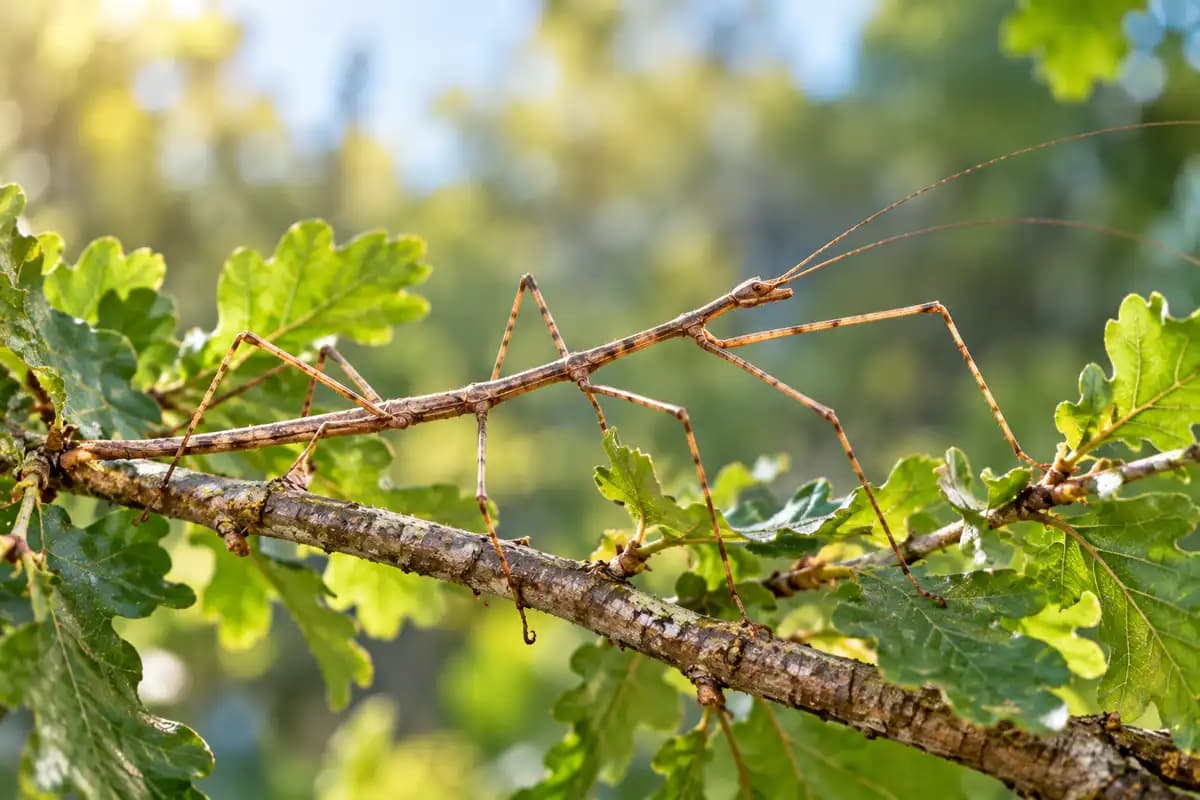
A walking stick is a slow moving, leaf eating insect whose long, thin body looks like a twig. More than 3,000 species live around the world, mostly in warm tropical forests, and a few are among the longest insects ever recorded. Here is how to spot one, the species people ask about most and what to know before keeping one as a pet.
What Is a Stick Insect and How Can You Spot One?
These insects belong to the order Phasmida, a name that comes from the Greek word for phantom. They have long, narrow bodies, long legs and thin antennae, and many have no wings. They are green, brown or gray, and hide by matching the plants they live on. During the day they stay still or sway gently like a twig; at night they climb out to feed. To find one, follow these steps:
- Search shrubs and trees after dark with a flashlight.
- Look for leaves with smooth, curved bites taken from the edges.
- Watch for a "twig" that has legs or antennae.
- Check under host plants for small droppings and seed shaped eggs.
Spotted a twig that moves? Upload a photo to the free ScanaBug Insect Identifier to confirm the species, its habitat and a safety rating.
Common Species of Walking Sticks and Phasmids
The species below are the ones people search for and keep as pets most often. Sizes are for adult females, which are usually much larger than males.
| Species | Where it lives | Adult size | Key feature |
|---|---|---|---|
| Northern walking stick (Diapheromera femorata) | Eastern and central North America | 7.5 to 9.5 cm (3 to 3.75 in) | Wingless, brown or green, feeds on oak and hazel |
| Indian walking stick (Carausius morosus) | Southern India, common as a pet worldwide | 8 to 10 cm (3 to 4 in) | Females lay fertile eggs without males |
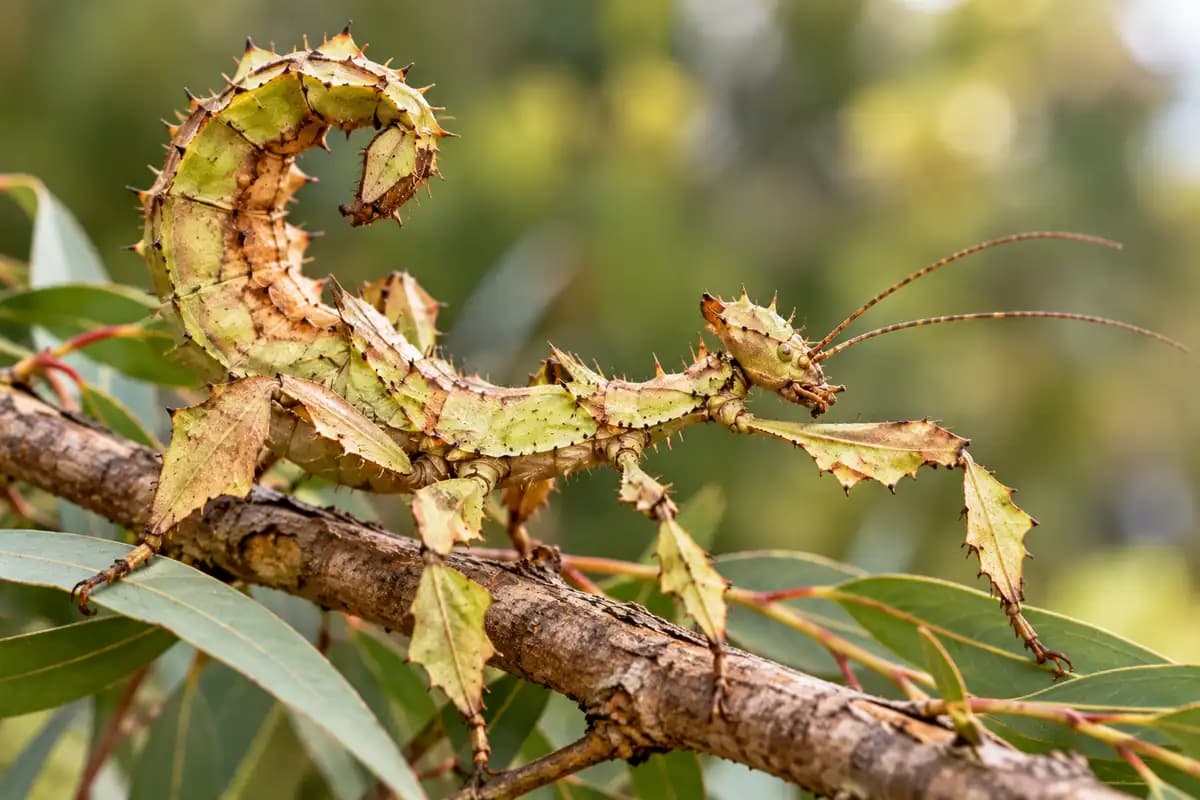
| Giant prickly stick insect (Extatosoma tiaratum) | Eastern Australia | Up to about 20 cm (8 in) | Spiny body, curls its tail like a scorpion |
| Goliath phasmid (Eurycnema goliath) | Northern and eastern Australia | Up to about 25 cm (10 in) | One of the longest phasmids in Australia, mostly green |
| Thorny devil (Eurycantha calcarata) | New Guinea and nearby islands | 12 to 15 cm (5 to 6 in) | Heavy, dark body with thick leg spines |
| Pink winged phasmid (Sipyloidea sipylus) | Southeast Asia | 8 to 10 cm (3 to 4 in) | Pale body, pink hind wings, can fly |
| Lord Howe Island phasmid (Dryococelus australis) | Ball's Pyramid and captive breeding | Up to about 15 cm (6 in) | Glossy black, nicknamed the tree lobster |
The northern walking stick is the species most people in North America see, often on oak trees in late summer. The giant prickly species curls her abdomen over her back like a scorpion when threatened, though she has no sting.
The Lord Howe Island Stick Insect: The Rarest Insect Comeback
The Lord Howe Island phasmid is a large, black, flightless phasmid that was thought to be extinct for about 80 years. Black rats reached the island in 1918 and the insects vanished soon after. In 2001, a research team climbed Ball's Pyramid, a steep rock tower in the sea about 23 km away, at night and found 24 living insects on a single shrub.
Two pairs were taken into captivity, and a breeding program led by Melbourne Zoo has since raised many generations. A 2017 genetic study confirmed the Ball's Pyramid insects are the same species once found on Lord Howe Island. Rats have since been removed from the island, which opens the door to returning the insects to their original home.
How Big Do Walking Sticks Get?
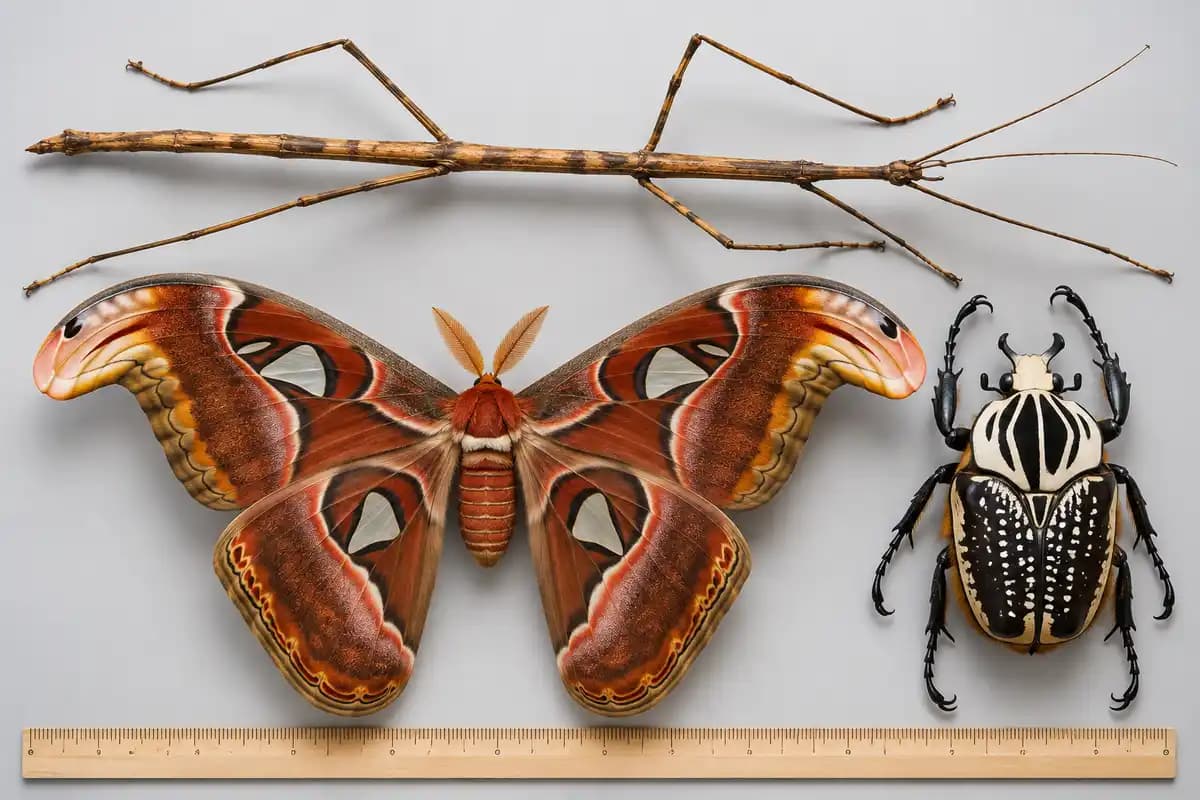
Most species measure between 5 and 15 cm (2 and 6 inches) long, but the largest are far bigger. The longest insect ever recorded is Phryganistria chinensis from southern China, a captive specimen of which reached about 64 cm (25 inches) with its legs extended. Our post on the biggest insects in the world compares these giants with record breaking moths and beetles.
Walking Stick Eggs and Life Cycle
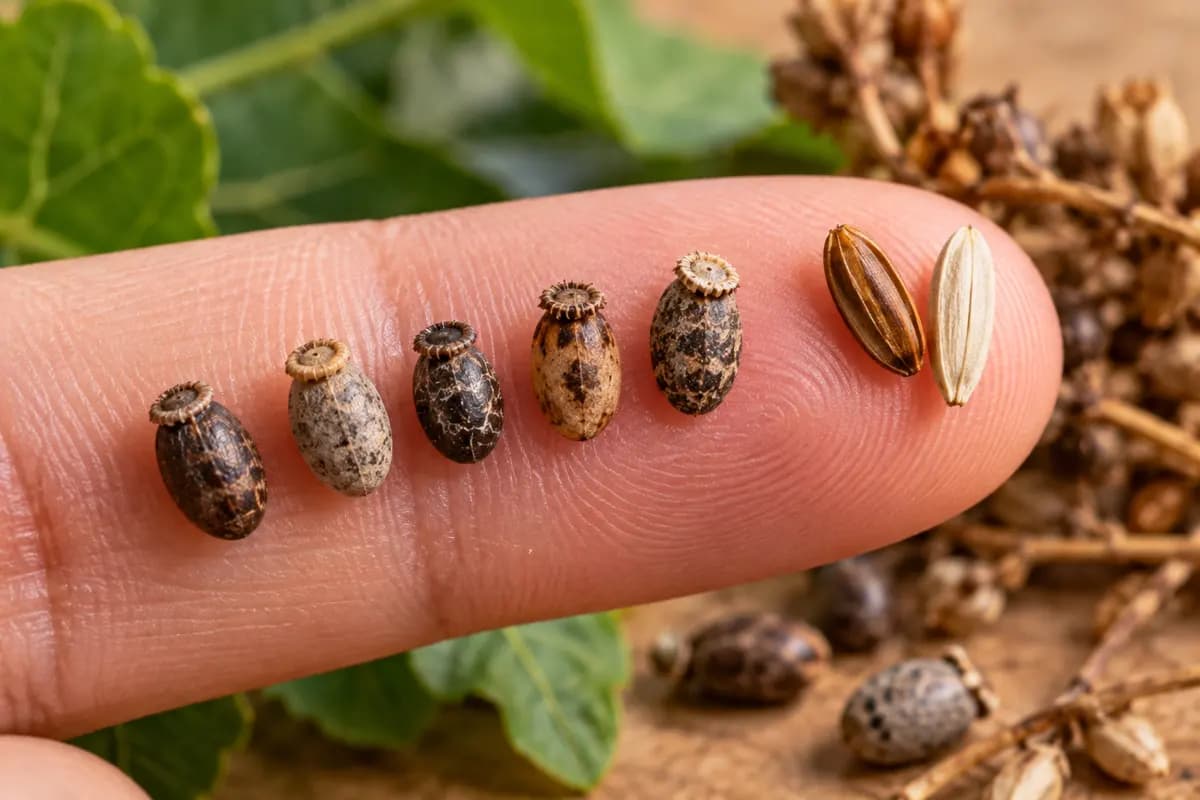
Walking sticks grow through incomplete metamorphosis, which has three stages: egg, nymph and adult. The nymphs look like small copies of the adults and molt several times as they grow. The eggs are one of the most unusual parts of their life: in many species, females simply drop or flick their eggs to the ground, where they look almost exactly like plant seeds. Some eggs even have a small knob that attracts ants, which carry them underground and keep them safe from predators.
A few species, including the Indian walking stick, can reproduce without males, laying eggs that hatch into more females, which is why pet owners often end up with dozens of young.
Are Walking Sticks Dangerous? Do They Bite?
Walking sticks are harmless to people and do not bite in a way that causes injury. They eat only plants and rely on hiding, not fighting. When disturbed, they use several defenses:
- Freezing or playing dead so predators lose interest.
- Dropping a leg to escape a predator's grip. Young nymphs can regrow it when they molt.
- Kicking with spiny legs, as seen in the thorny devil.
- Spraying a defensive chemical, as the two striped walking stick of the southeastern United States does. It can irritate the eyes, so avoid handling this species.
Keeping Phasmids as Pets
Phasmids are popular pets because they are quiet, easy to feed and safe to handle gently. Indian walking sticks, giant prickly species and pink winged phasmids are common beginner choices. Basic care includes:
- A tall, ventilated enclosure at least three times as tall as the insect is long, so it has room to molt.
- Fresh leaves from the right plant, such as bramble, privet, oak or eucalyptus, depending on the species.
- Light misting with water every day or two.
Check local laws before buying one. In the United States, keeping non native phasmids requires a permit from the US Department of Agriculture, because they can harm crops if released. Never release a pet phasmid outdoors.
Frequently Asked Questions
Sources and References
- NSW Department of Planning and Environment. Rediscovering the Lord Howe Island Phasmid.
- Smithsonian Institution, National Museum of Natural History. Insects as Pets, BugInfo.
- Mikheyev, A. S. and others. 2017. Museum Genomics Confirms that the Lord Howe Island Stick Insect Survived Extinction. Current Biology, Volume 27.
- Priddel, D., Carlile, N. and others. 2003. Rediscovery of the extinct Lord Howe Island stick insect. Biodiversity and Conservation.
- US Department of Agriculture, Animal and Plant Health Inspection Service. Plant pest permits for live insects.