The Biggest Insects in the World by Length, Wingspan and Weight
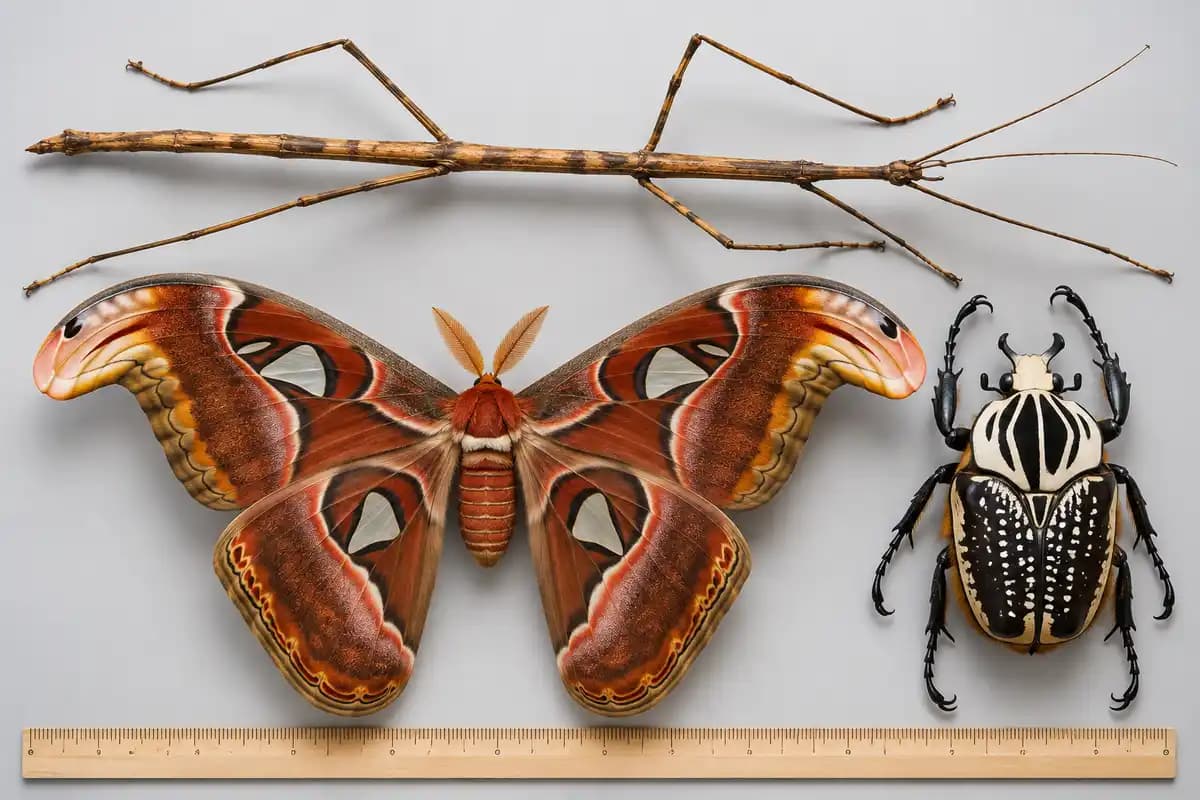
The biggest insect in the world depends on how you measure size. By length, a stick insect from southern China holds the record at about 64 cm (25 inches) with its legs stretched out. By wingspan, giant moths win. By weight, Goliath beetles and the giant weta of New Zealand take the title. Here is every record holder, a top 10 table and tips for identifying a giant insect you find yourself.
What Is the Biggest Insect in the World?
There is no single answer, because scientists measure insect size in three different ways. Each method crowns a different winner.
- Length: total body length, often with legs stretched forward. Stick insects lead this category.
- Wingspan and wing area: the distance from wingtip to wingtip, or the total surface of the wings. Moths and butterflies lead here.
- Weight: how heavy the insect is. Beetles and weta lead here.
When you see a headline about the largest insect, check which of these it means. A stick insect can be ten times longer than a beetle and still weigh far less.
The Longest Insect: Giant Stick Insects
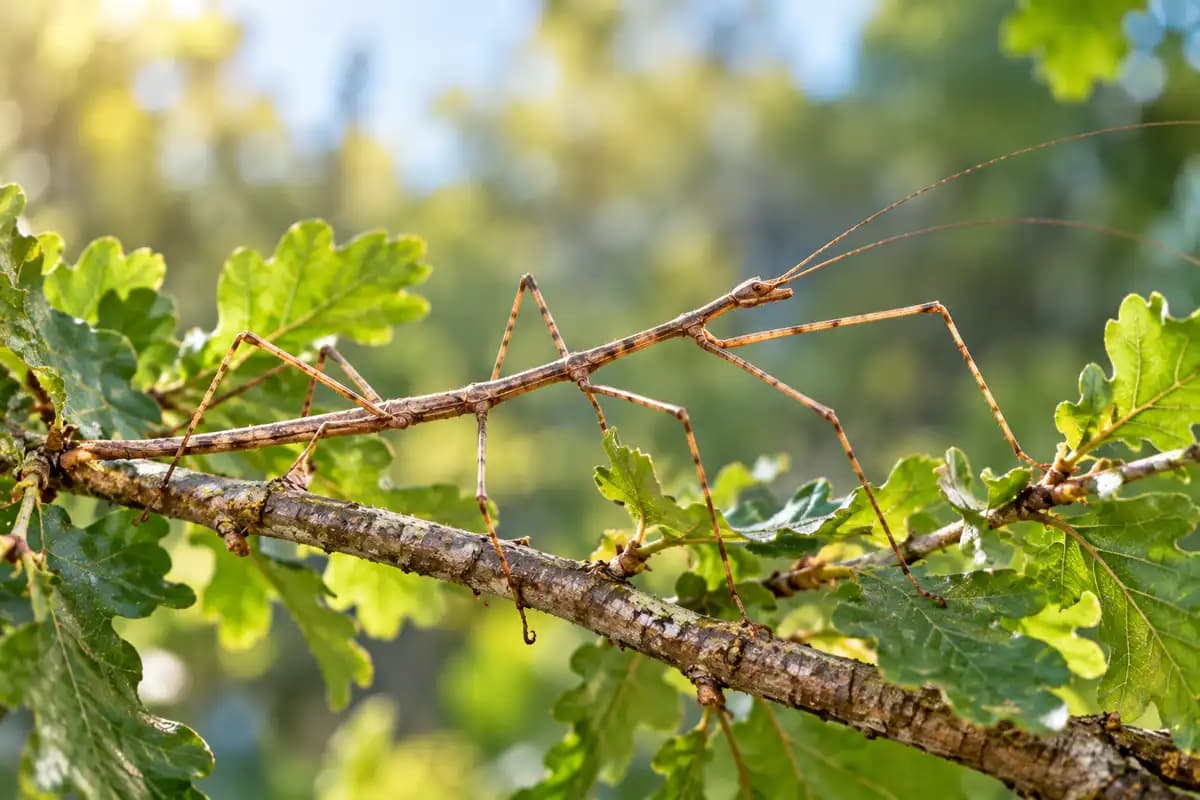
The longest insect ever recorded is Phryganistria chinensis, a stick insect from Guangxi in southern China. Zhao Li of the Insect Museum of West China found a wild female in 2014 that measured 62.4 cm (24.6 inches) with her legs extended. One of her offspring, bred at the museum, later reached about 64 cm (25 inches).
The previous record holder was Chan's megastick from Borneo, at 56.7 cm (22.3 inches). That specimen is now held at the Natural History Museum in London. These records include the legs. The bodies alone are shorter, but still longer than a standard school ruler.
The Largest Wingspan: Atlas Moth, Hercules Moth and White Witch
The insects with the widest wings are giant moths from tropical forests. Three species compete for this title.
- White witch moth: this gray and brown moth from Central and South America has the widest wingspan of any insect, reaching about 28 to 30 cm (11 to 12 inches).
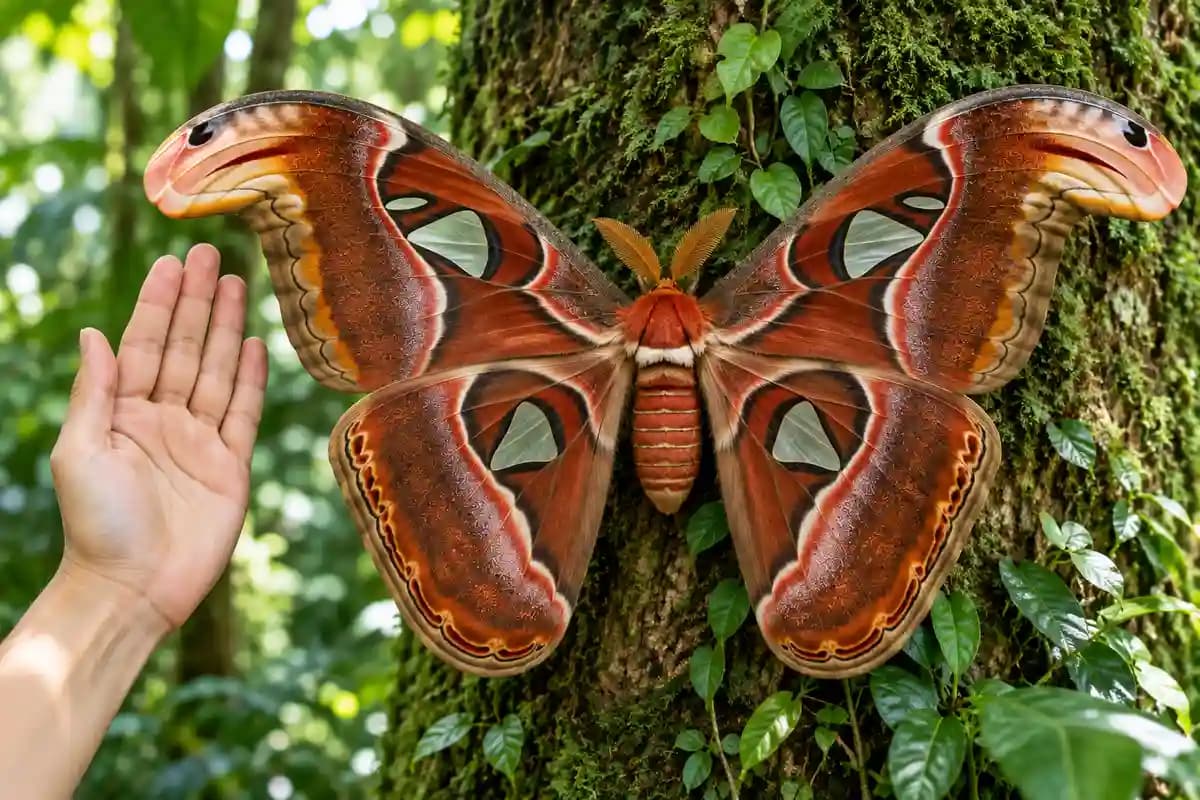
- Atlas moth: found in the forests of South and Southeast Asia, it has huge reddish brown wings with tips that look like snake heads. The Smithsonian lists its wingspan at up to 12 inches (30 cm).
- Hercules moth: this moth from New Guinea and northern Australia has a slightly shorter span of about 10.5 inches (27 cm), but its wings cover the largest total area of any moth, roughly 40 square inches (260 square centimeters).
Adult Atlas moths do not eat at all. They live for about one to two weeks on energy stored as caterpillars.
Among flying insects, Queen Alexandra's birdwing from Papua New Guinea is the largest butterfly, with females reaching about 28 cm (11 inches) across. Giant water bugs are another surprise: these brown water insects grow to about 12 cm (4.7 inches) and often gather around bright lights at night.
The Biggest Beetles: Titan, Hercules and Goliath
Beetles hold most of the records for bulk. Each of these three is famous for a different reason.
- Titan beetle: this South American longhorn beetle has the largest body of any known beetle, reaching about 16.5 cm (6.5 inches).
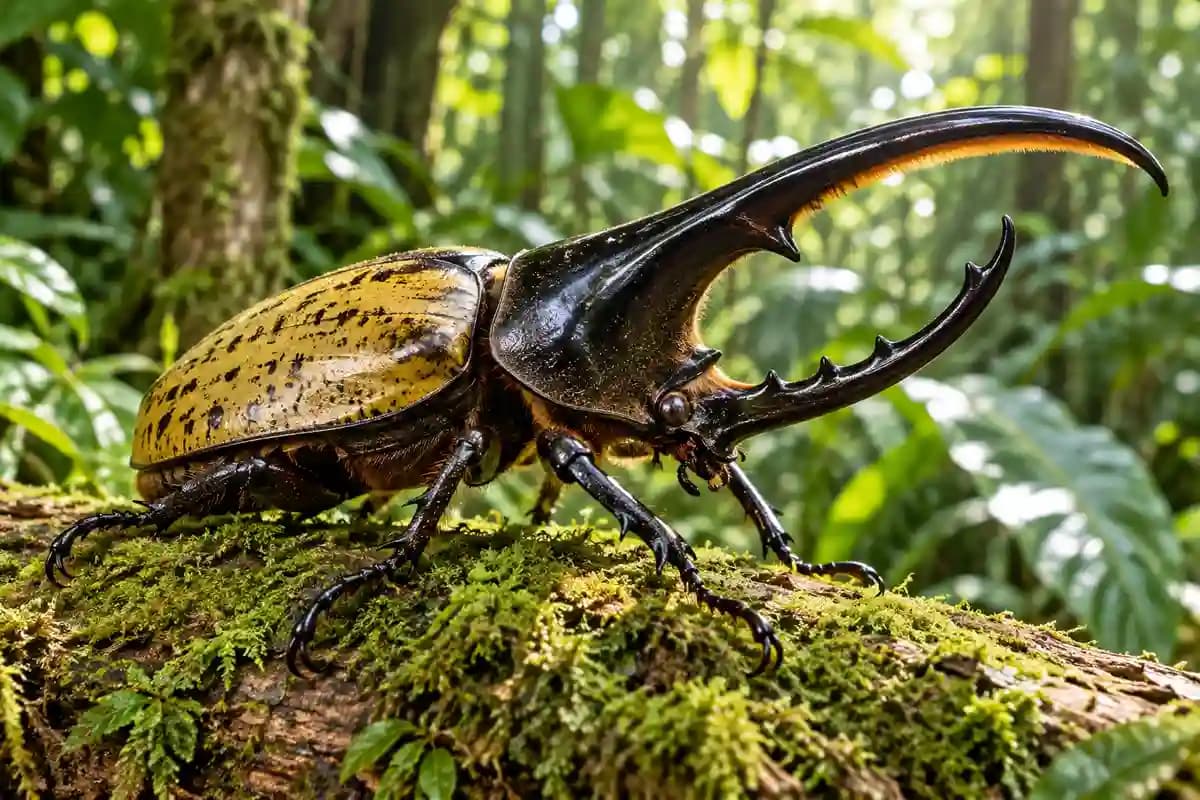
- Hercules beetle: males from Central and South America reach about 17 cm (6.7 inches), but much of that length is their long front horn, which makes them the longest beetles.
- Goliath beetle: these African beetles are among the heaviest adult insects, and their larvae can weigh about 100 grams (3.5 ounces), the heaviest insect weight on record.
The giant weta of New Zealand is a close rival. One female carrying eggs weighed about 71 grams (2.5 ounces), heavier than a house mouse.
Top 10 Biggest Insects in the World
This table compares the record holders by the measure they win on.
| Insect | Record | Approximate size | Where it lives |
|---|---|---|---|
| Phryganistria chinensis | Longest insect | 64 cm (25 in) with legs | Southern China |
| Chan's megastick | Second longest insect | 56.7 cm (22.3 in) with legs | Borneo |
| White witch moth | Widest wingspan | 28 to 30 cm (11 to 12 in) | Central and South America |
| Atlas moth | Huge wingspan | Up to 30 cm (12 in) | South and Southeast Asia |
| Hercules moth | Largest wing area | 27 cm (10.5 in) wingspan | New Guinea, northern Australia |
| Queen Alexandra's birdwing | Largest butterfly | 28 cm (11 in) wingspan | Papua New Guinea |
| Hercules beetle | Longest beetle | 17 cm (6.7 in) with horn | Central and South America |
| Titan beetle | Largest beetle body | 16.5 cm (6.5 in) | South America |
| Goliath beetle | Heaviest larvae | 100 g (3.5 oz) | Tropical Africa |
| Giant weta | Heaviest adult on record | 71 g (2.5 oz) | New Zealand |
Are Big Insects Dangerous?
Most of the biggest insects are harmless to people. Stick insects only eat leaves, giant moths cannot bite, and big beetles usually just try to walk away. A few can hurt if you handle them: giant water bugs give a very painful bite, large beetles may pinch, and weta can kick with spiny legs. If something bites you and you are unsure what it was, the ScanaBug bug bite identifier can help you narrow it down.
Size and danger rarely go together. The insect that causes the most human deaths is the mosquito, because it spreads diseases such as malaria.
How to Identify a Large Insect You Found
Most large insects people find at home are local species, not world record holders. Common examples include cicadas, sphinx moths, luna moths, dobsonflies and rhinoceros beetles. A big insect near a porch light is usually a moth or beetle that flew toward the glow. To identify one quickly, follow these steps:
- Place a coin or ruler beside it for scale.
- Photograph it from above and from the side.
- Note whether it has wings, horns or long legs.
- Upload the photo to the ScanaBug insect identifier.
Many big insects look alarming but turn out to be common and harmless.
Frequently Asked Questions
Sources and References
- Smithsonian Institution, National Museum of Natural History. Incredible Insects, BugInfo.
- Smithsonian Institution, National Museum of Natural History. Beetles, BugInfo.
- Natural History Museum, London. Chan's megastick (Phobaeticus chani) specimen records.
- Insect Museum of West China, Chengdu. Phryganistria chinensis record specimen, reported by Xinhua News Agency, May 2016.
- Grimaldi, D. and Engel, M. S. 2005. Evolution of the Insects. Cambridge University Press.