Bug Photo Gallery: Common Bugs Identified by Picture
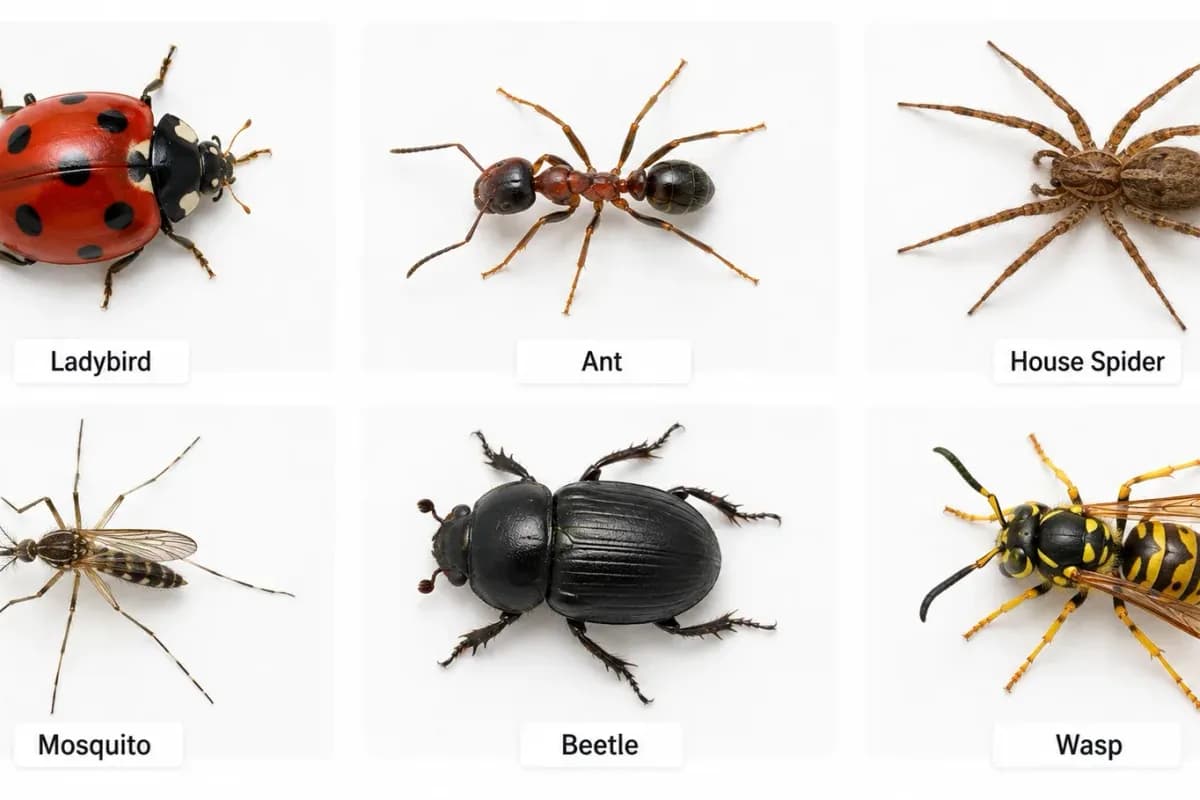
This gallery groups the most commonly searched bugs by where you are likely to find them: house, garden, spiders, and flying or biting insects. Each entry includes the common name, a quick identifying feature, and a danger note. If your bug is not here, the AI Bug Identifier at the top of the homepage covers over 10,000 species and gives a confirmed answer from your own photo in seconds.
House Bugs
The insects found most often indoors, grouped by where they typically appear.
Cockroach
NuisanceReddish brown, flat oval body, long thin antennae. Found near kitchens and bathrooms, active mostly at night. Presence indoors usually signals a food or moisture source nearby.
Silverfish
HarmlessSilver grey, teardrop shaped, fast moving, no wings. Found in damp areas such as bathrooms and basements. Feeds on paper, glue, and starches and is harmless to humans.
Carpet Beetle
NuisanceSmall, oval, mottled black, white, and orange scales as an adult. Larvae are the more commonly seen stage, oval and bristly, found near wool and natural fiber items.
Full guide →Black Ant
NuisanceGlossy black, 1 to 3mm, moves in a visible trail along walls and countertops toward a food source.
Drain Fly
NuisanceSmall, fuzzy, moth shaped wings, sits still on walls near bathroom or kitchen drains rather than flying actively.
Full guide →Pantry Moth
NuisanceGrey near the body, reddish bronze at the wing tip, seen flying near kitchen ceilings in the evening. Larvae live inside dry food packaging.
Full guide →Garden Bugs
Common outdoor species, both pests and the beneficial insects that help control them. See the Complete Garden Insect Identification Guide for a deeper breakdown of which garden bugs help and which harm.
Aphid
NuisanceTiny, soft bodied, green, black, or pink, found in dense clusters on new growth and the underside of leaves.
Ladybird Beetle
HarmlessRound, domed, red or orange with black spots. A major aphid predator worth protecting in any garden.
Full guide →Hoverfly
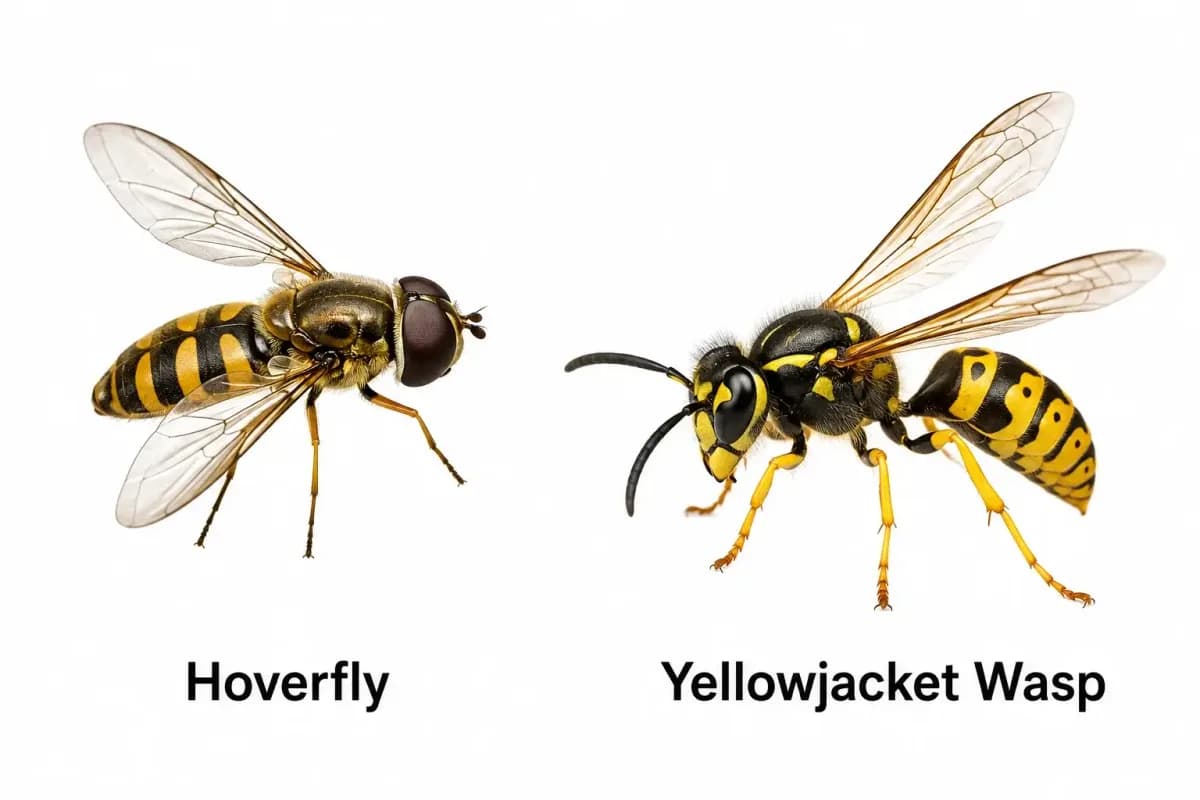
HarmlessYellow and black banding that mimics a wasp, but with only two wings and a habit of hovering motionless above flowers rather than landing to sting.
Ground Beetle
HarmlessDark, glossy, fast moving, usually found under mulch or stones rather than on plants. Hunts slugs and cutworms at night.
Caterpillar
NuisanceSoft bodied larva with 6 true legs at the front and up to 10 fleshy prolegs along the body. Species and host plant vary widely.
Wasp
CautionNarrow waist, smooth body, four wings, yellow and black banding. Beneficial as a predator of garden pests but can become defensive near an active nest.
Spiders
For full species identification and a danger rating on any spider, see the Spider Identifier tool, which covers over 200 species worldwide.
Common House Spider
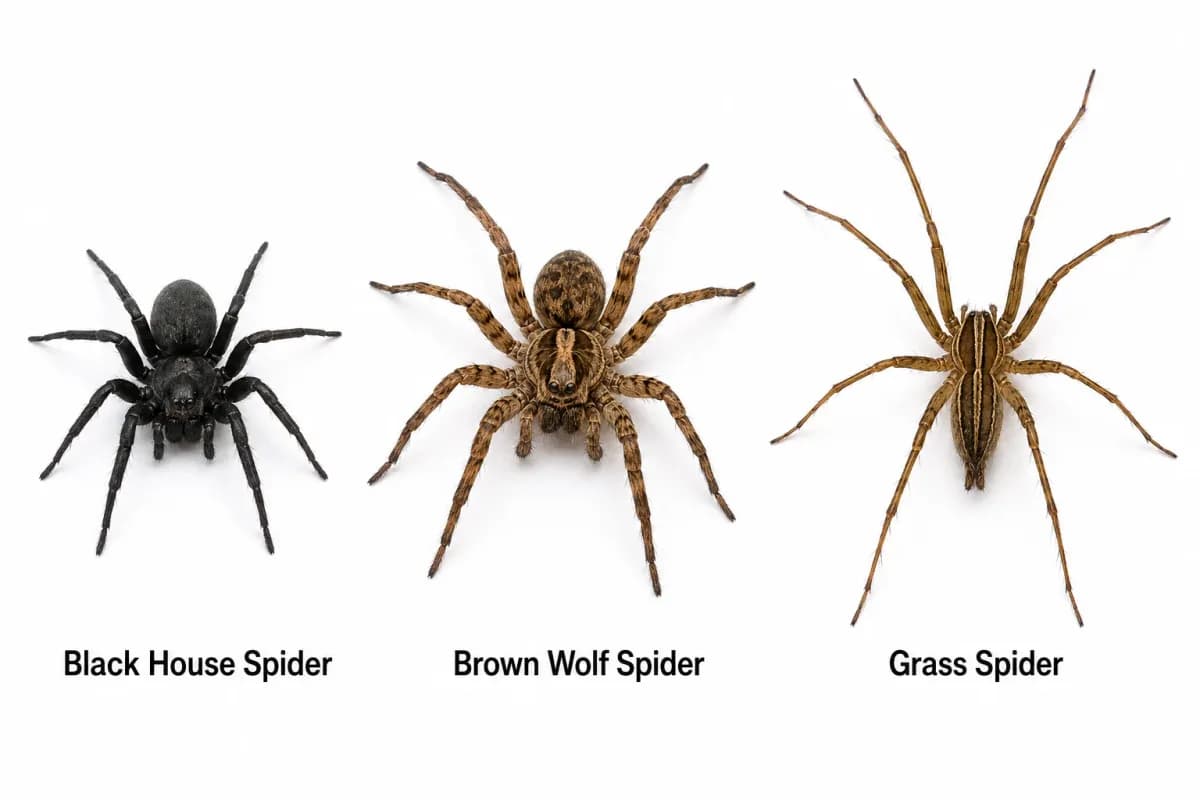
HarmlessBrown, small, builds a loose tangled web in corners. Harmless and one of the most frequently found indoor spiders.
Wolf Spider
HarmlessGrey brown, robust body, no web, hunts on the ground. Fast moving and often mistaken for something more dangerous purely due to its size.
Garden Orb Weaver
HarmlessRound striped abdomen, builds a large circular web between plants or structures. Harmless and beneficial for controlling flying insects.
Brown Recluse
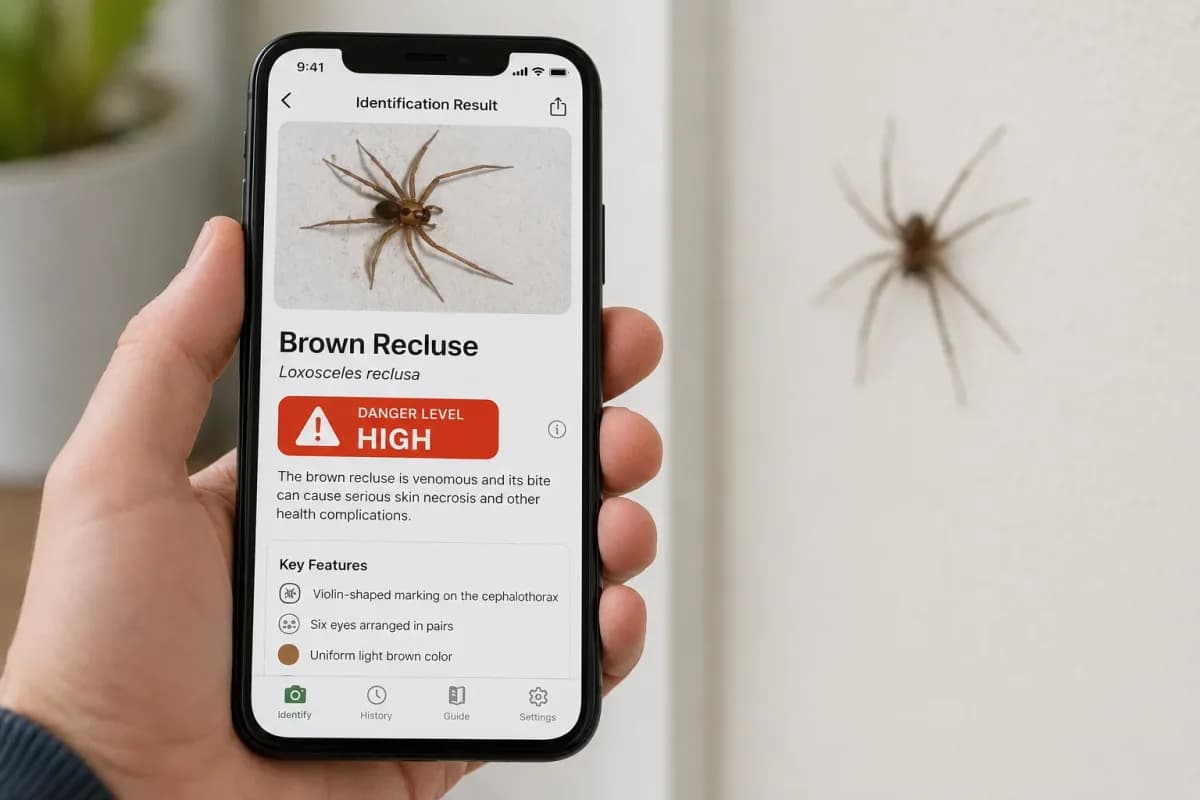
CautionPale to medium brown with a violin shaped marking on the back. Found in dark, undisturbed spaces such as closets and stored boxes.
Black Widow
CautionGlossy black with a red or orange hourglass marking on the underside of the abdomen. Builds an irregular tangled web low to the ground.
Flying and Biting Insects
For bite identification specifically, use the Bug Bite Identifier. For full species detail on true insects, see the Insect Identifier.
Mosquito
CautionThin body, long legs, active around dusk and near standing water. Bites leave a small raised bump with immediate itch.
Honeybee
CautionFuzzy golden brown body, gentle temperament, stings only when directly threatened or handled.
Fruit Fly
NuisanceSmall, tan, visible red eyes, circles ripe fruit and recycling. Does not bite.
Full guide →Tick
CautionFlat, oval, 8 legs as an adult, attaches to skin and feeds slowly. Often found after time in tall grass or wooded areas.
Cannot Find Your Bug in This Gallery?
A gallery this size can only cover the most commonly searched species. If your bug does not match anything above, upload a clear photo to the free AI Bug Identifier at the top of the homepage. It covers a database of over 10,000 species and returns the name, danger level, and next steps in seconds.
Upload a photo to the AI Bug Identifier for a confirmed match if nothing in this gallery matches what you found.