How to Identify Crickets: House, Field, Spider and Mole Crickets
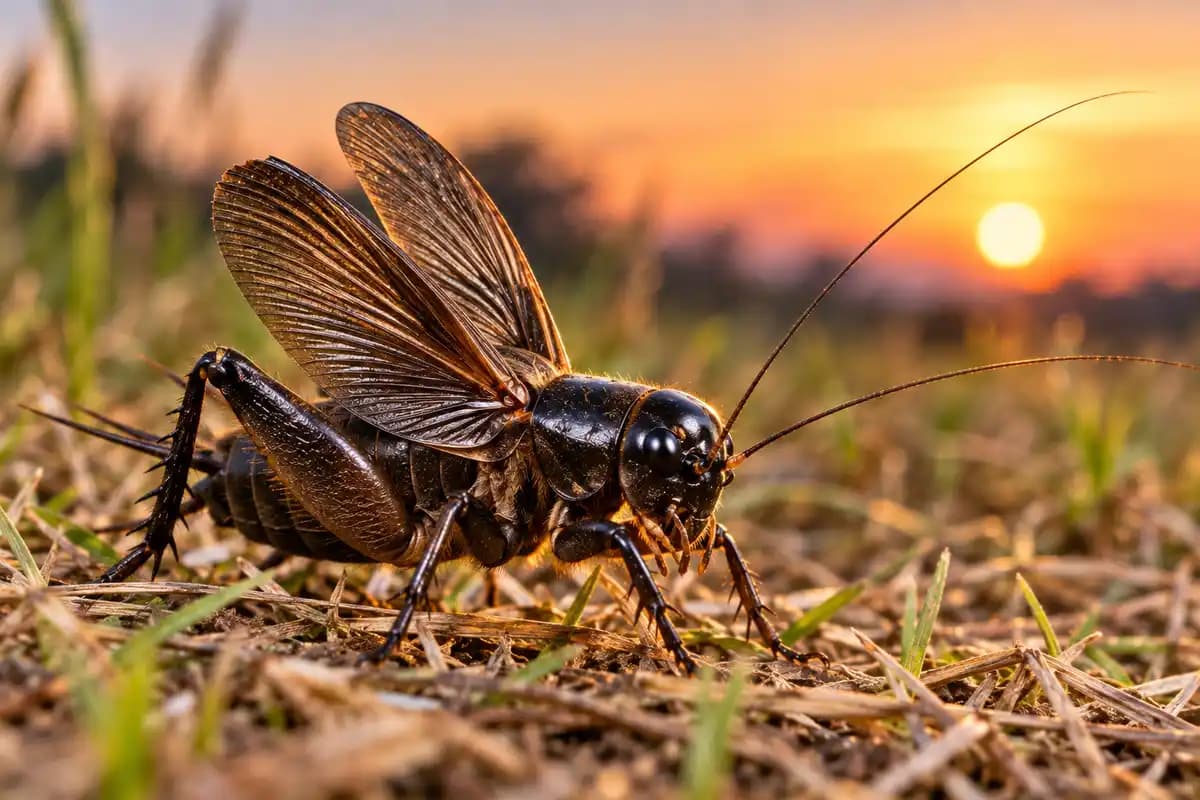
A cricket insect is a jumping insect with long, thin antennae, big back legs and wings folded flat over its back. The crickets most people find at home are house crickets, field crickets and camel crickets. Two lookalikes, the Jerusalem cricket and the mole cricket, also cause plenty of confusion. This guide shows you how to tell them apart and when they become a problem.
What Is a Cricket and How Do You Recognize One?
A cricket is an insect in the order Orthoptera, the same group as grasshoppers and katydids. Like all insects, it has six legs, three body parts and one pair of antennae. Look for these features to confirm you have a cricket:
- Long, threadlike antennae that are often longer than the body. Grasshoppers have short antennae.
- Large hind legs built for jumping.
- Two short tail feelers called cerci at the tip of the abdomen.
- A long, needlelike egg laying tube on adult females, called an ovipositor.
Most crickets are active at night and hide under rocks, leaves or boards during the day.
House Cricket vs Field Cricket vs Camel Cricket
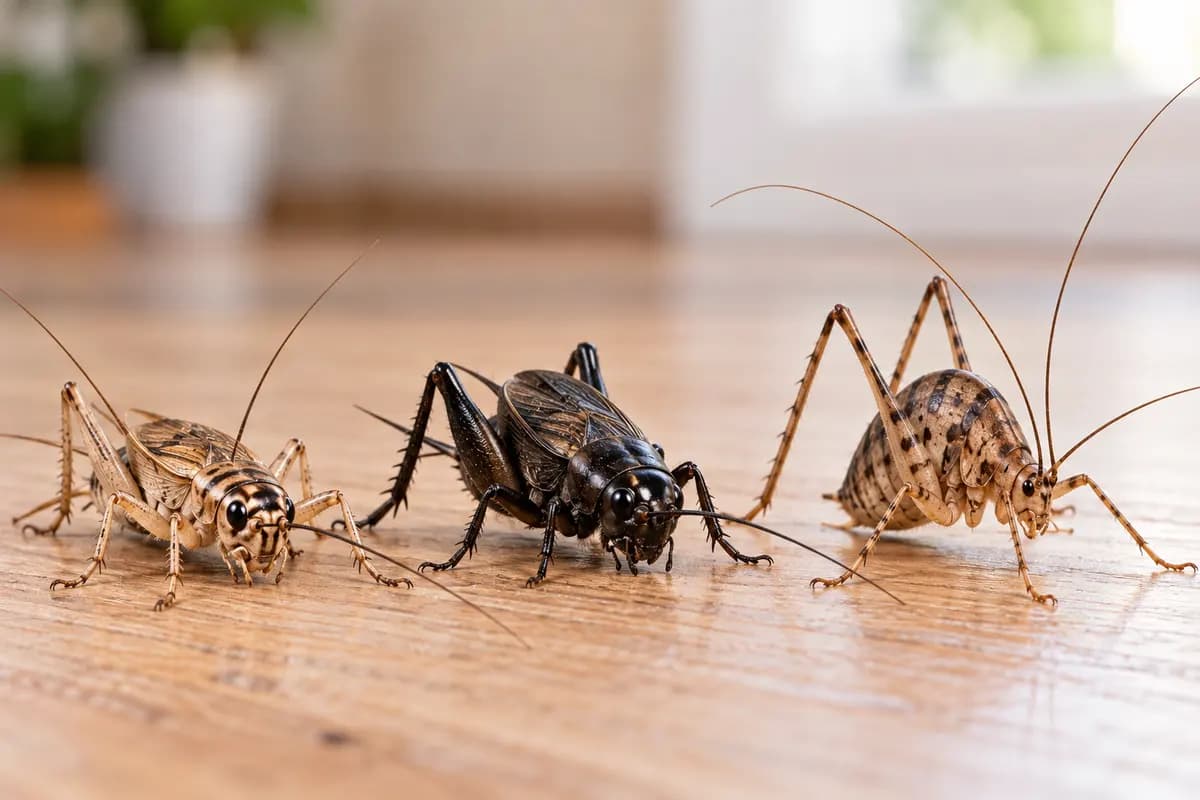
These three crickets are the most common indoors, and each has a few clear clues. The table below compares them side by side.
| Feature | House cricket | Field cricket | Camel cricket |
|---|---|---|---|
| Color | Light yellowish brown with three dark bands on the head | Shiny black or dark brown | Tan to brown, often with dark bands |
| Body length | About 2 cm (3/4 in) | About 1.5 to 2.5 cm (5/8 to 1 in) | About 1.3 to 3.8 cm (1/2 to 1 1/2 in) |
| Wings | Yes | Yes | None |
| Chirps | Yes | Yes | No |
| Drawn to lights | Yes | Yes | No |
| Found indoors | Warm rooms, kitchens, near heaters | Garages, doorways, ground floors in late summer | Damp basements, crawl spaces, laundry rooms |
If you search for a black cricket insect, you are almost always looking at a field cricket. Field crickets live outdoors in lawns and fields, then wander inside as nights cool. House crickets are paler and can live and breed indoors where it stays warm.
Spider Crickets: The Insect That Looks Like a Spider
Spider crickets are camel crickets, wingless crickets whose long legs and humped backs make them look like spiders. People also call them sprickets or cave crickets. The fastest way to tell them apart is to count legs: spider crickets have six legs, two long antennae and a curved back, while spiders have eight legs, no antennae and two body sections. If what you found does have eight legs, use the ScanaBug spider identifier instead.
Spider crickets jump in sudden, random directions when startled, which can feel like they are leaping at you. They are harmless. They gather in damp places, so a dehumidifier, sealed gaps around doors and sticky traps along walls usually reduce their numbers.
Found a cricket or a spidery lookalike and still not sure? Upload a clear photo to the free ScanaBug Insect Identifier for the species, habitat and a safety rating in seconds.
Jerusalem Crickets: Child of the Earth and Sand Puppy
Jerusalem crickets are large, wingless insects with a big round head and a striped, amber colored abdomen. They live mainly in western North America and Mexico. Despite the name, they are not true crickets and are not from Jerusalem. They are known by several local names, including child of the earth, potato bug and sand puppy, and adults can grow to about 5 cm (2 inches) long.
Jerusalem crickets are not venomous, but their strong jaws can give a painful bite if you pick one up, so handle them with care.
Mole Crickets in Lawns
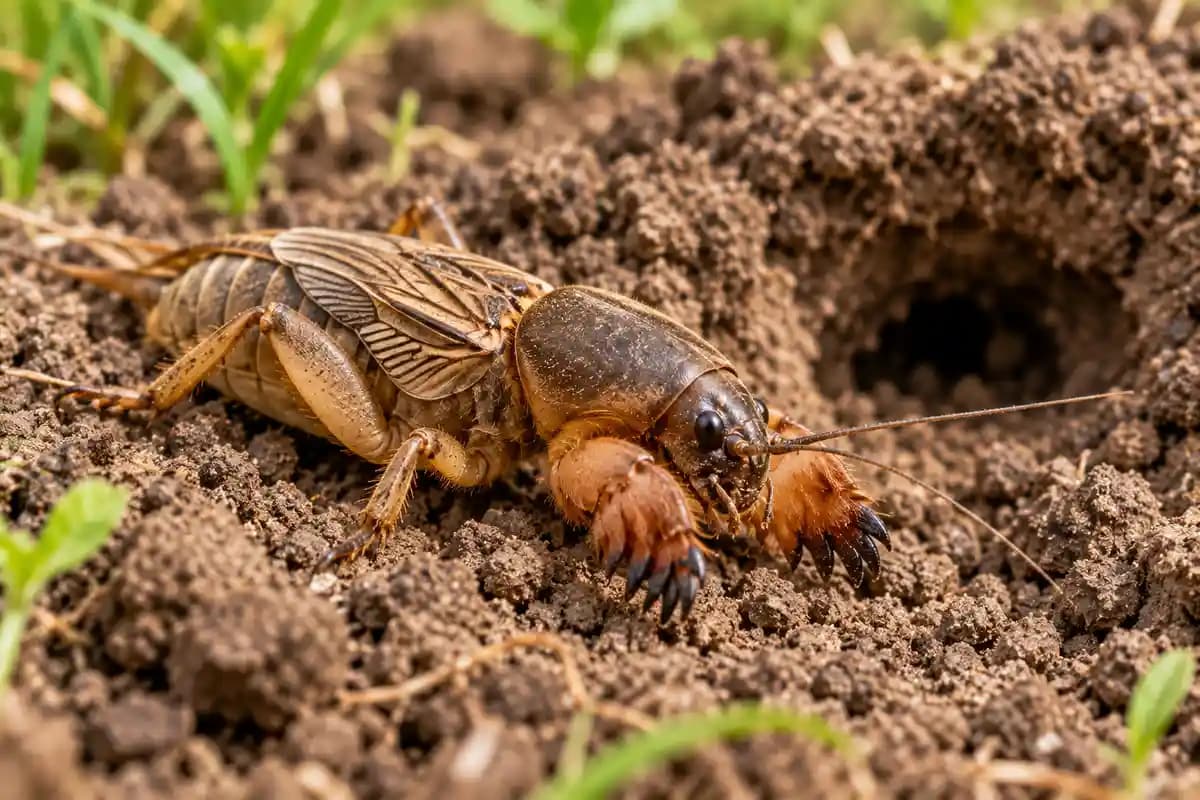
Mole crickets are burrowing crickets with wide, shovel shaped front legs that dig through soil like tiny moles. They are brown, velvety and about 2.5 to 4 cm (1 to 1 1/2 inches) long. Their tunnels lift the soil and loosen grass roots, leaving spongy brown patches in lawns.
To check for them, mix about two tablespoons of liquid dish soap into two gallons (about 7.5 liters) of water, pour it over a damaged patch, and any mole crickets will crawl to the surface within a few minutes.
Field Cricket vs Grasshopper: How to Tell Them Apart
The quickest way to tell a field cricket from a grasshopper is to look at the antennae. Crickets have very long, threadlike antennae, often longer than the body, while grasshoppers have short, thick antennae. A few more clues help:
- Activity: crickets are mostly active at night, grasshoppers during the day.
- Wings: cricket wings lie flat over the back, grasshopper wings fold along the sides like a tent.
- Sound: crickets chirp by rubbing their wings together, grasshoppers rub a hind leg against a wing.
- Diet: crickets eat almost anything, including fabric, while grasshoppers mostly eat plants.
Why Do Crickets Chirp?
Crickets chirp to attract females and to warn rival males away. Only adult males chirp, and they make the sound by rubbing a hard scraper on one front wing against a row of ridges on the other wing. Each species has its own song, and chirping speeds up as the temperature rises, because crickets are cold blooded. In fact, the snowy tree cricket is nicknamed the thermometer cricket: count its chirps in 14 seconds, add 40, and you get a close estimate of the temperature in degrees Fahrenheit.
Do Crickets Bite? Are They Harmful?
Crickets rarely bite people, and their bites are not dangerous. House and field crickets may nibble if handled, but they seldom break the skin. Indoors, the bigger concern is damage: large numbers can chew holes in cotton, wool, silk, paper and cardboard, especially items with food stains. Simple steps keep them out:
- Seal cracks around doors, windows and pipes.
- Switch outdoor lights to yellow bulbs, which attract fewer insects.
- Fix leaks and run a dehumidifier in damp basements.
- Clear leaf piles, firewood and clutter away from the foundation.
Frequently Asked Questions
Sources and References
- NC State Extension. Camel Crickets. North Carolina State University.
- University of Minnesota Extension. Crickets.
- University of Florida, IFAS Extension. Mole Crickets, Featured Creatures and turfgrass pest publications.
- Cornell Cooperative Extension, Nassau County. Cave (Camel) Crickets Home Grounds Fact Sheet.
- Capinera, J. L. (editor). 2008. Encyclopedia of Entomology, 2nd edition. Springer.