Black Spiders and Brown Spiders: Not Every One Is Dangerous
Finding a black or brown spider triggers an immediate assumption for a lot of people: black widow, or brown recluse. In most parts of the world, and for most individual spiders found indoors or in a garden, that assumption is wrong. Black and brown are two of the most common spider colors on earth, worn by dozens of completely harmless species. This guide covers the other common black and brown spiders worth knowing, so a color alone does not automatically mean panic.
Common Black Spiders Besides the Black Widow
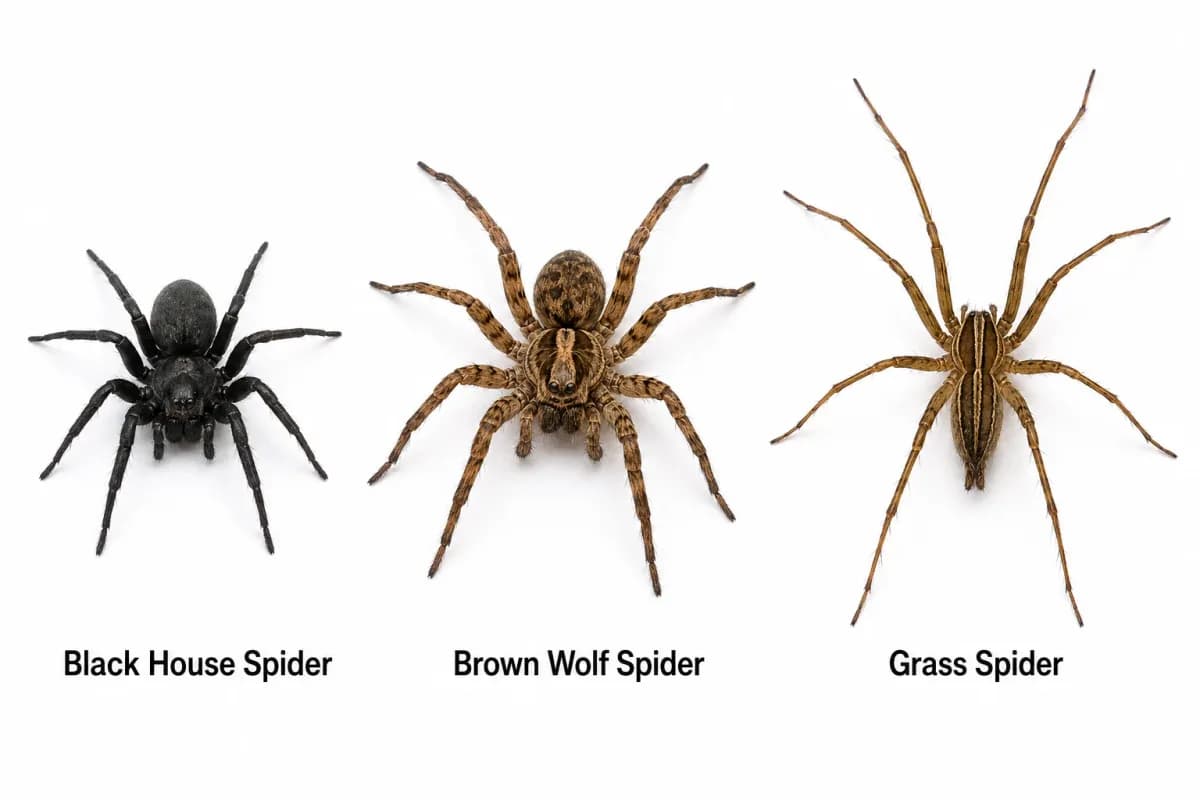
Black House Spider
Dark brown to black, robust body, builds a messy funnel shaped web in corners, window frames, and garden sheds. Often mistaken for a black widow purely on color, but it lacks the red or orange hourglass marking entirely and has a noticeably more robust, less glossy body.
Dark Wolf Spider
Several wolf spider species run dark grey to near black, especially in shaded or forested regions. Wolf spiders build no web at all and hunt actively on the ground, which alone rules out a black widow, since black widows stay in their web and rarely move far from it.
Dark Jumping Spiders
Many jumping spider species are black or very dark with small, distinct colored markings, often iridescent green or blue on the body or legs. Their large forward facing eyes and compact, square shaped body are immediately different from a black widow's smooth, round abdomen.
Common Brown Spiders Besides the Brown Recluse
Common House Spider
Light to medium brown, small, builds a loose tangled web in undisturbed corners. This is one of the most frequently found indoor spiders worldwide and is harmless, lacking the violin shaped marking a brown recluse carries.
Grass Spider
Brown with pale longitudinal stripes running down the body, builds a distinctive flat sheet web with a funnel retreat at one edge, most often seen in grass or low shrubs. The stripe pattern alone separates it from the plain, unmarked brown recluse.
Brown Wolf Spider
Brown, robust, no web, fast moving on the ground. Like its darker relatives, the complete absence of a web and its active hunting behavior are the fastest way to rule out a brown recluse, which is a passive, web free wanderer but moves far more slowly and stays in dark undisturbed spaces during the day.
The Fastest Way to Rule Out the Dangerous Two
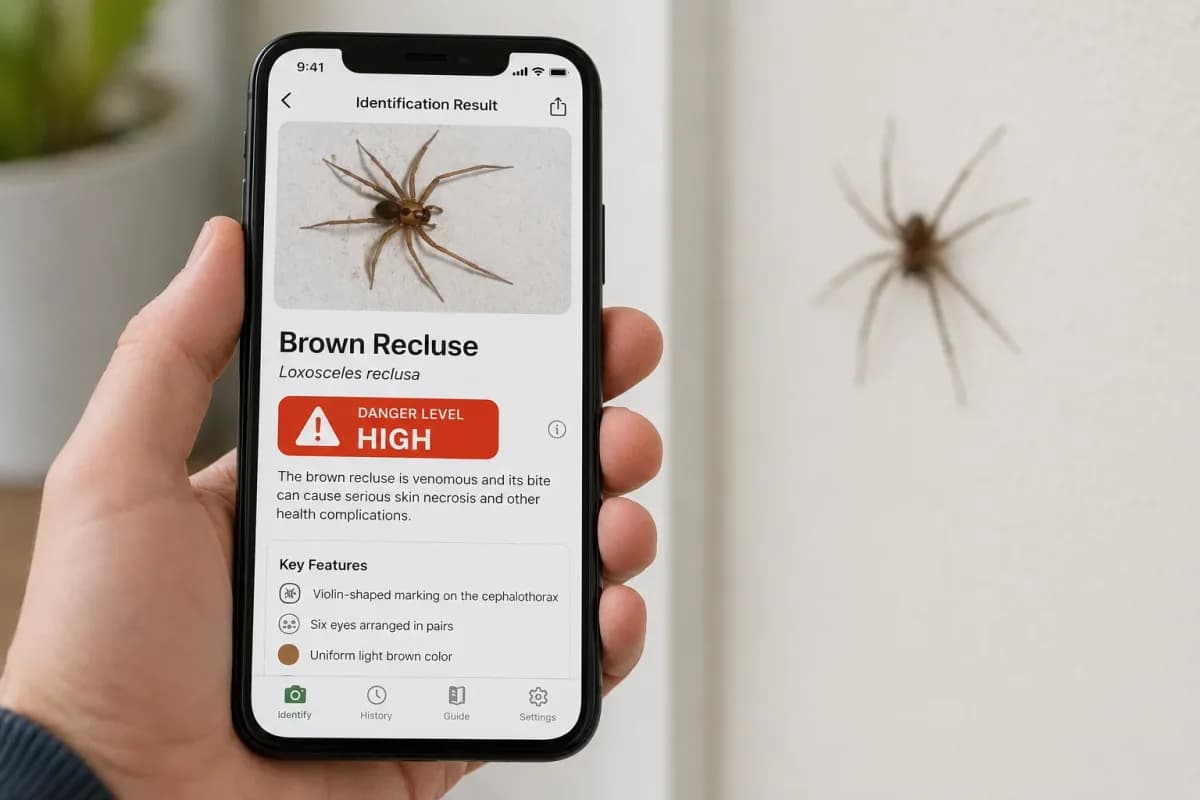
For brown recluse specifically, check for a dark violin shaped marking on the top of the body pointing toward the abdomen, and count the eyes if you can get a close look: 6 eyes in 3 pairs rather than the usual 8. For black widow specifically, check the underside of the abdomen for a red or orange hourglass marking, visible when the spider hangs upside down in its web. Both of these checks are covered in full detail, including photos and additional identifying features, on the Spider Identifier page's dedicated brown recluse and black widow sections.
Harmless black and brown spiders at a glance
| Spider | Color | Web? | Fastest tell |
|---|---|---|---|
| Black House Spider | Dark brown to black | Messy funnel web in corners | No hourglass; robust, less glossy body |
| Dark Wolf Spider | Dark grey to near black | None — hunts on the ground | Active hunter, so not a black widow |
| Dark Jumping Spider | Black, often iridescent marks | None | Large forward facing eyes, square body |
| Common House Spider | Light to medium brown | Loose tangled web | No violin marking |
| Grass Spider | Brown with pale stripes | Flat sheet web with a funnel | Striped, unlike the plain recluse |
| Brown Wolf Spider | Brown | None — hunts on the ground | Active hunter, so not a recluse |
Still not sure? Upload a photo to the free AI Spider Identifier for a confirmed species name and a clear danger rating in seconds.