Black Spider With Red on Its Back: Is It a Widow?
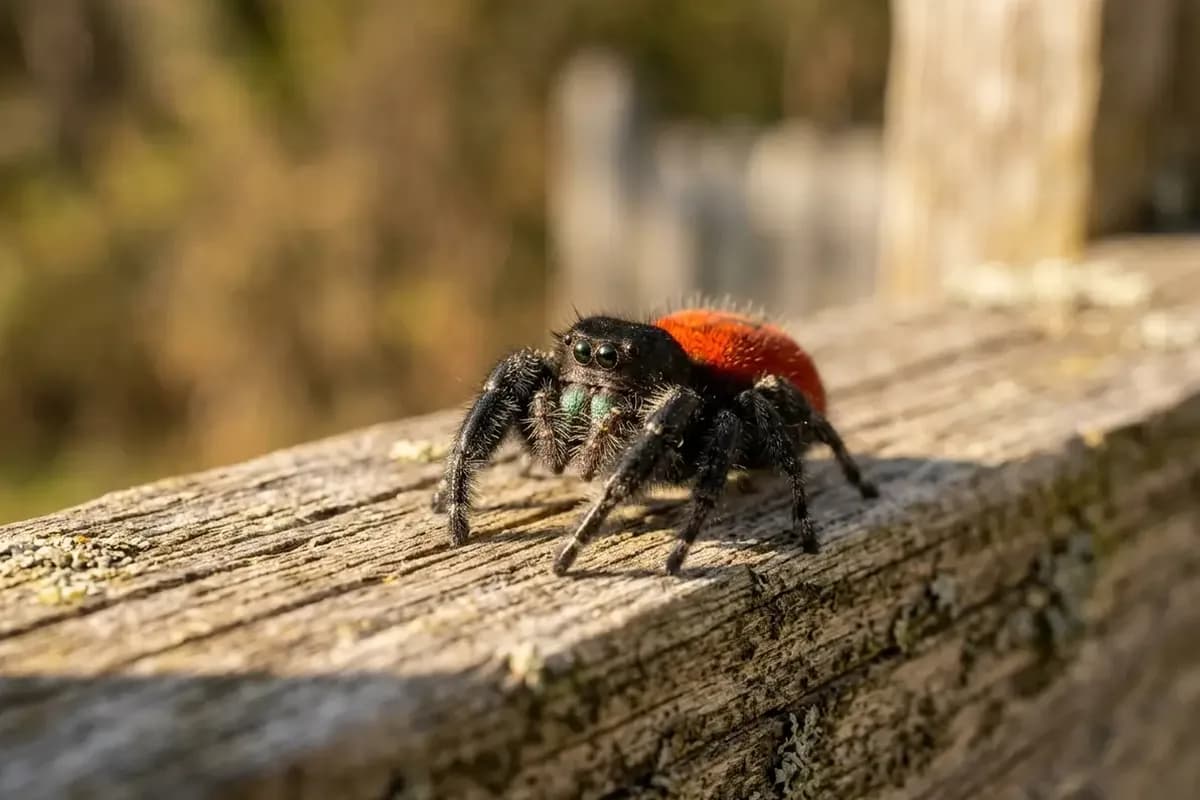
A spider black with red on back is most often a jumping spider with a red abdomen, not an adult black widow. Adult female black widows carry their red hourglass underneath the abdomen, while red markings on the top of the back usually mean a jumping spider, a young or male widow, or an ant mimic spider. Most of these are harmless to people. This guide shows how to tell them apart, covers spiders with red legs and red bodies, and explains which ones need care.
Quick Answer: Where Is the Red?
Where the red sits, on top, underneath or on the legs, is the fastest clue. Details come from NC State Extension, the University of Florida, Washington State University and Penn State Extension.
| Red marking | Body and behaviour | Most likely | Concern |
|---|---|---|---|
| Red on top of a fuzzy abdomen | Compact, big front eyes, jumps | Jumping spider | Harmless, may nip if handled |
| Red or orange spots on top of a black abdomen | Fuzzy, jumps, sometimes white spots too | Bold jumping spider (young) | Harmless |
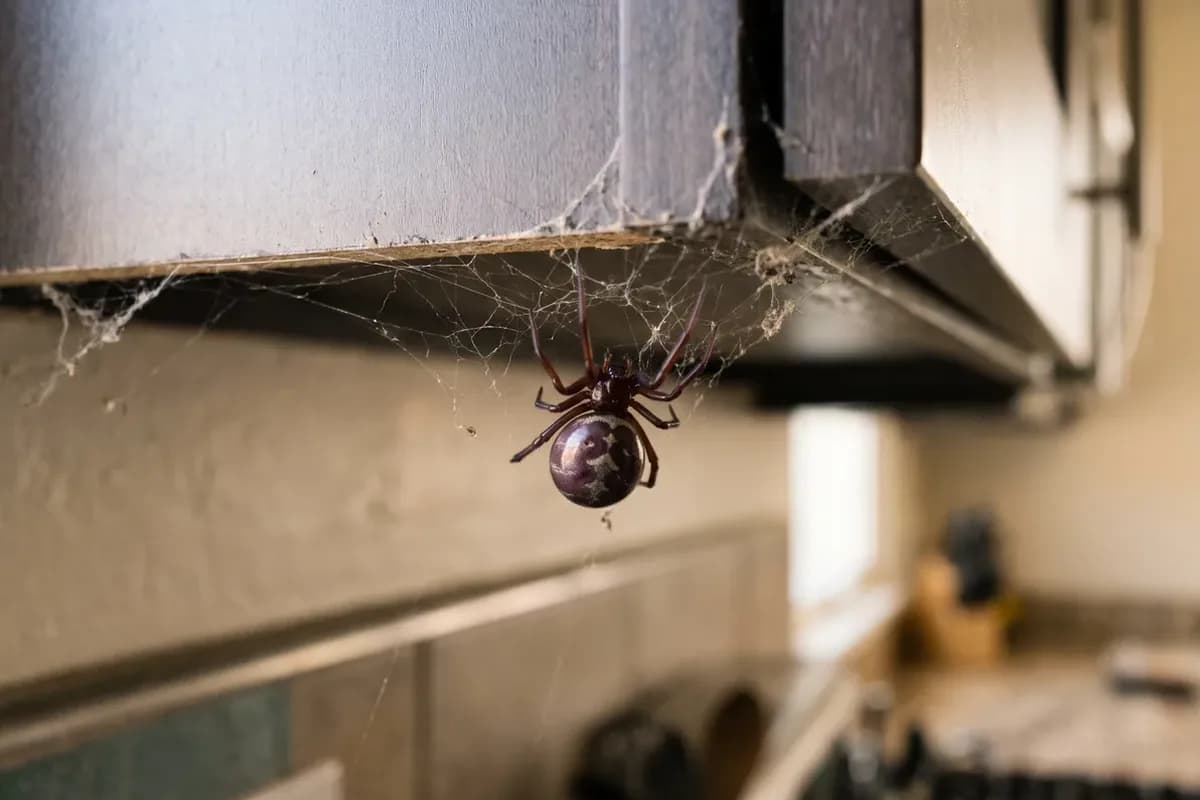
| Red hourglass underneath, shiny round body | Hangs upside down in a messy web | Adult female black widow | Medically important |
| Red and white marks on top of the back | Small, widow shaped | Male or young widow | Males cannot bite through skin |
| Red patch on a slim, ant shaped body | Walks like an ant, waves front legs | Ant mimic spider | Harmless |
| Red head and legs, dark rear | Slow, under pots and stones | Woodlouse hunter | Itchy bite at most |
Black Widow vs Other Red and Black Spiders
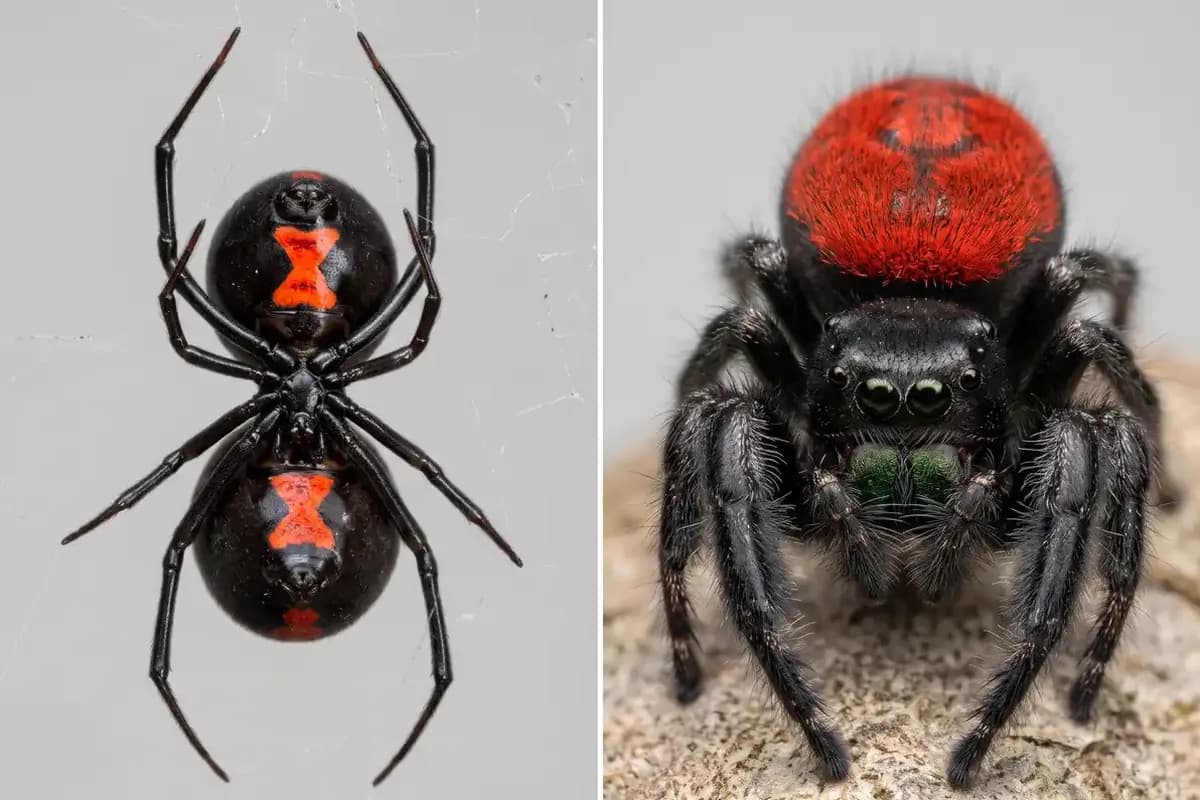
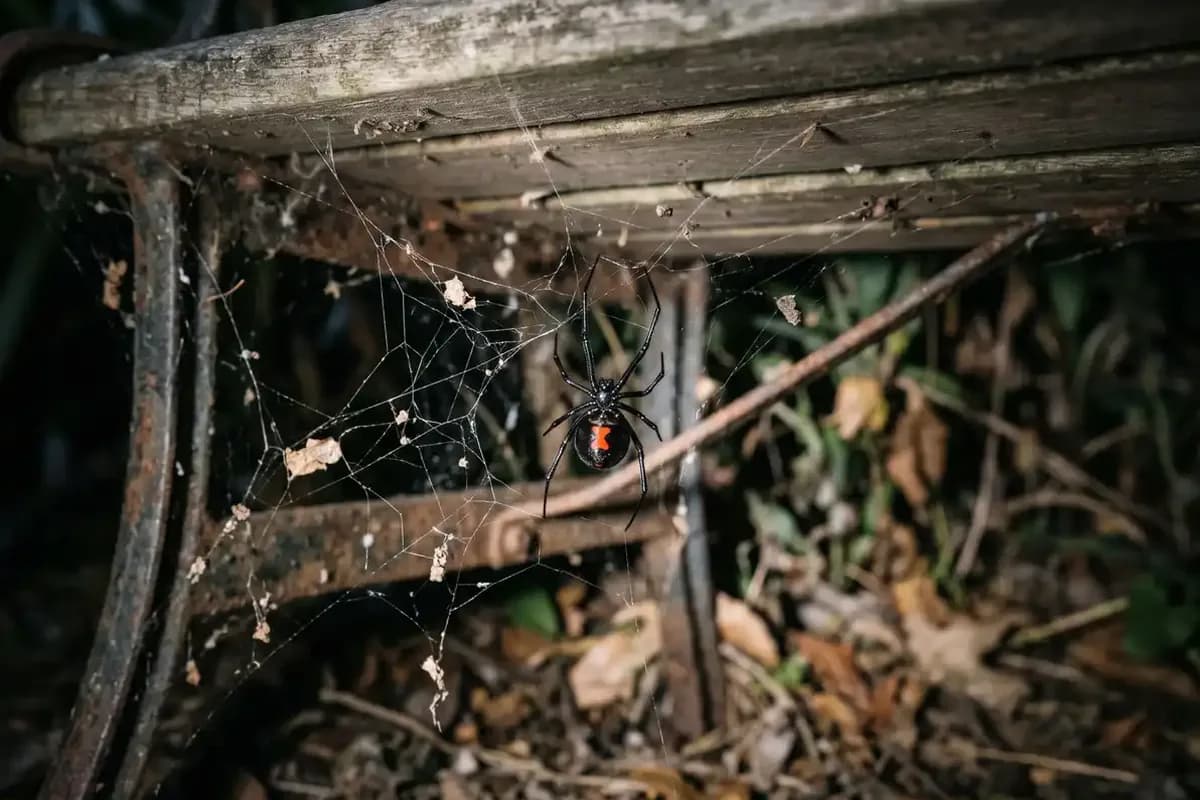
An adult female black widow is shiny and smooth, not fuzzy, with a round abdomen and a red hourglass underneath, and she hangs upside down in a messy web near the ground. NC State Extension describes adult females as large and shiny black with the red hourglass on the underside.
- Red on top of the back: male black widows have red and white markings on the back, and young widows are tan to gray with orange and white stripes.
- Males are harmless: UC IPM notes adult males have fangs too small to break skin, and only larger young and adult females can bite through.
- Red widow: the University of Florida lists the red widow (Latrodectus bishopi) among Florida's four widow species.
If a spider is fuzzy, jumps or has big front eyes, it is not a widow. For safe checks on true widows, see our guide to the black widow spider.
Red Backed Jumping Spiders
Fuzzy black spiders with a bright red top are almost always jumping spiders. Washington State University notes some jumping spiders have velvety red abdomens and that they hunt by day around homes and gardens.
- Look: compact, hairy bodies, short strong legs and two huge front eyes.
- Bold jumping spider: Penn State Extension notes white, yellow or orange spots on the abdomen, orange on younger spiders, and often iridescent green jaws.
- Behaviour: they stalk and pounce instead of using a web, and often turn to look at you.
- Bites: not considered harmful, and they bite only if cornered or handled, though the bite can be painful.
See our guides to the jumping spider and the black spider with white spots.
Spiders With Red Legs and Black Bodies
A dark spider with red or reddish legs is usually a woodlouse hunter, an ant mimic or a jumping spider.
- Woodlouse hunter (Dysdera crocata): a reddish orange front body and legs with a dirty white abdomen, about 11 to 15 mm long for females. Its large jaws point forward.
- Ant mimic spiders: slim, dark spiders that walk like ants and raise their front legs like antennae.
- Jumping spiders: some have reddish legs or red bands on dark legs.
Wolf spiders can also look reddish brown in some light. A spider that runs on the ground with no web and has banded legs is often a wolf spider.
Red Bodies With Black Legs
A red or reddish body with darker legs points to a few common possibilities.
- Woodlouse hunter: the reverse colouring is common, with a red front body and pale rear.
- False black widow: the front body is red brown and the legs slightly darker, with a purplish brown to black abdomen.
- Spiny orb weaver: these range from white with red spines to yellow with black spines, on a hard, crab shaped body in an orb web.
Very tiny, bright red specks on walls are usually mites, not spiders. Our guide to red spiders covers the reddish species in more detail.
Red on the Belly: How to Check for an Hourglass Safely
The red hourglass of an adult female black widow sits on the underside of the abdomen, so look at the belly, not the back. Never pick the spider up to check.
- Look from the side: widows hang upside down in their webs, so the belly often faces outward. A flashlight from the side helps.
- Use a photo: zoom in on a picture taken from a safe distance.
- Shape of the mark: an hourglass or two red triangles points to a widow. Red spots or a stripe on top of a fuzzy body point elsewhere.
Red and Black Striped Legs
Banded red and black legs are less common than red bodies, and they usually point to a hunting spider rather than a widow.
- Jumping spiders: some species have legs ringed with red, orange or pale bands.
- Wolf spiders: often have banded legs in brown and black that can look reddish in sunlight.
- Widows: adult female black widows have plain, glossy black legs, so strongly striped legs argue against a widow.
Check the eyes too. Jumping spiders have two huge front eyes, and wolf spiders have two large eyes above a row of smaller ones.
Where You Usually Find Them
- Jumping spiders: sunny walls, windowsills, fences and deck rails, active by day.
- Widows: dark, damp, protected spots such as crawlspaces, under appliances and outdoor utility boxes.
- Woodlouse hunters: under stones, logs and pots, where they hunt pill bugs.
- Ant mimics: on the ground and among leaf litter, sometimes wandering indoors.
Is It a Spider at All?
Some red and black creatures mistaken for spiders are not spiders.
- Velvet ants: fuzzy red and black insects that look spidery but are wingless wasps that can sting.
- Ants: ant mimic spiders have eight legs and a waist between two body parts, while real ants have six legs and three body parts.
Count the legs from a photo if you can. Spiders have eight, insects six. See our guide to the velvet ant.
Which Red and Black Spiders Are Dangerous?
Only adult female widows are medically important among red and black spiders in North America. The University of Florida notes widows are the only native or established Florida spiders with medically significant venom, and that they rarely bite unless crushed or pinched in clothing.
- Jumping spiders: harmless, with a possible painful nip if handled.
- Woodlouse hunters: bites cause a small, intensely itchy red area with no wider effects.
- Ant mimics and male widows: not a concern.
Wear gloves when moving woodpiles, boxes and outdoor clutter where widows hide. For more, see our guide to venomous spiders.
Safety note: this is general information, not medical advice. Call emergency services right away for trouble breathing or swelling of the face, lips or throat after a bite, and get medical care at once for spreading pain, cramps or sweating after a suspected widow bite.
Frequently Asked Questions
Sources and References
- Waldvogel M, Apperson C, NC State Extension. Spiders in and Around Homes. 2022.
- University of Florida IFAS. An Introduction to Some Common and Charismatic Florida Spiders. 2022.
- Washington State University Department of Entomology. Jumping Spider.
- Jacobs S, Penn State Extension. Bold Jumper Spider. 2025.
- Jacobs S, Penn State Extension. Woodlouse Hunter Spider. 2025.
- University of California Statewide IPM Program. Spiders. Pest Notes.