Black Widow Spiders: Types, Habitat and Facts
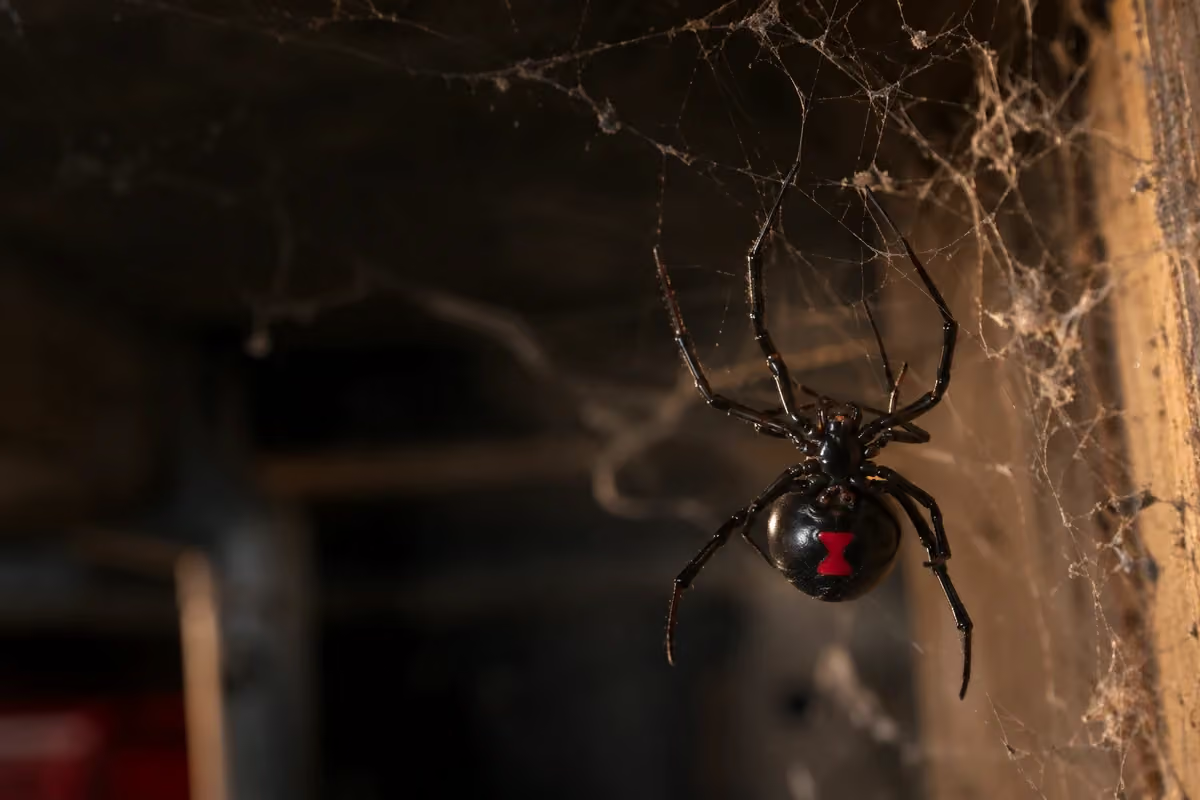
A black widow is a shiny black spider with a round abdomen and a red or orange hourglass on its underside, in the genus Latrodectus. Only adult females have that classic look, while males and young widows are smaller and patterned in white, tan or red. This guide covers the main widow types, where they live, how females, males and babies differ, and how to tell a widow from other black spiders. For the full hourglass and web checklist, see the Spider Identifier.
Widow Spider at a Glance
Widow spiders are medium sized cobweb spiders that hang upside down in messy, strong webs close to the ground. They are shy, rarely leave their web and bite only when pressed or trapped. An adult female is about 8 to 13 mm long in the body and up to 3.5 cm across with legs spread, roughly the size of a large paper clip. Males are about half that length.
| Feature | Female | Male |
|---|---|---|
| Body length | 8 to 13 mm (5/16 to 1/2 in) | 4 to 6 mm (about 3/16 in) |
| Size with legs | 25 to 35 mm (1 to 1 3/8 in) | 12 to 18 mm (1/2 to 3/4 in) |
| Color | Shiny black, sometimes brownish | Black or brown with white and red marks |
| Markings | Red or orange hourglass under the abdomen | Stripes and spots on the back |
| Lifespan | A year or more | A few months as an adult |
| Bite risk | Can bite and cause strong symptoms | Fangs too weak to matter |
Types of Widow Spiders
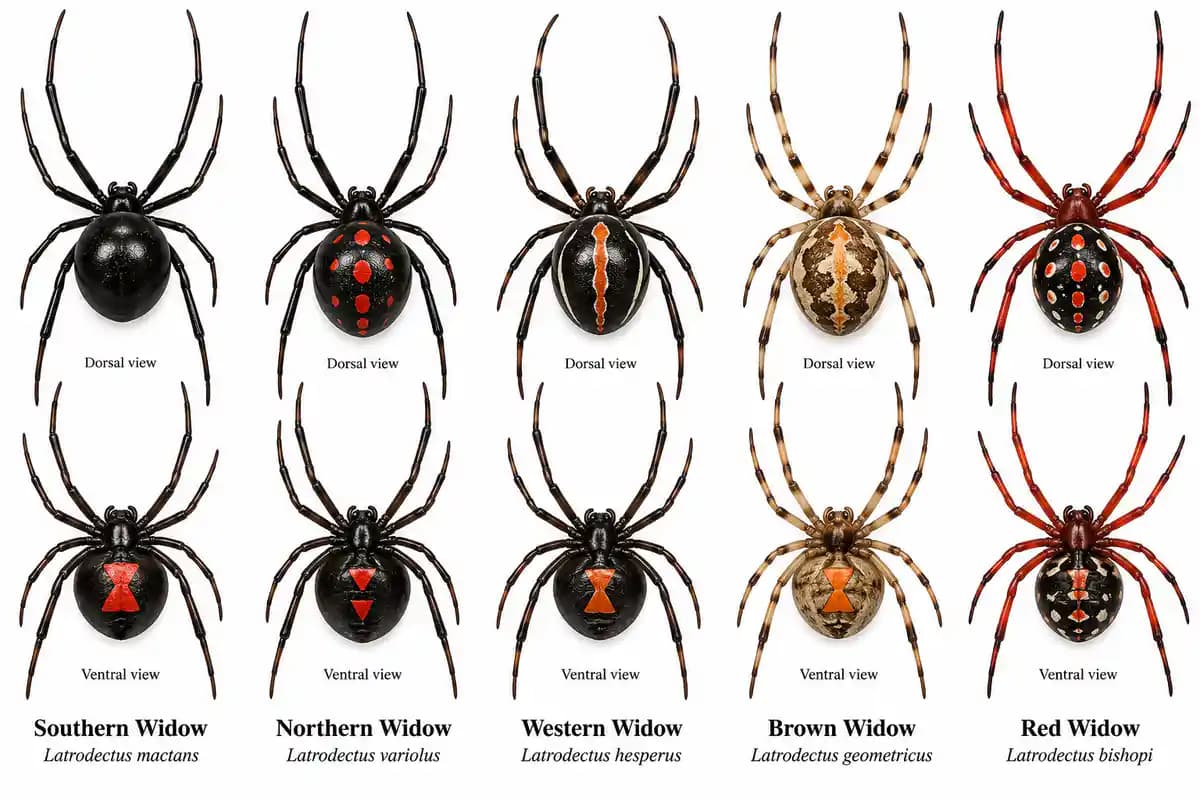
There are more than 30 widow species worldwide, and five are well known in North America. They share the same body shape and messy web, but their markings and ranges differ.
- Southern widow (L. mactans): shiny black with a full red hourglass, mostly in the southeastern US.
- Northern widow (L. variolus): hourglass usually split into two red marks, often with red spots down the back; northeastern US and southeastern Canada.
- Western widow (L. hesperus): jet black with a red hourglass, the most common widow in the West.
- Brown widow (L. geometricus): tan to dark brown with an orange hourglass and a spiky egg sac; warm regions including the Gulf states and Florida.
- Red widow (L. bishopi): red head and legs with a black spotted abdomen, only in central and southern Florida.
Found a glossy black spider with a red mark? Upload a photo to the free ScanaBug Spider Identifier for an instant ID and safety rating.
Where Do Black Widow Spiders Live?
Widows live across most of North America, most commonly in the southern and western United States. They pick dark, dry, undisturbed spots near the ground where insects walk or fly into their webs, in cities as well as the countryside.
- Outdoors: woodpiles, rock walls, hollow stumps, water meter boxes, fences and under decks.
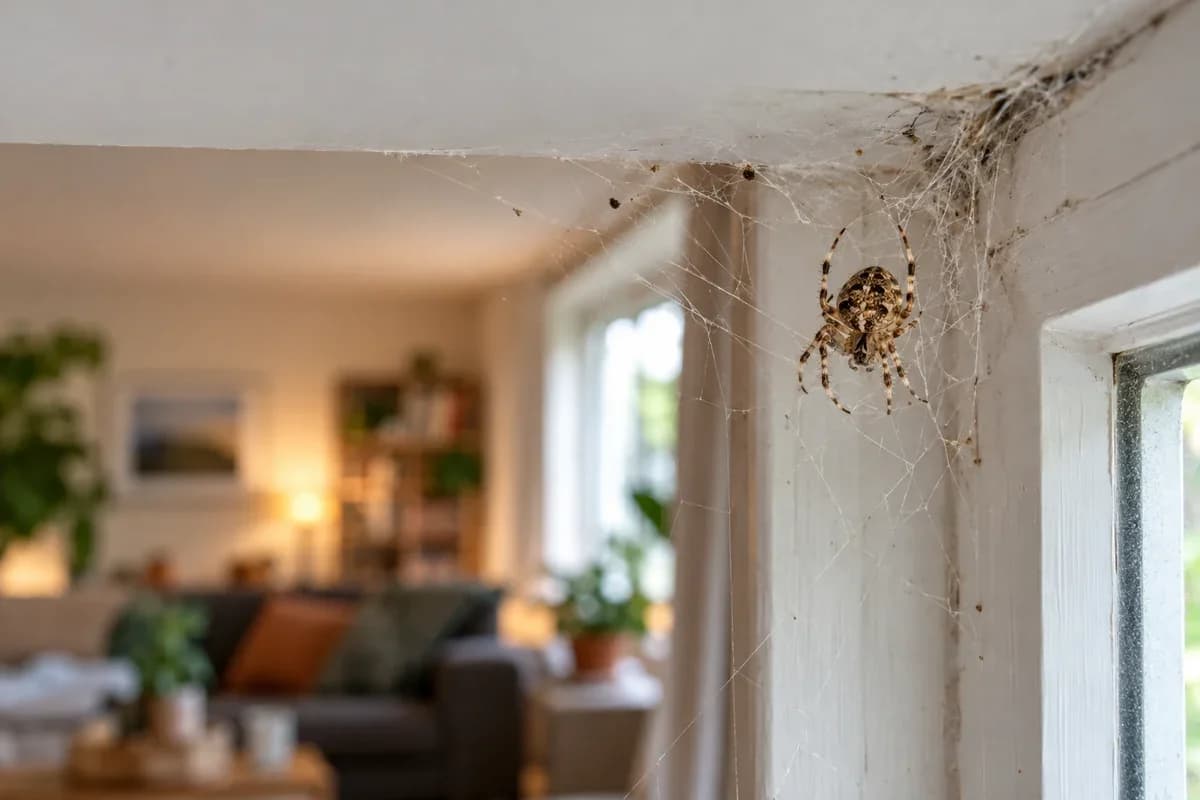
- Buildings: garages, sheds, barns, crawl spaces and basements, especially near doors and vents.
- Inside homes: uncommon in living areas, since they need undisturbed spots and crawling insects.
The web is an irregular, tangled cobweb with strong sticky lines running to the ground; the female hangs upside down in the middle. Females make round, pea sized cream to tan egg sacs, each holding about 200 to 800 eggs, and guard them in summer, which is when most bites happen because a hand reaches into the web.
Female vs Male Widows
Female widows are the large, shiny black spiders with the red hourglass; males are small, slender and patterned, and most people never notice one. Only females have fangs and venom strong enough to cause serious symptoms. Males, about half the size, mature and then stop eating, spending their time searching for a mate. The name widow comes from the female sometimes eating the male after mating, though this does not happen every time.
Baby and Juvenile Widows
A baby black widow looks nothing like its mother. Newly hatched spiderlings are tiny, with tan legs and a mostly white or cream abdomen marked with a few dark spots. As they grow and molt, the abdomen darkens to gray, olive or tan with white or yellow stripes and orange or red spots, until the female becomes fully black. White markings, stripes and spots on a widow are normal in juveniles and males, not a sign of a different species. Young spiders also lack fangs large enough to pierce human skin.
Black Widow vs Other Black Spiders
Most shiny black spiders people find are not widows. The quickest checks are the red hourglass under the belly, the messy web and the round, glossy abdomen.
| Spider | How it differs from a widow |
|---|---|
| False widow (Steatoda) | Brown or purple brown, often with cream marks on top, no red hourglass |
| Bold jumping spider | Hairy, black with white spots, big front eyes, no web, jumps |
| Black house spider | Dull, hairy body and lacy funnel webs on walls and windows |
| Parson spider | Black body with a white pattern on top, hunts on the ground |
| Black purseweb spider | Shiny black with long fangs, lives in a silk tube against trees |
False widows are common in Europe and along the Pacific coast and are often confused with widows. London's Natural History Museum notes that their bites usually cause only short lived pain, like a wasp sting.
Are Black Widows Dangerous?
Female widows can cause painful symptoms, but deaths are very rare today. Penn State Extension reports about 2,200 bites a year in the United States and no recorded deaths since 1983. The venom acts on nerves, so pain and muscle cramps can spread from the bite to the belly or back within an hour or two. Anyone with spreading pain, cramps or sweating after a suspected widow bite should get medical care; our Bug Bite Identifier explains which bite symptoms need a doctor.
How to Keep Widows Away
Widows are easiest to prevent by removing the quiet, cluttered places they like:
- Wear gloves when moving wood, rocks, bricks or stored items.
- Keep firewood off the ground and away from walls.
- Clear clutter from garage corners, shelves and crawl spaces.
- Seal gaps under doors and around pipes and vents.
- Knock down webs with a broom and remove egg sacs.
- Shake out boots, gloves and outdoor cushions before use.
Frequently Asked Questions
Sources and References
- University of California Statewide IPM Program. Widow Spiders and Their Relatives.
- Penn State Extension. Southern Black Widow Spider.
- CDC National Institute for Occupational Safety and Health. Venomous Spiders at Work.
- Australian Museum. Redback Spider.
- Natural History Museum, London. How Dangerous Are False Widow Spiders?