The 10 Most Venomous Spiders in the World (Ranked)
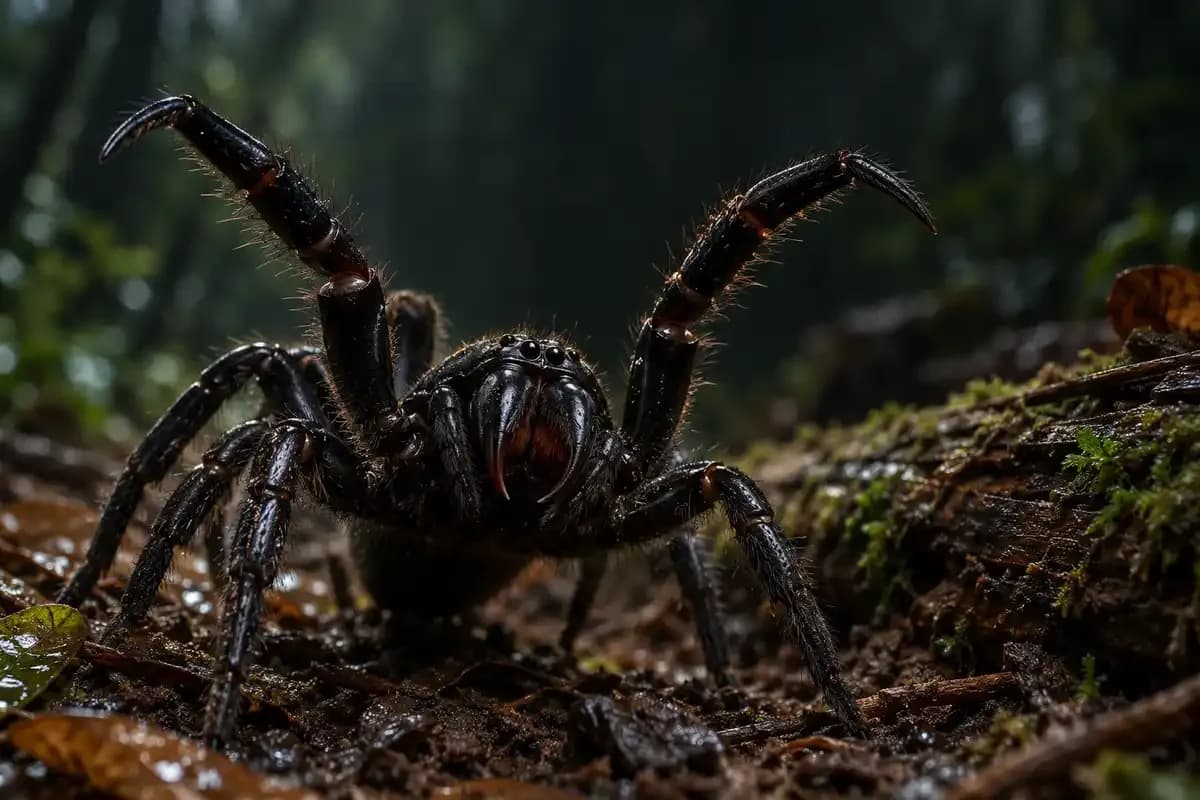
The Sydney funnel web spider of eastern Australia is widely considered the most venomous spider in the world for people, followed closely by the Brazilian wandering spiders of Central and South America. Both have fast acting venom that targets the nervous system. Yet thanks to antivenom and modern care, deaths from spider bites are now extremely rare. This ranking covers the 10 spiders with the most medically important venom, where they live and how much risk they really pose. Not sure what you found? The Spider Identifier rates the risk from a photo.
Most Venomous vs Most Dangerous: Not the Same
The most venomous spider has the strongest venom, while the most dangerous spider is the one most likely to harm people, and these are not always the same species. Danger depends on several things at once:
- Venom strength: how much harm a small amount of venom can do.
- Venom dose: how much the spider injects. A large spider with weaker venom can be riskier than a small one with strong venom.
- Fang size: whether the fangs can pierce human skin at all. Most spiders' cannot.
- Contact with people: whether the spider lives in homes, gardens and towns or far from people.
- Treatment: whether antivenom and hospitals are close by.
People also say "most poisonous spider," but spiders are venomous, not poisonous. Venom is injected through a bite, while poison harms you when eaten or touched.
Top 10 Most Venomous Spiders Ranking
This ranking weighs venom strength, how serious bites can be and how often the spider meets people. It does not count deaths, because reliable death figures are rare and most species now have effective treatment.
| Rank | Spider | Where it lives | Venom affects | Antivenom | Risk to people today |
|---|---|---|---|---|---|
| 1 | Sydney funnel web (Atrax robustus) | Eastern Australia, around Sydney | Nerves, fast acting | Yes | Serious bites possible; no deaths since antivenom |
| 2 | Northern tree funnel web (Hadronyche formidabilis) | Eastern Australia, forests | Nerves | Yes, same antivenom | Rare bites, can be severe |
| 3 | Brazilian wandering spiders (Phoneutria) | Central and South America | Nerves | Yes, in Brazil | Most bites mild; severe cases rare, mainly in children |
| 4 | Redback (Latrodectus hasselti) | Australia | Nerves | Yes | Bites common; no deaths since antivenom |
| 5 | Black widows of the Americas | North America | Nerves | Yes | Painful bites; no US deaths recorded since 1983 |
| 6 | Mediterranean widow (L. tredecimguttatus) | Southern Europe, western and central Asia | Nerves | Yes, in some countries | Painful bites in farming areas |
| 7 | Brown widow (L. geometricus) | Warm regions worldwide | Nerves | Widow antivenom | Venom strong per drop, but bites usually mild |
| 8 | Chilean recluse (Loxosceles laeta) | South America | Skin, blood | Yes, in some countries | The most serious recluse; rare severe reactions |
| 9 | Brown recluse (Loxosceles reclusa) | South central United States | Skin | No US product | Bites rare; most heal within weeks |
| 10 | Six eyed sand spiders (Sicarius) | Deserts of southern Africa and South America | Skin, blood | No | Strong venom in lab tests, almost no confirmed human bites |
Sydney Funnel Web Spider
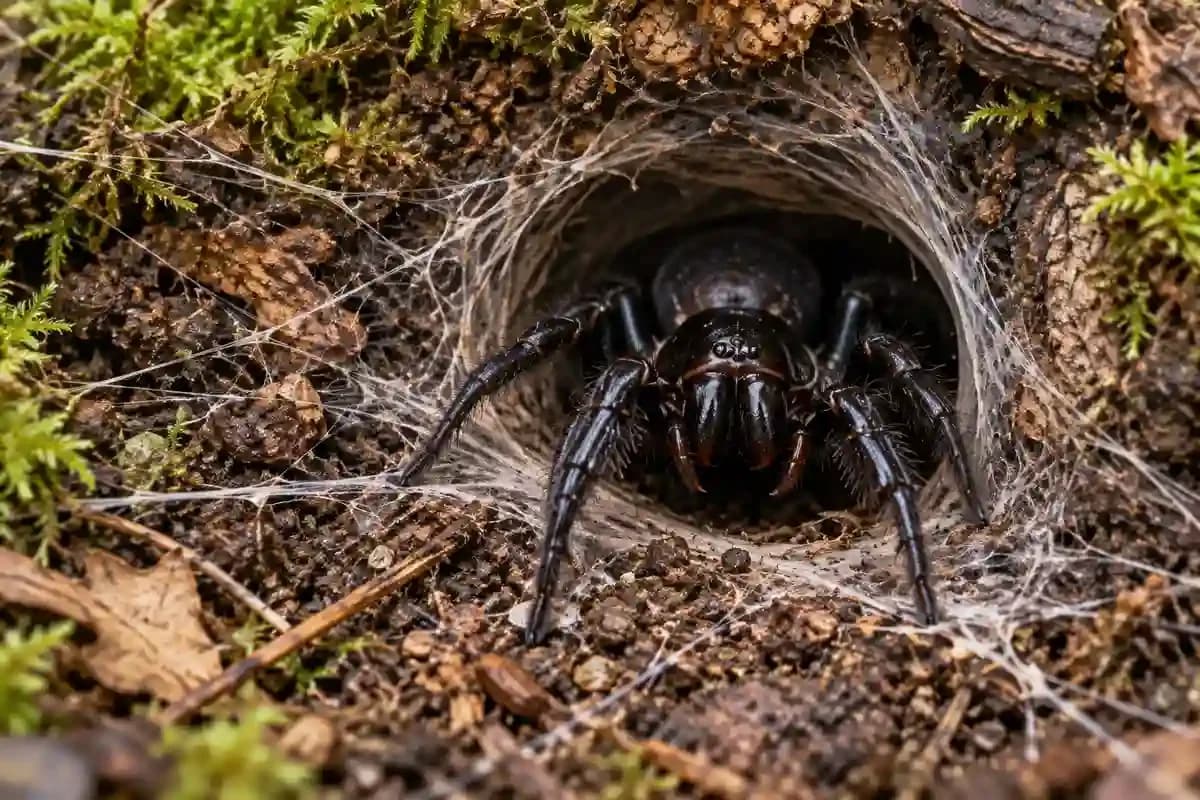
The Sydney funnel web is the spider most experts point to when asked which spider is deadliest to humans. It is a glossy black spider 2 to 4 cm (3/4 to 1 1/2 in) long that lives in silk lined burrows under logs and rocks around Sydney. Its venom acts quickly on the nervous system.
Males are the bigger threat. They wander in summer and autumn looking for females and sometimes end up in swimming pools, shoes or houses. The Australian Museum notes that there have been no deaths since antivenom was introduced, and it advises pressure bandaging, keeping the person still and getting urgent medical care for any suspected bite.
Brazilian Wandering Spider
Brazilian wandering spiders (Phoneutria) are large, fast, brown hunting spiders that roam the forest floor at night instead of building webs. They are often named as the most dangerous spider in the world in record books because their venom is strong and they sometimes hide in homes, shoes and banana bunches.
In practice, most bites cause only local pain. A review by Vetter and Isbister notes that severe poisoning is uncommon and occurs mostly in young children. When threatened, these spiders raise their front legs high, which is part of why they are seen as one of the most aggressive spiders. They are defending themselves, not hunting people.
Widows and Recluses
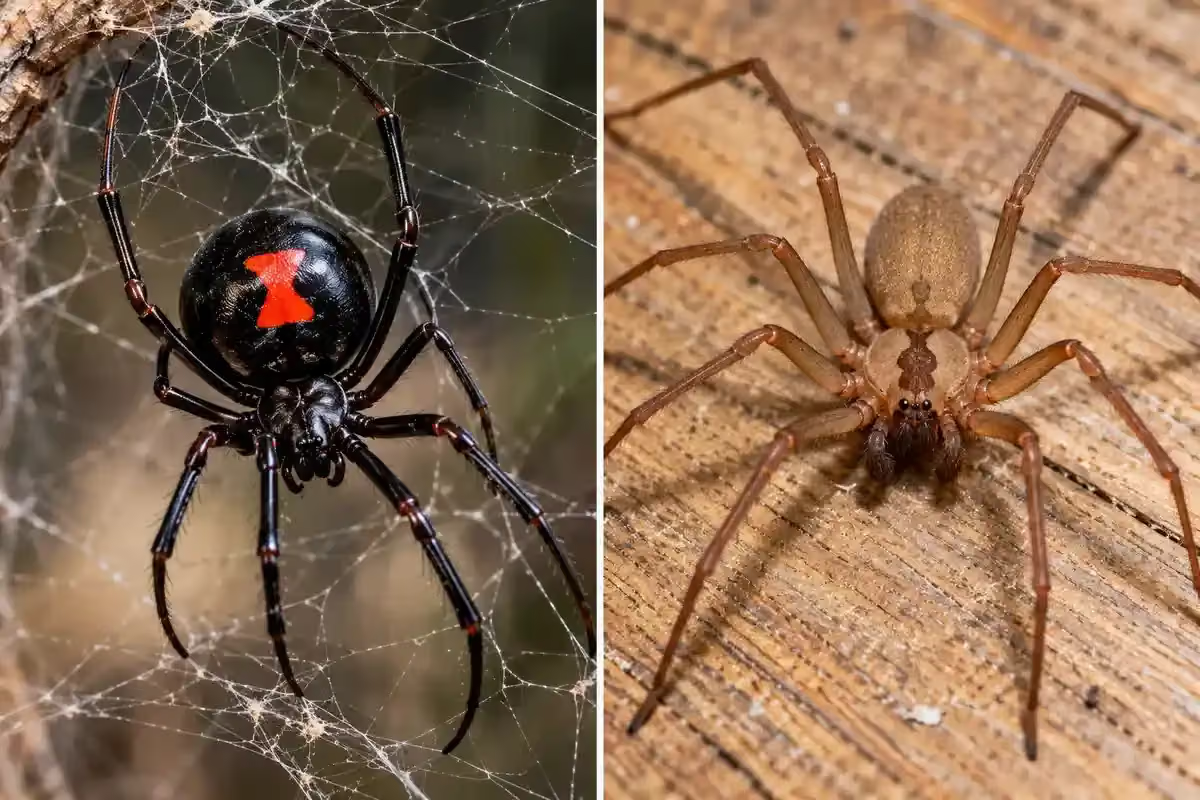
Widow spiders are the most widespread group of medically important spiders in the world, while recluse spiders are the group best known for skin damage. Both are shy and bite mainly when pressed against skin.
- Widows: the redback, the black widows of the Americas, the Mediterranean widow and the brown widow all have venom that acts on nerves and can cause spreading pain, cramps and sweating. Penn State Extension reports about 2,200 widow bites a year in the United States. Read more in our black widow spider guide.
- Recluses: the Chilean recluse is the most serious member of the group. The brown recluse of the United States can cause a slow healing sore in some cases, but the University of Kentucky stresses that bites are rare and most heal within about three weeks.
Dangerous Spiders by Region
Every inhabited continent has at least one spider of medical concern, but the species differ from place to place. Knowing which ones live near you is more useful than knowing the world ranking.
- Australia: funnel web spiders on the east coast and redbacks across the whole country.
- North America: black widows across most of the continent, the brown widow in warm southern areas and the brown recluse in the south central United States.
- Central and South America: Brazilian wandering spiders, the Chilean recluse and local widow species.
- Europe: the Mediterranean widow in the south. Common false widows bite occasionally but are not dangerous.
- Africa and Asia: several widow species, plus six eyed sand spiders in southern African deserts.
What Is the Most Aggressive Spider?
No spider hunts people, but Australian funnel web males and Brazilian wandering spiders are the most defensive. Both rear up, show their fangs and may bite repeatedly when cornered. Most other medically important spiders, including widows and recluses, would rather hide or flee.
Some spiders have an unfair reputation. The hobo spider was once called the aggressive house spider, but museum and university experts now say that name came from a mistranslation and that it is not aggressive. Read the full story in our hobo spider guide.
Do Any Spiders Kill People Today?
Deaths from spider bites are now extremely rare anywhere in the world. Antivenom for funnel webs and widows, faster ambulance care and better hospital treatment mean that even serious bites usually end in full recovery.
Most spider bites cause short lived pain, redness and swelling, much like a bee sting. People who are very young, very old or already ill are the most at risk from the few dangerous species, so any bite with spreading pain, sweating, cramps, breathing trouble or a growing sore needs medical care. Our Bug Bite Identifier shows bite symptoms and when to see a doctor.
How to Tell If a Spider Is Dangerous
Size and color alone are poor guides, since many large or dark spiders are harmless. The Spider Identifier page has a section on how to tell if a spider is poisonous or dangerous, with a checklist of features to check before you worry.
Found a spider you are unsure about? Upload a photo to the free ScanaBug Spider Identifier for an instant ID with a safety rating.
Frequently Asked Questions
Sources and References
- Australian Museum. Sydney Funnel Web Spider.
- Australian Museum. Redback Spider.
- Vetter RS, Isbister GK. Medical Aspects of Spider Bites. Annual Review of Entomology, 2008.
- Penn State Extension. Southern Black Widow Spider.
- University of Kentucky Entomology. Brown Recluse Spider (ENTFACT 631).
- University of California Statewide IPM Program. Widow Spiders and Their Relatives.