25 Common Spiders: Types, Names and Pictures
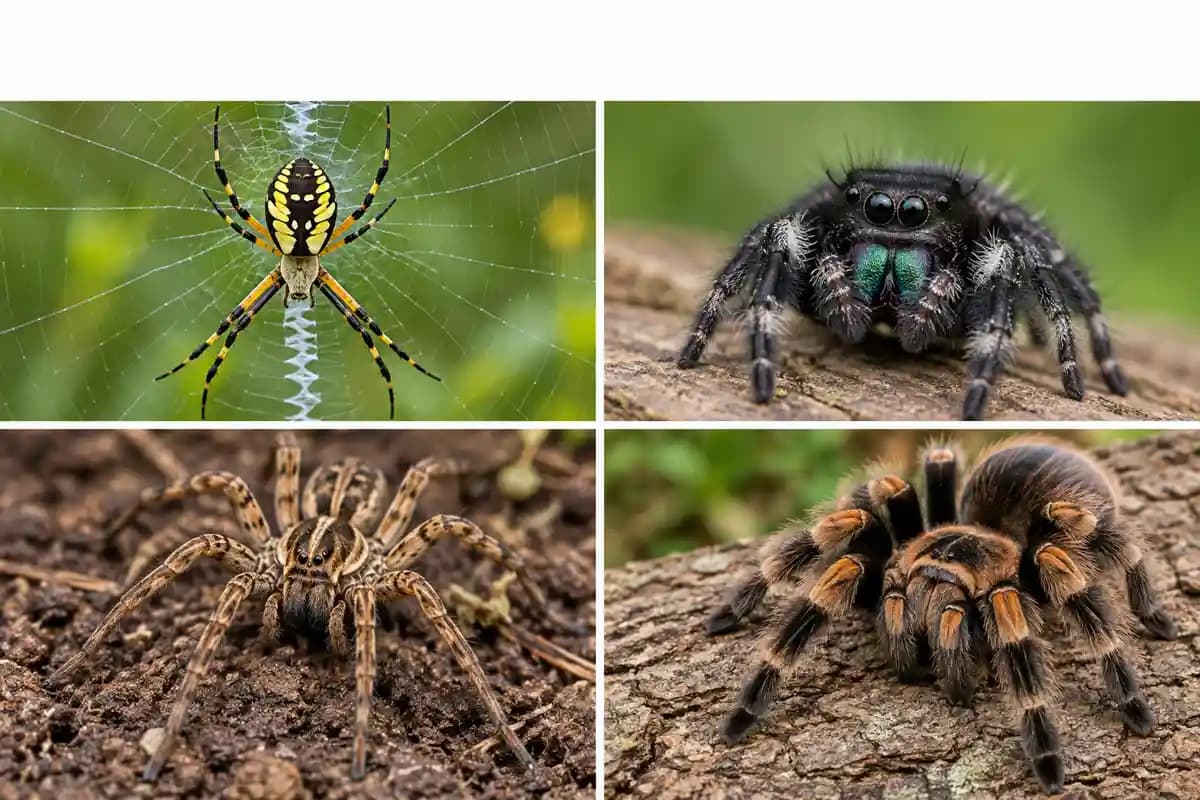
There are more than 50,000 known spider species, but most of the spiders people see fall into a few easy groups: web builders, ground hunters, jumpers, ambush hunters and tarantulas. Knowing the group is the fastest way to put a name to a spider. This guide shows 25 common spiders with their names and scientific names, which live indoors or outdoors, which are dangerous and some of the strangest spiders in the world.
How Are Spiders Grouped?
Scientists split spiders into two main groups based on how their fangs move, then into more than 130 families. For everyday identification, the way a spider catches food is more useful.
The two main groups
- Mygalomorphs: heavy bodied spiders with fangs that point straight down, such as tarantulas, trapdoor spiders and funnel webs.
- Araneomorphs: about 90% of all spiders, with fangs that close sideways like pincers, including orb weavers, wolf spiders, jumpers and house spiders.
Types by hunting style
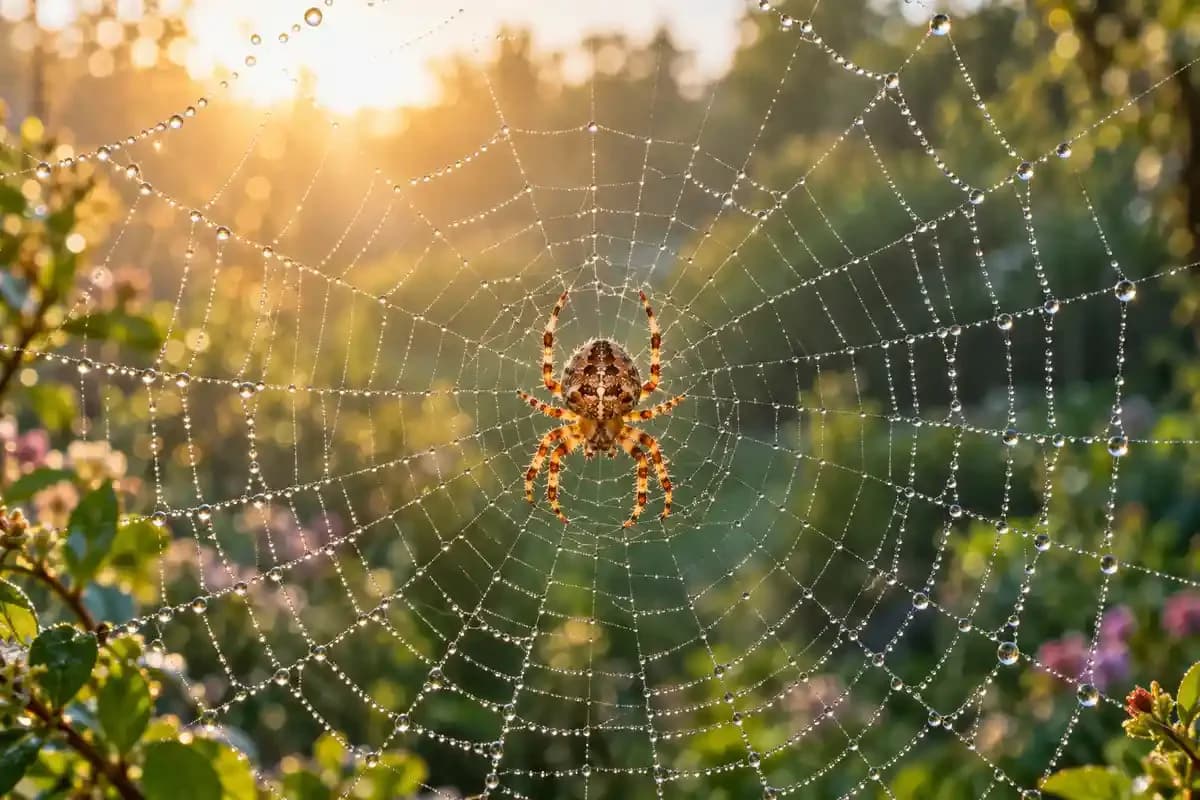
- Orb weavers: round, wheel shaped webs in gardens and hedges.
- Cobweb and tangle web spiders: messy, three dimensional webs in corners and sheds.
- Funnel and sheet web spiders: flat sheets of silk with a funnel shaped hiding tube.
- Ground hunters: run down prey without a web, such as wolf spiders.
- Jumpers and ambush hunters: stalk or wait for prey, such as jumping spiders and crab spiders.
- Burrowers: wait in silk lined holes, such as tarantulas and trapdoor spiders.
25 Common Spiders With Names and Pictures
These are 25 of the spiders people around the world find most often, with the group each belongs to and one quick way to recognize it.
| # | Spider (scientific name) | Group | Where | Quick ID tip |
|---|---|---|---|---|
| 1 | Cross orb weaver (Araneus diadematus) | Orb weaver | Europe, North America | White cross on a round brown abdomen |
| 2 | Yellow garden spider (Argiope aurantia) | Orb weaver | North America | Black and yellow, zigzag silk band in the web |
| 3 | Marbled orb weaver (Araneus marmoreus) | Orb weaver | North America | Bright orange or yellow marbled abdomen |
| 4 | Spiny orb weaver (Gasteracantha cancriformis) | Orb weaver | Americas, warm regions | Hard, wide abdomen with six red spines |
| 5 | Golden silk orb weaver (Trichonephila clavipes) | Orb weaver | Americas, warm regions | Very long banded legs, golden silk web |
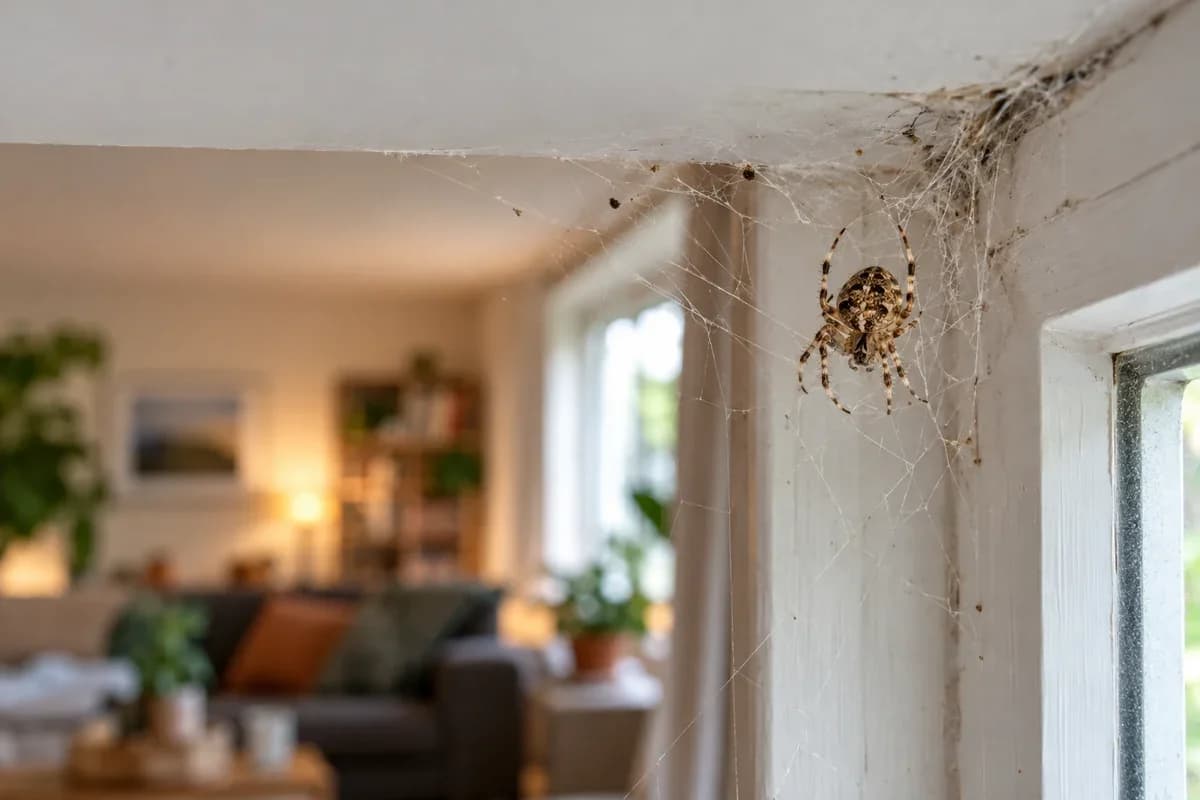
| 6 | American house spider (Parasteatoda tepidariorum) | Cobweb | Worldwide | Small, round, brown mottled, messy web in corners |
| 7 | Black widow (Latrodectus) | Cobweb | Worldwide, warm regions | Glossy black with a red hourglass underneath |
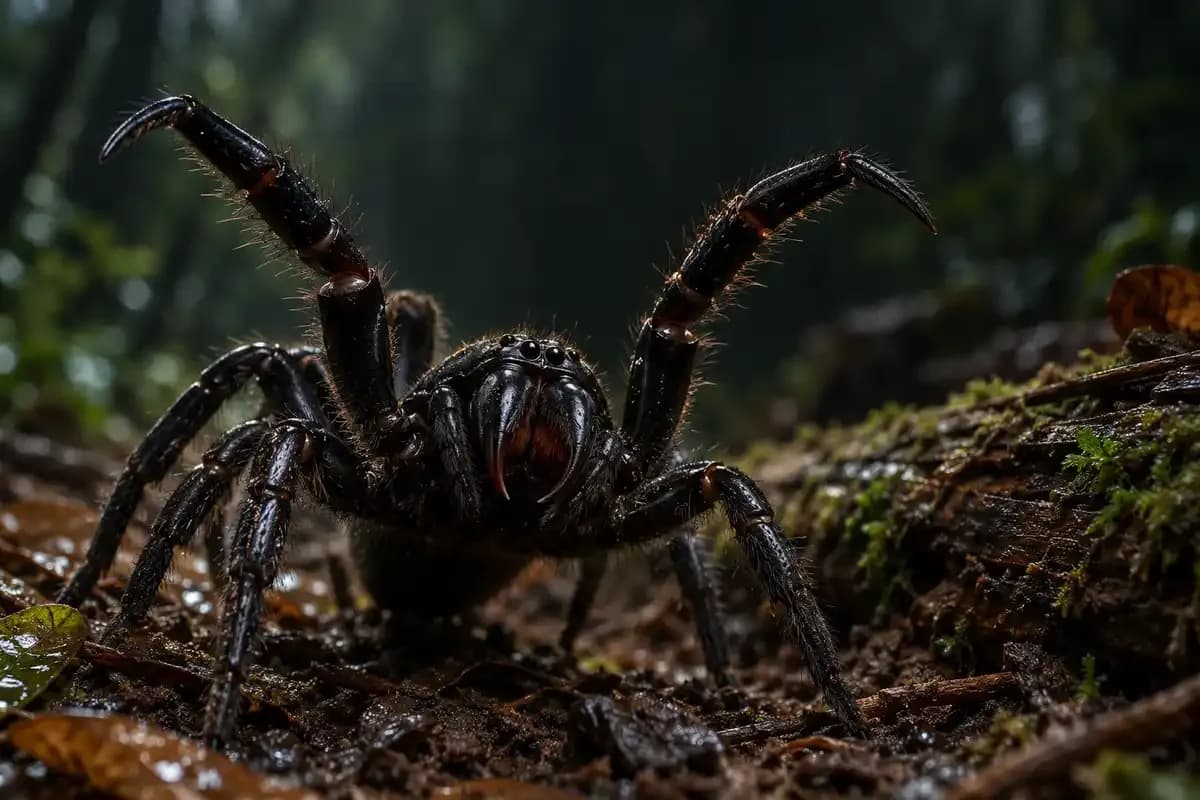
| 8 | Noble false widow (Steatoda nobilis) | Cobweb | Europe, spreading | Dark brown with cream skull shaped marks |
| 9 | Cellar spider (Pholcus phalangioides) | Tangle web | Worldwide | Tiny body, very long thin legs, vibrates in web |
| 10 | Grass spider (Agelenopsis) | Funnel web | North America | Striped, fast, sheet web with a funnel in lawns |
| 11 | Giant house spider (Eratigena atrica) | Funnel web | Europe, Pacific NW | Large, hairy, brown, long legs, fast runner |
| 12 | Hobo spider (Eratigena agrestis) | Funnel web | Europe, Pacific NW | Brown, funnel web at ground level |
| 13 | Black house spider (Badumna insignis) | Lace web | Australia, New Zealand | Dark, velvety, lacy web around window frames |
| 14 | Wolf spider (Lycosidae) | Ground hunter | Worldwide | Hairy, striped, two big forward eyes, no web |
| 15 | Bold jumper (Phidippus audax) | Jumper | North America | Black and fuzzy with white spots, green jaws |
| 16 | Zebra jumper (Salticus scenicus) | Jumper | Europe, North America | Black and white stripes on sunny walls |
| 17 | Goldenrod crab spider (Misumena vatia) | Ambush hunter | Europe, North America | White or yellow, waits on flowers, crab like legs |
| 18 | Huntsman spider (Sparassidae) | Ground hunter | Warm regions | Large, flat, long legs that spread sideways |
| 19 | Yellow sac spider (Cheiracanthium) | Night hunter | Worldwide | Pale yellow body, dark jaw tips, silk sac retreat |
| 20 | Fishing spider (Dolomedes) | Ground hunter | Worldwide, near water | Large, brown, rests on docks and water surfaces |
| 21 | Green lynx spider (Peucetia viridans) | Ambush hunter | Southern North America | Bright green with spiny legs on plants |
| 22 | Woodlouse hunter (Dysdera crocata) | Ground hunter | Worldwide | Red legs and front body, gray abdomen, big fangs |
| 23 | Brown recluse (Loxosceles reclusa) | Night hunter | South central US | Plain brown, violin mark, six eyes |
| 24 | Tarantulas (Theraphosidae) | Burrower | Warm regions | Very large and hairy, slow moving |
| 25 | Sydney funnel web (Atrax robustus) | Burrower | Eastern Australia | Glossy black, thick legs, burrows under logs |
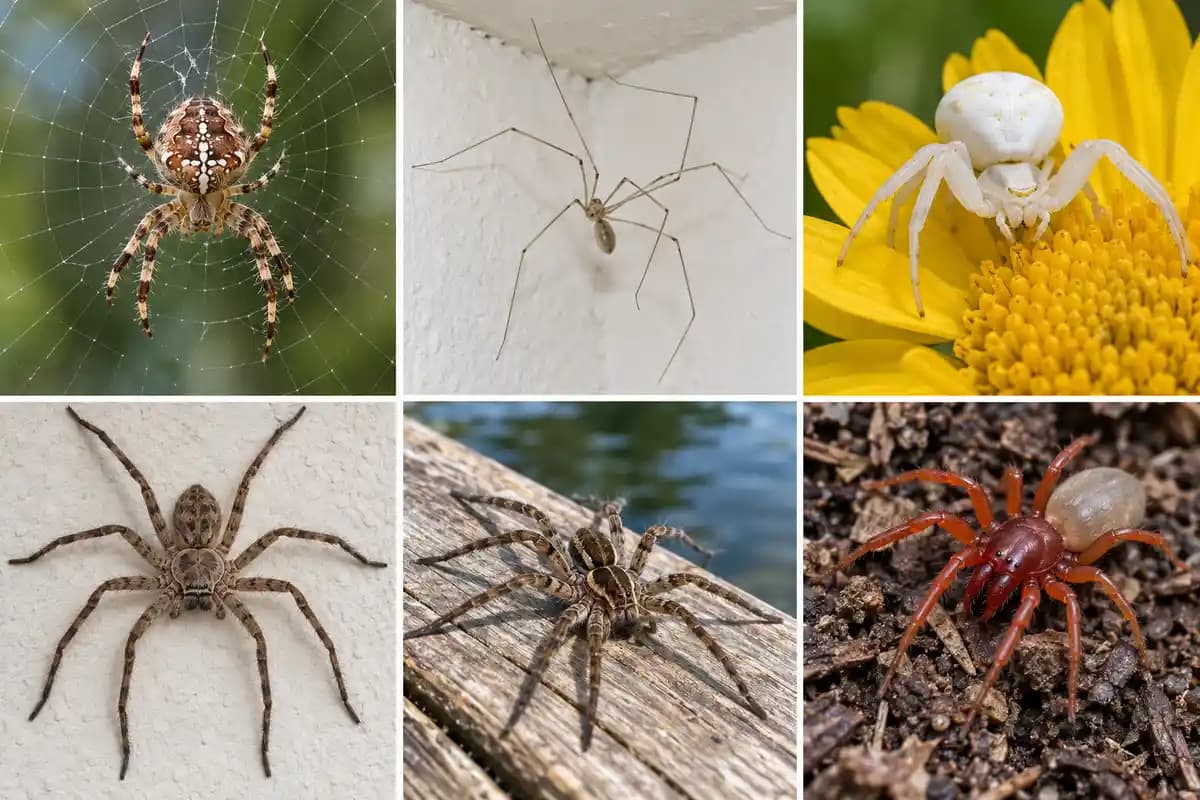
Several of these spiders have their own full guides, including wolf spiders and jumping spiders.
Spotted one you cannot place? Upload a photo to the free ScanaBug Spider Identifier for an instant ID with a safety rating.
Spiders You Find Indoors vs Outdoors
Indoor spiders are mostly small web builders and wandering hunters that can live on the few insects inside a home, while outdoor spiders need plants, soil or water to hunt. Some outdoor spiders come in by accident, especially in autumn.
| Usually indoors | Usually outdoors | Both |
|---|---|---|
| American house spider | Orb weavers | Wolf spiders |
| Cellar spider | Grass spider | Jumping spiders |
| Giant house spider | Crab spiders | Yellow sac spider |
| False widows | Fishing spiders | Black widow (garages, sheds) |
| Brown recluse (within its range) | Tarantulas and funnel webs | Woodlouse hunter |
Most indoor spiders are harmless, and cleaning, vacuuming and sealing gaps keep their numbers low.
Dangerous vs Harmless Spiders
Almost all spiders are harmless to people. Only a small number of the world's spider species can cause serious symptoms, and even those bite rarely. Most spiders' fangs are too small to break human skin. The few that matter are:
- Widow spiders: black widows, redbacks and relatives can cause pain and muscle cramps.
- Recluse spiders: brown recluses and relatives can, in some cases, cause skin sores.
- Funnel web spiders: found in eastern Australia, with fast acting venom; no deaths since antivenom became available.
- Wandering spiders: found in Central and South America, sometimes in banana shipments.
Large size often scares people more than real danger. Huntsman spiders, giant house spiders, fishing spiders and most tarantulas look alarming but are not dangerous to healthy people, and their bites usually feel much like a bee sting.
Rare and Unusual Looking Spiders
Some of the strangest spiders look like bird droppings, ants or even jewels:
- Peacock spiders (Maratus): tiny Australian jumpers whose males raise bright, fan shaped flaps to dance.
- Bird dropping spiders: sit still on leaves by day, looking exactly like a bird dropping.
- Ant mimicking jumpers: narrow bodied jumpers that copy the shape and walk of ants.
- Ogre faced spiders: hold a silk net between their front legs and throw it over passing insects.
- Darwin's bark spider: spins giant orb webs across rivers in Madagascar, with some of the toughest silk known.
- Goliath birdeater: a South American tarantula that is one of the heaviest spiders in the world.
How to Identify Which Type of Spider You Have
To identify a spider, check its web, eyes, body shape and where you found it, then confirm with a clear photo. These steps narrow most spiders to a group:
- Look at the web: a round wheel means an orb weaver, a messy tangle means a cobweb or cellar spider, a flat sheet with a tunnel means a funnel web spider.
- No web? The spider is probably a hunter, such as a wolf spider, jumper, crab spider or sac spider.
- Check the eyes: two huge front eyes mean a jumper; six eyes instead of eight point to recluses.
- Check the shape: long thin legs, a round abdomen, a flat body or a hairy heavy body each point to different groups.
- Note the place: a flower, a lawn, a dock, a basement corner or a garage wall each favors certain spiders.
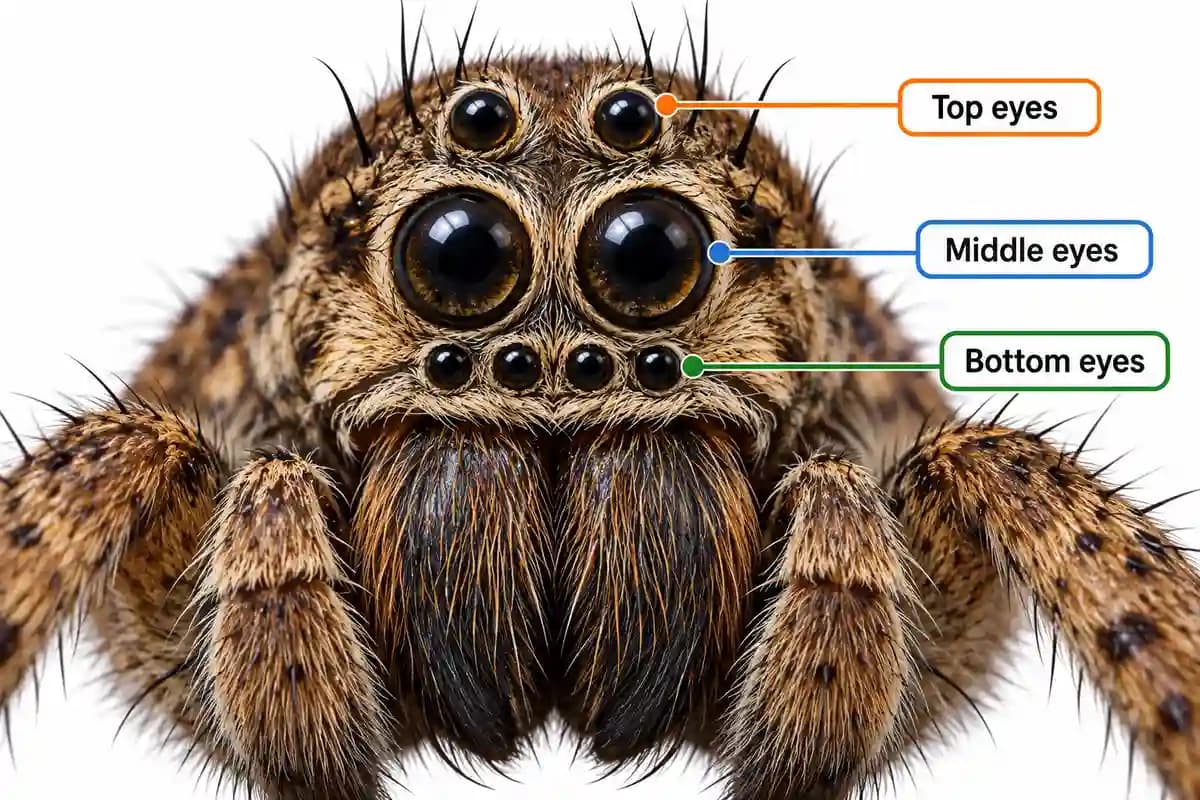
For a visual checklist with photos, use the Spider Identifier.
Why Spider Names Can Be Confusing
Many spiders share the same common name, and the same spider can have different names in different countries. A "house spider" in the United States usually means a small cobweb spider, while in the United Kingdom it often means the large, hairy giant house spider. A "tarantula" in Europe once meant a wolf spider. This is why scientists use a two part scientific name, such as Araneus diadematus, which stays the same everywhere. When you look up spider pictures, check both the common name and the scientific name so you are comparing the right species.
Frequently Asked Questions
Sources and References
- University of Kentucky Entomology. Kentucky Urban Spider Chart.
- University of California Statewide IPM Program. Spiders.
- Penn State Extension. Spiders Commonly Encountered in Pennsylvania and the Northeast.
- Natural History Museum, London. How Dangerous Are False Widow Spiders?
- Australian Museum. Sydney Funnel Web Spider.