Wolf Spiders: Identification, Types and Are They Dangerous?
A wolf spider is a fast, hairy, brown or gray hunting spider that chases prey on the ground instead of catching it in a web. These spiders belong to the family Lycosidae, with more than 2,000 species on every continent except Antarctica. They are not dangerous to most people, and their bite is usually no worse than a bee sting. This guide shows how to recognize them, the common species, why they wander indoors and what their venom really does. The Spider Identifier shows the full checklist with photos.
How to Identify a Wolf Spider
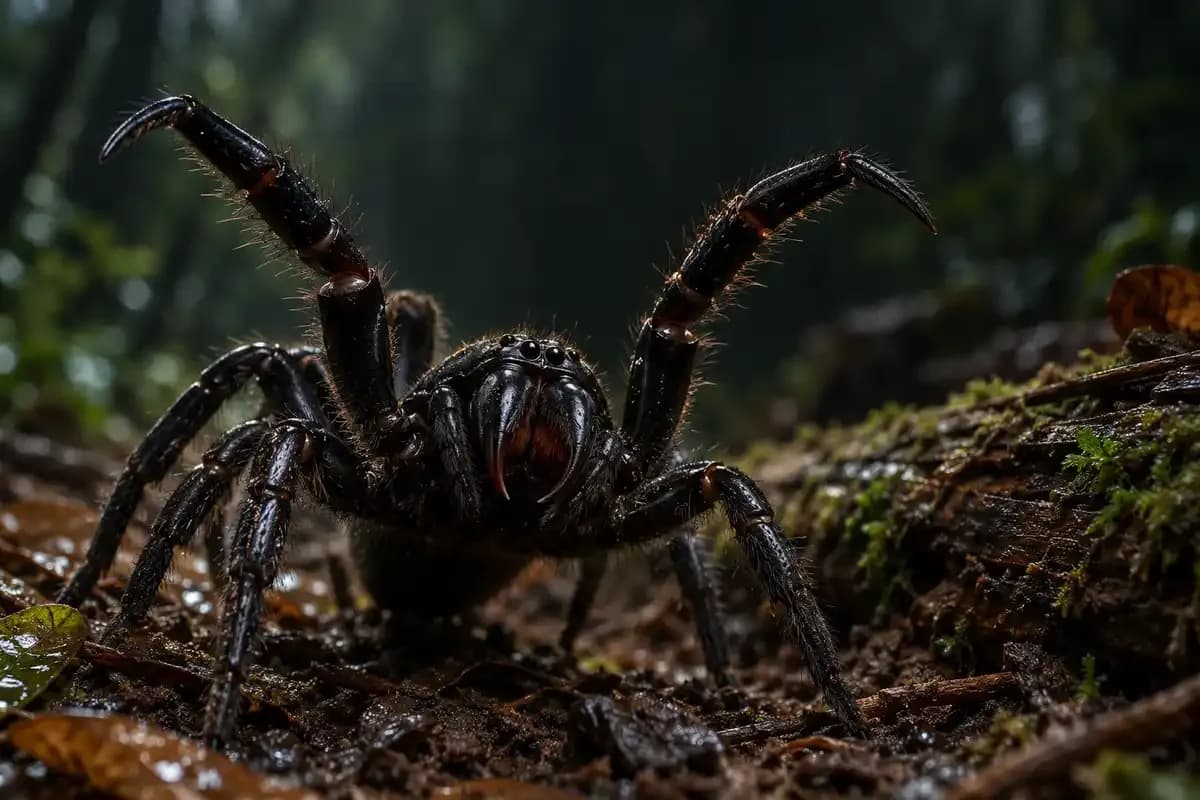
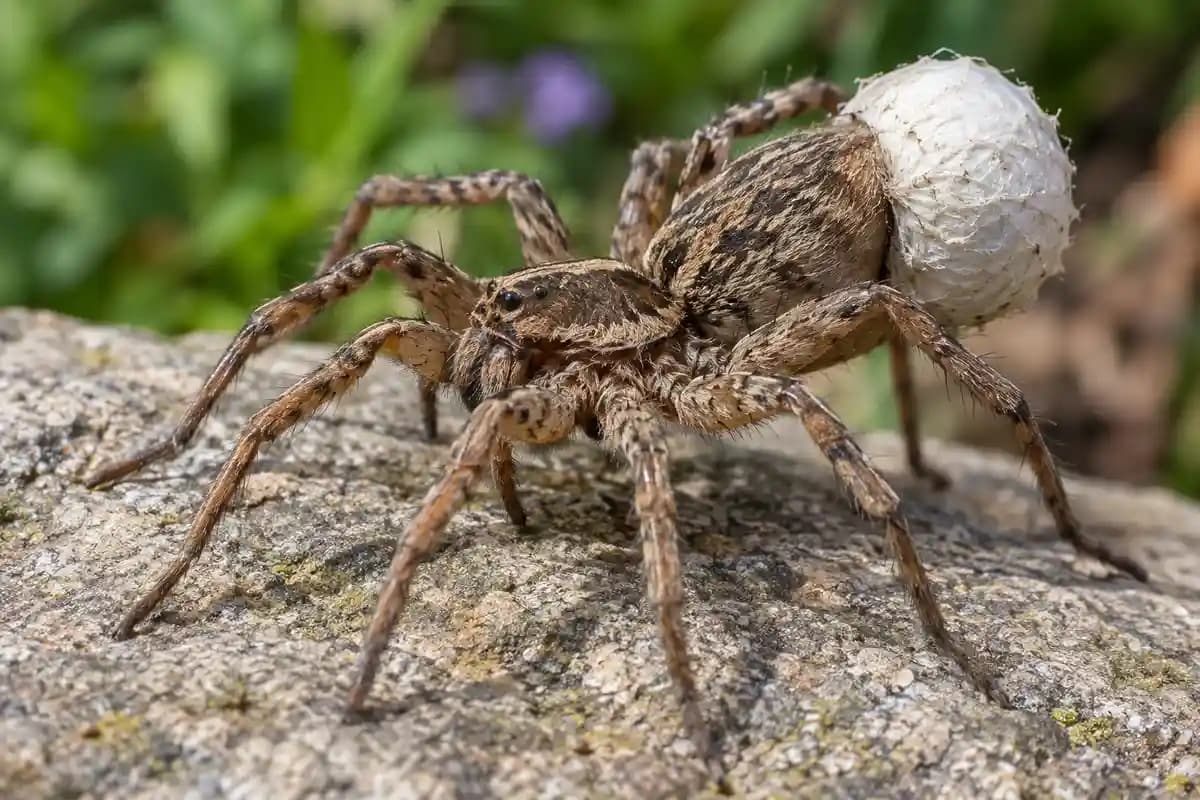
You can identify one by its stocky, hairy body, long sturdy legs, brown or gray striped pattern and, most of all, its eyes. Two large eyes face forward from the middle of the face, giving these hunters sharp night vision.
- Body: thick and hairy, with a long oval abdomen and a front body that is often striped front to back.
- Color: brown, gray, tan or black, usually in stripes, bands or mottled patches that blend into soil and leaves.
- Legs: strong, spiny and often banded, built for running.
- Behavior: runs fast across floors and ground, does not sit in a web, and is most active at night.
Their eyes sit in three rows: four small eyes in a line at the bottom, two very large eyes above them and two medium eyes on top. They also reflect light, so a flashlight shone across a lawn at night makes the spiders' eyes glow green, an easy way to see how many live in your yard.
Common Species Around the World
The most common species people meet are the Carolina, rabid and tiger wolf spiders in North America, plus many smaller thin legged species worldwide.
| Species | Where | Look and size | Notes |
|---|---|---|---|
| Carolina (Hogna carolinensis) | Across much of North America | Dark brown with gray hairs, females 22 to 35 mm | One of the largest in North America |
| Rabid (Rabidosa rabida) | Eastern and central US | Pale tan with two dark stripes on the front body | The name comes from Latin, not rabies |
| Tiger (Tigrosa aspersa) | Eastern US | Dark brown, thin yellow line near the eyes, banded legs | Often found in homes in autumn |
| Thin legged (Pardosa) | Worldwide | Small, dark, long thin legs, 4 to 10 mm | Common near water and in gardens |
| Garden (Tasmanicosa godeffroyi) | Australia | Large, gray brown with a starburst pattern | Lives in burrows in lawns |
| Tarantula (Lycosa tarantula) | Southern Europe | Large, brown with a dark belly | The original spider called a tarantula |
Color alone is not reliable, since brown and gray help them hide. Check the eye pattern, the striped front body and whether the spider runs freely rather than sitting in a web.
Found a big, fast brown spider? Upload a photo to the free ScanaBug Spider Identifier for an instant ID with a safety rating.
Where Do They Live and How Do They Hunt?
These spiders live on the ground almost everywhere, from lawns and gardens to forests, deserts, beaches and mountain meadows. Many shelter in leaf litter, while others dig burrows, some with a trapdoor or a small turret of silk. They hunt mostly at night: a spider spots movement with its large eyes, sprints, grabs the prey with its front legs and bites. Their diet includes crickets, beetles, ants, flies, cockroaches and other spiders, and larger species can even catch small frogs and lizards.
Egg Sacs and Babies on the Mother's Back
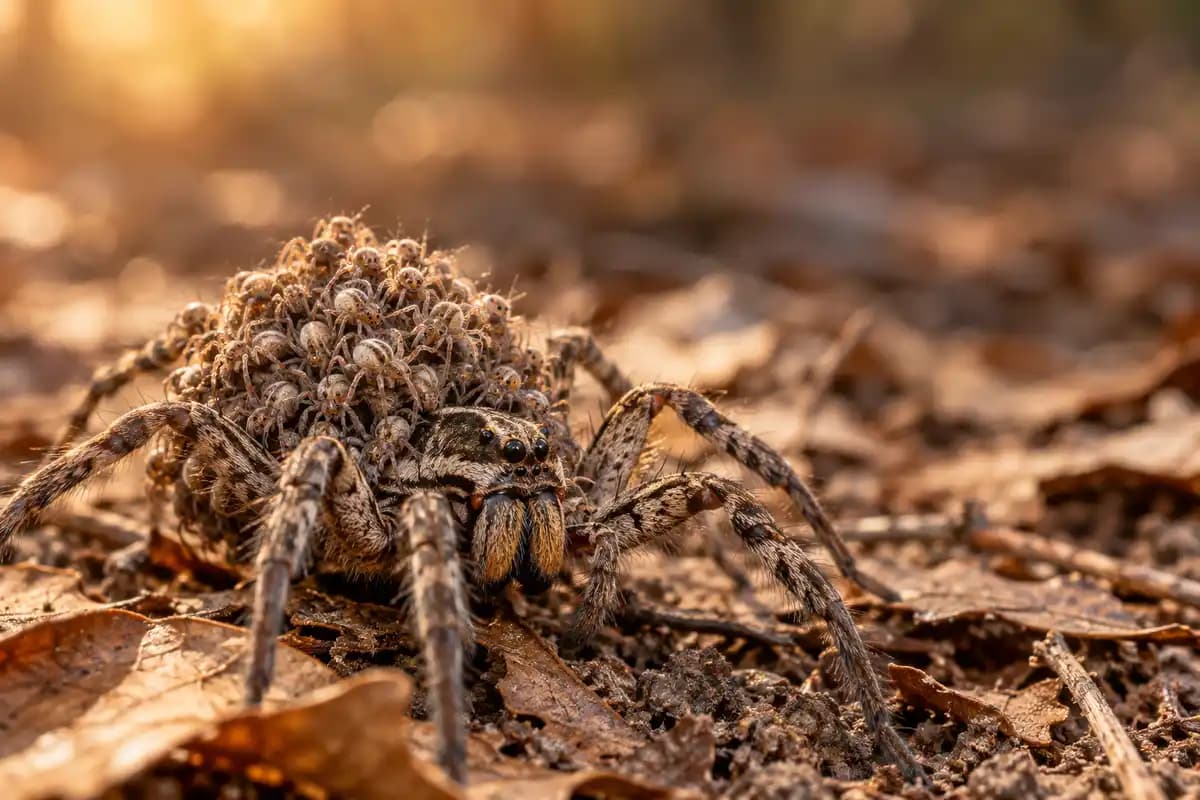
Females carry their round egg sac attached to the spinnerets at the tip of the abdomen, and after the eggs hatch, the babies ride on her back. No other common spiders do both, so this is one of the easiest ways to recognize the family.
- The egg sac: a round, white to gray ball of silk, about the size of a pea, dragged behind the female.
- Hatching: when the young are ready, she helps open the sac so they can climb out.
- Riding on the back: dozens of spiderlings cling to her abdomen for about a week or more.
- Leaving home: the young then drop off and scatter, walking away or floating on a strand of silk.
Wolf Spiders in the House
They usually come indoors by accident, often in late summer and autumn, following insects through gaps under doors. They do not build webs inside and cannot breed well in most homes, so a house wolf spider is usually a single wanderer along baseboards, in basements, garages and window wells. One spider inside does not mean an infestation. Seal gaps under doors, repair screens, move woodpiles away from walls and reduce outdoor lighting near doors to keep them out. The easiest way to remove one is to cover it with a cup, slide a card underneath and release it outside.
Are Wolf Spiders Poisonous or Dangerous?
These spiders are venomous, like nearly all spiders, but they are not poisonous to touch and are not considered dangerous to healthy people. They bite only when picked up, squeezed or trapped against skin. Penn State Extension describes the bite as causing pain, redness and some swelling that usually fades within 24 hours. Venom is injected through fangs and is designed for insects, so it is mild for people; poison, by contrast, is harmful when eaten or touched. For bite pictures and warning signs, see our Bug Bite Identifier.
How to Tell Them From Lookalikes
They are most often confused with hobo, grass and fishing spiders, and sometimes with recluses. The quickest checks are the eye pattern and whether the spider lives in a web:
- Hobo and grass spiders build funnel shaped webs and wait inside them, while wolf spiders roam freely.
- Fishing and nursery web spiders carry the egg sac in their jaws instead of from the spinnerets.
- Recluse spiders are plain brown with no stripes, six eyes and a violin mark on the front body.
- Jumping spiders are smaller, with two huge front eyes and a habit of hopping rather than running. See our guide to jumping spiders.
Frequently Asked Questions
Sources and References
- Penn State Extension. Wolf Spiders.
- University of California Statewide IPM Program. Spiders.
- University of Kentucky Entomology. Kentucky Urban Spider Chart.
- Australian Museum. Wolf Spiders.
- Penn State Extension. Spiders Commonly Encountered in Pennsylvania and the Northeast.