Jumping Spiders: How to Identify Them, Common Species and Facts
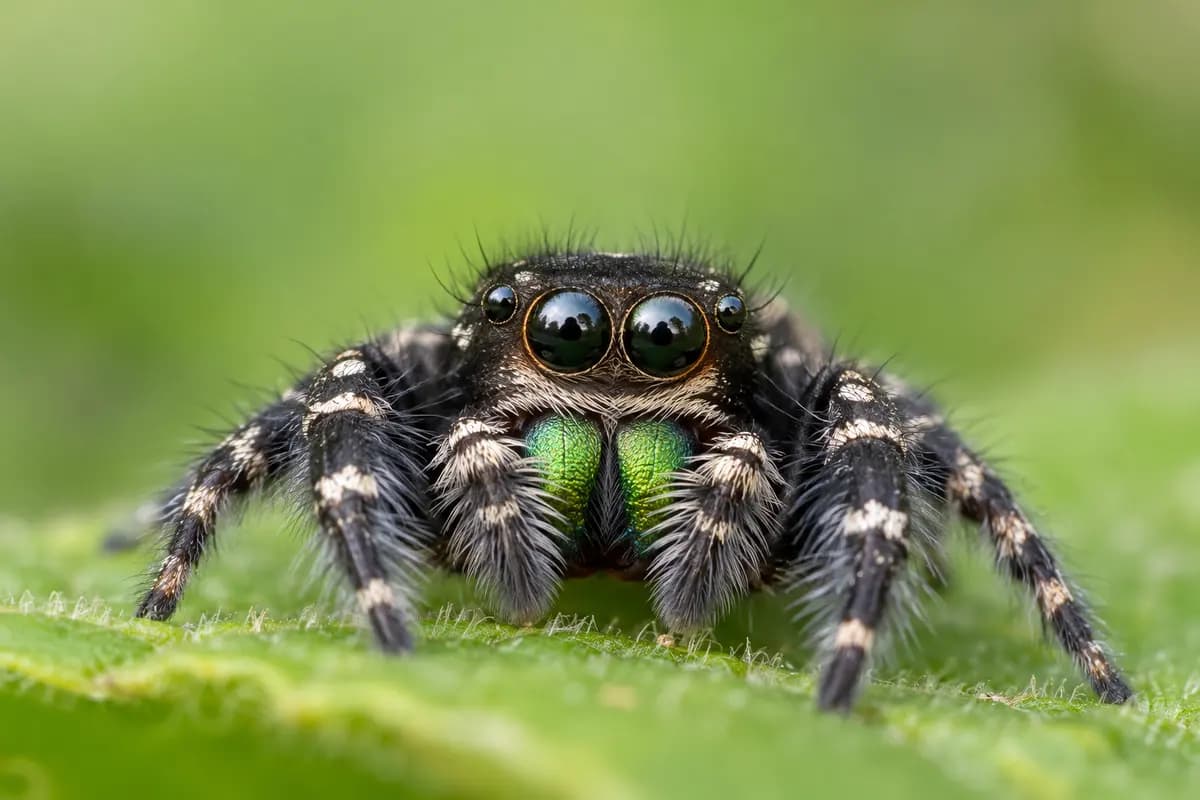
A jumping spider is a small, compact spider with two very large front eyes that hunts by stalking and pouncing on prey instead of catching it in a web. They belong to the family Salticidae, the largest spider family in the world, with more than 6,000 species. Most are 3 to 12 mm long, curious, harmless to people and active in daylight. This guide covers how to recognize them, the most common species, why they appear indoors and how people keep them as pets. For a photo checklist, use the Spider Identifier.
How to Identify a Jumping Spider
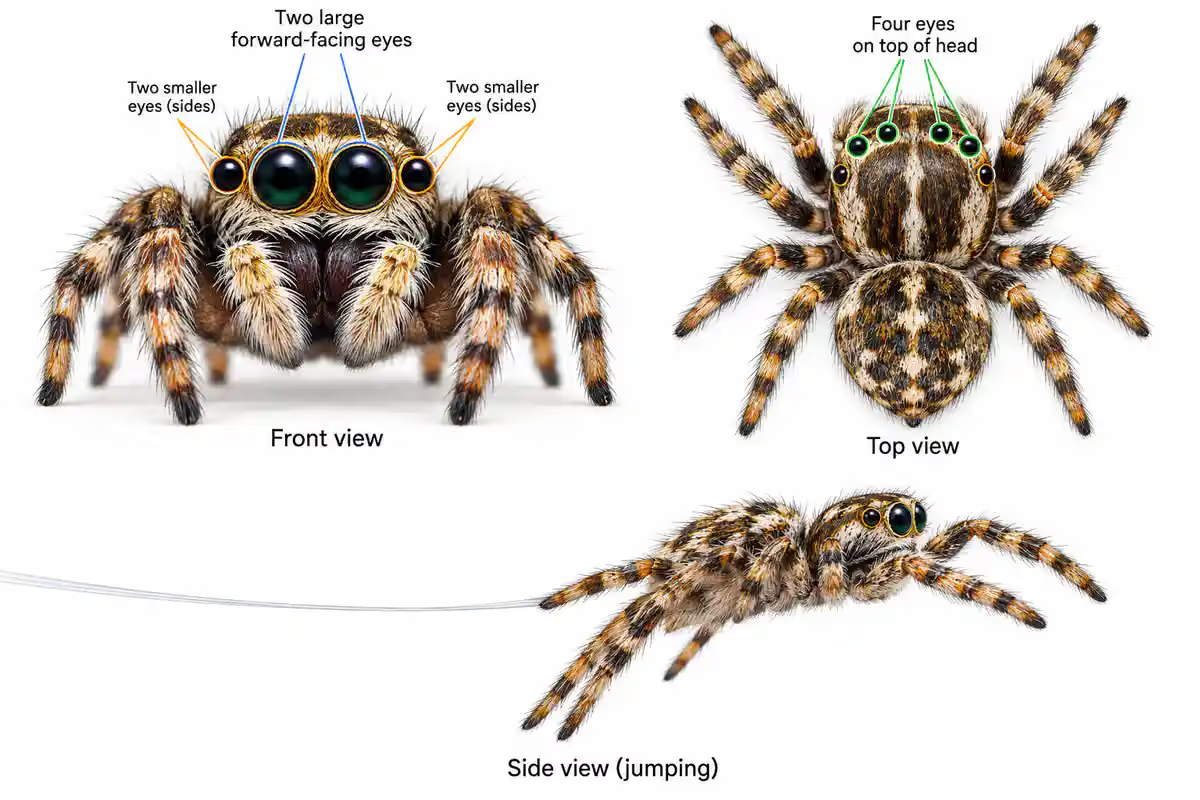
The fastest way to identify one is its face: two big, forward facing eyes in the middle of a flat front, like a pair of headlights. No other common spider has eyes this large for its size.
- Eyes: eight in total, with two huge front eyes, two smaller ones beside them and four on top.
- Body: short, stocky and often fuzzy, with a square front end and fairly short, strong legs.
- Movement: quick, jerky steps, sudden hops and a habit of turning to look at you.
- No web: they make small silk shelters for resting and egg laying, not catching webs.
- Daytime activity: they hunt in sunlight on walls, windows, fences, plants and tree trunks.
Their two large front eyes work like small telephoto lenses and give them some of the sharpest vision of any spider, and many species see color. When something moves, the spider turns its whole body to aim, then leaps, attaching a silk safety line first so it can climb back if it misses.
Common Species: Bold, Regal, Zebra and Peacock
The most common jumpers people notice are the bold, regal, zebra, tan and peacock species. Each has a distinct color or pattern.
| Species | Where | Look | Size (body) |
|---|---|---|---|
| Bold jumper (Phidippus audax) | Canada to Mexico, coast to coast | Black and hairy with white or orange spots, shiny green jaws | Females 8 to 19 mm |
| Regal jumper (Phidippus regius) | Southeastern US and the Caribbean | Females gray, orange or tan; males black with white bands | Up to about 2 cm (3/4 in) |
| Zebra jumper (Salticus scenicus) | Europe, North America, parts of Asia | Black and white stripes | About 5 to 7 mm |
| Tan jumper (Platycryptus undatus) | Eastern North America | Flat, mottled tan and brown, blends into bark | About 10 to 12 mm |
| Emerald jumper (Paraphidippus aurantius) | Southern US to Central America | Shiny green or gold scales | About 6 to 10 mm |
| Peacock spiders (Maratus) | Australia | Males with bright, fan shaped flaps on the abdomen | Usually 3 to 5 mm |
The bold jumper is the black spider with white spots most people find on decks, windowsills and fences in North America, often with iridescent green jaws. The regal jumper is popular with keepers for its size and calm nature, while Australian peacock spiders are tiny but famous for the males' colorful courtship dance.
Found a curious little spider watching you? Upload a photo to the free ScanaBug Spider Identifier for an instant ID with a safety rating.
Where Do They Live?
Jumpers live on every continent except Antarctica, with the most species in warm tropical forests. They hunt on sunny surfaces such as leaves, bark, rocks, fences and the outside walls of buildings, and rest in small silk sacs under bark or in folded leaves at night. A female spins a flat silk sac in a sheltered spot and often guards the eggs until the spiderlings hatch. Babies look like tiny copies of their parents and start hunting small prey right away.
Brown, Black and Tiny Jumpers
Brown jumpers are common on bark, walls and fences, where their mottled colors help them hide. Black ones include the bold jumper and several smaller Phidippus species. Tiny jumpers only 2 to 4 mm long often live in leaf litter, and some even look like ants to avoid predators. Color can change with age: young bold jumpers often have orange spots that turn white as they mature, and males and females of the same species can look very different.
Why Do Jumpers Come Indoors?
They often come indoors by accident, usually on windowsills and walls where sunlight and insects attract them. They do not infest homes, build messy webs or breed in large numbers inside. You will see them on sunny windows, door frames and potted plants, hunting flies, gnats, small moths and mosquitoes. Because they hunt flies and gnats, many people are happy to have one on a windowsill, or let it walk onto a piece of paper and carry it outside.
Are They Dangerous to People or Pets?
No. Jumpers are not dangerous to people, and most are too small to bite through human skin. They are shy and usually hop away rather than bite. When a large species is squeezed or handled roughly, Penn State Extension says the bite may cause minor pain, itching, swelling and redness for one to two days. They are not poisonous to touch and cannot harm pets in any meaningful way. If you want to move one, let it step onto your hand or a card rather than grabbing it.
Keeping a Jumper as a Pet
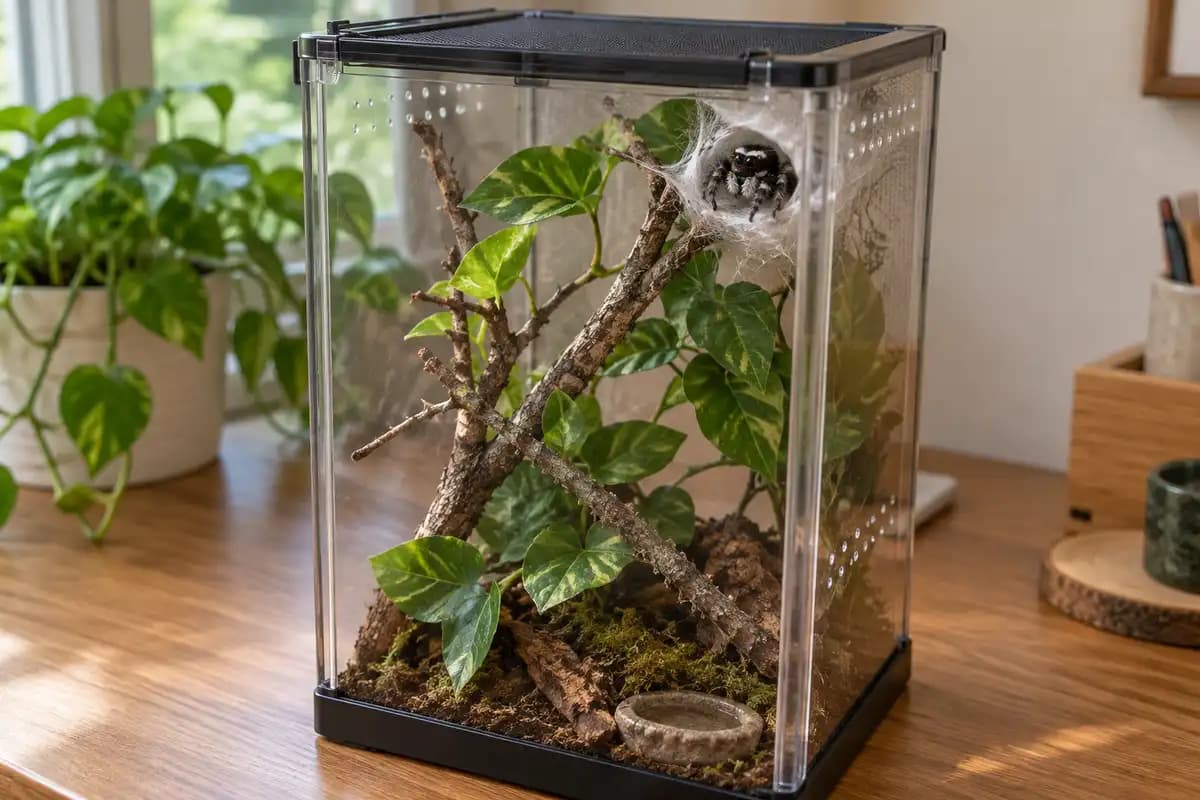
Jumpers are among the most popular pet spiders because they are small, active in daytime and seem to recognize their keepers. A pet jumper needs a simple setup and live insect food.
- Enclosure: a small, tall clear enclosure, since they like to climb, with good airflow.
- Decor: sticks, silk plants and a spot near the top where the spider can build its silk hideout.
- Food: small live insects such as fruit flies or small crickets every few days, no larger than the spider's body.
- Water: a light mist on the enclosure wall a few times a week.
- Temperature: normal room temperature and indirect daylight, away from direct sun.
Most jumpers live about a year in the wild; in captivity, females of larger Phidippus species can live about two years. Species with a calm temperament, such as the regal and bold jumpers, are the usual choice for beginners.
Frequently Asked Questions
Sources and References
- Penn State Extension. Bold Jumper Spider.
- Australian Museum. Jumping Spiders.
- University of Florida IFAS. Jumping Spiders: Beneficial Arthropods, Predators.
- University of California Statewide IPM Program. Spiders.
- University of Kentucky Entomology. Kentucky Urban Spider Chart.