Common House Spiders: 12 Types You Will Find Indoors
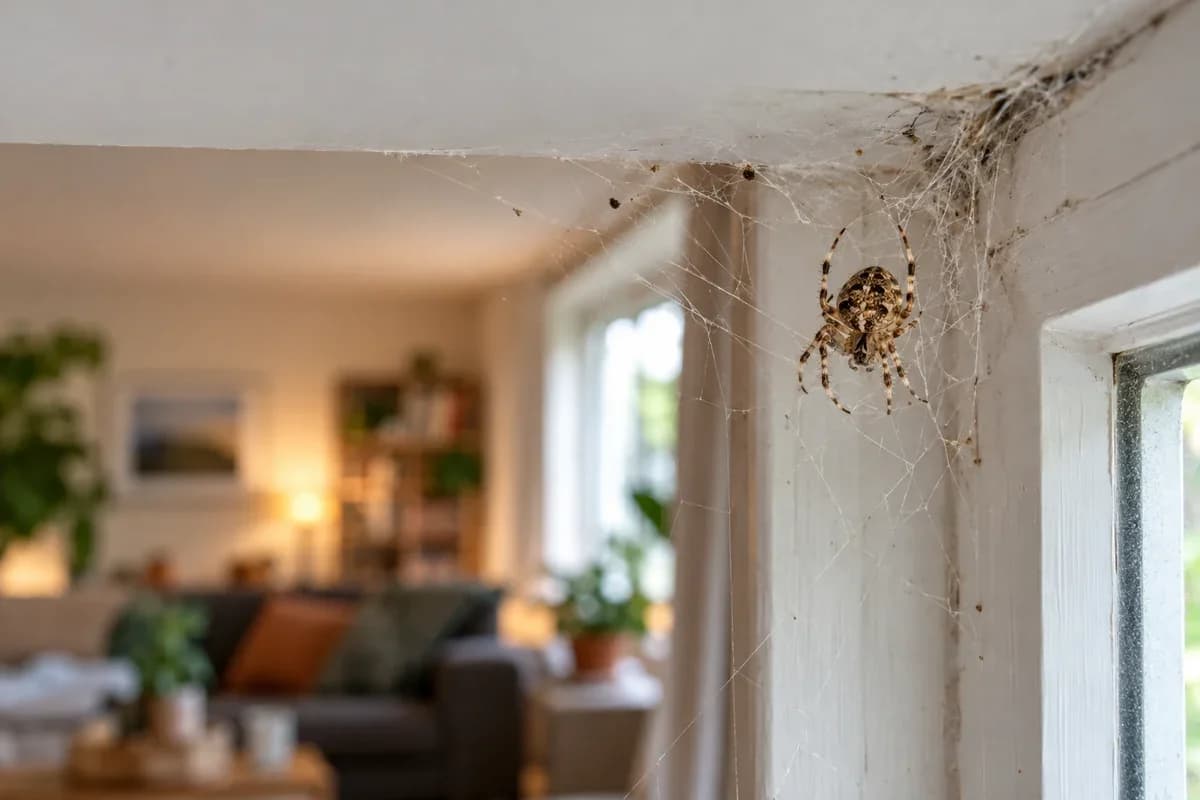
The most common house spider in many homes is a small, brown cobweb spider that builds messy webs in corners, followed by long legged cellar spiders and fast funnel web spiders. Almost all household spiders are harmless and help by eating flies, moths and other insects. This guide shows 12 types of indoor spiders, where each one hides, how big they get and which few deserve caution. To name yours, the Spider Identifier works from a single photo.
The Spiders Most People Find Indoors
Indoor spiders fall into two groups: web builders that live in your home for their whole lives and hunters that wander in from outside. Web builders stay in corners, basements and behind furniture, while hunters roam floors and walls, often in autumn.
| Spider | Group | Where you see it | Size (body) |
|---|---|---|---|
| Common cobweb spider (Parasteatoda tepidariorum) | Web builder | Room corners, windows, under furniture | 4 to 8 mm |
| Cellar spider (Pholcus phalangioides) | Web builder | Basements, ceilings, bathrooms | 7 to 10 mm, very long legs |
| Giant funnel weaver (Eratigena atrica) | Web builder | Corners, behind furniture, baths in autumn | Up to 16 mm |
| Barn funnel weaver (Tegenaria domestica) | Web builder | Basements, garages, sheds | 6 to 11 mm |
| Cupboard spider (Steatoda grossa) | Web builder | Cupboards, under appliances | 4.5 to 10 mm |
| Southern crevice weaver (Kukulcania hibernalis) | Web builder | Cracks in walls and window frames, southern US | Up to 19 mm |
| Black window spider (Badumna insignis) | Web builder | Window frames, eaves, Australia and New Zealand | 9 to 18 mm |
| Yellow sac spider (Cheiracanthium) | Hunter | Walls and ceilings at night | 5 to 10 mm |
| Zebra jumper (Salticus scenicus) | Hunter | Sunny windows and walls | 5 to 7 mm |
| Wolf spiders (Lycosidae) | Hunter | Floors, basements, garages | Often 10 to 25 mm |
| Woodlouse hunter (Dysdera crocata) | Hunter | Damp basements, ground floors | 10 to 15 mm |
| Spitting spider (Scytodes thoracica) | Hunter | Closets, walls, slow moving | 4 to 6 mm |
Cobweb, Cellar and Funnel Web Spiders
These are the classic household spiders that live indoors full time and build webs in quiet corners.
Common Cobweb Spider
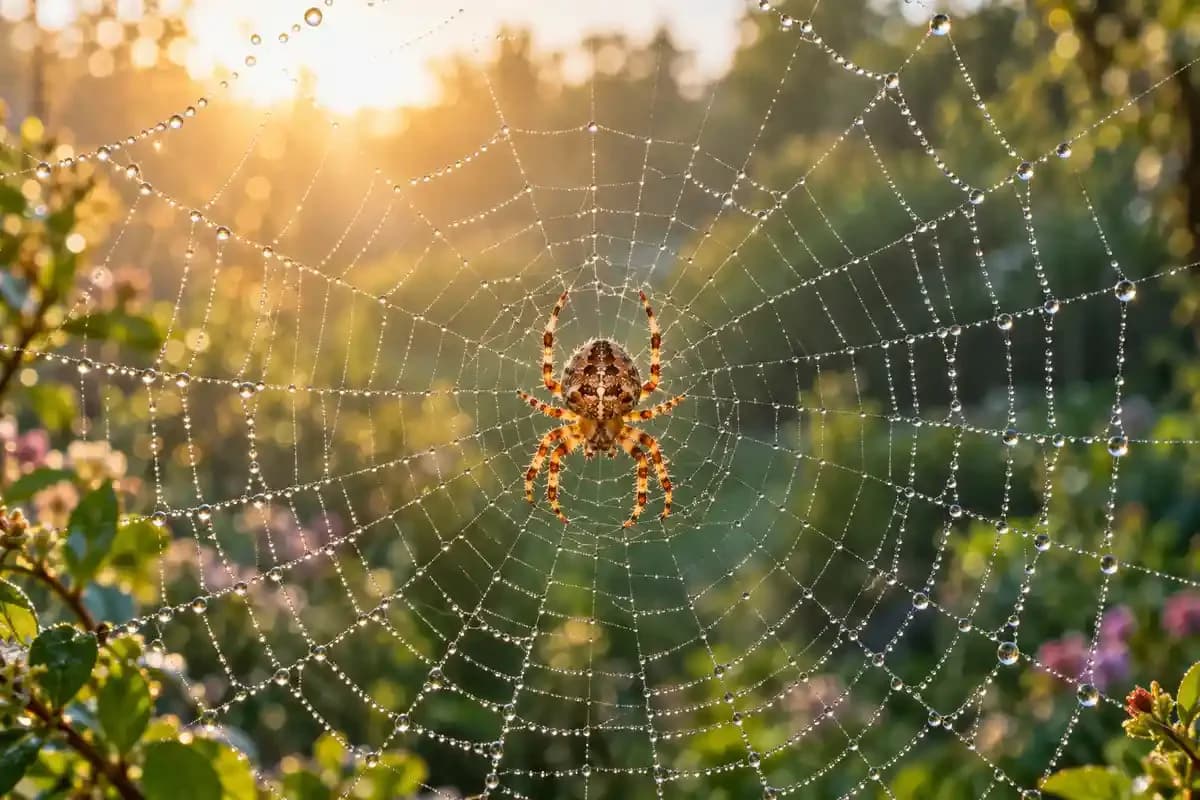
Parasteatoda tepidariorum, often called the American house spider, is a small, round, brown or gray mottled spider found in homes worldwide. It hangs upside down in a messy, tangled web in corners, window frames and behind furniture. The University of Kentucky describes it as about nickel sized with legs spread.
Cellar Spider
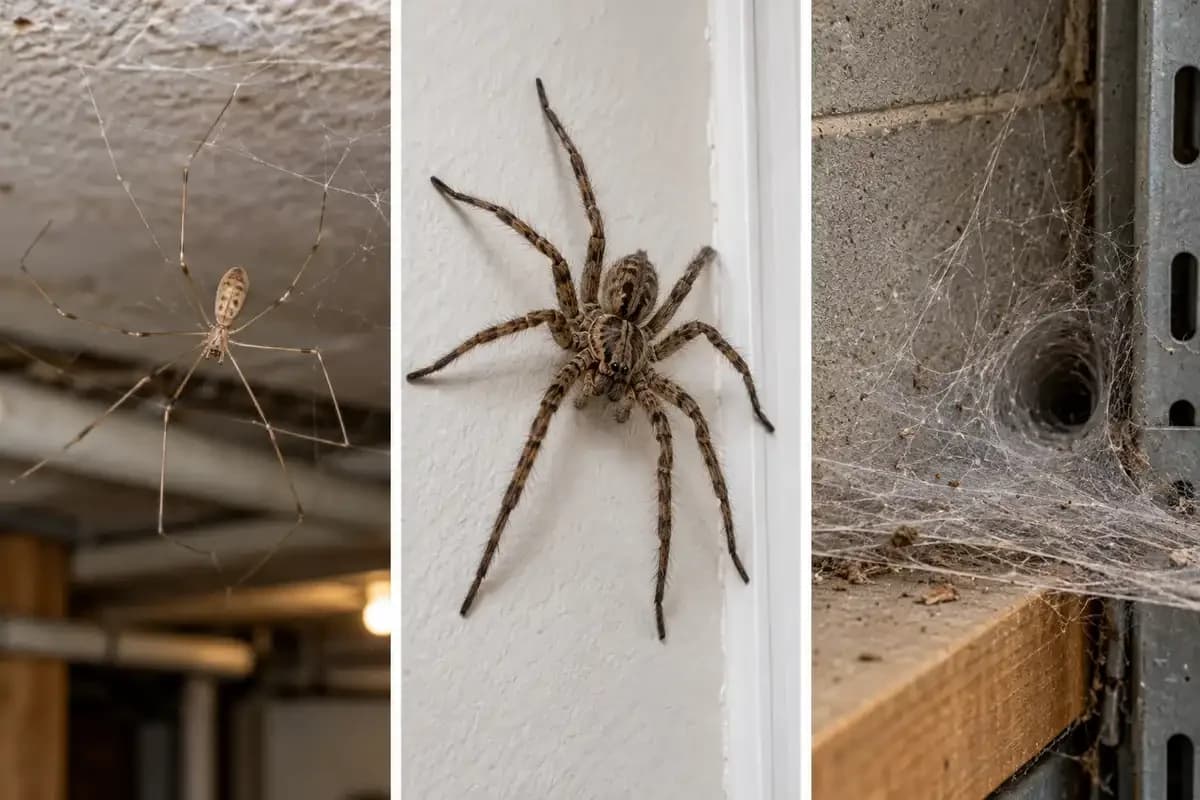
Cellar spiders have tiny bodies and extremely long, thin legs, so people often call them daddy longlegs. When disturbed they shake their loose webs so fast they seem to blur. The University of California notes that their main problem is the messy webs they leave in corners.
Giant and Domestic House Spiders
The giant house spider (Eratigena atrica), also called the giant funnel weaver, of Europe and the Pacific Northwest is a large, hairy, brown spider with long legs. The Wildlife Trusts note that its leg span can reach 7.5 cm (3 in) and that males wander indoors in late summer and early autumn while looking for mates, which is why people find them in baths and sinks. The smaller domestic house spider, also called the barn funnel weaver, builds flat sheet webs with a funnel retreat in basements, garages and sheds around the world.
Hunting Spiders That Wander Indoors
Hunting spiders do not live in webs and usually come inside by accident, chasing insects or looking for shelter.
- Wolf spiders: hairy, striped and fast, they run along floors and baseboards, mostly in autumn. See our wolf spider guide for more.
- Yellow sac spiders: pale yellow spiders that hunt on walls and ceilings at night and rest in small silk sacs in corners by day. They sometimes bite when trapped in clothing or bedding.
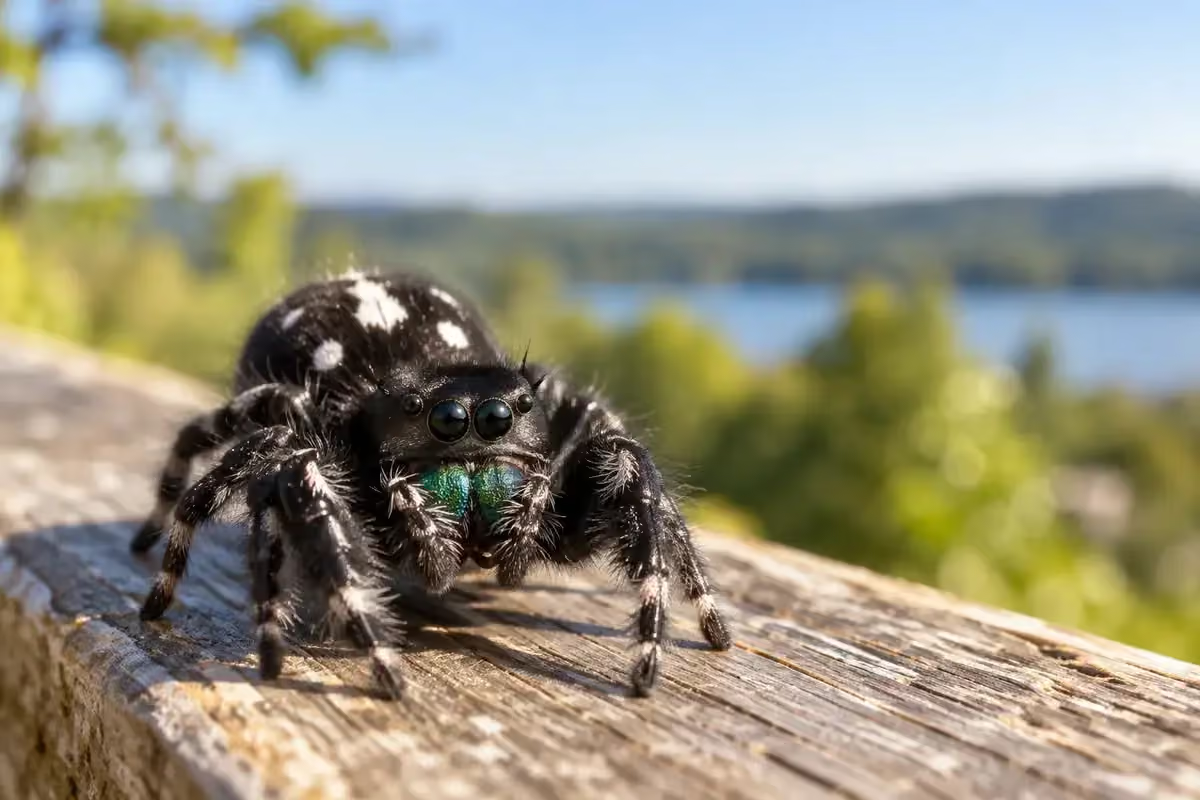
- Jumping spiders: small, fuzzy and active in daylight on sunny windows.
- Woodlouse hunters: red legged spiders with large fangs that hunt woodlice in damp basements.
- Spitting spiders: slow, spotted spiders that trap insects by spitting sticky silk over them.
Where Each Type Hides in Your Home
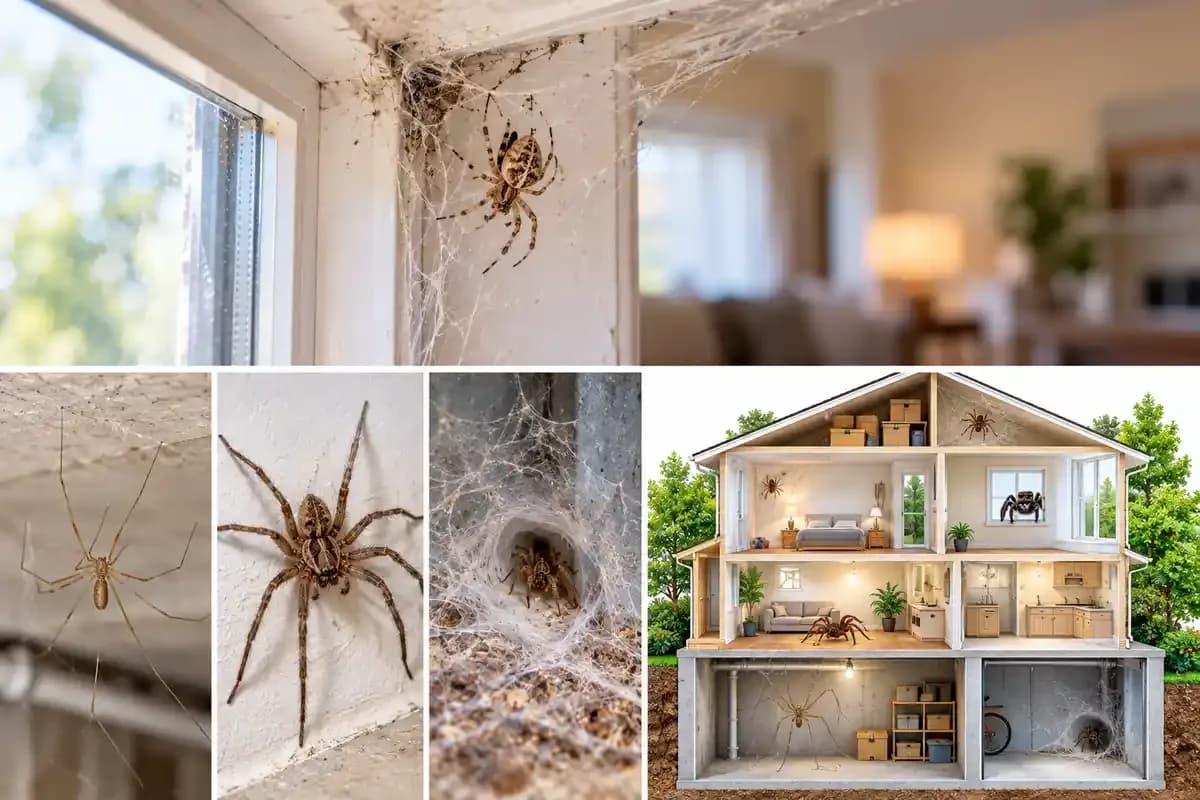
Each type of indoor spider prefers a different spot, so where you find it is a strong clue to what it is.
| Place | Spiders you usually find there |
|---|---|
| Room corners and ceilings | Common cobweb spiders, cellar spiders |
| Basement spider hot spots | Cellar spiders, funnel weavers, wolf spiders, woodlouse hunters |
| Attic spider hot spots | Cobweb spiders and, within their range, recluse spiders |
| Bathrooms and tubs | Wandering giant funnel weavers and wolf spiders |
| Windows | Jumpers, cobweb spiders, black window spiders |
| Carpets and floors | Wolf spiders and wandering males of web building species |
| Cupboards and closets | Cupboard spiders, spitting spiders, sac spiders |
Spiders in carpet are usually just passing through, since few species live on floors. Regular vacuuming along edges removes webs, egg sacs and the insects spiders feed on.
What Lots of Spiders Indoors Can Mean
Many spiders in one area usually point to plenty of insects for them to eat, such as flies near windows, moths near lights or springtails in a damp basement. Fixing leaks, using a dehumidifier in damp rooms and sealing gaps cuts the insect supply, and spider numbers drop with it. A sudden rise in autumn is normal and usually fades by winter.
How Big Do House Spiders Get and How Long Do They Live?
Most indoor spiders have bodies between 4 and 12 mm (1/8 and 1/2 in) long, but some, such as the giant funnel weaver, look much bigger because of their long legs. Size alone is a poor guide to danger, since several of the largest indoor spiders are harmless.
- Small web builders: cobweb and cupboard spiders often live about one to two years.
- Cellar spiders: can live two years or more in a quiet basement.
- Funnel weavers: females can live several years indoors.
- Hunters: wolf and sac spiders usually live about a year.
A spider in your bath is not climbing out of the drain. It usually fell in while wandering and cannot climb the smooth sides.
Which Household Spiders Should You Worry About?
Only two indoor spiders in North America are of real medical concern: the black widow and the brown recluse. Even these bite rarely and usually only when trapped against skin.
- Black widow: shiny black with a red hourglass, found mainly in garages, sheds, crawl spaces and basements rather than living areas. Learn more about the black widow spider.
- Brown recluse: plain brown with a violin mark and six eyes, found in boxes, closets and attics within its south central US range. Read our guide to the brown recluse spider.
- Yellow sac spider: can give a painful but mild bite.
- False widows: London's Natural History Museum says their bites cause pain similar to a wasp sting, usually lasting a few hours.
The southern crevice weaver, also known as the southern house spider, is often mistaken for a brown recluse because males are brown with long legs, but it is harmless. For a photo checklist of features that mark a dangerous spider, use the Spider Identifier.
A big brown spider on the wall? Upload a photo to the free ScanaBug Spider Identifier to tell a harmless house spider from a widow or recluse.
How to Keep Spiders Out of Your Home
The University of California recommends simple steps rather than sprays, which rarely give lasting control:
- Seal cracks, gaps around pipes and spaces under doors.
- Repair window and vent screens.
- Vacuum webs, egg sacs and spiders from corners, basements and storage areas.
- Reduce clutter and store items in sealed plastic tubs.
- Turn off or dim outdoor lights near doors, since they draw insects that spiders eat.
- Move woodpiles, leaf litter and dense plants away from the walls.
Frequently Asked Questions
Sources and References
- University of California Statewide IPM Program. Spiders.
- University of Kentucky Entomology. Kentucky Urban Spider Chart.
- The Wildlife Trusts. Giant House Spider.
- Natural History Museum, London. How Dangerous Are False Widow Spiders?
- University of California Statewide IPM Program. Widow Spiders and Their Relatives.
- Penn State Extension. Spiders Commonly Encountered in Pennsylvania and the Northeast.