Brown Recluse Spider Facts: Size, Where They Live and Where They Hide
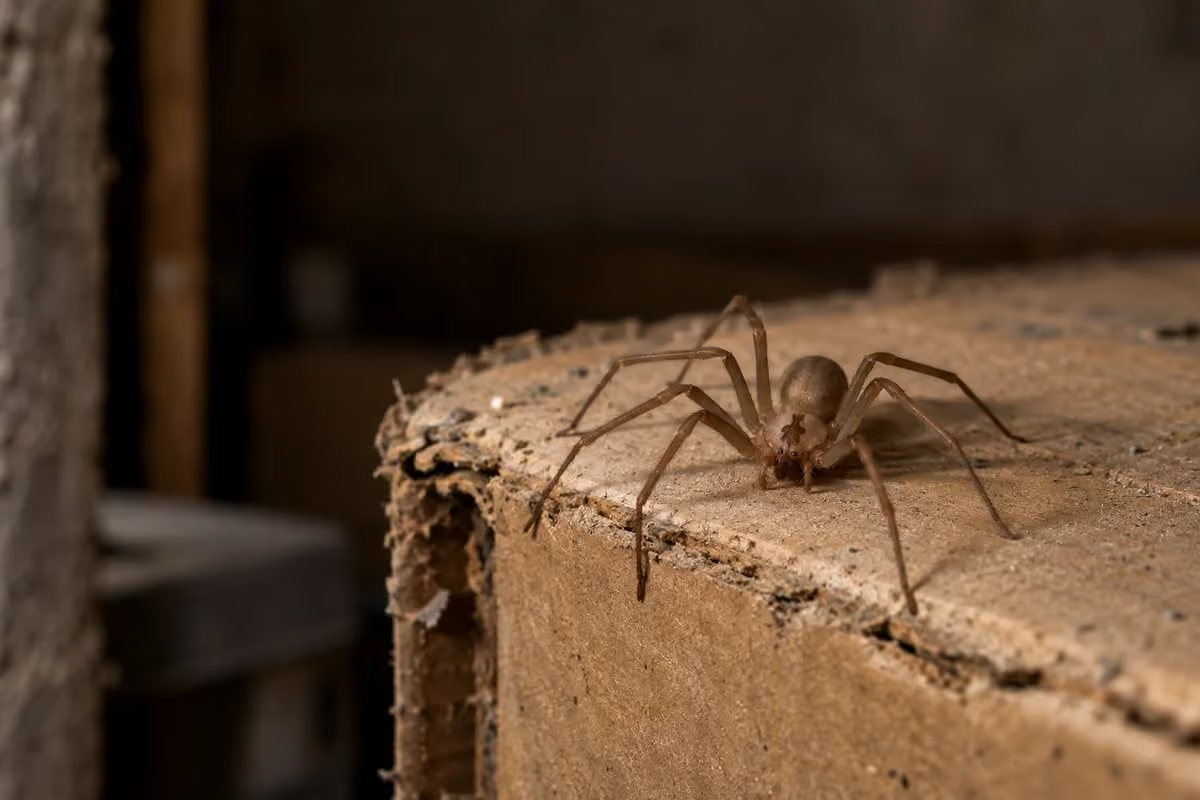
The brown recluse (Loxosceles reclusa) is a shy, tan to dark brown spider about the size of a coin with its legs spread, found mainly in the south central and Midwestern United States. It hides in dark, dry places, hunts at night and bites only when pressed against skin. This guide covers its size, range, babies, nests, diet and what it means when you find one at home. To check the spider's marks, such as the violin shape and six eyes, use the Spider Identifier.
Recluse Spider at a Glance
A recluse spider is a medium sized, plain brown spider with long, thin legs and no stripes, spots or bands. Its name, Loxosceles reclusa, means a shy spider with slanted eyes, and the name fits its habit of staying out of sight.
| Feature | What to expect |
|---|---|
| Body length | About 9 mm (3/8 in) |
| Size with legs spread | About 2.5 cm (1 in), close to a US quarter |
| Color | Tan to dark brown, same color all over the legs |
| Markings | Dark violin shape on the front body, fainter in young spiders |
| Eyes | Six eyes in three pairs, not eight |
| Lifespan | About 2 to 4 years |
| Active | At night |
| Native range | South central and Midwestern United States |
Do recluse spiders have striped legs?
No. Recluse spiders have plain legs with no stripes, rings or bands. Striped or banded legs are one of the quickest signs that the spider is something else: many harmless house spiders and grass spiders have striped legs and get mistaken for recluses. Anything much bigger than a large coin, especially a thick, hairy spider, is usually a different species such as a wolf spider.
Where Do Brown Recluse Spiders Live?
They live mainly in the south central and Midwestern United States, from Texas and Oklahoma east to Georgia and north to Ohio, Illinois and Nebraska, in about 16 states. Outside their native range, recluse spiders are rare; single spiders arrive in boxes or furniture but do not establish outdoors. There are no established populations in California, the Pacific Northwest or the Northeast, even though bites are often blamed on them there.
Indoors they prefer warm, dry, quiet places:
- Storage areas: cardboard boxes, stacked papers, closets and under beds.
- Inside the structure: wall voids, attics, crawl spaces and basements.
- Everyday items: shoes, gloves and clothes left on the floor for weeks.
Juvenile and Male Recluse Spiders
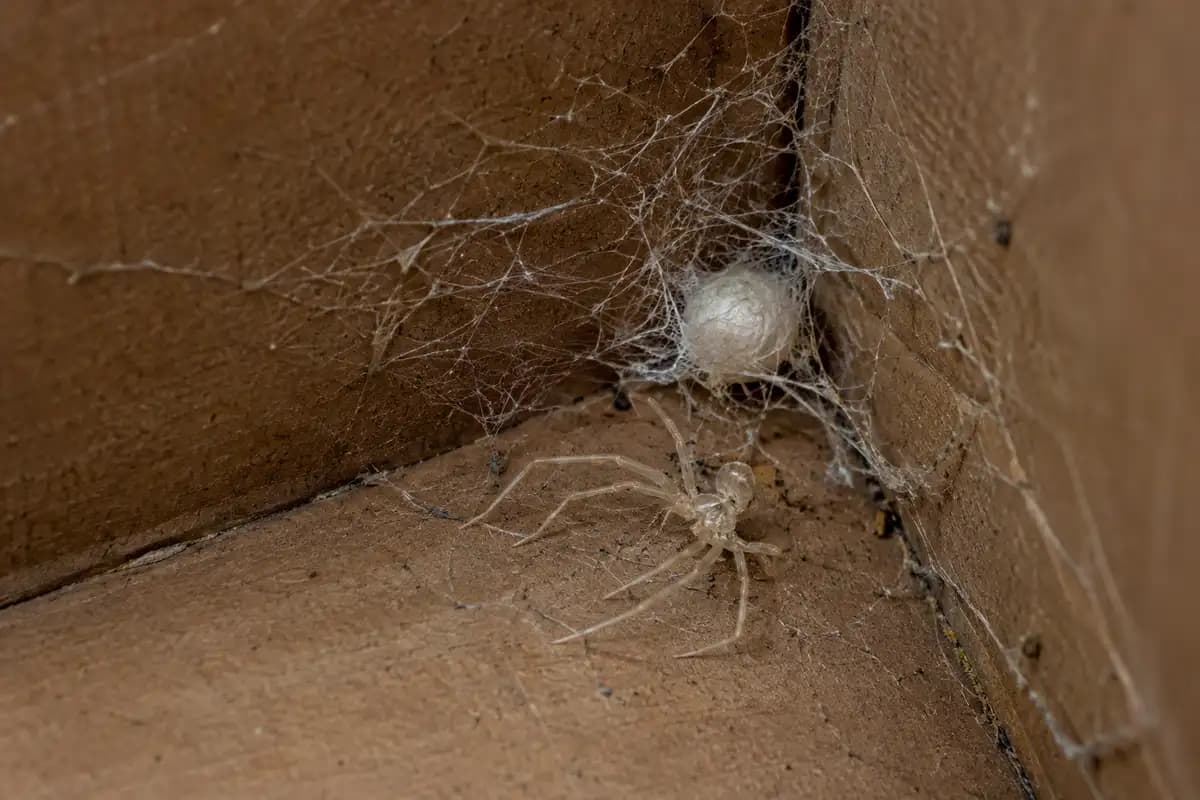
A baby recluse looks like a smaller, paler copy of the adult, often light tan with a faint violin mark and the same six eyes. Young recluses molt five to eight times before they become adults and take about a year to mature. After each molt, the empty skin is left behind with its legs spread; finding several of these shed skins is a strong sign that spiders are living and breeding nearby. Males have a slightly smaller body, longer legs and swollen palp tips, and wander more in spring and summer, so they are the ones most often found in sinks, tubs and sticky traps.
Think you found a recluse? Upload a clear photo to the free ScanaBug Spider Identifier for an instant ID with a safety rating, since many brown spiders are harmless lookalikes.
Brown Recluse Nests and Webs
These spiders do not build a nest the way wasps or ants do, and they do not use webs to catch prey. Instead, each spider spins a small, irregular patch of off white silk in a hidden spot as a daytime retreat.
- What it looks like: loose, cottony silk in a corner, crack or box, often with no clear shape.
- Egg sacs: round, off white silk sacs about 8 mm (1/3 in) across, each holding roughly 40 to 50 eggs.
- How many: a female can make up to five egg sacs in her life, mostly from May to August.
What Do Recluse Spiders Eat?
They eat small insects and other arthropods, such as crickets, cockroaches, silverfish and other spiders. They hunt at night by roaming floors and walls, grabbing small insects and also scavenging dead ones. They can survive many months without food or water, which is why a home can keep recluses even after the insects inside seem gone, and why sticky traps along walls work well for monitoring.
How Common Are Recluses Indoors?
Inside their native range these spiders can be very common indoors, yet bites stay rare. In one well known study, researchers collected 2,055 recluse spiders from a single Kansas home over six months, and none of the family had been bitten in the years they lived there. Bites usually happen only when a spider is trapped against skin, such as inside a shoe, glove or bedsheet. The University of Kentucky notes that their fangs are too small to bite through clothing and that most bites heal within about three weeks. A recluse bite needs care if a sore grows, darkens or blisters; our Bug Bite Identifier shows what to watch for and when to see a doctor.
Brown Recluse vs Black Widow
The two spiders people worry about most in the United States look and behave very differently. A recluse is plain brown and roams at night, while a black widow is shiny black and waits in a messy web.
| Feature | Brown recluse | Black widow |
|---|---|---|
| Color | Tan to dark brown, no pattern on the legs | Shiny black, red hourglass under the belly |
| Web | No catching web, only a loose retreat | Tangled, strong cobweb near the ground |
| Where | Boxes, closets, attics, wall voids | Woodpiles, garages, sheds, under decks |
| Range | South central and Midwestern US | Most of North America |
Found a Dead or Shed Recluse? What It Means
A dead recluse or a shed skin usually means more spiders are nearby, because these spiders rarely travel alone outside their range. One spider in a box from another state is different from finding several in a basement inside the native range.
- Check the item: a spider in a box moved from another state may have come with it.
- Look for shed skins: several pale, empty skins point to spiders growing and living indoors.
- Set sticky traps flat along walls and in storage areas to see how many there are.
- Cut clutter: store items in sealed plastic tubs, shake out shoes and gloves, keep bedding off the floor.
Many brown spiders found indoors are harmless species.
Frequently Asked Questions
Sources and References
- University of Kentucky Entomology. Brown Recluse Spider (ENTFACT 631).
- Penn State Extension. Brown Recluse Spiders.
- Vetter RS, Barger DK. An Infestation of 2,055 Brown Recluse Spiders and No Envenomations in a Kansas Home. J Medical Entomology, 2002.
- CDC National Institute for Occupational Safety and Health. Venomous Spiders at Work.
- University of California Statewide IPM Program. Spiders.