Black Spiders in the House: How to Identify the Types
A black house spider in North America is usually a false black widow, a black jumping spider, a dark wolf spider or, in the southern United States, a southern house spider. In Australia and New Zealand, the name belongs to a separate species, Badumna insignis. Most of these are harmless or cause only minor bites. The one to treat with care is the shiny black widow with a red hourglass underneath, which usually lives in garages and crawlspaces rather than living rooms. This guide shows how to tell them apart.
The Most Common Black Spiders Indoors
Match the spider's shape and behaviour to the table. Details come from Penn State Extension, Texas A&M University, London's Natural History Museum and NC State Extension.
| Spider | Look | Where indoors | Concern |
|---|---|---|---|
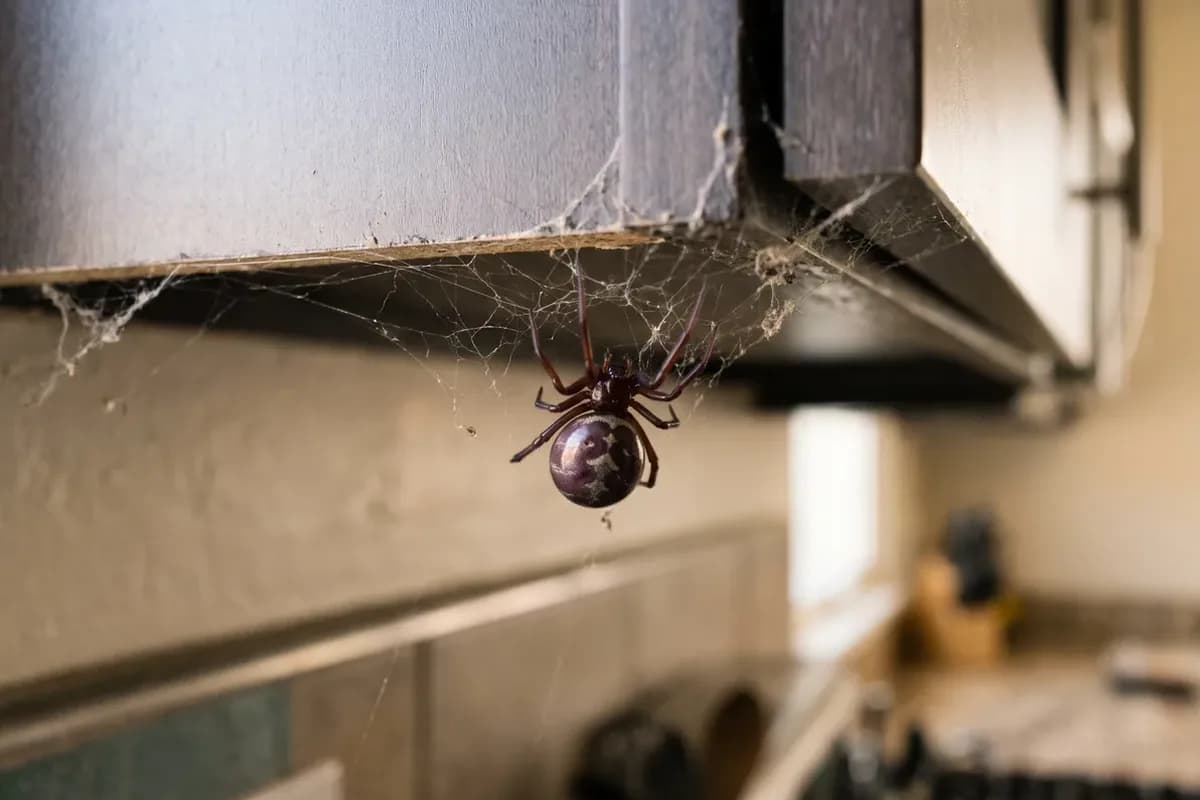
| False black widow (Steatoda grossa) | Purplish brown to black, round, no red hourglass | Corners, under furniture, bathrooms | Mild bite |
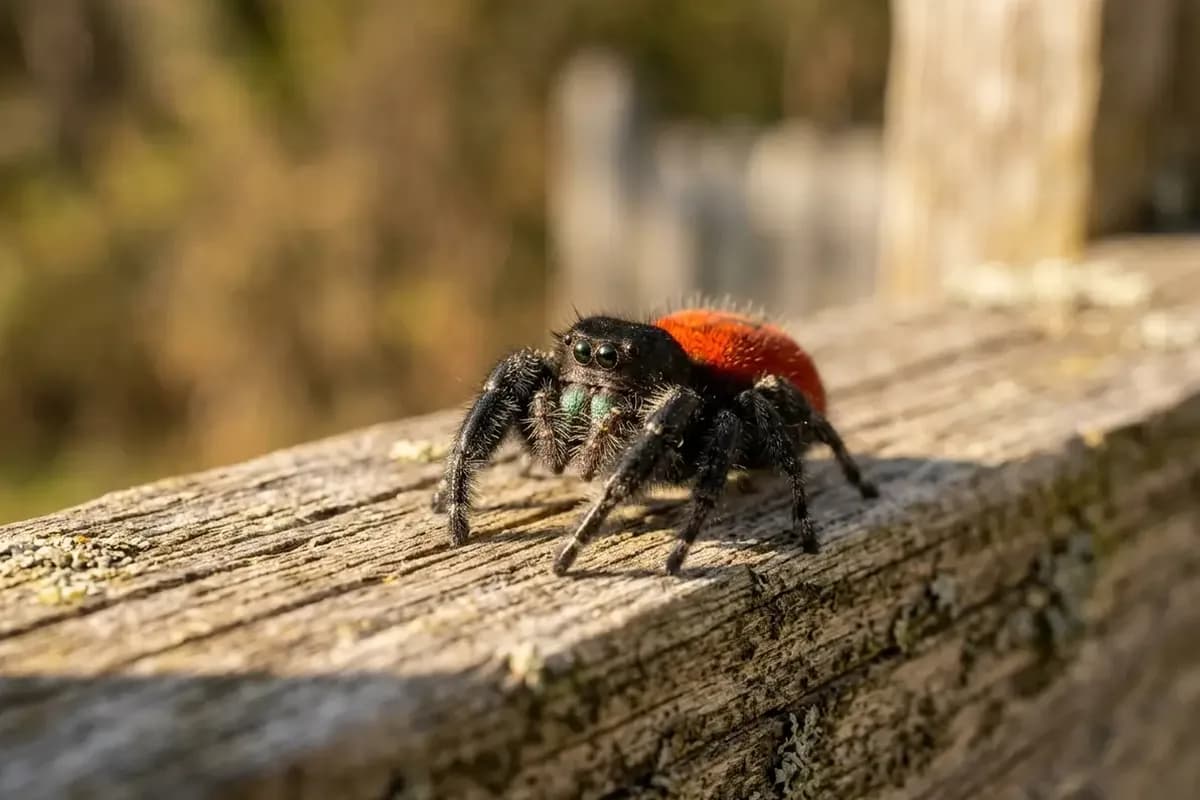
| Bold jumping spider (Phidippus audax) | Fuzzy black, white or orange spots, big eyes | Windowsills, walls | Minor bite if handled |
| Wolf spiders | Dark brown to black, fast, hairy | Floors, basements, garages | Harmless to most people |
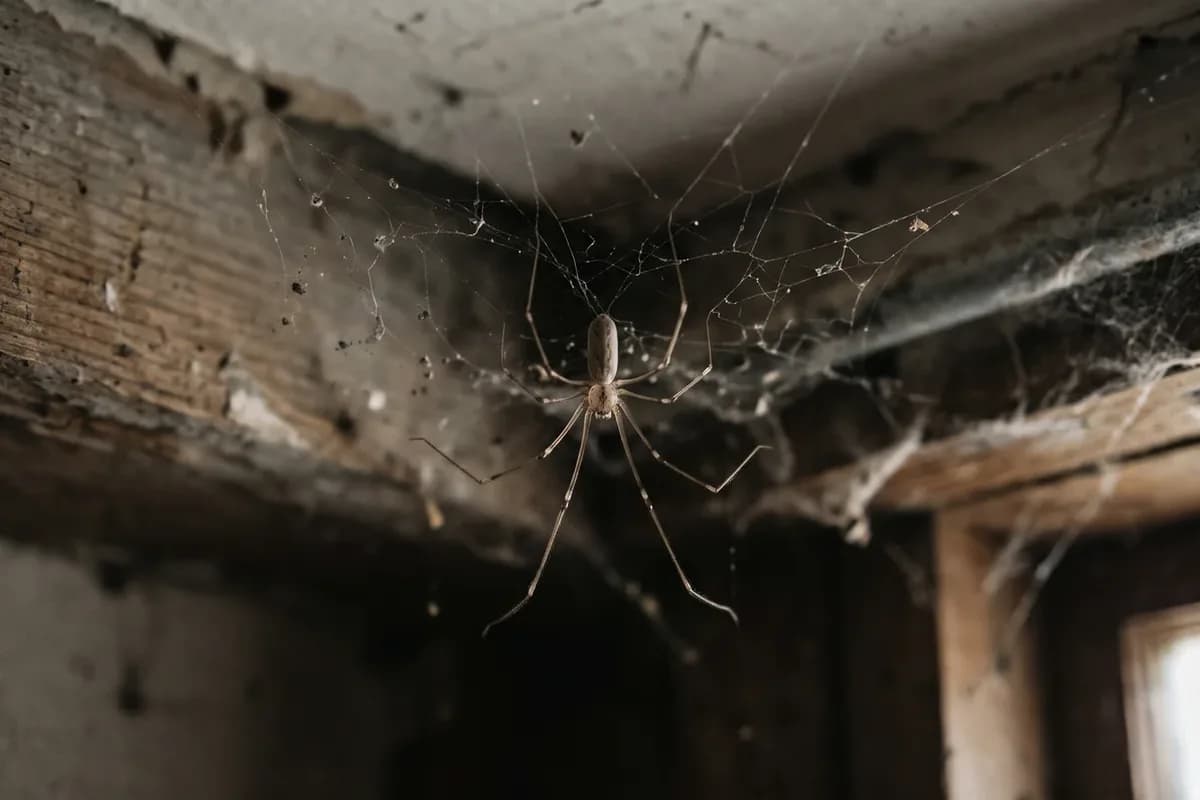
| Southern house spider (Kukulcania hibernalis) | Dark brown female, flat web from a crack | Barns, garages, old buildings | Not considered dangerous |
| Black lace weaver (Amaurobius ferox) | Dark brown, bluish lacy web | Wall holes, window frames, cellars | Harmless |
| Black widow (Latrodectus) | Shiny black, red hourglass underneath | Crawlspaces, garages, under appliances | Medically important |
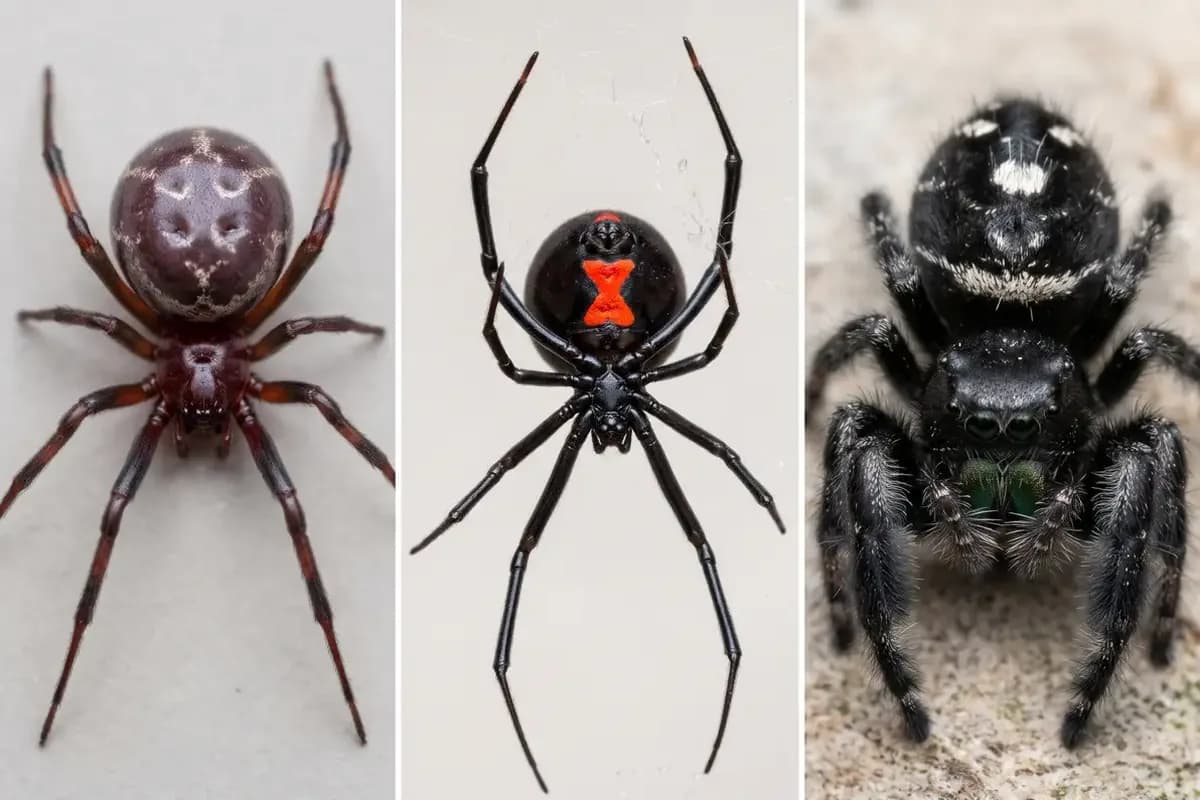
False Black Widows: The Usual Black Spider Indoors
The round, dark spider in a corner web is most often a false black widow. Penn State Extension notes it is common in homes in southern and western states, with all ages found indoors all year.
- Look: purplish brown to black abdomen with pale yellow to gray markings, a red brown front body and no red hourglass.
- Size: females 6 to 10.5 mm, about the same as a true black widow.
- Bite: symptoms resemble a black widow bite but are much less severe, sometimes with blistering and a few days of feeling unwell.
- Bonus: they are reported to catch other spiders, including true black widows.
If the spider is shiny jet black and has an hourglass underneath, see our guide to the black widow spider.
Little Black Spiders Indoors
Small, fuzzy black spiders on windowsills and walls are usually jumping spiders, often young bold jumping spiders.
- Bold jumping spider: Penn State Extension gives 8 to 19 mm for females, with white, yellow or orange spots and often iridescent green jaws.
- Where: windowsills, tree trunks and deck railings.
- Bite: they are shy and generally do not bite when handled, and any bite causes minor pain and itching for a day or two.
Learn more in our guide to the black spider with white spots. Tiny dark spiders in cobwebs can also be dark individuals of the common house spider.
Large Black Spiders in the Basement or Garage
A large, fast, dark spider running across a basement or garage floor is usually a wolf spider, while a big dark spider sitting in a flat web around a crack is often a southern house spider in the South.
- Wolf spiders: dark brown to black hunters that wander in from outside and do not build capture webs.
- Southern house spider: females are larger and darker brown than males, build webbing radiating from a central hole and are common in old barns and undisturbed buildings.
- Recluse confusion: southern house spiders cause worry when mistaken for recluses, though they are larger.
Black widows also live in garages and crawlspaces, favouring dark, damp, protected places. See our guide to the wolf spider.
Black Lace Weavers and Dark Lace Web Spiders
A dark brown spider in a hole in a wall or window frame, surrounded by a bluish, lacy web, is a lace weaver. London's Natural History Museum notes these spiders are 5 to 15 mm long and that Amaurobius ferox is the largest and darkest.
- Web: woolly and bluish when fresh, around a funnel shaped retreat on a vertical surface.
- Indoors: most often seen inside in autumn, when males search for females, and after heavy rain.
- Danger: harmless.
The Black House Spider of Australia and New Zealand
In Australia and New Zealand, black house spider is the common name of Badumna insignis. The Australian Museum describes a dark, sturdy spider with a dark brown to black front body and legs and a charcoal gray abdomen with faint white marks.
- Size: females about 12 to 18 mm, males about 9 to 15 mm.
- Web: lacy sheets around funnel like entrances, often in window frames and wall crevices.
- Bite: uncommon, but it may be quite painful with local swelling, and occasionally nausea, sweating or dizziness.
This species is not established in North America, so black spiders in US homes are one of the species above.
Round or Fat Black Spiders
A dark spider with a round, plump abdomen hanging in a messy web is a cobweb spider, the family that includes both false widows and true widows.
- Purplish brown with pale marks and no hourglass: false black widow.
- Shiny jet black with a red hourglass underneath: adult female black widow.
- Mottled brown to gray with ringed legs: a dark common house spider.
Thin, long bodied black spiders that run fast are usually wolf or ground spiders instead.
Baby Black Spiders
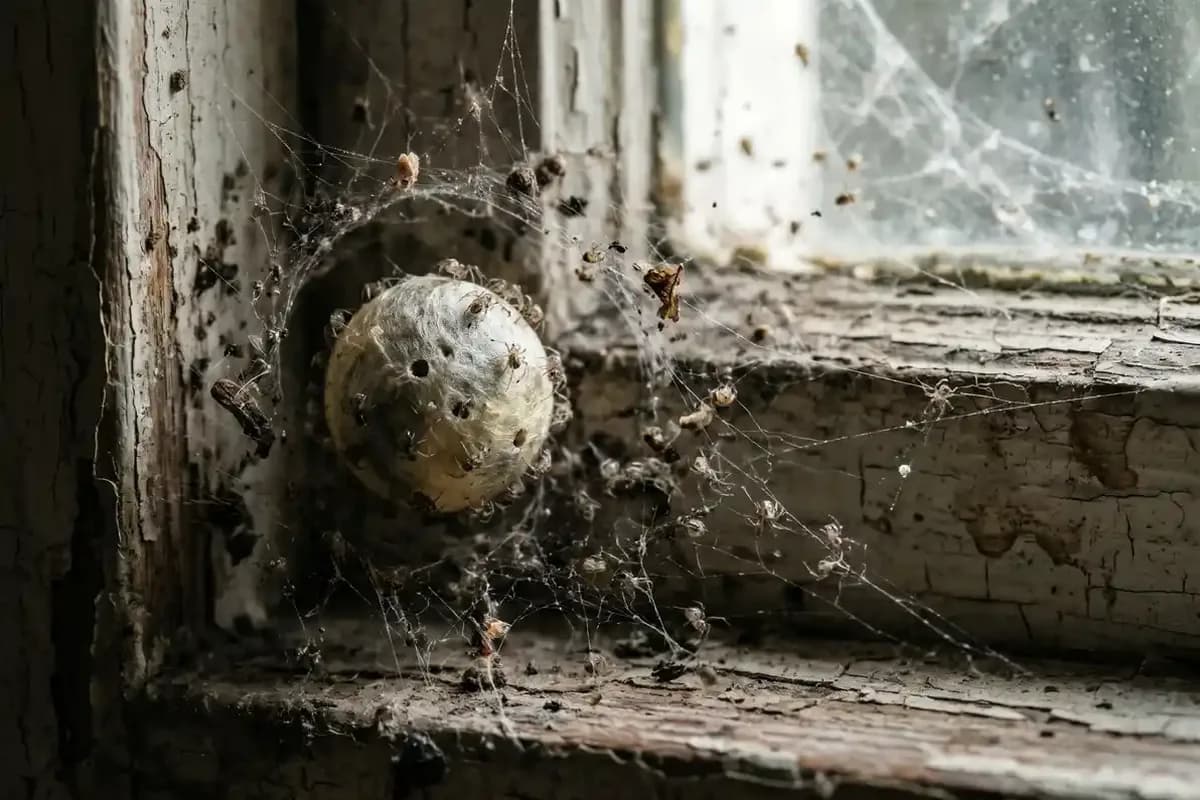
Tiny black spiders are usually young jumping spiders or spiderlings near an egg sac. Young widows look very different from adults: they are tan to gray with orange and white stripes, so a tiny jet black spider is not likely to be a baby widow. A cluster of tiny spiders around a web usually means an egg sac has just hatched and they will soon spread out.
When Black Spiders Show Up Indoors
- Autumn: lace weavers are most often seen indoors when males search for females, and after heavy rain.
- All year: false black widows of all ages live in buildings throughout the year.
- Warm months: jumping spiders are active by day on sunny walls and windowsills.
- After nearby building work or heavy rain: wolf spiders often wander in from disturbed ground.
Which Black House Spiders Are Dangerous?
Only the black widow is medically important among the black spiders found in and around North American homes.
- Black widow: shiny, smooth, round, with a red hourglass underneath.
- False widows and lace weavers: mild or harmless.
- Jumping and wolf spiders: minor bites at most if handled.
Wear gloves in garages and crawlspaces, and shake out shoes and clothes stored on the floor. For more, see our guide to venomous spiders.
Safety note: this is general information, not medical advice. Call emergency services right away for trouble breathing or swelling of the face, lips or throat after a bite, and get medical care at once for spreading pain, cramps or sweating after a suspected widow bite.
How to Keep Black Spiders Out
- Seal gaps around doors, windows and pipes, and repair screens.
- Vacuum corners, under furniture and storage areas regularly.
- Keep boxes off the floor and store items in sealed tubs.
- Reduce clutter and woodpiles near the foundation.
- Move single spiders outside with a jar and a card.
A black spider in your bed most likely wandered in from the floor. Keep bedding off the floor and the bed away from walls. Our Spider Identifier can check any black spider you find from one photo.
Frequently Asked Questions
Sources and References
- Jacobs S, Penn State Extension. False Black Widow Spider. 2025.
- Jacobs S, Penn State Extension. Bold Jumper Spider. 2025.
- Texas A&M University Urban and Structural Entomology Program. Southern House Spider.
- Natural History Museum, London. Lace Web Spider.
- Australian Museum. Black House Spider.
- Waldvogel M, Apperson C, NC State Extension. Spiders in and Around Homes. 2022.