Common House Spider: Identification and Facts
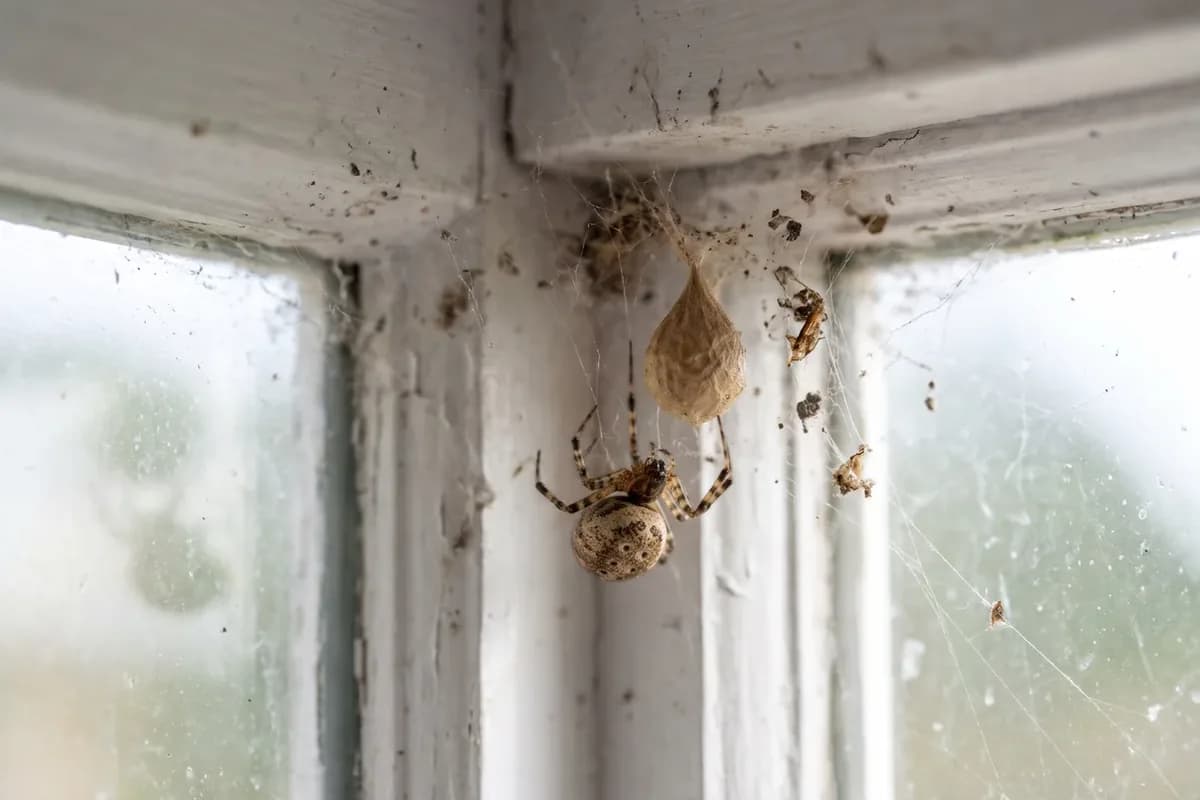
The common house spider (Parasteatoda tepidariorum), also called the American house spider, is a small, mottled brown or gray cobweb spider with a round, tall abdomen and dark ringed legs that builds messy webs in room corners, windows, garages and basements. It is one of the most familiar spiders in North American homes. Its bite is not considered medically significant, and it eats flies, mosquitoes and other household pests. This guide shows how to identify it, its web and egg sacs, how it differs from lookalikes and how to manage it.
What Is the American House Spider?
It is a cobweb spider in the family Theridiidae, the same family as the black widow. The Missouri Department of Conservation notes it was moved to the genus Parasteatoda in 2006.
- Lives with people: it is synanthropic, meaning it mainly lives near humans.
- Natural homes: outdoors it uses nooks on cliffs, cave entrances and hollow logs.
- Common nationwide: listed among the common spiders around California homes and found statewide in Missouri.
The name house spider is used for several other species too. See our guide to house spiders for the others you may find indoors.
How to Identify a Common House Spider
Look for a small, drab spider with a round abdomen that is taller than it is long, hanging upside down in a tangled web. Colours vary a lot between individuals, so the round abdomen, ringed legs and tangled web together are the most reliable clues.
| Feature | What to look for |
|---|---|
| Body length | 1/8 to 3/8 inch (3 to 10 mm) for females; about 1/8 inch for males |
| Colour | Yellowish, tan, brown or gray with darker mottling or streaks |
| Abdomen | Round and high, with side streaks, V shapes toward the rear and a whitish patch |
| Legs | Usually ringed with a darker colour |
| Web | Messy, three dimensional tangle, not a round orb |
| Egg sacs | Tan or gray, teardrop or pear shaped, often several in one web |
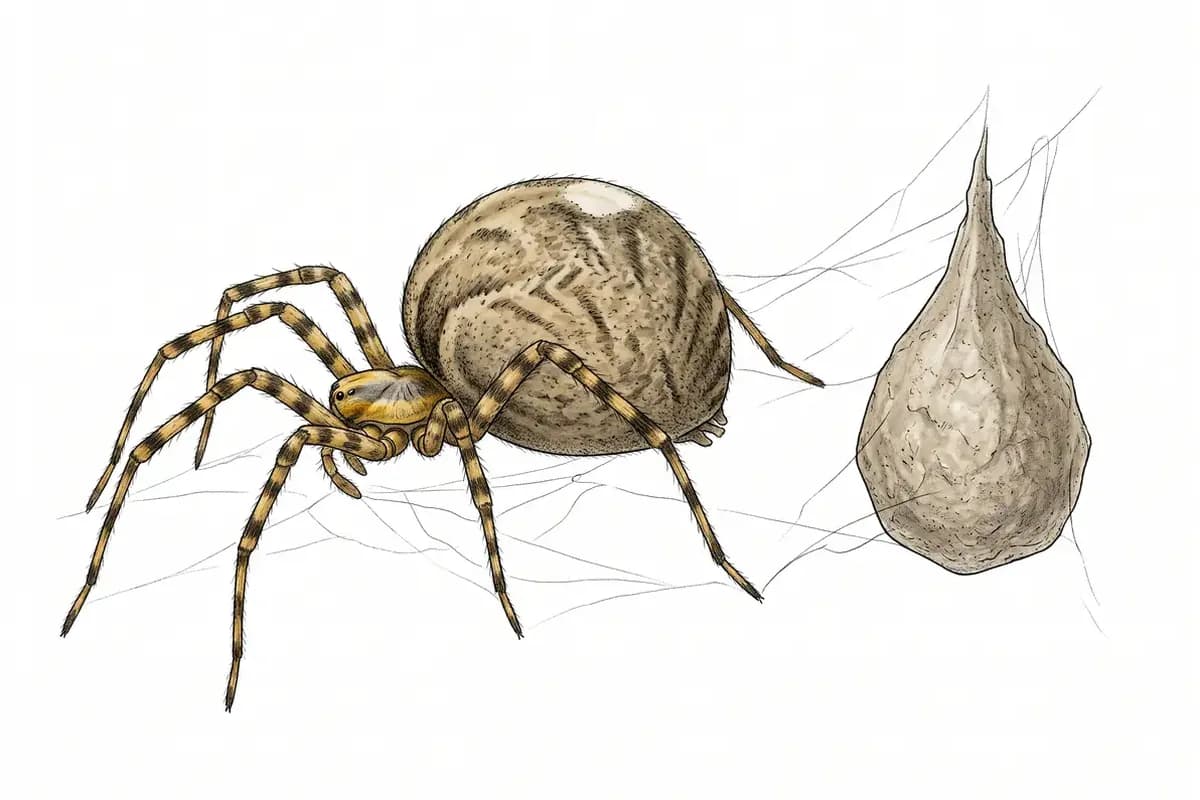
Size, Colour and Males vs Females
Females are the spiders you usually see sitting in the web, and they are larger than males.
- Size: females reach about 3/8 inch (10 mm) in body length, while males stay about 1/8 inch.
- Brown and gray forms: most look tan or brown with darker mottling, while some look gray.
- Darker individuals: some look almost black at a glance, but they still have the round, mottled abdomen and ringed legs rather than the shiny body of a widow.
- Males: small and leggier, seen mainly during courtship.
Small, pale juveniles often cluster near the egg sac for a while after hatching.
Web and Egg Sacs
The web is a messy, three dimensional tangle of threads, usually in a sheltered corner, with the spider hanging upside down near the middle.
- Catching prey: it uses comb like bristles on its hind feet to throw silk over prey, then bites it and wraps it.
- Leftovers: empty prey shells are dropped below the web, a useful sign the spider is there.
- Egg sacs: each holds 100 to 400 eggs, and a female can make more than 15 sacs in her lifetime.
- Lifespan: indoors it can live more than a year.
For a wider look at web types, read our guide to spider webs.
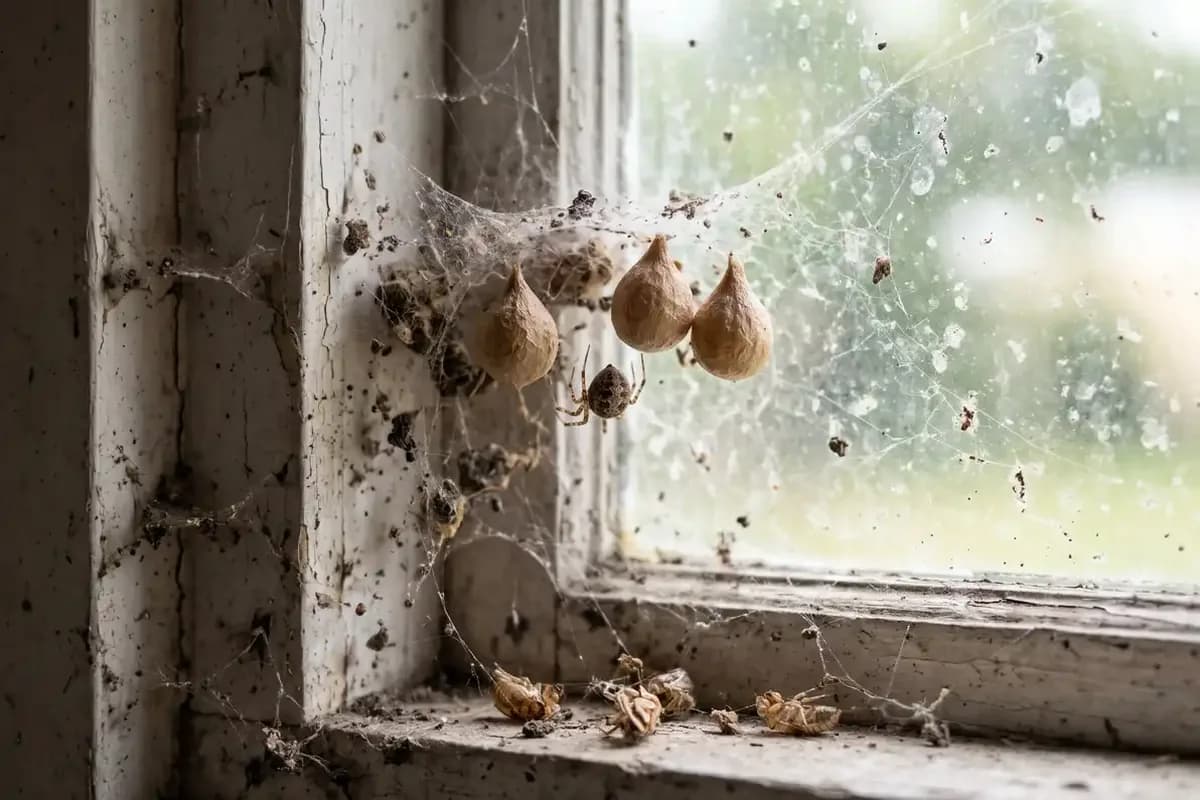
Where You Find Them
These spiders live in quiet, sheltered spots in and around buildings.
- Indoors: room corners, window frames, behind open doors and under furniture.
- Garages, basements and barns: common sites.
- Outdoors: eaves, porch lights and sheds, where lights draw insects.
Most spiders found indoors are accidental visitors, but this one is a true house dweller that can complete its life indoors.
Lookalikes: Other Cobweb Spiders and the Brown Recluse
Several small brown spiders in tangled webs are confused with this species.
- Triangulate cobweb spider: about 1/8 to 1/4 inch long, with a row of white and yellow triangular spots on a brown abdomen. There are no known cases of human envenomation.
- Black widow: same family, but a shiny black female with a red hourglass underneath.
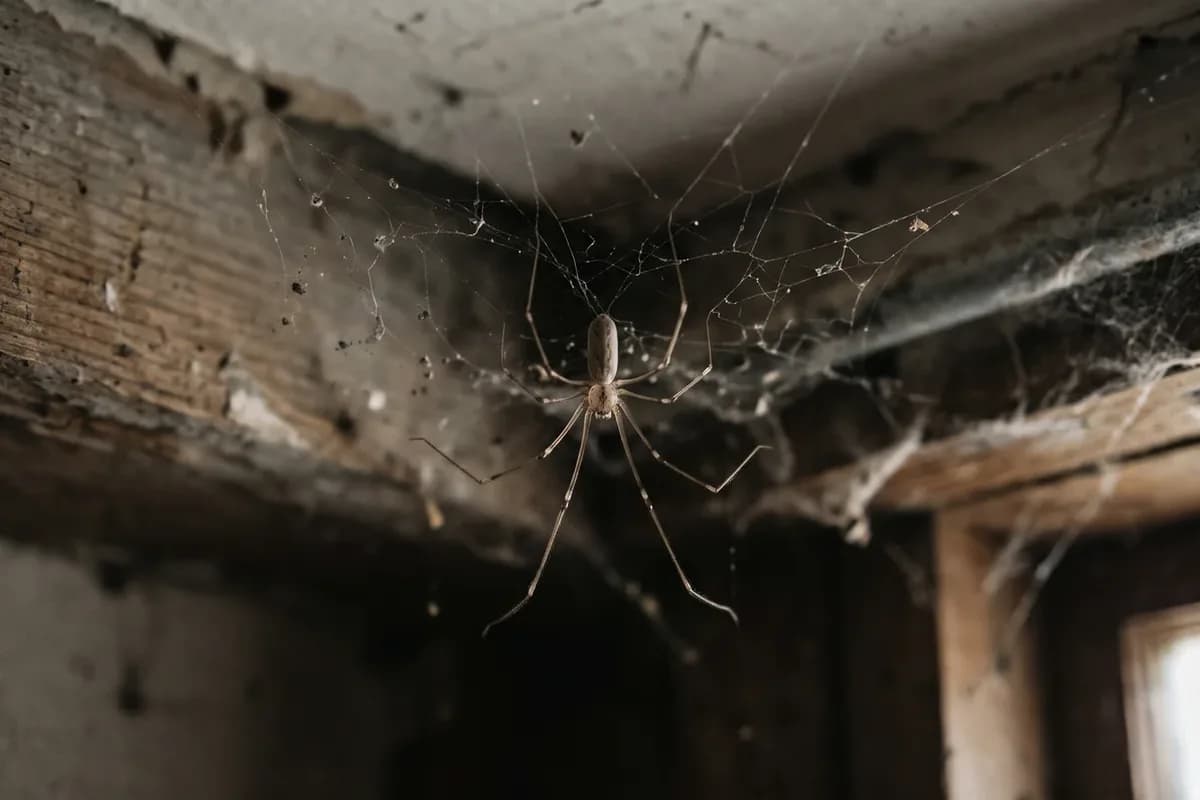
- Cellar spiders: much longer, thinner legs and a tiny body.
- Brown recluse: a flatter spider with a dark violin shaped mark and six eyes, and a sticky sheet web rather than a tangle.
See our guides to the black widow spider and the brown recluse spider to compare safely.
Are Common House Spiders Poisonous?
No. They have venom for their prey, like almost all spiders, but the Missouri Department of Conservation notes their bite is not considered medically significant and at worst may feel like a bee sting.
- Bites are rare: they bite only if grabbed or squeezed and tend to run, hide or play dead when disturbed.
- Typical bite: a small, painful lump that fades within a day or two.
- Allergy: a few people may react more strongly.
The University of Kentucky notes house spider bites are harmless except to allergic people. For what a bite looks like, see our Bug Bite Identifier.
Life Through the Year
Indoors these spiders can be active in every season, while outdoor spiders follow the weather.
- Spring and summer: egg sacs hatch, and spiderlings often stay in the mother's web for several days before spreading out.
- Late summer and fall: adults are full size and webs are most noticeable. Small males are seen mainly during courtship.
- Winter: most spiders in temperate regions die at the first hard freeze, but this species can live more than a year in a heated building.
Seeing tiny pale spiders around one web usually means an egg sac has just hatched, not that an infestation has started.
Why They Are Good Neighbours
These spiders are part of the natural pest control in a home and garden. The Missouri Department of Conservation notes several useful roles:
- Pest eaters: they catch mosquitoes, flies, wasps, Asian lady beetles and cockroaches.
- Food for wildlife: salamanders, lizards, small snakes, birds and small mammals eat them outdoors.
- Nest material: hummingbirds, vireos and warblers collect cobwebs to build their nests.
If you are unsure whether the spider in your corner is this harmless species, check a photo with our Spider Identifier before removing it.
Should You Get Rid of Them?
You do not need to, because they eat pests. If you prefer fewer webs:
- Vacuum webs, spiders and egg sacs from corners and windows.
- Seal gaps around windows and doors and repair screens.
- Reduce outdoor lights that draw insects to windows.
- Move a spider outside in a jar with a card slid underneath.
UC IPM notes sprays rarely help without good housekeeping.
Not sure the spider in your corner is this harmless house spider? Upload a clear photo to the free ScanaBug Spider Identifier for an instant ID with a safety rating.
Frequently Asked Questions
Sources and References
- Missouri Department of Conservation. Common House Spider. Field Guide.
- University of California Statewide IPM Program. Spiders. Pest Notes.
- University of Kentucky Entomology. Common Spiders Found Around Homes and Buildings. ENTFACT 622.
- University of Kentucky Entomology. Kentucky Urban Spider Chart.
- Ogg B, University of Nebraska Lincoln Extension. Triangulate Household Spider: A Common Harmless Spider.