Spider Webs: Types of Webs and Who Builds Them
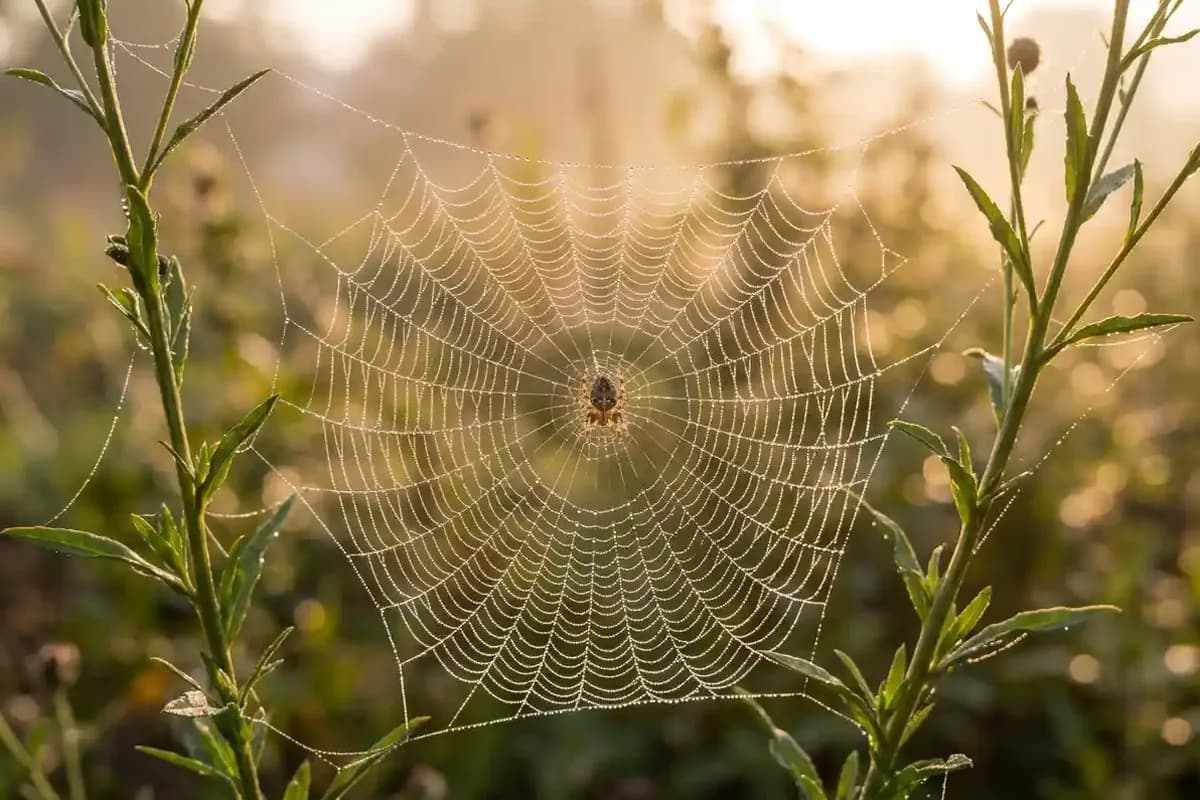
A spider web is a structure of silk that a spider spins to catch prey, hide or protect its eggs, and its shape usually tells you which family of spider built it. Orb weavers make round wheel webs, cobweb spiders make messy tangles, funnel weavers make flat sheets with a tunnel and many hunting spiders build no web at all. This guide explains what silk is, how webs are built, the main web types, how to work out which spider made the web you found and when to remove webs around your home.
What Are Webs Made Of?
Webs are made of silk, a protein that spiders produce as a liquid in glands inside the abdomen and pull out as solid threads through spinnerets at the rear of the body. The Australian Museum explains the liquid becomes a fibre as it leaves tiny nozzles called spigots.
- Many kinds of silk: the Australian Museum notes ten types of silk glands are known in spiders, and one species can have up to eight, each making silk with different properties.
- Sticky and dry threads: Penn State Extension notes webs mix sticky and non sticky threads, and the spider knows which ones are safe to walk on.
- Strength: the Australian Museum reports that dragline silk has a tensile strength greater than mild steel and almost all artificial fibres except Kevlar.
- Other uses: silk also wraps prey, lines retreats and protects egg sacs.
Some spiders even recycle silk. The Australian Museum notes eating an old web returns the protein to the silk glands to make new silk.
How Do Spiders Build a Web?
Spiders build webs by laying down a frame of strong dry lines first, then filling it with the capture threads their family uses, such as a sticky spiral in an orb web or a dense mat in a sheet web.
- Anchor lines: the spider attaches a first line between two points, often letting a thread drift on the breeze until it catches.
- Frame and spokes: in an orb web, it adds a frame and radiating spokes that meet at a hub.
- Capture spiral: it then lays a sticky spiral from the outside in.
- Waiting spot: it sits at the hub or in a nearby retreat, feeling for vibrations.
The Australian Museum notes building an orb web takes about 30 to 45 minutes. Many night active orb weavers eat their web toward dawn and build a fresh one each evening.
The Main Types of Webs
Most webs fall into a handful of types. Penn State Extension groups them as orb webs, sheet webs, funnel webs and cobwebs, and UC IPM adds the silken tubes of sac spiders.
| Web type | What it looks like | Who builds it | Where |
|---|---|---|---|
| Orb web | Round wheel with spokes and a spiral | Orb weavers, garden spiders | Gardens, porches, between plants |
| Cobweb (tangle web) | Messy three dimensional tangle | Cobweb spiders, house spider, widows | Room corners, garages, sheds |
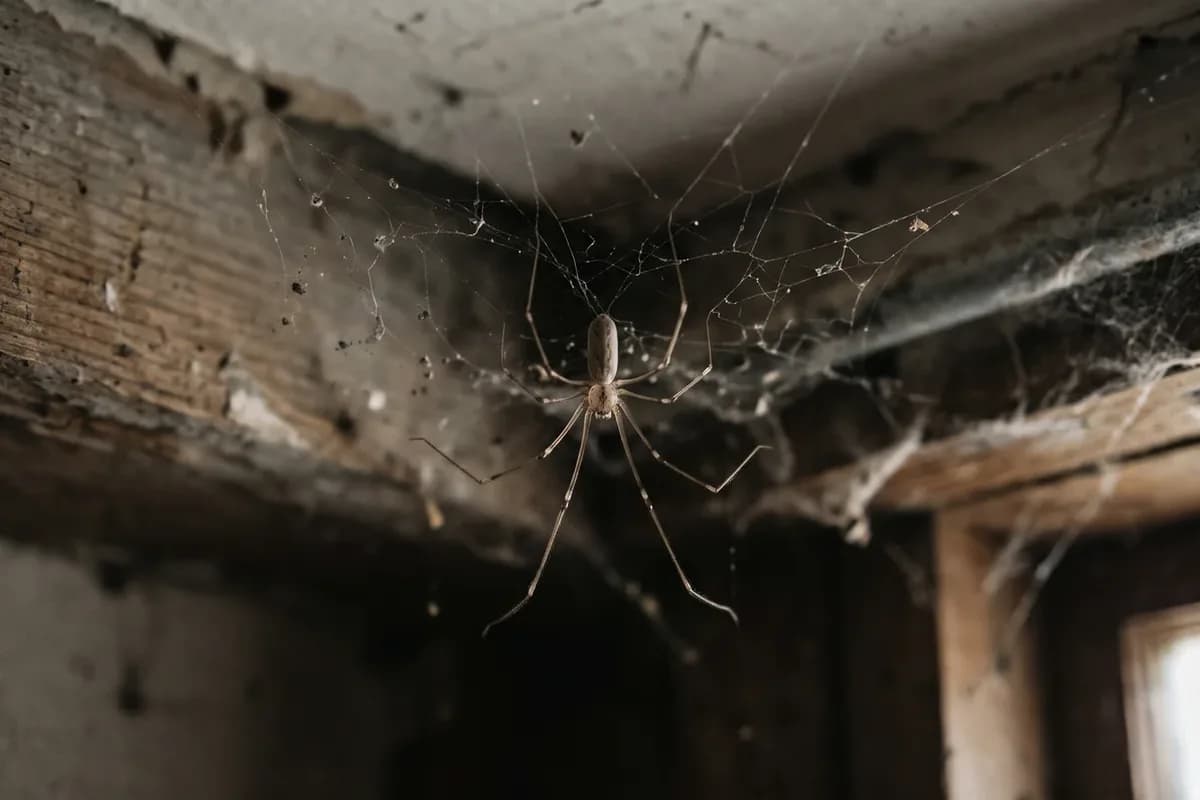
| Irregular web, hangs upside down | Loose, untidy threads | Cellar spiders | Basements, ceilings, corners |
| Funnel web | Flat sheet leading to a tunnel retreat | Grass spiders and funnel weavers | Lawns, shrubs, rock crevices |
| Sheet web | Flat or domed sheet of fine silk | Sheet weavers (dwarf spiders) | Shrubs, grass, garages |
| Silk tube or sac | Small pouch, not used to trap prey | Sac spiders | Ceiling corners, rolled leaves |
| No web | Hunt on foot | Wolf, jumping, crab and fishing spiders | Ground, plants, water edge |
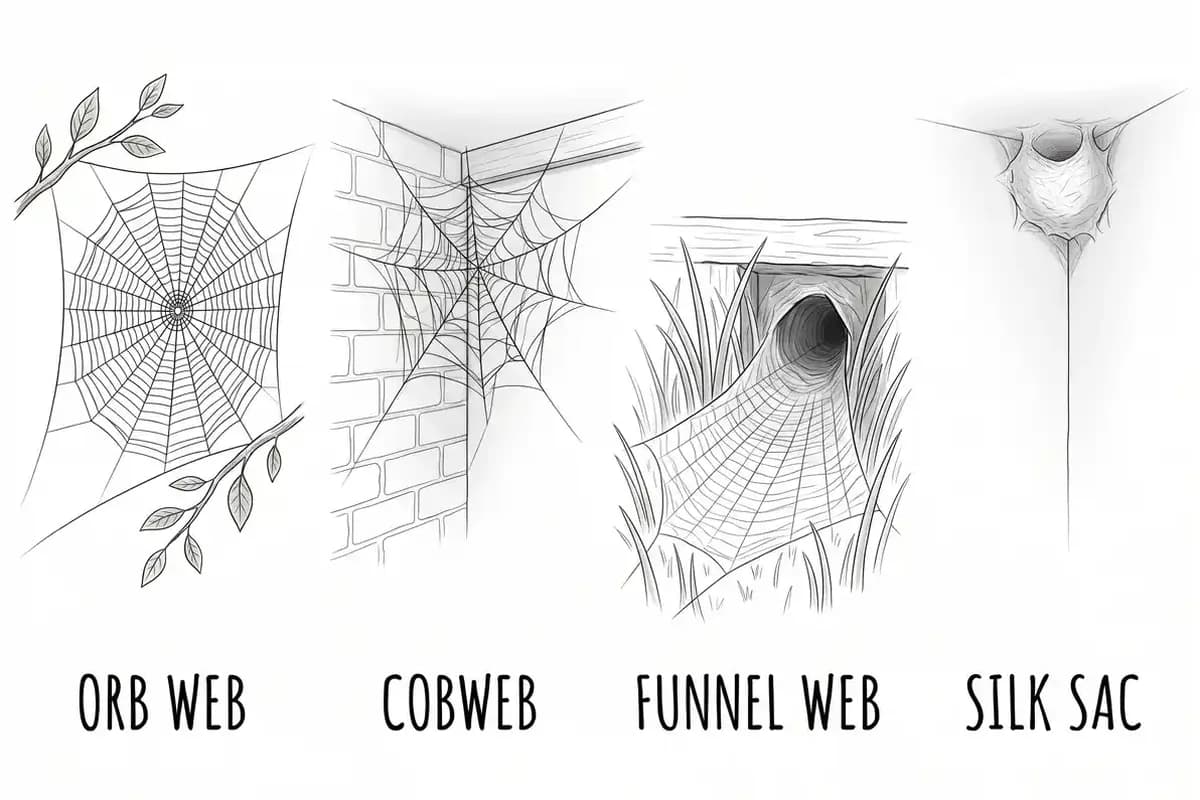
Our Spider Identifier page also has a quick web chart you can use alongside a photo of the spider.
Which Spider Made This Web?
Look at the web shape, where it is and where the spider sits, and you can usually narrow it to one group.
- Round wheel in the open with the spider at the center: an orb weaver. A zigzag band of silk in the middle, called a stabilimentum, is often a garden spider.
- Messy tangle in a corner with the spider hanging upside down: a cobweb spider such as the common house spider. Widows also hang upside down in irregular sticky webs.
- Long legged spider in a loose web in the basement: a cellar spider, which hangs upside down beneath its web.
- Flat sheet on the lawn with a tunnel at one side: a grass spider that waits in the funnel and dashes out.
- Small silk pouch in a ceiling corner: often a sac spider resting by day.
For a sure answer, photograph the spider itself, not just the web. Our Spider Identifier names the spider from one clear photo.
Webs Indoors vs Outdoors
Indoor webs are usually cobwebs and cellar spider webs, while outdoor webs are usually orb and funnel webs.
- Indoors, room corners and windows: the common house spider makes cobwebs there. See our guide to the common house spider.
- Indoors, basements and ceilings: cellar spiders, whose messy webs are their main nuisance.
- Outdoors, gardens and porches: orb weavers and garden spiders.
- Outdoors, lawns: grass spider funnel webs, which become visible when morning dew is heavy.
- Outdoors, woodpiles and clutter: widow spiders, which build irregular, tough, sticky webs.
Homes with more indoor insects tend to have more spiders and webs, as UC IPM notes, because the spiders follow their food. For the indoor spider behind that corner web, see our common house spider guide.
Spiders With Large Webs
The biggest webs most people see belong to orb weavers and funnel weavers.
- Grass spiders: their sheet webs can reach 3 feet (about 90 cm) wide, with a funnel over a foot long.
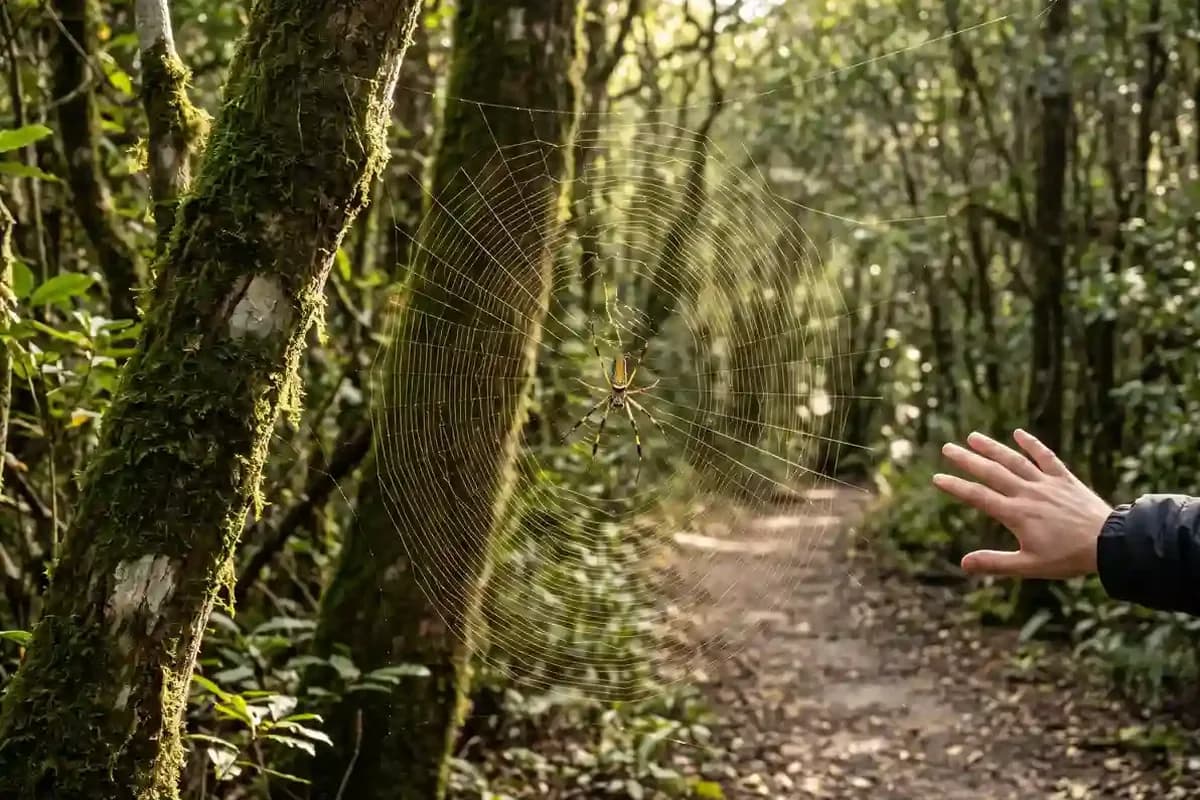
- Joro spiders: females build webs up to 10 feet (3 m) wide, a nuisance near homes in the southeastern United States.
- Golden silk orb weavers: Nephila webs are semi permanent and repaired rather than rebuilt each night.
A very large web is a sign of a large, well fed spider, not a dangerous one. For more on these builders, see our guide to orb weavers.
Black and Brown Spider Webs
The colour of a spider does not decide its web, but a few dark spiders build webs worth recognising.
- Black widow webs: irregular, tough and sticky, low down in clutter, woodpiles and garages.
- Brown recluse webs: a sticky sheet of silk to trap prey, usually in undisturbed storage areas.
- Dark funnel weavers: brown funnel weavers, including the hobo spider of the Pacific Northwest, build flat sheets leading to a retreat.
A grey, dusty web in an old corner is usually just an abandoned cobweb collecting dust. For the brown funnel weaver people worry about, see our guide to the hobo spider.
Spiders That Don't Build Webs
Many spiders never build a web to catch prey. The University of Kentucky notes wolf, fishing, jumping and crab spiders hunt without webs.
- Wolf spiders: chase prey on the ground.
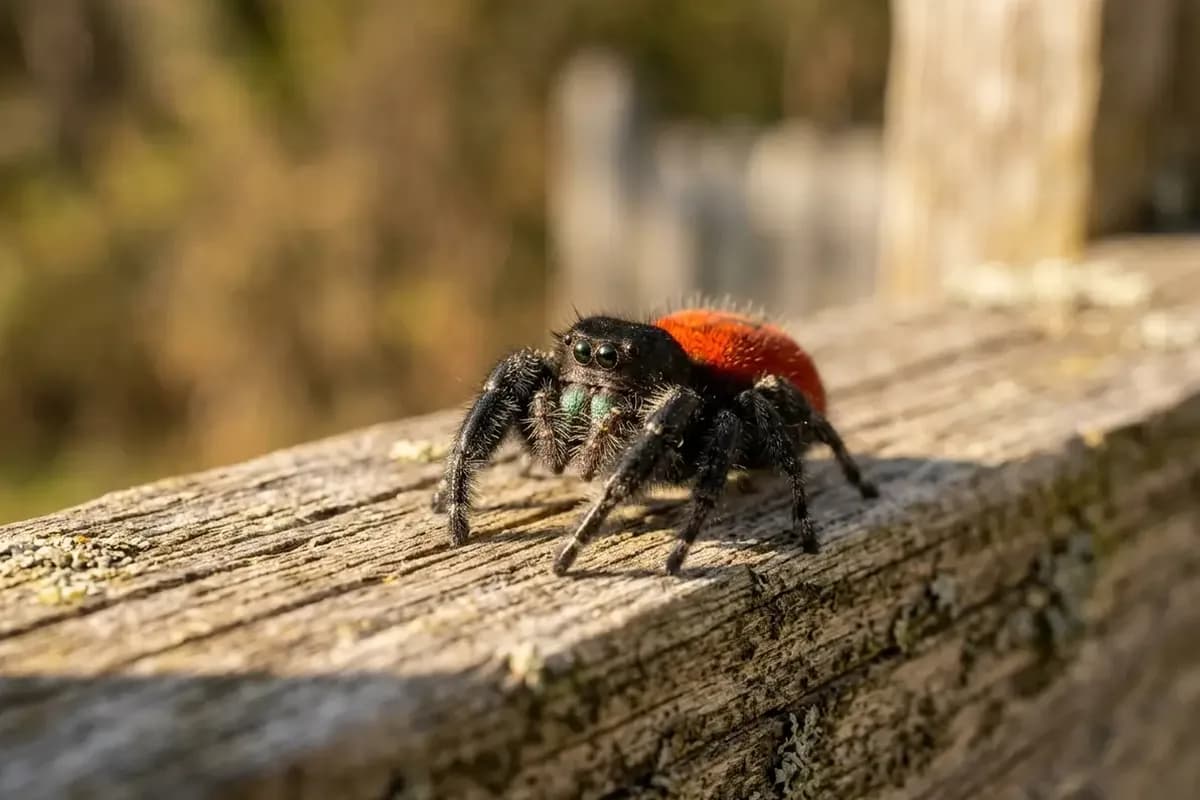
- Jumping spiders: stalk and pounce, using the best eyesight of any spider.
- Crab spiders: wait in ambush on flowers.
- Fishing spiders: hunt at the water edge.
These spiders still make silk for safety lines, egg sacs and shelters. A large spider indoors with no web nearby is often a wandering wolf spider.
Should You Remove Webs Around the Home?
You can remove webs whenever you like, and the spiders will not be harmed by it. UC IPM suggests vacuuming webs indoors and using a broom or a hose outdoors.
- Indoors: vacuum corners, ceilings and under furniture regularly to remove webs, spiders and egg sacs.
- Outdoors: knock down webs on eaves and porches, and trim plants away from the walls.
- Lights: limiting outdoor lighting cuts the insects that draw spiders to build there.
- Leave some outdoors: garden webs catch flies, moths and other pests.
Want to know which spider lives in that web? Upload a clear photo of the spider to the free ScanaBug Spider Identifier for an instant ID with a safety rating.
Frequently Asked Questions
Sources and References
- Australian Museum. Spider Webs.
- Australian Museum. Silk: The Spider's Success Story.
- Gibson MJR, Penn State Extension. Spider Webs in the Garden. 2023.
- University of California Statewide IPM Program. Spiders. Pest Notes.
- University of Kentucky Entomology. Common Spiders Found Around Homes and Buildings. ENTFACT 622.
- Missouri Department of Conservation. Grass Spiders. Field Guide.