Cellar Spiders: The Long Legged Spiders in Your Basement
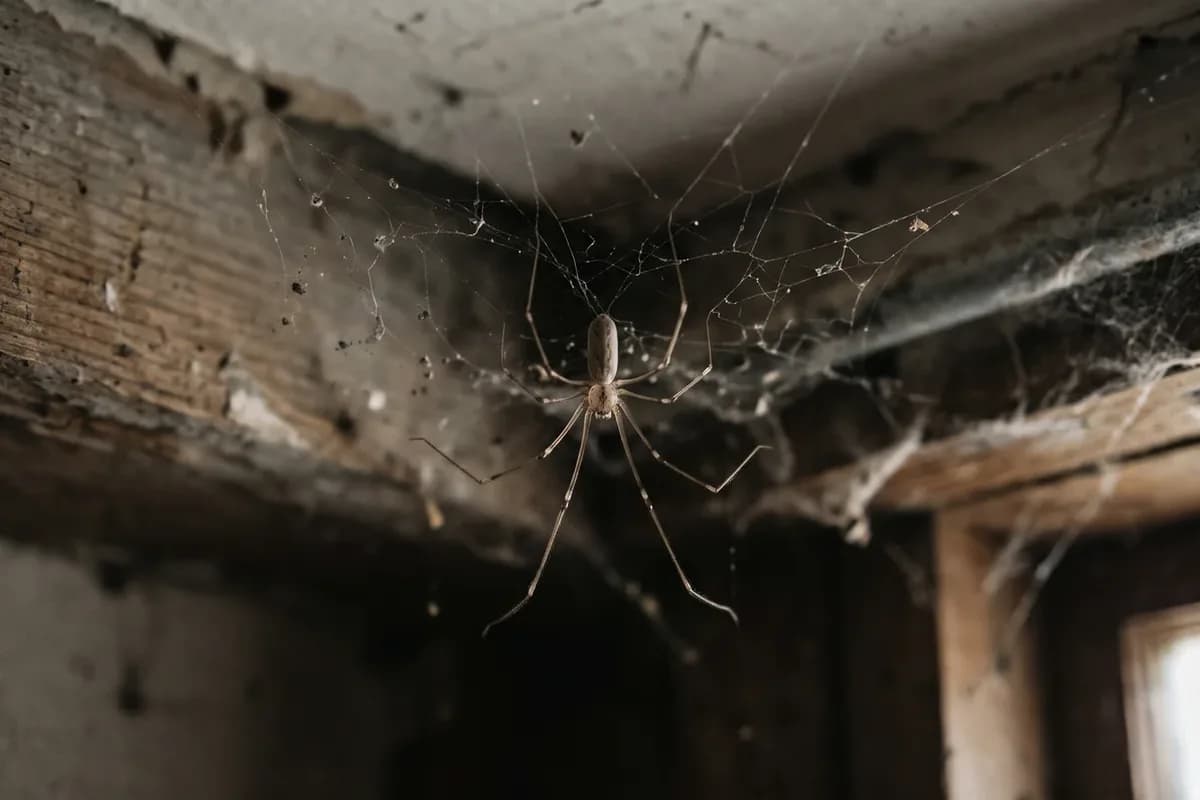
A cellar spider is a fragile, pale spider with a small body and extremely long, thin legs that hangs upside down in a loose, untidy web in basements, garages and ceiling corners. They belong to the family Pholcidae and are often called daddy longlegs, a name they share with harvestmen, which are not spiders. They are harmless to people and eat other spiders, including larger house spiders. This guide shows how to identify them, how they differ from harvestmen, why they shake their webs and how to manage them.
How to Identify One
Look for a spider with legs many times longer than its body, a gray, tan or whitish colour and a habit of hanging upside down in a messy web. The Missouri Department of Conservation describes them as inconspicuous, fragile spiders with extremely long, thin legs.
- Body: usually no more than about 1/4 inch (6 mm) long, oval, rounded or peanut shaped.
- Legs: very long and thin, sometimes with darker joints that look knobby kneed.
- Eyes: many have eight eyes in three groups, two in the center and a cluster of three on each side.
- Web: a loose, non sticky tangle, usually in corners or crevices.
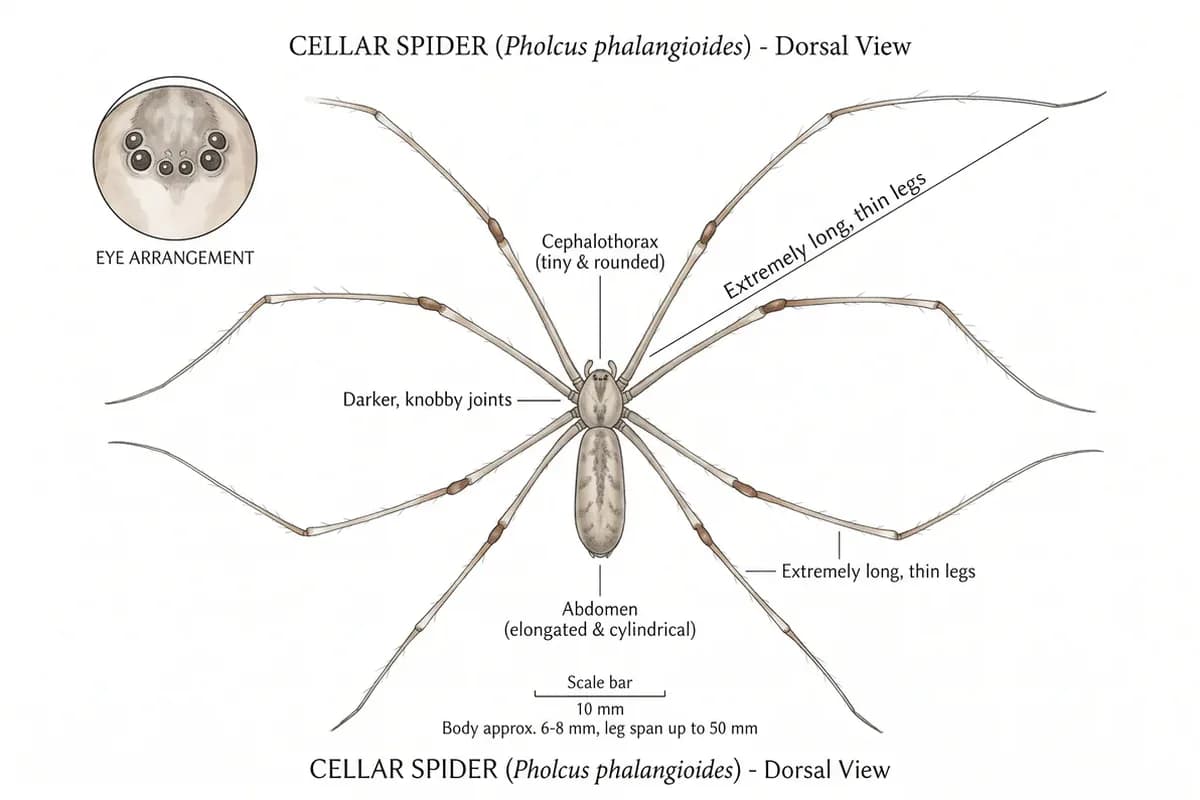
Common Types: Longbodied, Marbled and Short Bodied
Several species live in homes, and they differ mainly in body shape and markings. London's Natural History Museum notes the longbodied species is not native to the UK, has spread over the last 30 years and reaches up to 45 mm across including legs.
| Species | Body | Notes |
|---|---|---|
| Longbodied (Pholcus phalangioides) | Long, cylindrical, pale tan or yellow | 7 to 8 mm for females, front legs about 50 mm long |
| Marbled (Holocnemus pluchei) | Marbled pattern | Arrived in California in the 1970s and has displaced the longbodied species there |
| Short bodied pholcids | Rounder, smaller body | Several smaller species with shorter, round abdomens |
Cellar Spider vs Daddy Longlegs (Harvestman)
Harvestmen look similar but are not spiders. The Missouri Department of Conservation notes they are unrelated arachnids in the order Opiliones. UC Riverside notes harvestmen produce no venom and cannot bite people because they have no fangs. Crane flies, also called daddy longlegs in some places, are winged insects and are prey for pholcids, not relatives.
| Feature | Pholcid spider | Harvestman |
|---|---|---|
| Body | Two distinct parts, head and abdomen | One fused, usually egg shaped body |
| Silk | Spins webs | Cannot spin webs |
| Venom | Has venom glands | No venom glands |
| Where found | Indoors, upside down in webs | Mostly outdoors on walls, plants and the ground |
Why They Shake Their Webs
When disturbed, one of these spiders vibrates or whirls rapidly in its web until it becomes a blur. Penn State Extension describes it vibrating in a circular motion, which makes it hard to see.
- Purpose: it may make the spider hard for predators to target, and may frighten predators.
- Try it: a gentle puff of air on the web usually sets one off.
This harmless display is often the first thing people notice about these spiders.
How They Hunt
Pholcids catch insects and other spiders, often prey much larger than themselves. Their webs are not sticky, so they rely on a tangle of threads that trips prey up.
- Big prey: they catch wolf spiders and crane flies.
- Long range wrapping: they can cast silk over prey, even black widows, from a safe distance, then bite and wrap it.
- Web invaders: some species enter other spiders' webs, mimic the struggles of a trapped insect and attack the owner.
- House spiders: they eat fairly large house spiders.
Life Cycle
- Egg carrying: females carry a loose cluster of eggs in their jaws, clusters of 25 to 60 eggs each about 1 mm across.
- Growth: they take about a year to mature.
- Lifespan: adults can live two or more years.
- Season: both sexes live in heated buildings all year.
Their habit of eating other spiders makes them useful in a home with spider problems.
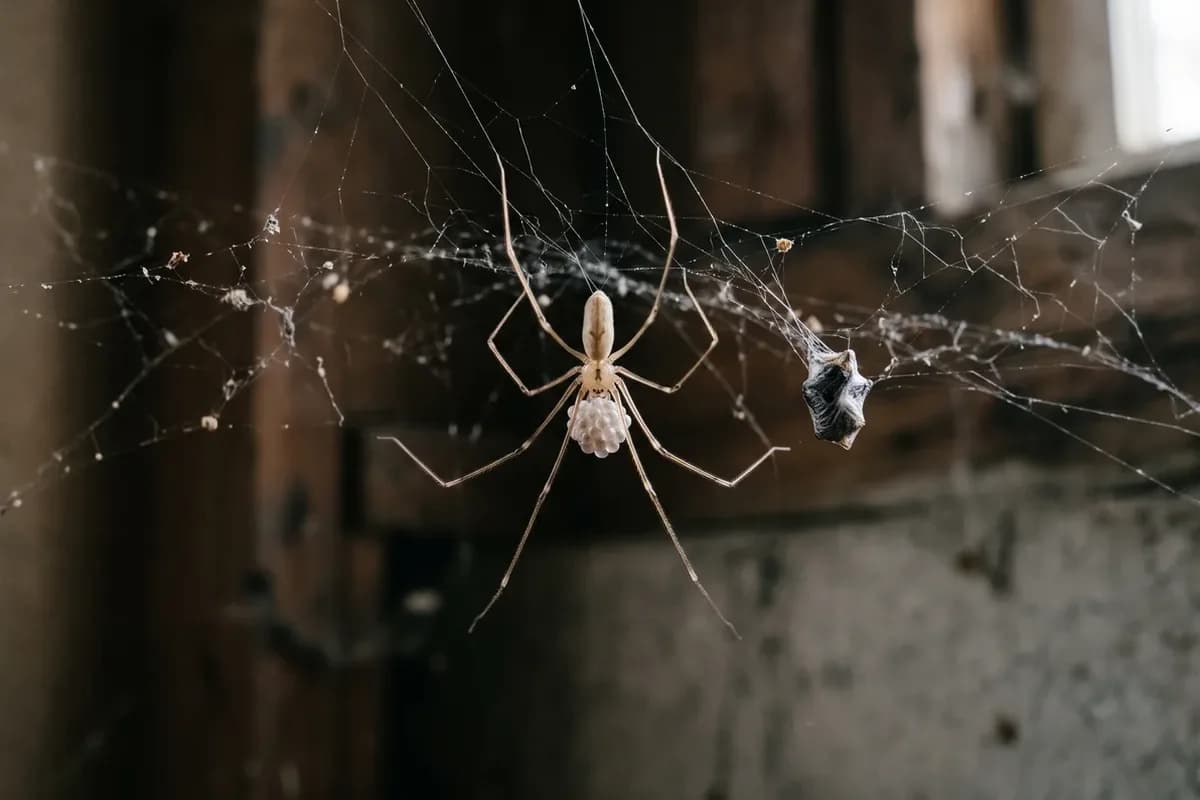
Size and Close Up Features
Most species have a body only about 1/4 inch (6 mm) long, but the legs make them look much bigger.
- Leg span: adult female longbodied spiders have front legs about 50 mm (2 inches) long, with an overall size up to 45 mm.
- Face: close up, the face shows a central pair of small eyes with a group of three larger eyes on each side.
- Carapace: a very wide front body with a gray mark in the center on the longbodied species.
- Feet: flexible leg tips that give a wispy look when they walk.
A close up photo from above usually shows the eye groups and body shape well enough for an identification.
Where They Live
These spiders prefer the warm, stable conditions of buildings. London's Natural History Museum notes the longbodied species lives in homes, garages and sheds, is active all year and is rarely found outdoors in the UK because it cannot survive winter temperatures there.
- Indoors: basements, cellars, ceiling corners, garages, attics and behind furniture.
- California: UC IPM notes the marbled species, introduced in the 1970s, is now very common and its messy webs are its main nuisance.
Why Are There So Many in My House?
A home with many of these spiders usually offers three things: warmth, little disturbance and food.
- Long lives: adults can live two or more years, so populations build up slowly in undisturbed corners.
- Food: homes with more indoor insects tend to have more spiders.
- Few predators: indoors, little eats them, and they eat many of their spider rivals.
Regular vacuuming of corners and storage areas keeps numbers low without sprays.
Are Cellar Spiders Dangerous?
No. They are harmless to people. Penn State Extension notes the longbodied species is not known to bite people and is not medically important.
- The venom myth: a popular story says they have the strongest venom of any spider but fangs too short to bite. Studies show their venom is comparatively mild.
- Venom target: pholcid venom affects only invertebrate prey, not humans.
- UC Riverside also rejects the claim that daddy longlegs are among the most venomous spiders.
For other spiders that are often wrongly feared, see our guide to venomous spiders.
Getting Them Out of the House
Because they are harmless and eat other spiders, many people leave a few alone. If webs build up into what feels like an infestation:
- Vacuum webs, spiders and egg clusters from corners and ceilings.
- Relocate single spiders with a jar and a card, releasing them outdoors in a shed or garage.
- Store items in sealed plastic tubs and keep boxes off the floor and away from walls.
- Lower humidity in basements and crawl spaces, reduce clutter and seal gaps around windows, doors and pipes.
UC IPM notes sprays give only temporary results without good housekeeping. See our guides to house spiders and spider webs for the other indoor species.
Not sure which long legged spider you have? Upload a clear photo to the free ScanaBug Spider Identifier for an instant ID with a safety rating.
Frequently Asked Questions
Sources and References
- Missouri Department of Conservation. Cellar Spiders. Field Guide.
- Jacobs S, Penn State Extension. Longbodied Cellar Spider. 2026.
- Natural History Museum, London. Daddy Long Legs Spider.
- University of California Statewide IPM Program. Spiders. Pest Notes.
- University of California Riverside. No, Daddy Long Legs Are Not One of the Most Venomous Spiders. 2024.
- University of Florida IFAS. An Introduction to Some Common and Charismatic Florida Spiders. 2022.