Venomous Spiders: Which Are Really Dangerous?
Almost all spiders are venomous, but only a small number of venomous spiders can seriously harm people. In North America, the University of Kentucky notes only black widows and brown recluses have venom very toxic to humans. Most other spiders have fangs too small to pierce skin or venom too weak to be harmful, and lethal bites are very rare. This guide explains venom versus poison, which spiders deserve care, which only look frightening, and what to do if you find one or someone is bitten.
Venomous or Poisonous: What Is the Difference?
Venom is injected through a bite or sting, while poison harms you when you eat or touch it. Spiders inject venom with their fangs, so venomous is the accurate word, although most people search for poisonous spiders.
- Nearly all spiders have venom: they use it to subdue insects and other prey.
- Most cannot bite people: UC IPM notes most spiders' jaws are too small to pierce adult skin.
- Most venom is weak in people: UC IPM notes a spider bite is often no worse than a bee sting, though reactions vary.
So the useful question is not whether a spider has venom, but whether it can bite through skin and whether its venom affects people. Our Spider Identifier gives a harmless, caution or avoid rating from a photo.
Which Spiders Are Deadly or Dangerous to People?
In North America, the spiders of real medical concern are the widows and the recluses. Details come from UC IPM, the University of Kentucky and the CDC's NIOSH. Other parts of the world have their own dangerous species, such as Australia's funnel web spiders.
| Spider | Where | Key sign | Bite effects | Need care? |
|---|---|---|---|---|
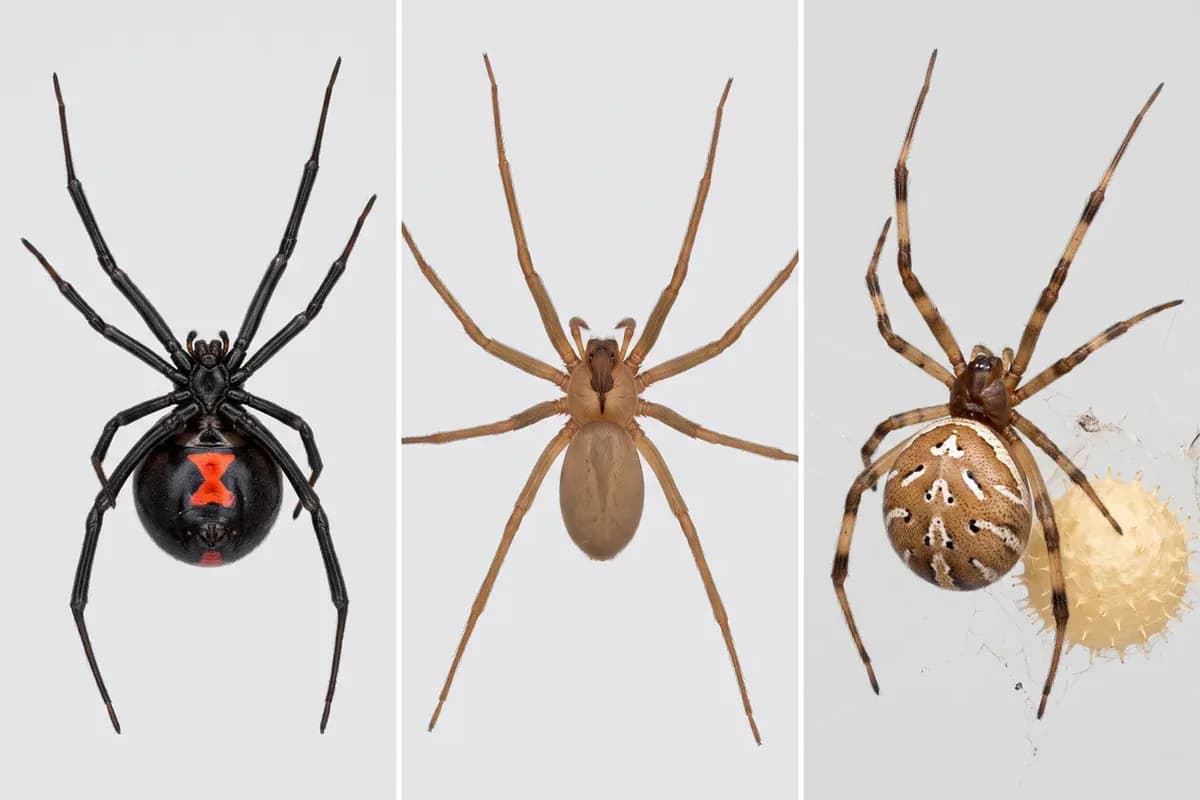
| Black widows | Across the US, outdoors in clutter | Shiny black female, red hourglass | Pain that spreads, cramps, sweating | Yes, at once |
| Brown recluse | South central US | Violin mark, six eyes | Can destroy skin over days | Yes, promptly |
| Brown widow | Warm southern areas | Tan with white stripes, spiky egg sac | Usually pain at the site | If symptoms spread |
| Desert recluse | Southwestern deserts | Like a brown recluse | Minor concern | If the wound worsens |
| Yellow sac spider | Homes, gardens | Pale yellow | Painful, like a bee sting | Rarely |
| False widows | Homes, sheds | Brown, round, no red | Like a wasp sting | Rarely |
| Wolf, jumping, orb, house spiders | Everywhere | Varied | Minor, if any | No, unless allergic |
For a global view, see our ranking of the most venomous spiders.
Widow Spiders: The Main Danger in North America
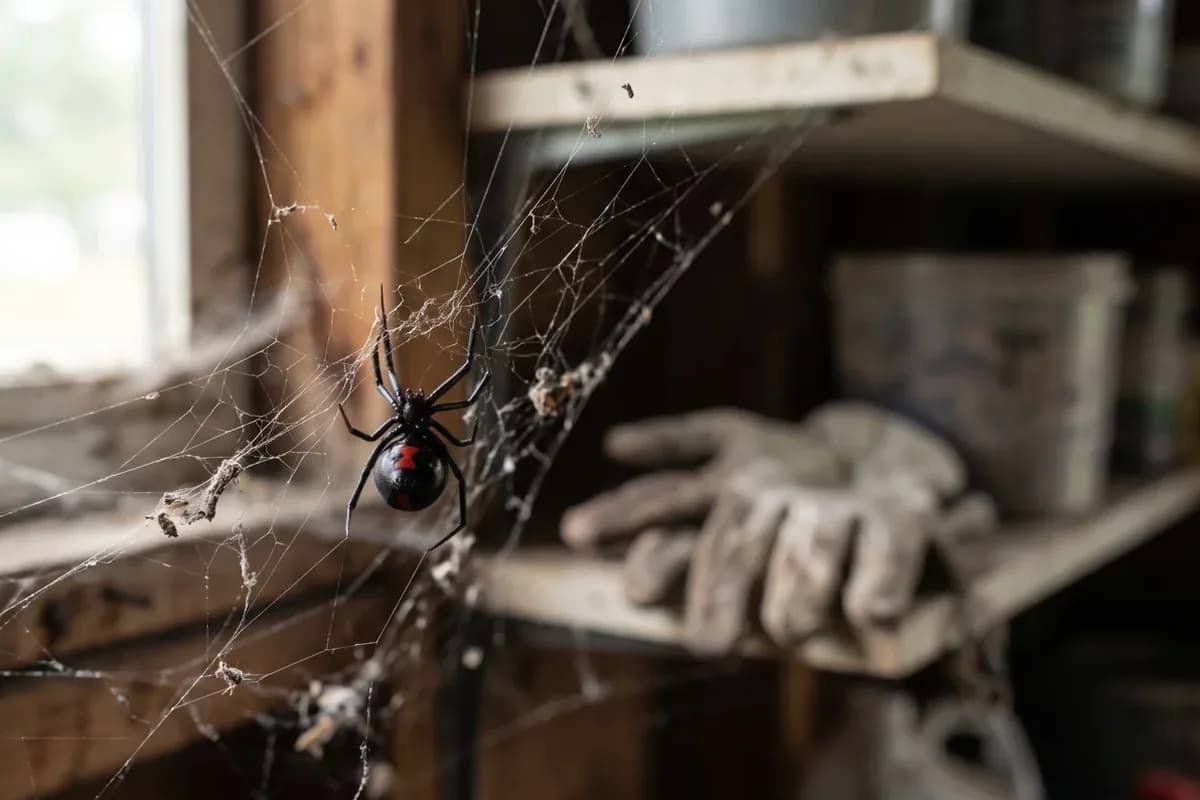
Black widows are the spiders with the greatest potential to harm people in the western United States, according to UC IPM, though bites are rare and death is very unlikely with treatment.
- Look: adult females are shiny black with a red hourglass under the abdomen, about 1/2 inch (13 mm) long.
- Who bites: only larger young and adult females can bite through skin. Adult males have fangs too small.
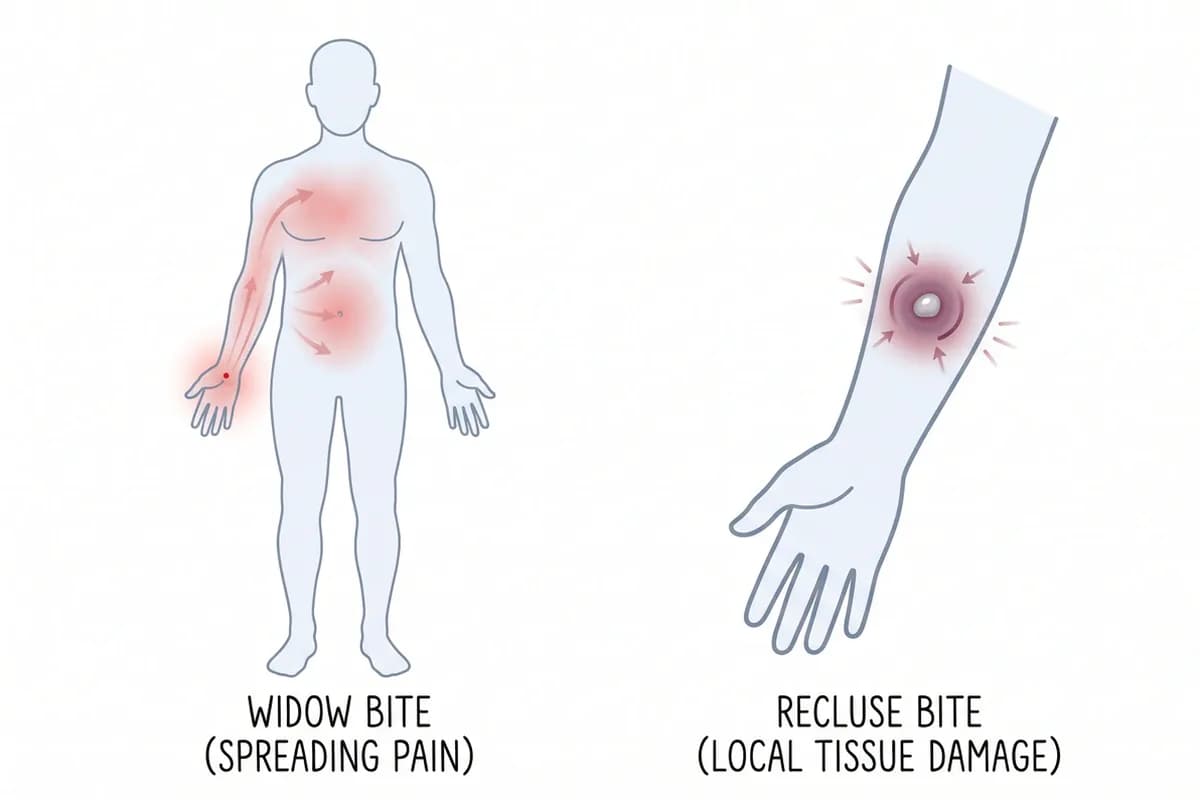
- Symptoms: NIOSH notes the venom causes pain at the bite that spreads to the chest, abdomen or whole body.
- Brown widows: their bite is much milder, with most bites causing only pain at the site.
Widows live in holes, crevices, woodpiles and clutter and seldom survive long indoors. Learn the details in our guide to the black widow spider.
Recluse Spiders
Brown recluses can cause a wound that destroys skin, though most bites are mild. UC IPM reports that about 10% of brown recluse bites cause moderate or greater skin damage and scarring.
- Look: a dark violin shaped mark on the front body and six eyes instead of eight.
- Range: the south central United States, from southeastern Nebraska to southwestern Ohio and south through Texas to north Georgia. It does not breed in California.
- Symptoms: NIOSH notes a stinging feeling and a small white blister that can be followed by a severe wound.
Recluses are shy. UC IPM describes a Kansas home with 2,055 recluses where only one suspected bite happened in 10 years. See our brown recluse spider guide.
Types of Spider Venom: How Bites Affect People
The dangerous spiders of North America affect the body in two broad ways, which is why their bites look so different.
- Nerve affecting venom (widows): NIOSH notes black widow venom causes pain that spreads from the bite to the chest, abdomen or whole body, with rigid stomach muscles, sweating and pain.
- Tissue damaging venom (recluses): NIOSH notes brown recluse venom can destroy skin tissue and cause a severe wound, usually starting with a small white blister.
- Mild local venom (most other spiders): a short sting, redness and sometimes swelling, much like a bee or wasp sting.
Knowing these patterns helps you describe a bite to a doctor.
Venomous Spiders in Homes
Most spiders found indoors are harmless, and the ones that do bite indoors usually cause only short lived pain.
- False black widow: common in Pacific Coast homes and involved in more bites than true widows because it lives indoors, with mild venom causing symptoms like a yellowjacket sting.
- Yellow sac spider: its bite usually causes pain like a bee sting, with redness and sometimes swelling.
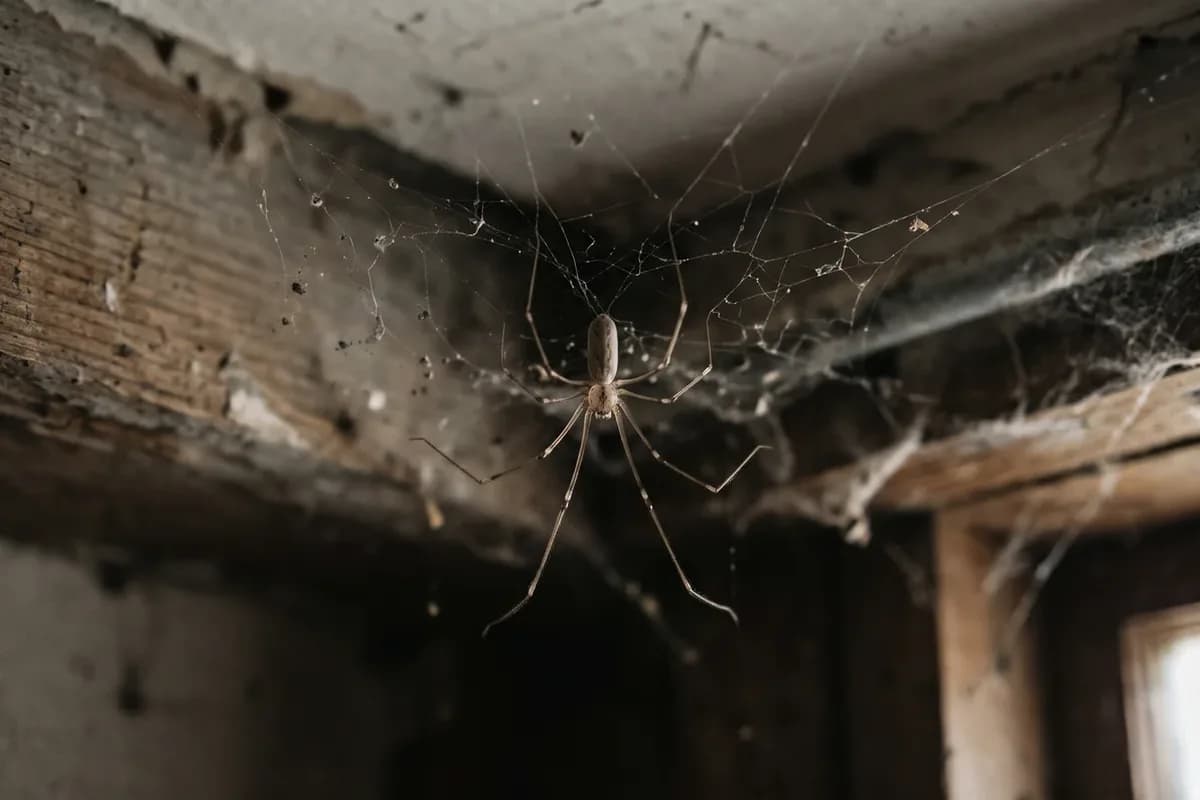
- Common house spider and cellar spiders: their bites are harmless except to allergic people.
- Widows indoors: black widows seldom survive long inside homes, but they can live in garages and sheds.
For the full list of indoor species, see our guide to house spiders.
Spiders That Look Dangerous but Are Not
Size, hair and dark colours make many spiders look threatening, but most are harmless to people.
- Wolf spiders: large, fast and hairy, yet their bites are harmless except to allergic people.
- Tarantulas: a California tarantula bite is at worst similar to a bee sting.
- Hobo spiders: once feared, but later research questioned their toxic reputation.
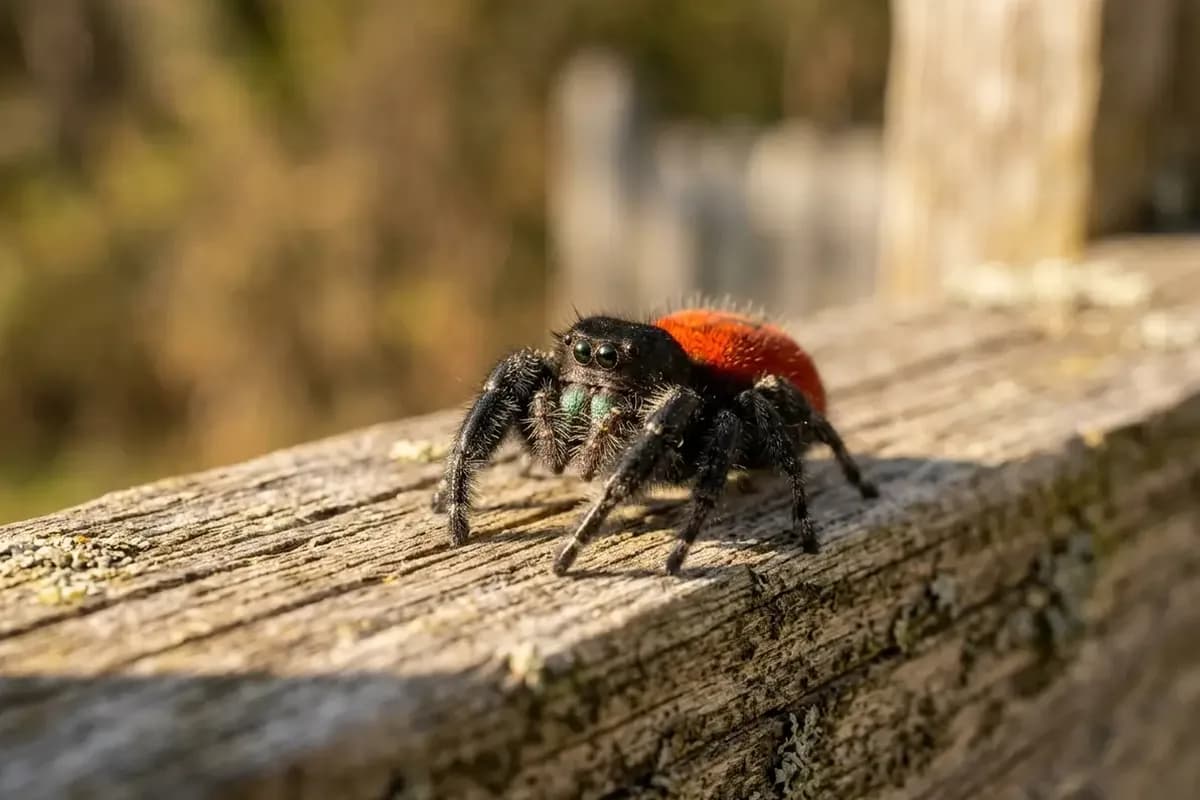
- Red and black jumping spiders: may bite if disturbed, usually without serious results.
- Big black spiders: many are wolf or jumping spiders. A black spider is a concern mainly if it is shiny with a red hourglass underneath.
UC IPM also notes people and doctors often blame spiders for skin wounds with other causes, so a sore alone does not prove a dangerous bite.
Are Spiders Aggressive?
No. UC IPM notes spiders do not seek out people to bite, unlike mosquitoes. They bite mainly when squeezed, lain on or otherwise provoked, such as when trapped in clothing, gloves or bedding. Even widows and recluses usually try to escape. Calling a spider aggressive usually reflects a defensive reaction to being grabbed or cornered.
How Many Dangerous Spiders Are There?
Very few. The University of Kentucky notes about 2,500 spider species live in North America, and only two groups, the widows and the recluses, have venom very toxic to people. Worldwide, a few more groups matter, mainly in Australia and Central and South America. For most readers, learning to recognise a widow and a recluse covers almost all the real risk.
What to Do If You Find a Dangerous Spider
- Do not handle it with bare hands.
- Take a photo from a safe distance to confirm what it is.
- Move or remove it by placing a jar over it and sliding a card underneath, or vacuum it up.
- Wear gloves when moving boxes, firewood and outdoor clutter where widows hide.
- Reduce hiding places by clearing clutter, sealing gaps and keeping stored items in sealed containers.
Shake out shoes, gloves and clothing left in garages or on the floor before putting them on.
What to Do If Someone Is Bitten
Stay calm, clean the bite and get medical care quickly if a widow or recluse may be involved.
- Identify the spider if safe: NIOSH advises catching or photographing it to help treatment.
- Wash the bite with soap and water.
- Cool it with a cloth dampened with cold water or wrapped ice, and raise the area if possible.
- Do not try to remove venom by cutting or sucking, which NIOSH warns against.
- Get care at once for severe pain or cramping, trouble breathing, a growing wound or spreading redness.
Health note: this guide is general information, not medical advice, and a photo cannot diagnose a bite. Call emergency services (911 in the US, 999 in the UK) right away for trouble breathing, swelling of the face, lips, tongue or throat, dizziness or fainting. Get medical care at once after a suspected black widow or brown recluse bite.
Frequently Asked Questions
Sources and References
- University of California Statewide IPM Program. Spiders. Pest Notes.
- University of California Statewide IPM Program. Widow Spiders and Their Relatives. Pest Notes.
- University of California Statewide IPM Program. Brown Recluse and Other Recluse Spiders. Pest Notes.
- University of Kentucky Entomology. Common Spiders Found Around Homes and Buildings. ENTFACT 622.
- CDC National Institute for Occupational Safety and Health. Venomous Spiders at Work.
- Mayo Clinic. Spider Bites: First Aid.