Red Spiders: How to Identify Reddish Species
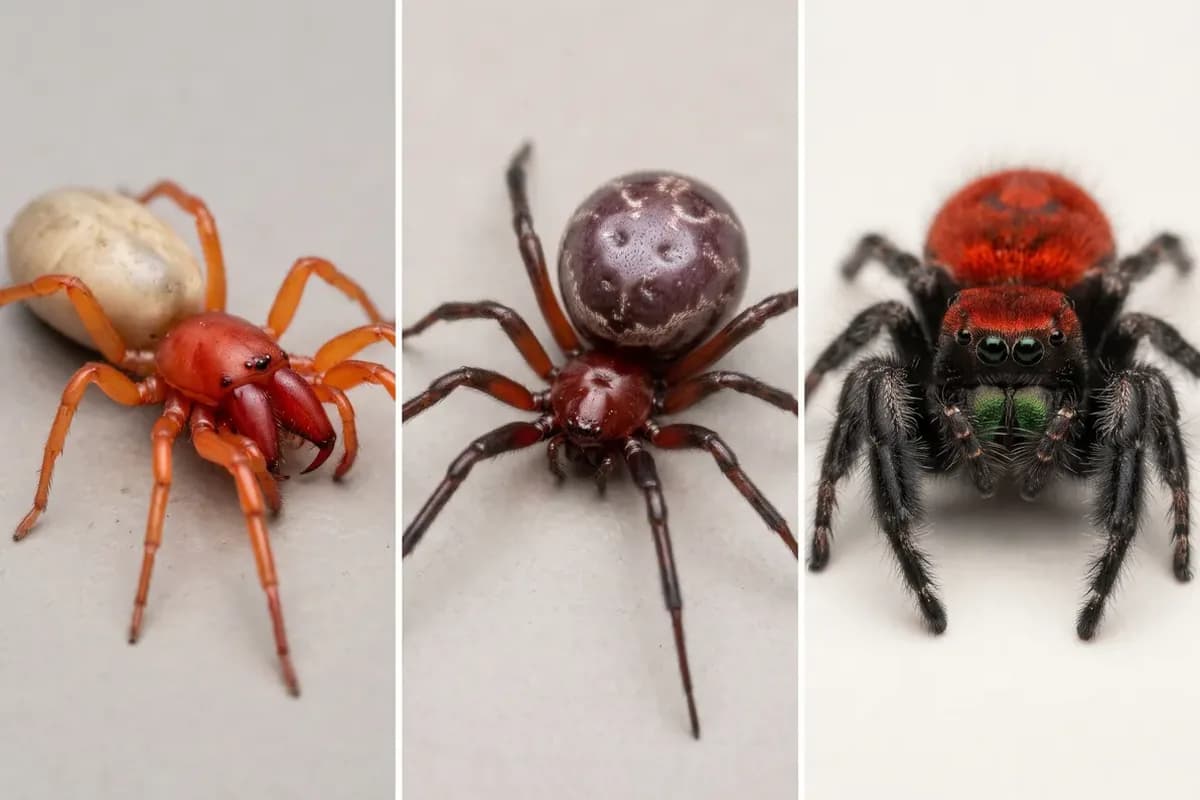
A red spider found in or around a house is most often a woodlouse hunter, a reddish jumping spider, a false black widow with a red brown front body or, in warm regions, a young or male widow with red markings. Most are harmless and eat insects or pill bugs. Very tiny, bright red specks are usually mites. This guide covers larger red and reddish spiders indoors and out, spiders with red legs or spots, red and white spiders, and which ones need care.
Quick Guide to Red and Reddish Spiders
Match the red part of the body to the likely spider. Details come from Penn State Extension, the University of Florida, NC State Extension and Washington State University.
| What is red | Other clues | Likely spider | Concern |
|---|---|---|---|
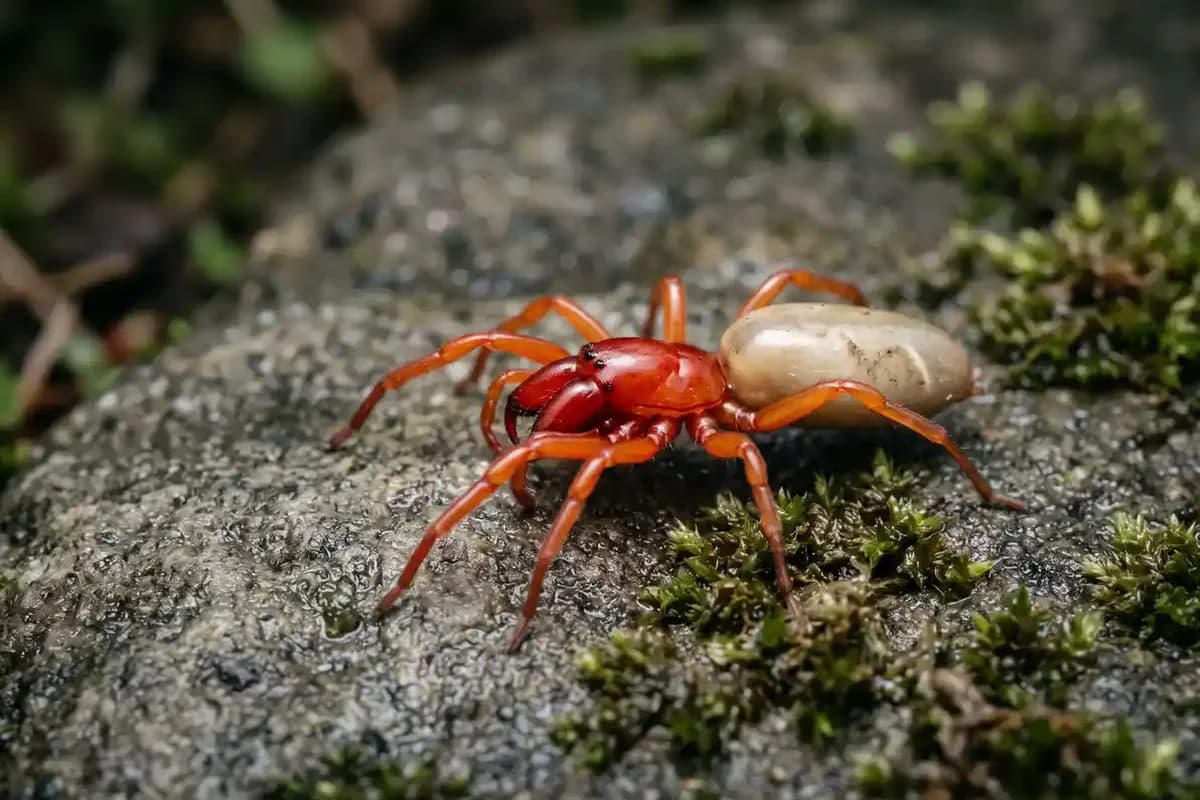
| Front body and legs reddish orange | Pale cream or gray rear, big forward jaws | Woodlouse hunter | Itchy bite at most |
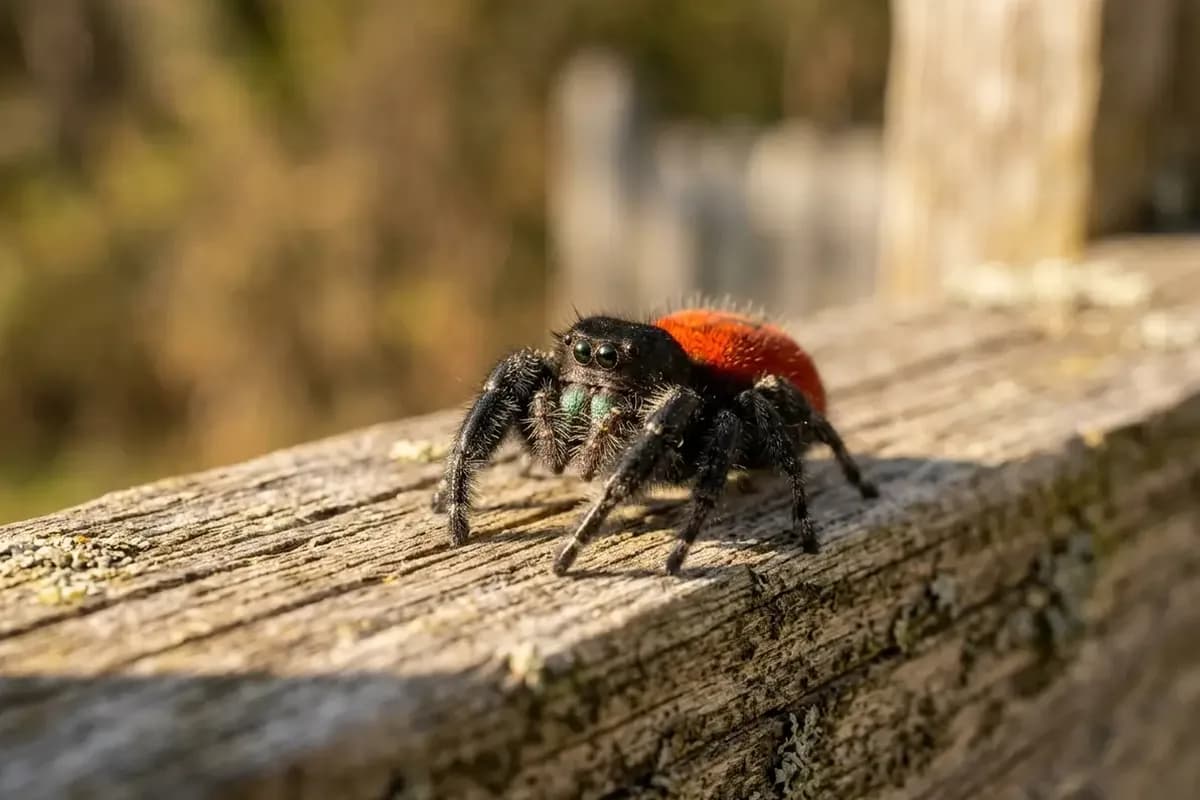
| Whole abdomen velvety red | Fuzzy, big front eyes, jumps | Jumping spider | Harmless |
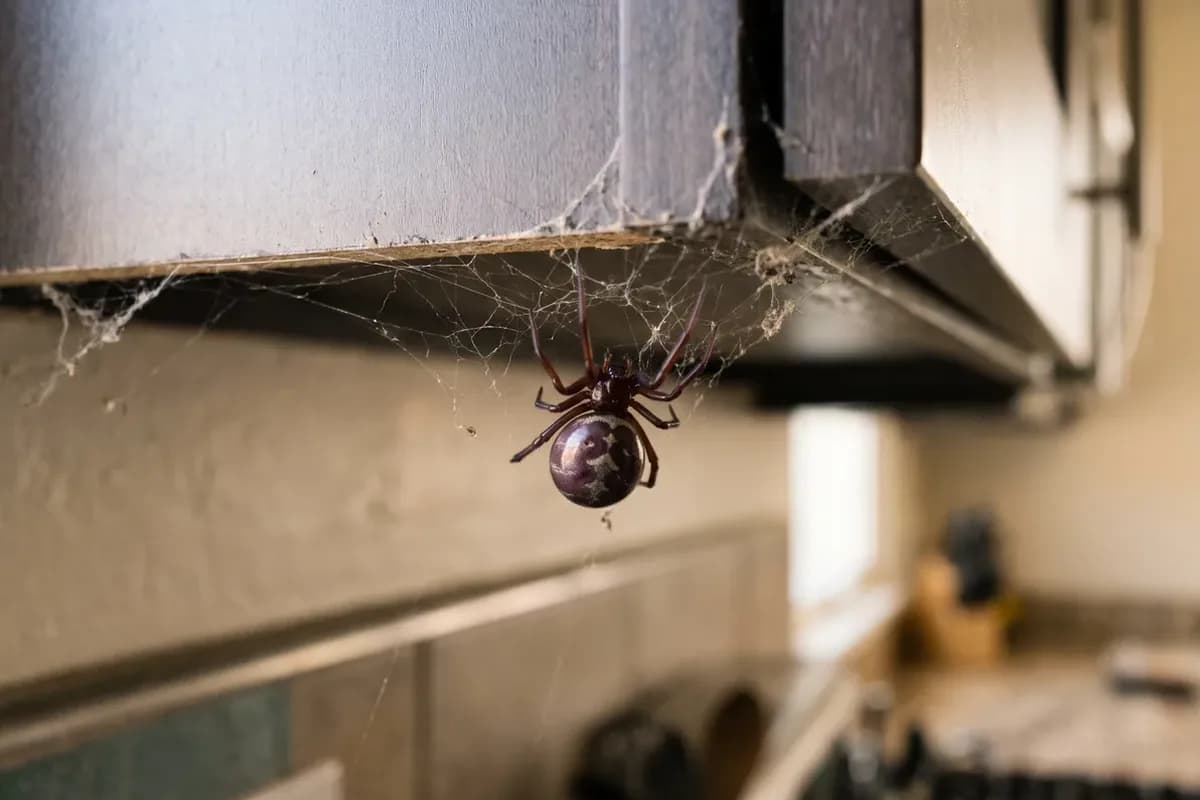
| Front body red brown, legs a little darker | Round purplish brown to black rear, no hourglass | False black widow | Mild |
| Red and white marks on the back | Small, widow shaped | Male or young widow | Males cannot bite through skin |
| White body with red spines | Hard, crab shaped, in an orb web | Spiny orb weaver | Harmless |
| Red hourglass underneath | Shiny black, hangs upside down | Female black widow | Medically important |
The Reddish Spider in Your House
The large reddish spider people most often find indoors is the woodlouse hunter (Dysdera crocata). Penn State Extension describes a reddish orange front body and legs with a dirty white abdomen. It hunts pill bugs and sow bugs, which live in damp spots such as basements, crawl spaces and garden mulch.
- Size: Penn State Extension gives 11 to 15 mm for females and 9 to 10 mm for males, about 1/2 inch.
- Jaws: large, thick and slanted far forward, which makes it look fierce.
- Food: pill bugs and sow bugs, so it turns up in damp spots where those live.
A reddish spider in a corner cobweb with a round, dark abdomen is more likely a false black widow, which has a red brown front body and is common in buildings in southern and western states.
Reddish Brown Spiders
Many spiders look reddish brown rather than truly red, especially in warm light.
- Woodlouse hunters: the reddish brown front body is the clearest clue.
- False black widows: red brown front body and a dark, round rear.
- Wolf spiders: brown with dark markings, sometimes with a reddish tint, running on the ground without a web.
- Recluses: tan to dark brown, not red, with a dark violin shaped mark.
Lighting changes colour a lot, so compare shape, eyes and web as well as colour. See our guides to the wolf spider and the brown recluse spider.
Spiders With Red Legs, Red Spots or a Red Body
Red on one part of the body narrows the list quickly.
- Red legs: woodlouse hunters have reddish orange legs.
- Red body: some jumping spiders have velvety red abdomens.
- Red spot on the back: often a jumping spider. Young bold jumping spiders have orange spots on a black abdomen.
- Red belly: an hourglass on the underside of a shiny black spider means an adult female black widow.
Truly big, bright red species are rare in North America. A large spider that looks red is usually a woodlouse hunter, a wolf spider in warm light or a female regal jumping spider, which can be orange. See our guide to the black spider with red on its back.
Red Legged Spiders Outdoors
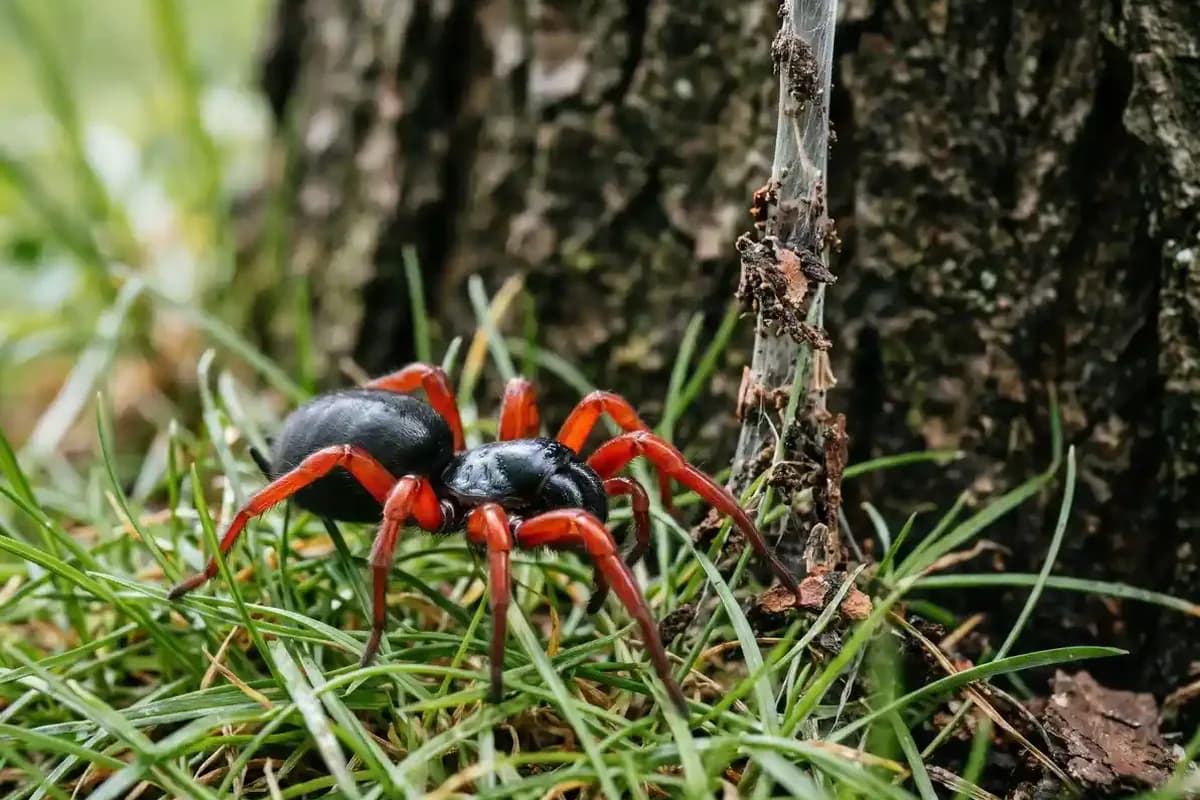
A shiny black spider with bright red legs walking across a lawn or path in early summer is likely a male red legged purseweb spider (Sphodros rufipes). The Missouri Department of Conservation describes males as shiny black with bright reddish orange legs, about 1/2 to 3/4 inch long.
- Web: a silk tube 6 to 10 inches long that stands against the base of a tree and can look like a small branch.
- When seen: males wander across the ground by day in early summer looking for females.
- Danger: they do not pose a danger to people except those highly sensitive to spider bites.
Long legged reddish spiders on the ground in late summer are more often wolf spiders, which run rather than walk slowly.
Reddish Spiders in Basements and Gardens
- Basements and crawl spaces: woodlouse hunters follow the pill bugs and sow bugs that live in damp places.
- Gardens: spiny orb weavers in orb webs, red jumping spiders on sunny walls and purseweb tubes at tree bases.
- Patios and walls: tiny red specks are usually mites rather than spiders.
A photo of the spider beside a coin or ruler makes identification much easier. Our Spider Identifier can name it from that photo.
Red Spiders With Striped Legs or Spikes
- Striped or banded legs: a reddish spider with banded legs running on the ground is usually a wolf spider. Plain reddish orange legs point to a woodlouse hunter.
- Red spikes: a hard, flat spider with red spines in a garden orb web is a spiny orb weaver, which can be white with red spines.
- Red stripes on the body: young widows show orange and white stripes, while some jumping spiders have velvety red abdomens.
Household reddish spiders with plain legs and a pale rear are almost always woodlouse hunters.
Red and White Spiders
Red and white patterns usually belong to young or male widows, spiny orb weavers or some jumping spiders.
- Male and young widows: male black widows have red and white markings on the back, and young widows are tan to gray with orange and white stripes.
- Spiny orb weavers: range from white with red spines to yellow with black spines, sitting in orb webs in gardens.
- Regal jumping spiders: both sexes have white markings, and females can be orange, gray or brown.
Spiders that are white with red dots are often spiny orb weavers seen from above.
Are They Poisonous?
Most reddish spiders are not dangerous to people. The University of Florida notes widows are the only native or established Florida spiders with medically significant venom, and the same is true across most of North America alongside recluses.
- Woodlouse hunters: bites cause a small, intensely itchy red area without wider effects.
- Jumping spiders: not considered harmful and bite only if cornered or handled.
- False black widows: bite symptoms resemble a black widow's but are much less severe.
For the full picture, see our guide to venomous spiders.
Tiny Red Specks and Red Mites
Very small red specks crawling on walls, window sills or patios are usually mites, not true spiders. Larger spiders that look red are the ones in this guide. If what you found is barely bigger than a pinhead, a close photo will usually show whether it has the two body parts of a spider or the single rounded body of a mite.
Keeping Reddish Spiders Out
- Seal cracks and gaps and fit tight door sweeps on outside doors.
- Reduce damp spots, mulch and woodpiles near the foundation, which hold pill bugs.
- Vacuum spiders indoors or move them outside in a jar.
- Wear gloves when moving clutter where widows may hide.
Not sure what your red spider is? Upload a clear photo to the free ScanaBug Spider Identifier for an instant ID with a safety rating.
Frequently Asked Questions
Sources and References
- Jacobs S, Penn State Extension. Woodlouse Hunter Spider. 2025.
- Washington State University Department of Entomology. Jumping Spider.
- Missouri Department of Conservation. Purseweb Spiders. Field Guide.
- University of Florida IFAS. An Introduction to Some Common and Charismatic Florida Spiders. 2022.
- Waldvogel M, Apperson C, NC State Extension. Spiders in and Around Homes. 2022.
- Jacobs S, Penn State Extension. False Black Widow Spider. 2025.