Brown Spider With Black Stripes: What Is It?
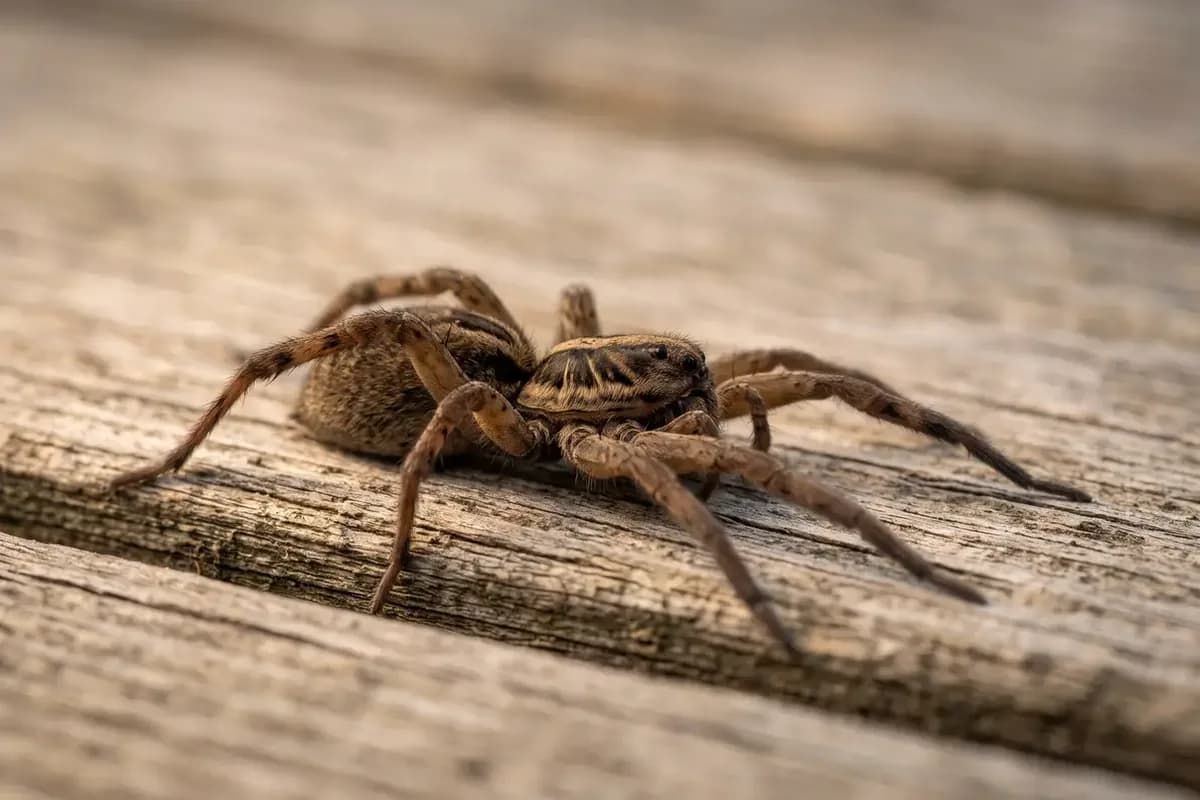
A brown spider with black stripes is most often a wolf spider, a grass spider or a nursery web spider, all common and harmless to most people. Where the stripes sit is the best clue: two dark bands on the head point to a grass spider, a pale and dark striped body on a plant points to a nursery web spider, and banded legs on a ground runner point to a wolf spider. A brown widow is the main striped brown spider that deserves care. This guide matches each pattern to its spider and explains which ones matter.
Quick Match: Where Are the Stripes?
Start with where the stripes are and where you found the spider. This table covers the most common answers in North America. The University of Kentucky notes that only black widows and brown recluses have venom very toxic to people.
| Stripe pattern | Where found | Most likely spider | Concern |
|---|---|---|---|
| Dark bands on the front body, often banded legs | Ground, lawns, indoors | Wolf spider | Harmless except to allergic people |
| Two broad dark bands on the head, long spinnerets | Funnel web in grass or shrubs | Grass spider | Harmless except to allergic people |
| Long, slim body with lengthwise stripes | On plants, legs held in pairs | Nursery web spider | Harmless |
| Pale stripe along each side, very large | Near streams and ponds | Fishing spider | Harmless except to allergic people |
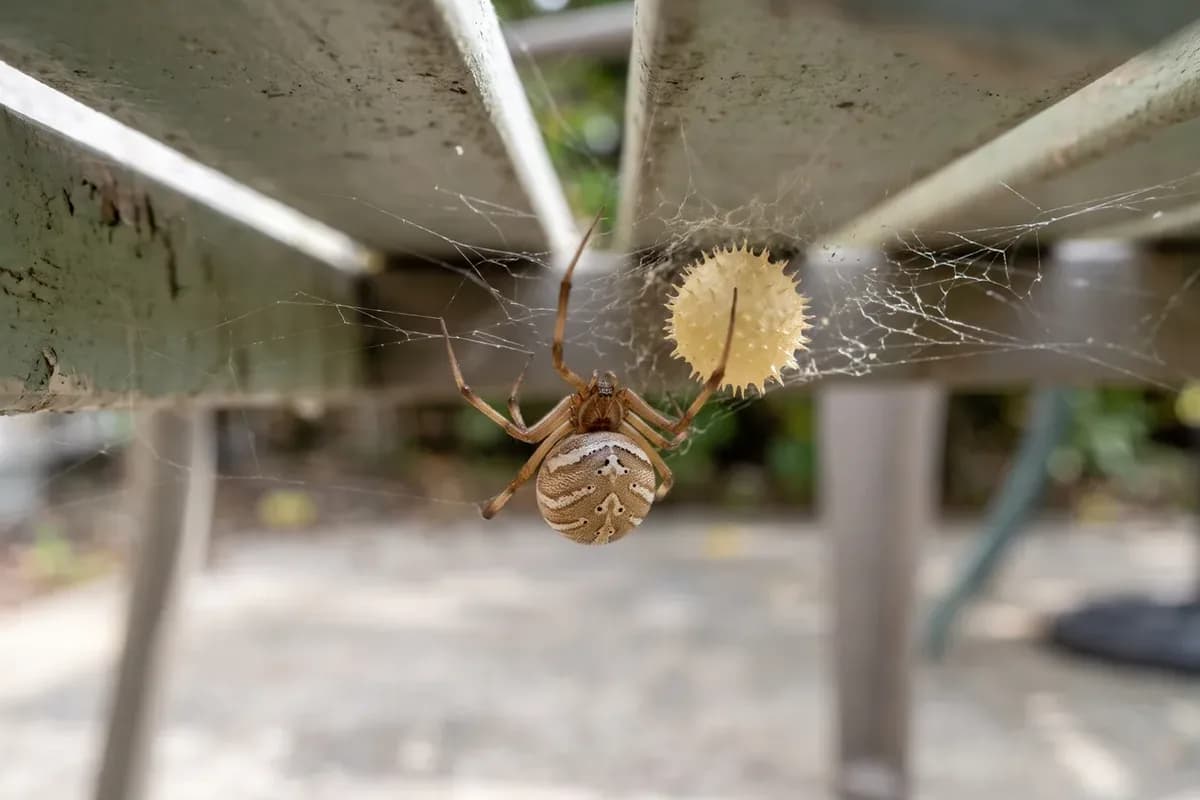
| Tan with white stripes and black dots, round abdomen | Under furniture, eaves, outdoor clutter | Brown widow | Mild venom, use care |
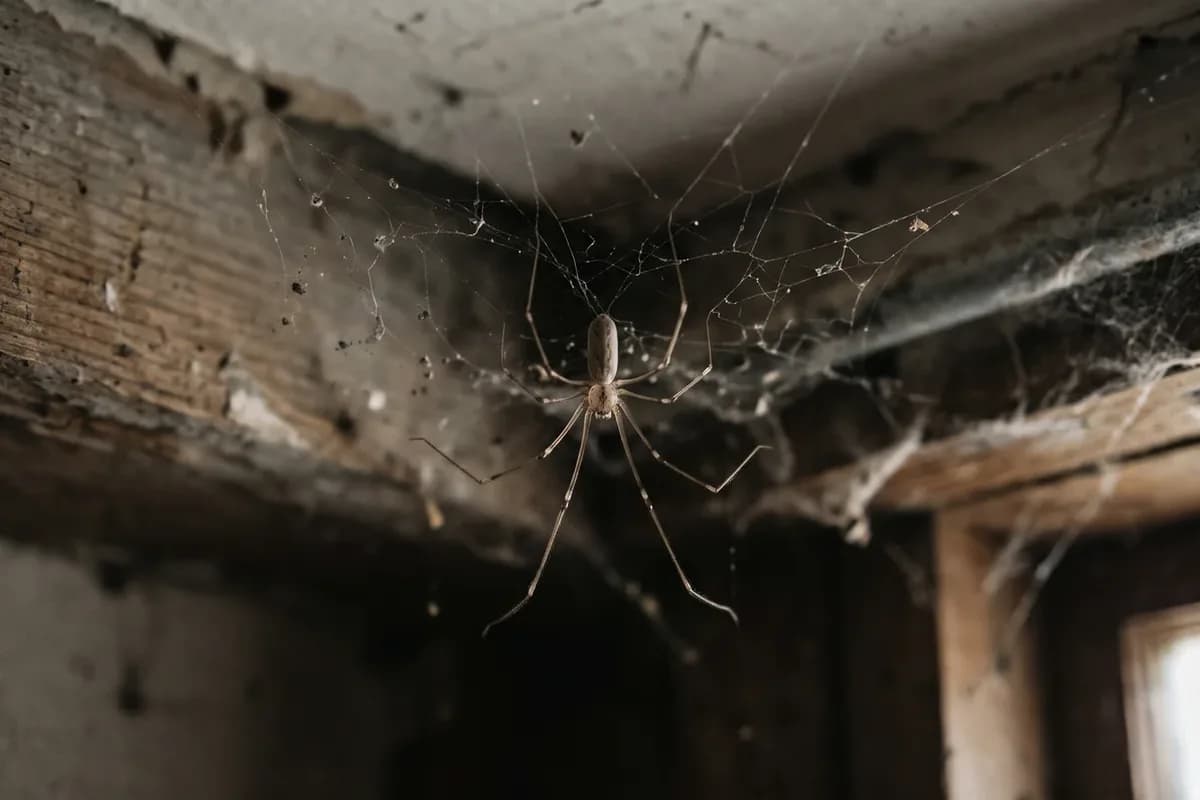
| Mottled brown, round abdomen, ringed legs | Indoor cobweb in a corner | Common house spider | Harmless |
| Plain legs, gray abdomen with pale chevrons | Funnel web in a basement, Pacific NW | Hobo spider | Minor at most |
Wolf Spiders: Stripes on the Body and Banded Legs
The most common brown spider with dark stripes is a wolf spider. The University of Kentucky describes wolf spiders as mostly dark brown with dark markings, and many have stripes running down the front body.
- Legs: the Missouri Department of Conservation notes the tiger wolf spider has banded legs and a narrow pale line between the eyes.
- Belly: the same source notes its underside is orange with black stripes and spots.
- Size: about 1/2 to nearly 1 inch (13 to 25 mm) long in that species, not counting legs.
- Behaviour: hunts on the ground without a web, and females carry their egg sac on the spinnerets.
Wolf spiders often wander indoors by accident but do not settle there. See our guide to the wolf spider for more.
Grass Spiders: Two Dark Bands on the Head
A brown spider with two dark bands down the head that sits in a funnel web on the lawn is a grass spider. The Missouri Department of Conservation describes a pair of broad, dark brownish bands running lengthwise beside a lighter middle band.
- Abdomen: brown with a reddish brown zigzag stripe edged in cream.
- Rear: noticeably long spinnerets, which help tell them from wolf spiders.
- Size: adult females about 1/2 to 3/4 inch (13 to 19 mm) long.
- Web: a flat sheet with a funnel retreat, most visible when dew covers it.
The University of Kentucky notes grass spiders seldom come indoors. Read more about their webs in our guide to spider webs.
Nursery Web and Fishing Spiders: Long Stripes on a Slim Body
A slim, long legged brown spider with stripes running the length of its body, resting on a plant, is probably a nursery web spider. The Missouri Department of Conservation notes many have lengthwise striping that helps them blend with plant stems.
- Colour: dark to tan, rusty, gray or yellowish, with suede like hairs.
- Size: about 1/2 to 3/4 inch long, not counting legs.
- Egg sac: the female carries it in her jaws and later guards a silk nursery tent.
- Danger: harmless to people.
Their larger relatives, fishing spiders, live near water and often have a pale stripe along each side.
Brown Spiders With Striped Legs
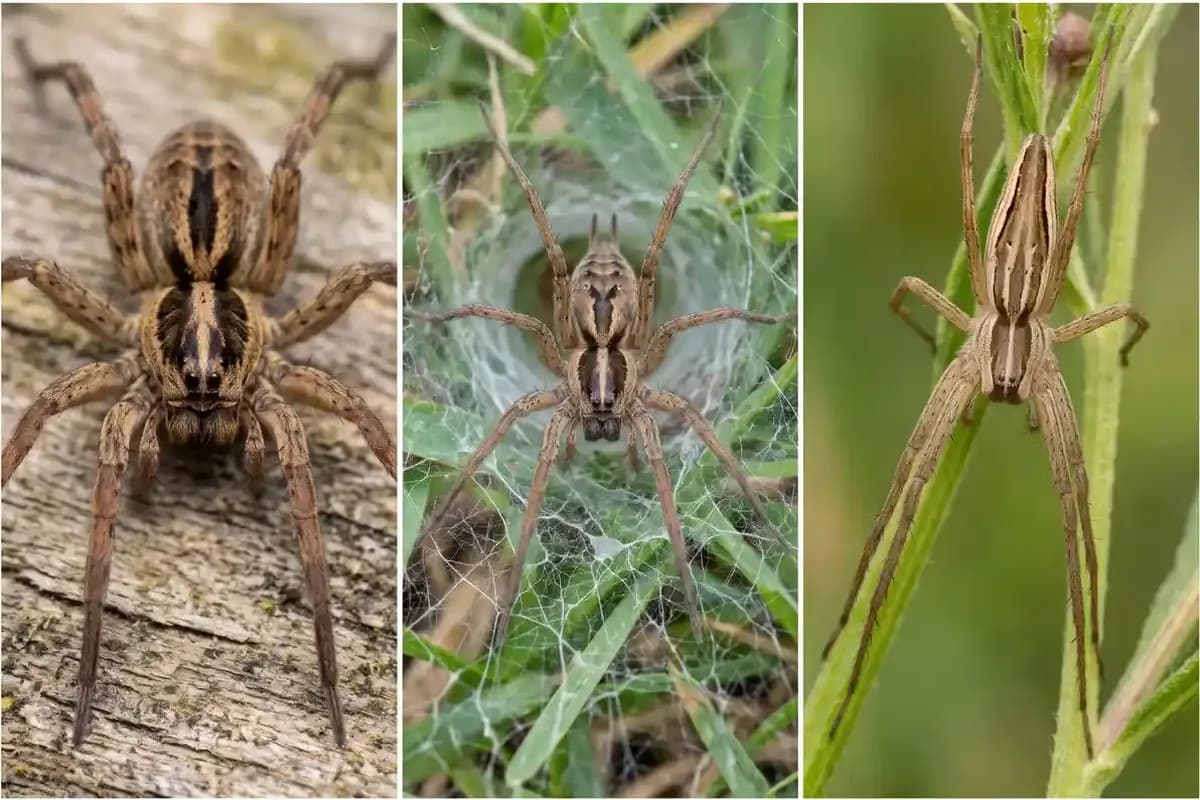
Striped or banded legs are common in brown spiders, so legs alone rarely give the answer. Combine them with the body pattern and the web.
- Banded legs and a ground runner: wolf spider.
- Ringed legs and a round abdomen in an indoor cobweb: common house spider.
- A round, widow shaped body with a spiky egg sac nearby: brown widow, whatever its legs look like.
- Plain legs with no bands: rules out many of these and fits a hobo spider in the Pacific Northwest.
See our guides to the common house spider and the hobo spider to compare. A clear photo from above is the quickest way to an answer.
Black Spiders With Brown Markings
Dark spiders with a brown stripe down the back or brown legs are often dark wolf spiders or nursery web spiders, whose colours range from nearly black to tan. A shiny, round, dark spider with no stripes in a messy web is more likely a widow or false widow, so look for a red or orange hourglass underneath and treat it with care. Our guide to the black widow spider shows how to check safely.
Brown Widows: The Striped Brown Spider to Watch
The brown widow (Latrodectus geometricus) is a tan to brown spider with white stripes and black dots on a round abdomen, and its bite is far milder than a black widow's. UC Riverside describes it as a tan spider with a series of white stripes.
- Hourglass: usually orange underneath, sometimes red orange in dark individuals.
- Egg sac: the easiest clue. UC Riverside describes it as round and yellow with many little silk spikes, while the black widow's is smooth.
- Lookalike: young western black widows are also tan with white stripes. The black dots on the abdomen are the key to telling them apart.
- Where: warm regions, including urban Los Angeles and San Diego.
Brown widows often hide in sheltered spots around homes, so wear gloves when cleaning outdoor clutter.
Big or Small? Using Size and Spots to Narrow It Down
Size and spots narrow the list quickly once you know the stripe pattern.
- Big brown and black spider with striped legs: usually a large wolf spider or, near water, a fishing spider, whose legs can span more than 2 inches.
- Small brown spider with stripes: often a young wolf, grass or nursery web spider, which look like small versions of the adults.
- Brown spider with a dark abdomen in a messy web: points to a widow relative; a mottled round abdomen in a corner cobweb fits a common house spider.
- Brown spider with black spots: brown widows have small black dots on the abdomen, and some wolf spiders have spotted bellies.
When the clues conflict, a clear photo from above settles it. Our Spider Identifier compares your photo with these common species and gives a safety rating.
Which Striped Brown Spiders Are Dangerous?
Almost none. Wolf, grass, nursery web, fishing and house spiders are harmless to most people and bite only if trapped against skin. The brown widow has a mild bite that usually causes pain at the site. Brown recluses, the brown spider people worry about most, have a dark violin shaped mark and six eyes rather than stripes. If someone is bitten, see our Bug Bite Identifier and the brown recluse guide for what to watch for.
Safety note: this guide is general information and not medical advice. Call emergency services right away for trouble breathing or swelling of the face, lips or throat after a bite, and see a doctor for spreading pain, cramps or a bite that gets worse.
Frequently Asked Questions
Sources and References
- Missouri Department of Conservation. Grass Spiders. Field Guide.
- Missouri Department of Conservation. Nursery Web Spiders. Field Guide.
- Missouri Department of Conservation. Tiger Wolf Spider. Field Guide.
- Missouri Department of Conservation. Common House Spider. Field Guide.
- University of California Riverside, Center for Invasive Species Research. How to Identify Brown Widow Spiders.
- University of Kentucky Entomology. Common Spiders Found Around Homes and Buildings. ENTFACT 622.