Yellow Sac Spider: Identification and Bites
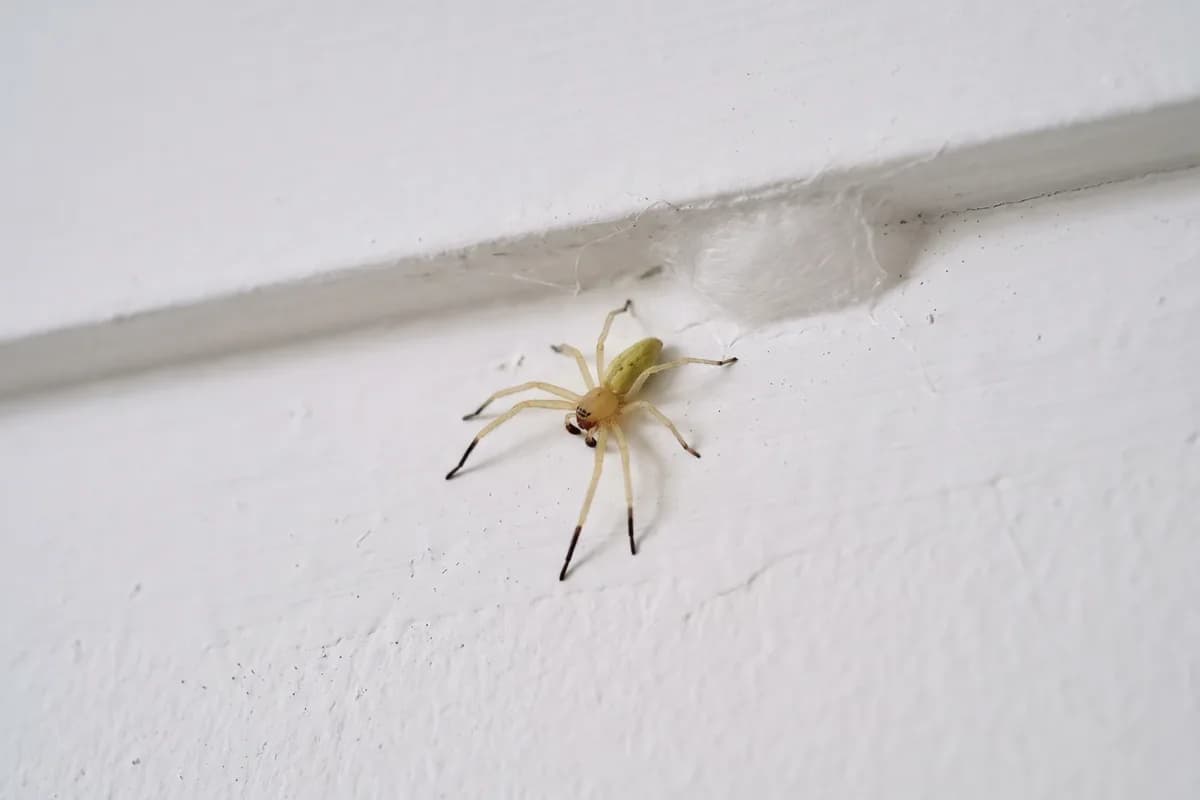
A yellow sac spider is a small, pale yellow to cream spider with dark brown jaws and dark tips on its feet that hunts at night and rests by day in a small silk sac in ceiling corners, behind pictures or on outdoor plants. Two species are common in North America, the agrarian sac spider and the longlegged sac spider. Their bite can be painful and itchy, but studies have not confirmed the skin damage they were once blamed for. This guide covers identification, hiding places, lookalikes and bites.
What Kind of Spider Is It?
These are hunting spiders that do not build webs to catch prey. Instead, they spin a small silk tube or sac to hide in by day and hunt on foot at night. The University of Minnesota notes these spiders build tube like silk retreats rather than webs.
- Genus: Cheiracanthium, the pale species people find indoors.
- Agrarian sac spider (Cheiracanthium inclusum): native to much of the United States except the northernmost states.
- Longlegged sac spider (Cheiracanthium mildei): introduced from Europe and found across much of the northern United States.
Other sac spiders in different families, some brownish, also live under bark and in leaf litter, but the pale yellow ones are the species people find indoors most.
How to Identify a Yellow Sac Spider
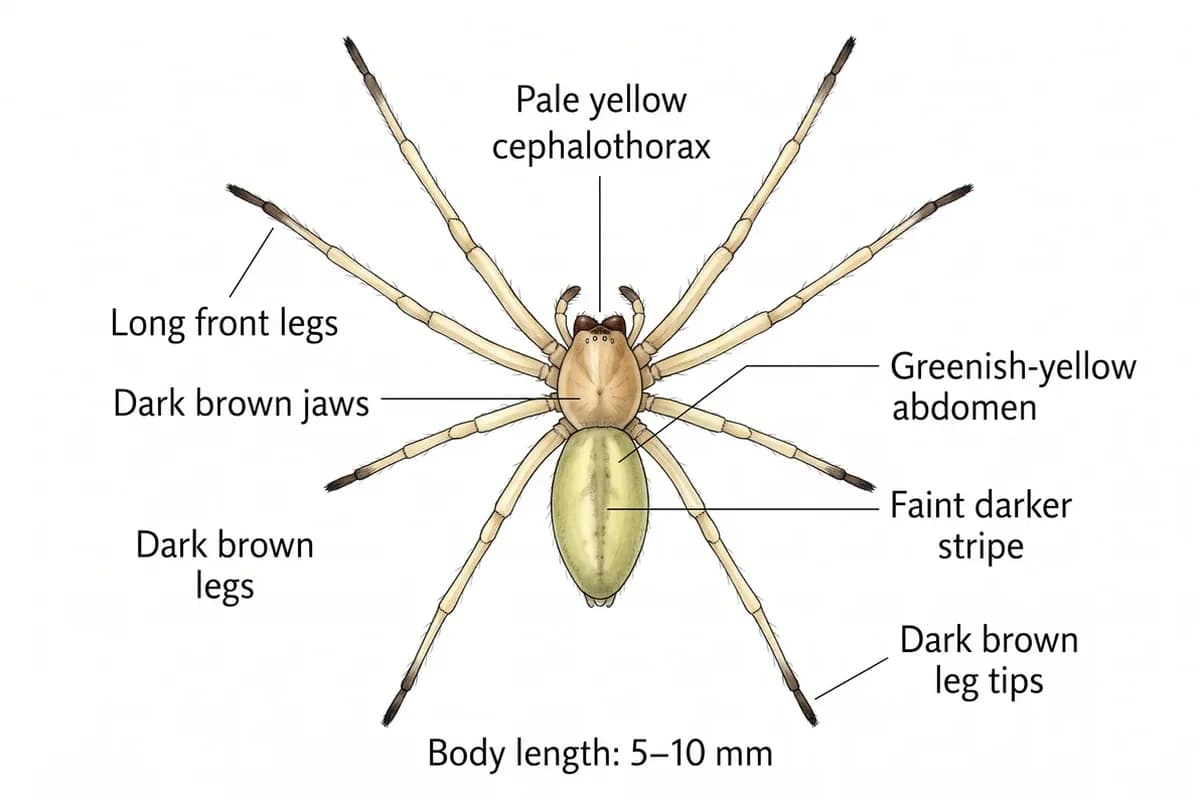
Look for a small, pale spider with a darker front body, long front legs and dark tips on the jaws, feet and palps. The dark leg tips give the agrarian species its other common name, the black footed sac spider.
| Feature | What to look for |
|---|---|
| Body colour | Light yellow to cream; longlegged species often slightly greenish |
| Dark parts | Dark brown jaws, palps and leg tips |
| Abdomen | Slightly darker stripe down the middle |
| Legs | Long, with the first pair longest |
| Size | Females 5 to 10 mm, males 4 to 8 mm (about 1/5 to 2/5 inch) |
| Web | None; a small silk sac or tube retreat |
Black Footed vs Longlegged Sac Spiders
The two common species look alike but differ in colour and where they live.
- Agrarian (black footed): light yellow to cream, more often outdoors on plants. Most females lay eggs on the undersides of leaves.
- Longlegged: slightly greenish abdomen and pale yellow front body, and it lays eggs almost entirely indoors.
- Both: dark jaws, palps and leg tips, and a darker stripe on the abdomen.
For most people the difference matters little, because both behave the same in homes and have similar bites.
Where They Hide Indoors
By day, they rest in small silk sacs high on walls and in corners, and at night they hunt across walls, ceilings and furniture.
- Ceiling corners: retreats are commonly built high on walls at ceilings, in any room.
- Behind things: silken sacs in ceiling and wall corners and behind shelves and pictures.
- Outside: also on foliage, under leaf litter, stones and boards, and under windowsills and siding.
- Light walls: their pale colour makes them hard to notice on light walls and ceilings.
Young spiders hunt at night and return to the retreat by daybreak, which is why people often see them moving across ceilings in the evening.
What the Silk Sac Looks Like
The sac is the best sign these spiders are present. It is a small, flat, white silk pouch or tube tucked into a corner where a wall meets the ceiling, behind a picture frame or in a folded curtain.
- Not a web: there are no sticky threads around it, because the spider hunts away from the sac at night.
- Eggs inside: eggs are placed loosely inside a silk retreat and the female guards them nearby.
- Easy to miss: on light walls and ceilings, the pale sac and spider blend in.
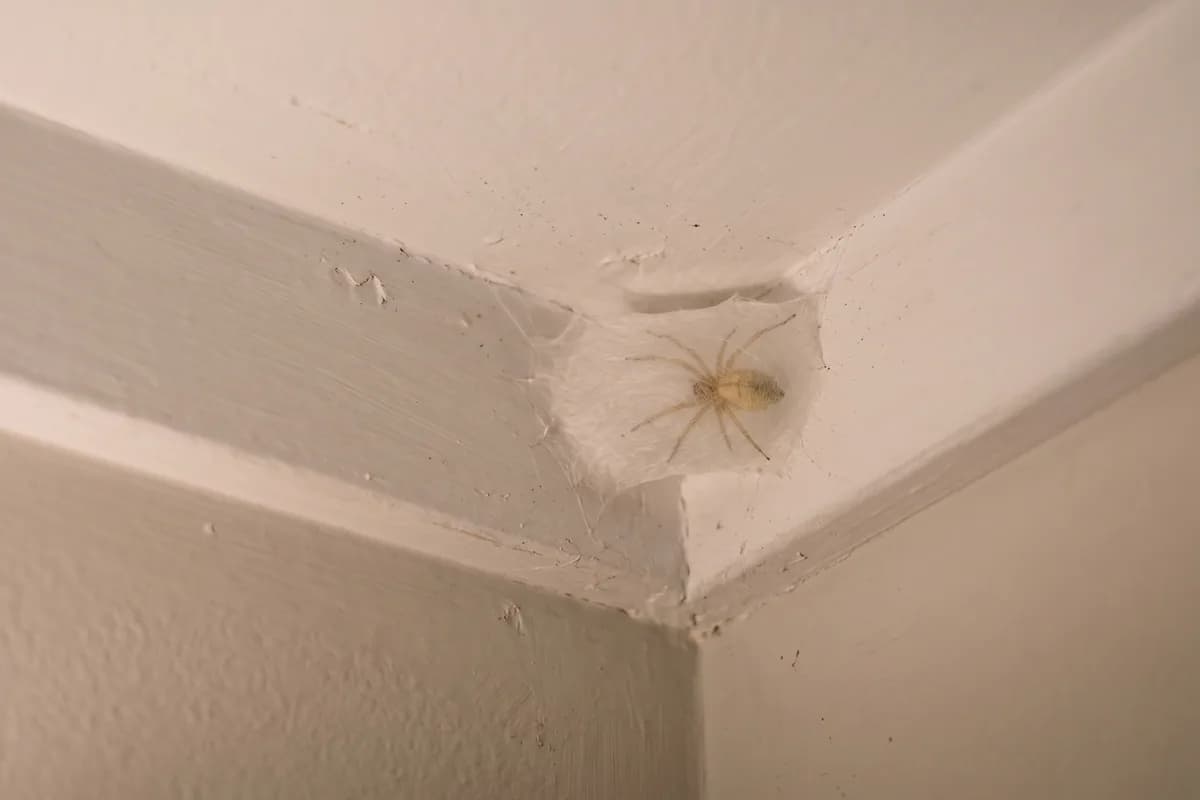
Vacuuming sacs during the day removes the spider, any eggs and its hiding place at once.
Life Cycle and Seasons
Penn State Extension notes eggs are laid in June or July, and young spiders stay in the retreat for a short time before hunting at night and returning by daybreak. The University of Minnesota notes the spiders are present in spring and summer and can be found indoors all year.
- Longlegged species: lays eggs almost entirely indoors, so it can live its whole life in a house.
- Agrarian species: most females lay eggs on the undersides of leaves outdoors.
Bites While Gardening
Penn State Extension notes bites from the agrarian species usually happen outdoors during summer gardening, while bites from the longlegged species often happen indoors in bed or when putting on clothes or shoes.
- Wear gloves when pruning shrubs, pulling weeds or moving pots and boards.
- Check folded leaves and garden gloves before use, and shake out boots and jackets stored in sheds or garages before putting them on.
- Wash any bite with soap and water and use a cold pack for pain and swelling.
Lookalikes: Other Pale Spiders
Several pale spiders are mistaken for Cheiracanthium.
- Common house spider: a round, tall abdomen with darker mottling in a messy cobweb.
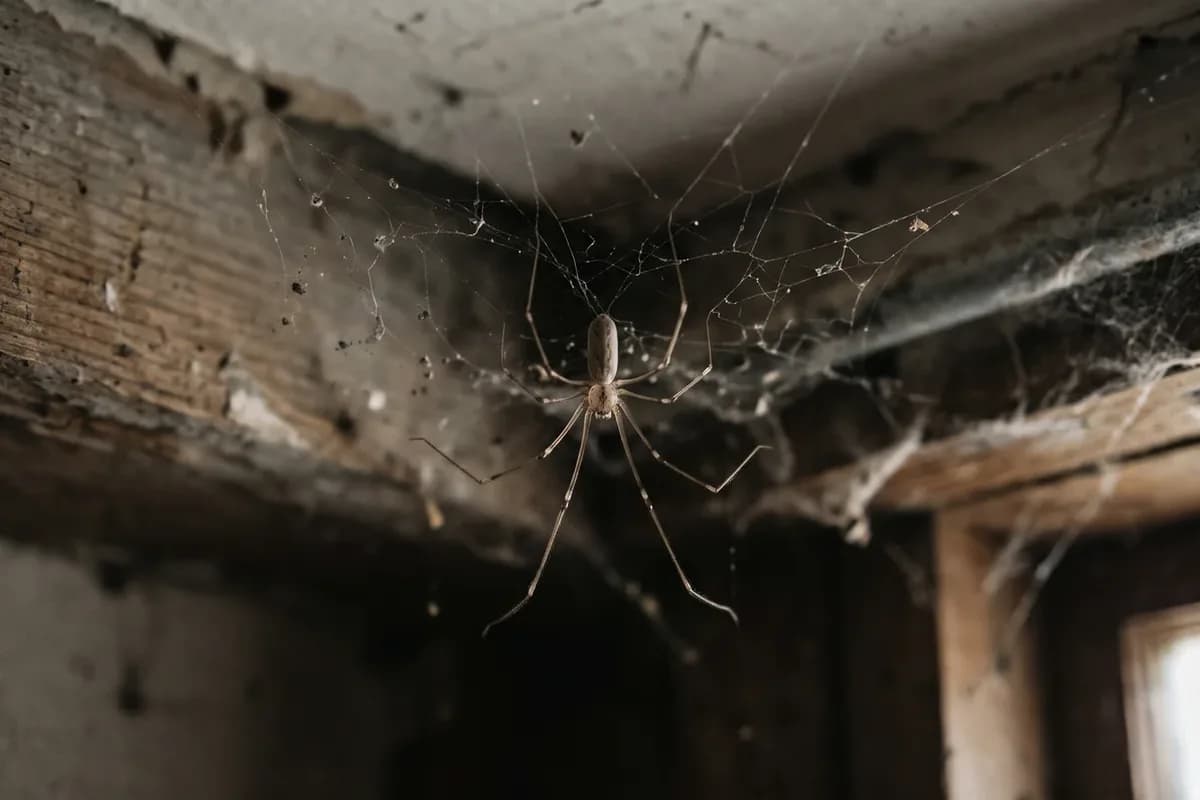
- Cellar spiders: pale, but with a tiny body and extremely long, thin legs, hanging upside down in a loose web.
- Crab spiders: pale species wait on flowers outdoors with their two front leg pairs held out sideways.
- Brown recluse: tan to brown with a dark violin mark and six eyes, not pale yellow with dark feet.
The quickest check is the dark jaws and leg tips on a pale body, plus a silk sac instead of a web. See our guides to the common house spider, cellar spiders and brown recluse spider to compare.
Are Yellow Sac Spiders Dangerous?
No, though their bite can hurt. The University of Kentucky notes the bite can be painful but is not medically significant except to allergic people, and UC IPM notes it usually feels like a bee sting with redness and sometimes swelling.
- Typical bite: burning pain at first, with redness, swelling and intense itching, and sometimes a rash or blister over the next 10 hours.
- Wider symptoms: some people report fever, feeling unwell, muscle cramps or nausea.
- Necrosis myth: studies of many verified bites have failed to confirm the skin damage these spiders were once blamed for.
- When bites happen: indoors, often when someone rolls onto a spider in bed or puts on clothing or shoes with one inside.
For care and warning signs, see our Bug Bite Identifier and our guide to venomous spiders.
How to Get Rid of Them
- Vacuum sacs from ceiling corners and behind pictures and shelves.
- Seal gaps around windows, doors and siding, and repair screens.
- Shake out clothes, towels and shoes left on the floor, and keep bedding off the floor.
- Trim plants away from walls and windows.
UC IPM notes sprays give only temporary results without housekeeping. A single spider can be moved outside in a jar with a card slid underneath.
Not sure the pale spider on your ceiling is a yellow sac spider? Upload a clear photo to the free ScanaBug Spider Identifier for an instant ID with a safety rating.