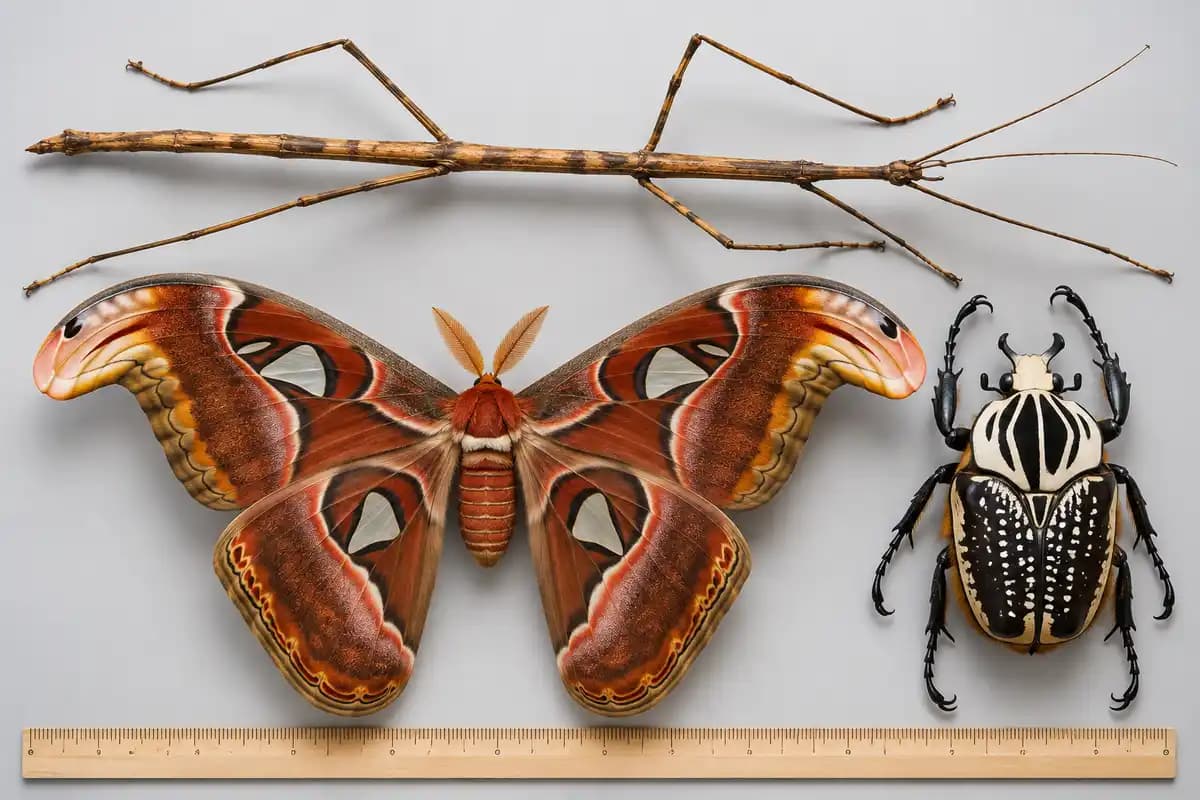
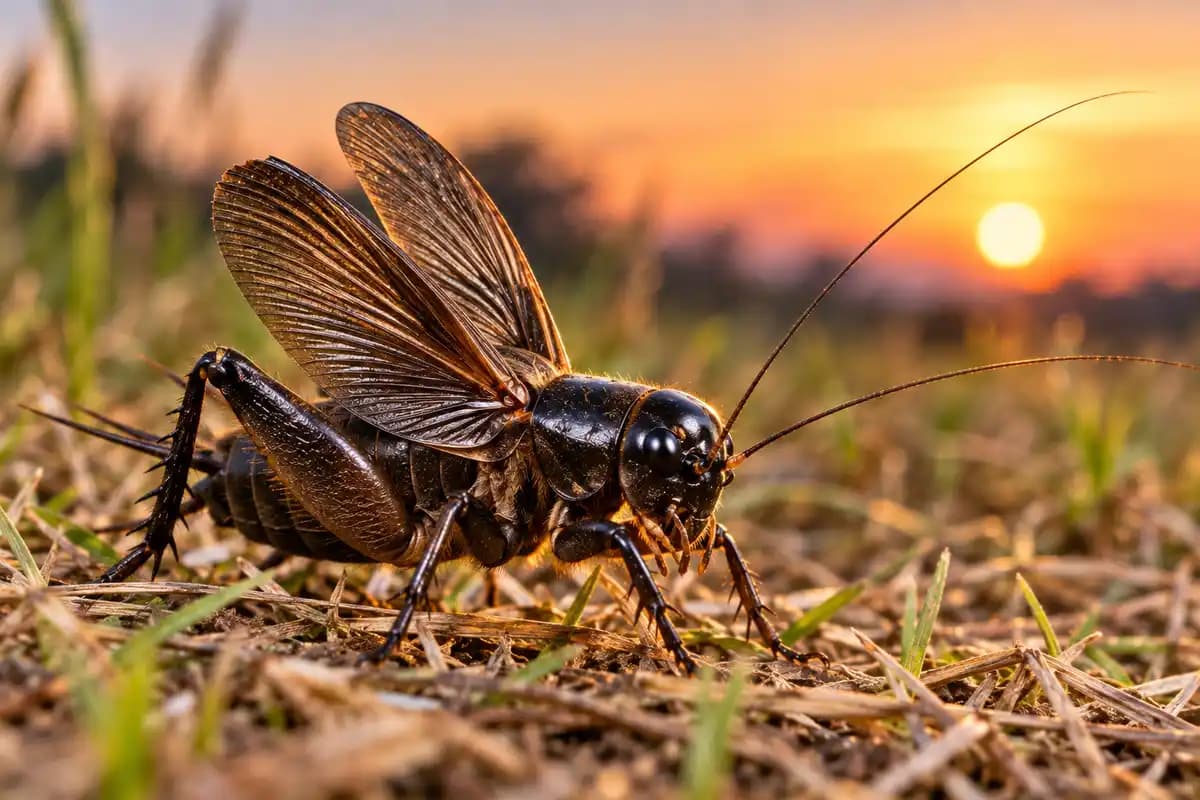
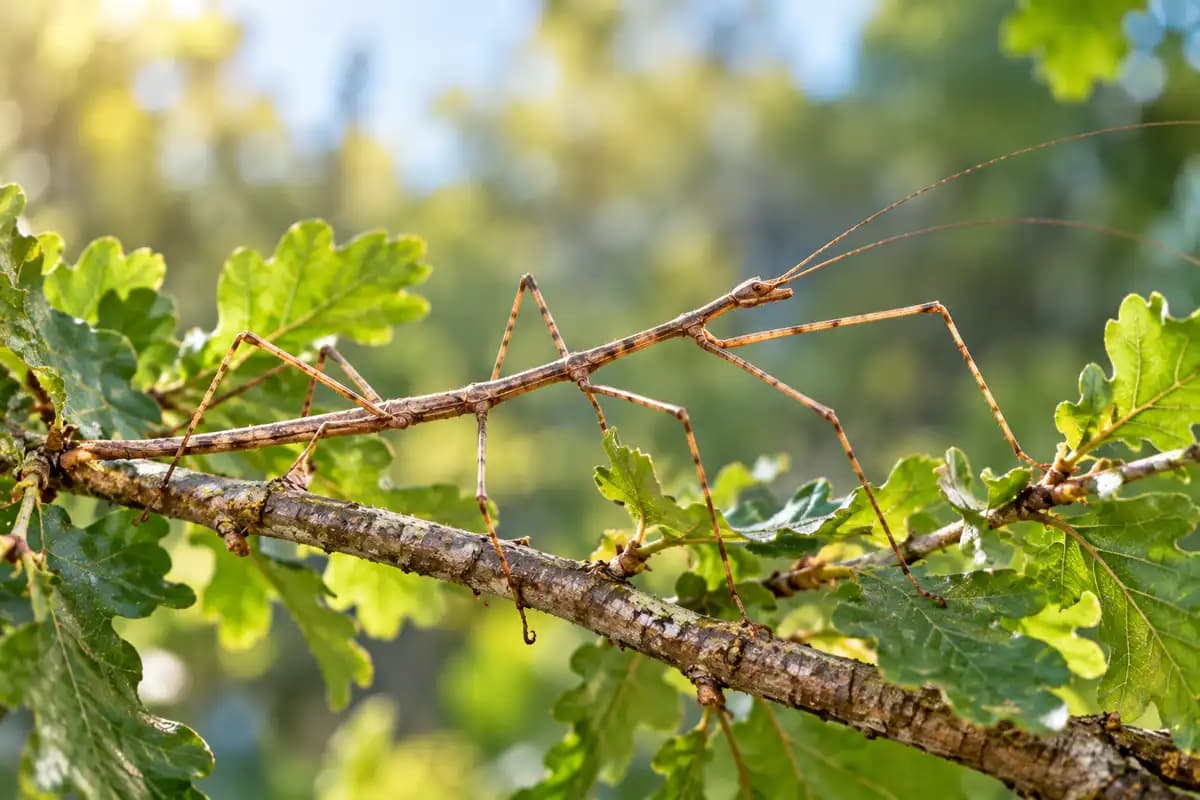
Insect Anatomy: The 3 Parts of an Insect Explained With a Diagram
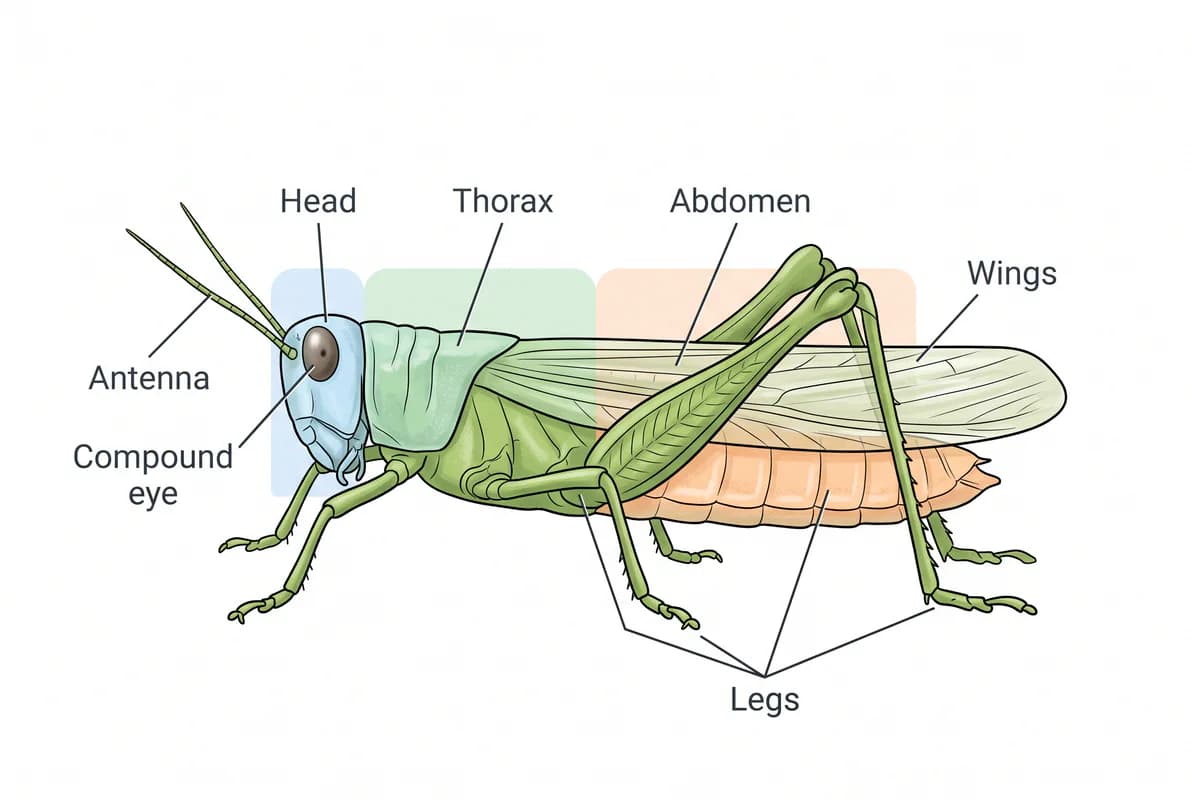
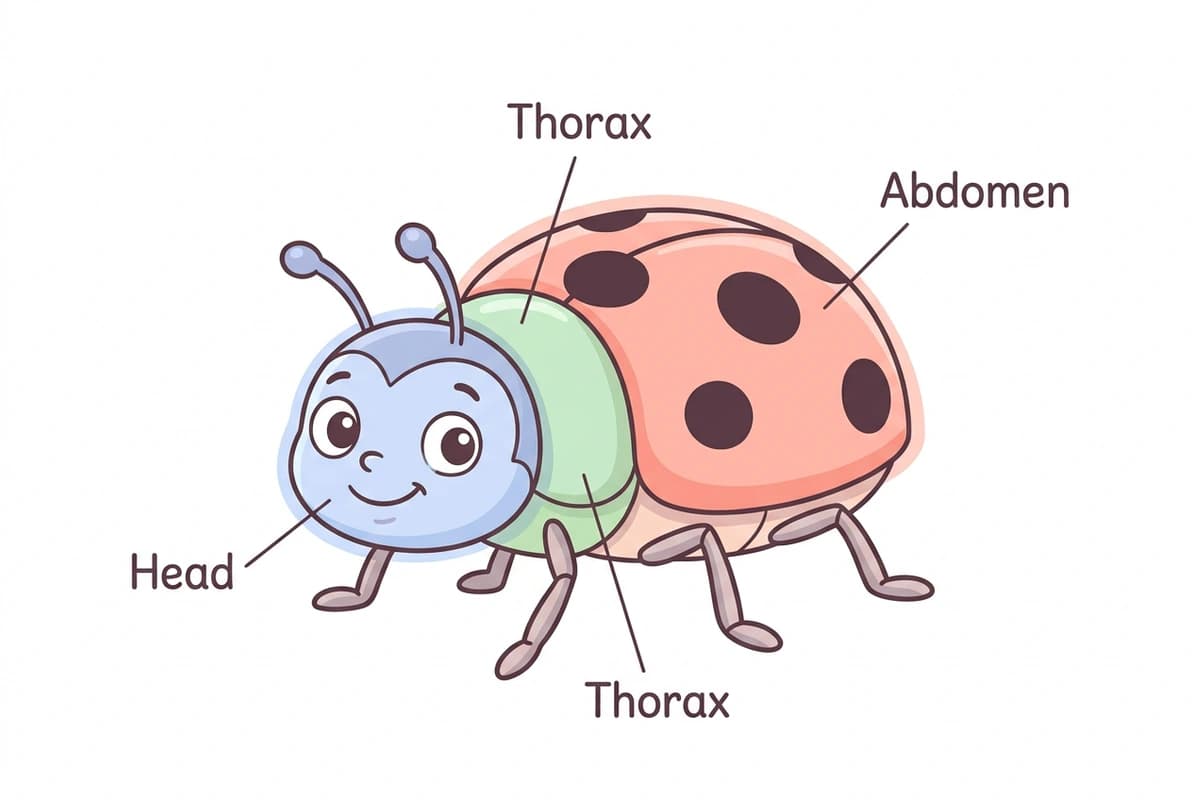
Every adult insect has a body built from three parts: the head, the thorax and the abdomen. The head senses and eats, the thorax moves and the abdomen digests food and makes eggs. Around this simple plan, insects have evolved an amazing range of antennae, mouthparts, legs and wings. This guide explains each part in plain language, with tables and a labeled diagram.
What Are the 3 Body Parts of an Insect?
The three body parts of an insect are the head, the thorax and the abdomen. Scientists call these regions tagmata, and each is made of smaller segments joined together, which is why insects can bend and flex.
- Head: holds the eyes, antennae, brain and mouthparts.
- Thorax: the middle section that carries all six legs and the wings.
- Abdomen: the rear section that holds most of the digestive and reproductive organs.
This three part body, along with six legs and one pair of antennae, is what separates insects from spiders, centipedes and other arthropods.
The Insect Exoskeleton
An insect has no bones inside its body. Instead, it wears a hard outer skeleton called an exoskeleton, made mainly of chitin and proteins. It protects soft organs, holds the body's shape and gives muscles a place to attach on the inside, while a thin waxy outer layer keeps water in. Because the exoskeleton cannot stretch much, an insect must shed it to grow, a process called molting. The empty shells you sometimes find on tree trunks, such as cicada skins, are left behind after molting.
The Head: Antennae, Eyes and Mouthparts
The head is the insect's control center, with the brain and most of its senses.
Antennae
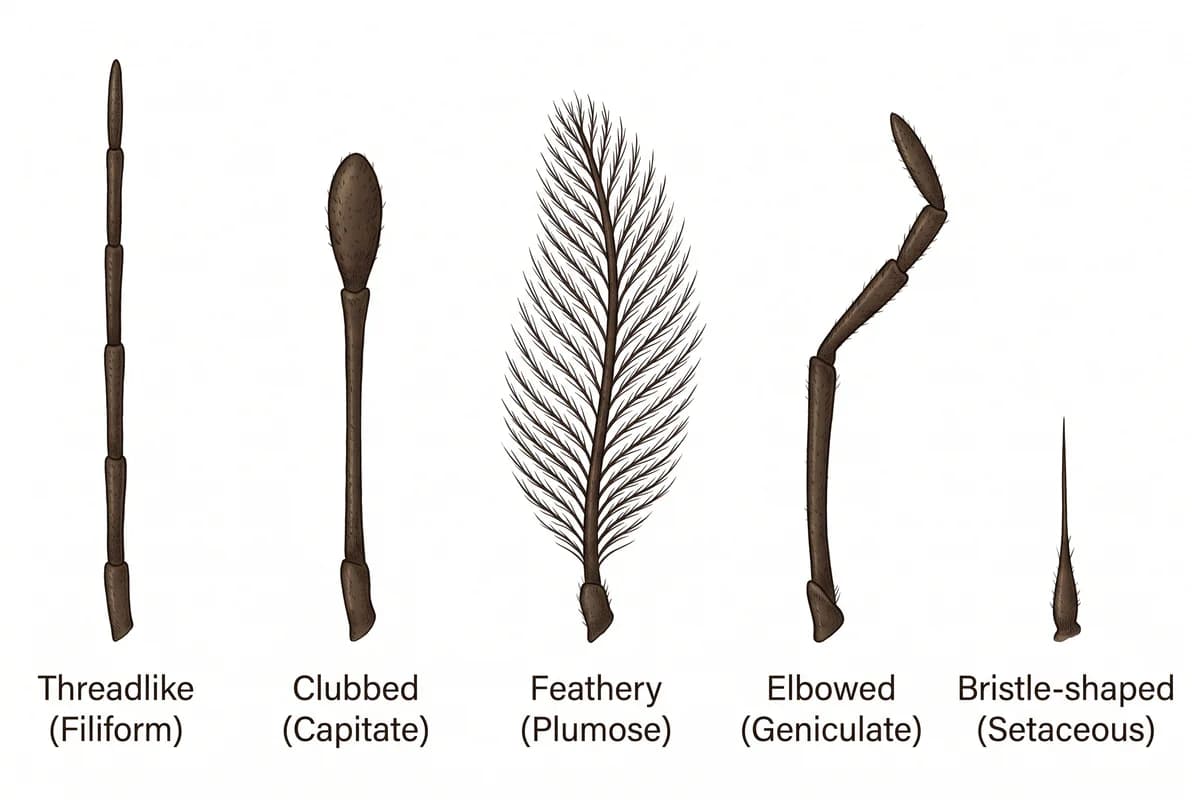
Antennae are a pair of jointed feelers used to smell, touch and sometimes taste. Their shape is a useful clue for identification: threadlike (crickets), clubbed (butterflies), feathery (male moths), elbowed (ants and bees) or short and bristly (dragonflies and house flies).
Eyes and mouthparts
Most adult insects have two large compound eyes made of many tiny units, each with its own lens, which are excellent at spotting movement. Mouthparts are shaped for what each insect eats, as the table below shows.
| Mouthpart type | How it works | Examples |
|---|---|---|
| Chewing | Strong jaws cut and grind food | Beetles, grasshoppers, caterpillars |
| Piercing and sucking | A sharp tube pierces skin or plants and sucks fluid | Mosquitoes, aphids, stink bugs |
| Siphoning | A long coiled tongue sips nectar like a straw | Butterflies and moths |
| Sponging | A soft pad soaks up liquid food | House flies |
| Chewing and lapping | Jaws for shaping wax plus a tongue for nectar | Bees |
The Insect Thorax: Legs and Wings
The thorax is the middle body section of an insect, and it powers all movement. It is made of three segments, and each segment carries one pair of legs. In winged insects, the second and third segments also carry the wings. The thorax is packed with strong muscles, which is why it often looks thicker and more solid than the head or abdomen.
Insect legs
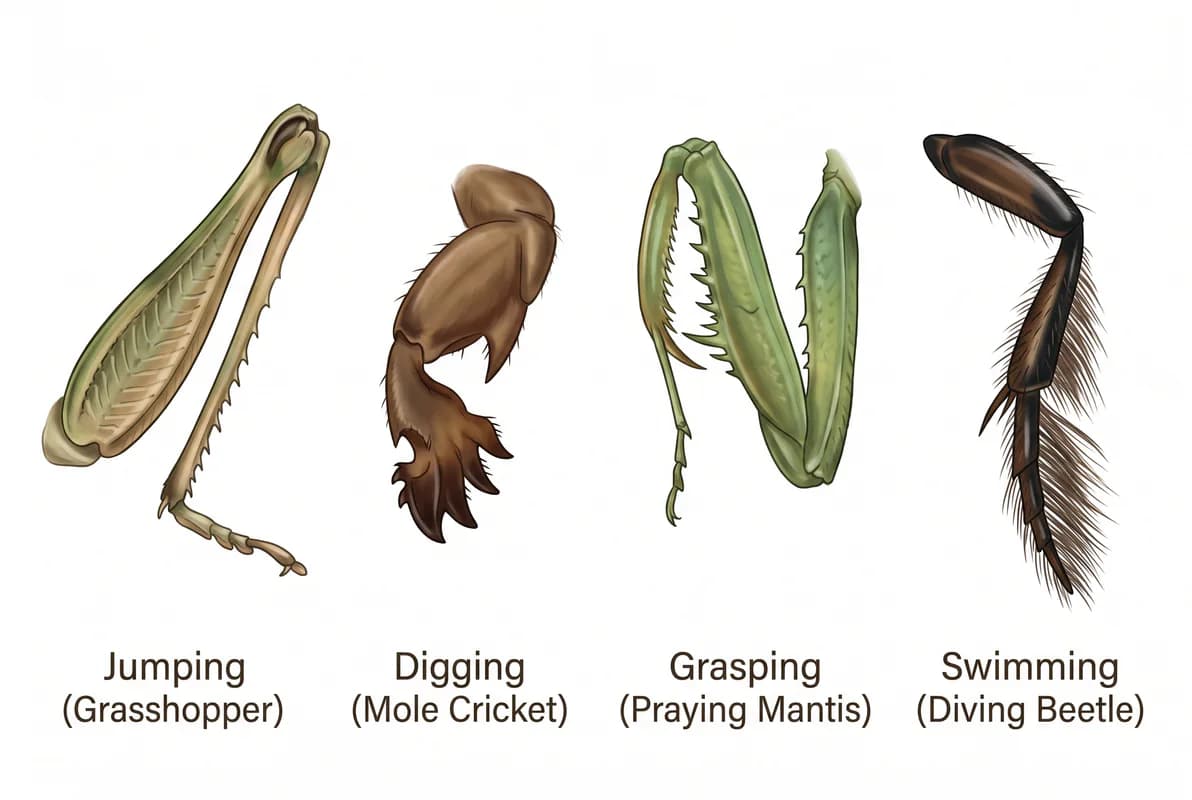
Every insect leg has the same five main parts, from the body outward: the coxa, trochanter, femur, tibia and tarsus (the foot). Different insects have legs shaped for different jobs. Digging legs appear in mole crickets, and grasping legs in praying mantises.
| Leg type | What it does | Example |
|---|---|---|
| Walking or running | Long, even legs for fast movement | Cockroaches, ground beetles |
| Jumping | Thick, powerful back legs | Grasshoppers, crickets, fleas |
| Digging | Wide, shovel shaped front legs | Mole crickets |
| Grasping | Spiny front legs that snap shut on prey | Praying mantises |
| Swimming | Flat, hairy back legs used like oars | Diving beetles, water boatmen |
| Pollen collecting | Back legs with a smooth basket for pollen | Honey bees, bumblebees |
Insect wings
Most adult insects have two pairs of wings, both attached to the thorax. Insects are the only invertebrates that can fly. Wings may be thin and clear (dragonflies, bees), covered in scales (butterflies, moths), or hardened into front wing covers (beetles, ladybugs). Flies and mosquitoes have only one pair, and some insects, such as worker ants and fleas, have none.
The Abdomen
The abdomen is the rear section of an insect and holds most of its digestive and reproductive organs. Small breathing holes called spiracles line its sides, feeding a network of tiny tubes called tracheae that carry oxygen straight to the cells. The abdomen tip can carry cerci (short feelers), an ovipositor (an egg laying tube) or a stinger, which in bees and wasps is a modified ovipositor, which is why only females can sting.
Insect Anatomy for Kids: The Simple Version
For a quick way to remember insect anatomy, think of the three body parts as three jobs:
- Head = think and eat. It has the eyes, antennae and mouth.
- Thorax = move. It has six legs and the wings.
- Abdomen = digest and grow. It holds the stomach and makes eggs.
Using Anatomy to Identify an Insect
Body parts are the fastest clues for narrowing down what insect you found. Look at these features in order:
- Wings: count the pairs and check if they are clear, scaled or hard.
- Antennae: note if they are threadlike, clubbed, feathery or elbowed.
- Legs: see if any pair is built for jumping, digging or grasping.
- Mouthparts: check for jaws, a coiled tongue or a straw shaped beak.
For a faster answer, take a clear photo and upload it to the ScanaBug insect identifier, which reads these same features for you.
Frequently Asked Questions
Sources and References
- NC State University, General Entomology. Lab 4: Insect External Anatomy.
- Purdue University Extension Entomology. Generalized Insect Structure study guide.
- Chapman, R. F. 2013. The Insects: Structure and Function, 5th edition. Cambridge University Press.
- Gullan, P. J. and Cranston, P. S. 2014. The Insects: An Outline of Entomology, 5th edition. Wiley Blackwell.
- Triplehorn, C. A. and Johnson, N. F. 2005. Borror and DeLong's Introduction to the Study of Insects, 7th edition.