Types of Caterpillars: How to Identify Them and Avoid the Asp Caterpillar
A caterpillar insect is the young, or larval, stage of a butterfly or moth. There are about 180,000 known species of butterflies and moths, so caterpillars come in a huge range of colors, sizes and shapes. Most are harmless, but a few have venomous spines that cause painful stings. This guide shows you how to identify a caterpillar, which ones to avoid and which ones damage gardens.
How to Identify a Caterpillar
The fastest way to identify a caterpillar is to check five things: size, color pattern, hairs or spines, the plant it is eating and where you live. Together, these clues narrow the options quickly.
- Size: measure or compare it to a coin. Many species grow from a few millimeters to over 7 cm (3 inches).
- Color and pattern: note stripes, spots, bands and the color of the head.
- Hairs, spines or horns: check if it is smooth, fuzzy, spiny or has a horn on its tail.
- Host plant: many caterpillars eat only one plant family, such as milkweed or tomatoes.
- Behavior: see if it loops as it walks, lives in a silk tent or curls into a ball.
All true caterpillars have six jointed legs behind the head plus up to five pairs of fleshy prolegs on the abdomen. Inchworms have only two or three pairs of prolegs at the rear, which is why they loop. If a larva has six or more pairs of prolegs, it is probably a sawfly larva, a wasp relative that looks very similar.
Common Caterpillar Types
These are some of the caterpillars people find most often. Several live across many regions of the world.
| Caterpillar | What it looks like | Where you find it | Stings? |
|---|---|---|---|
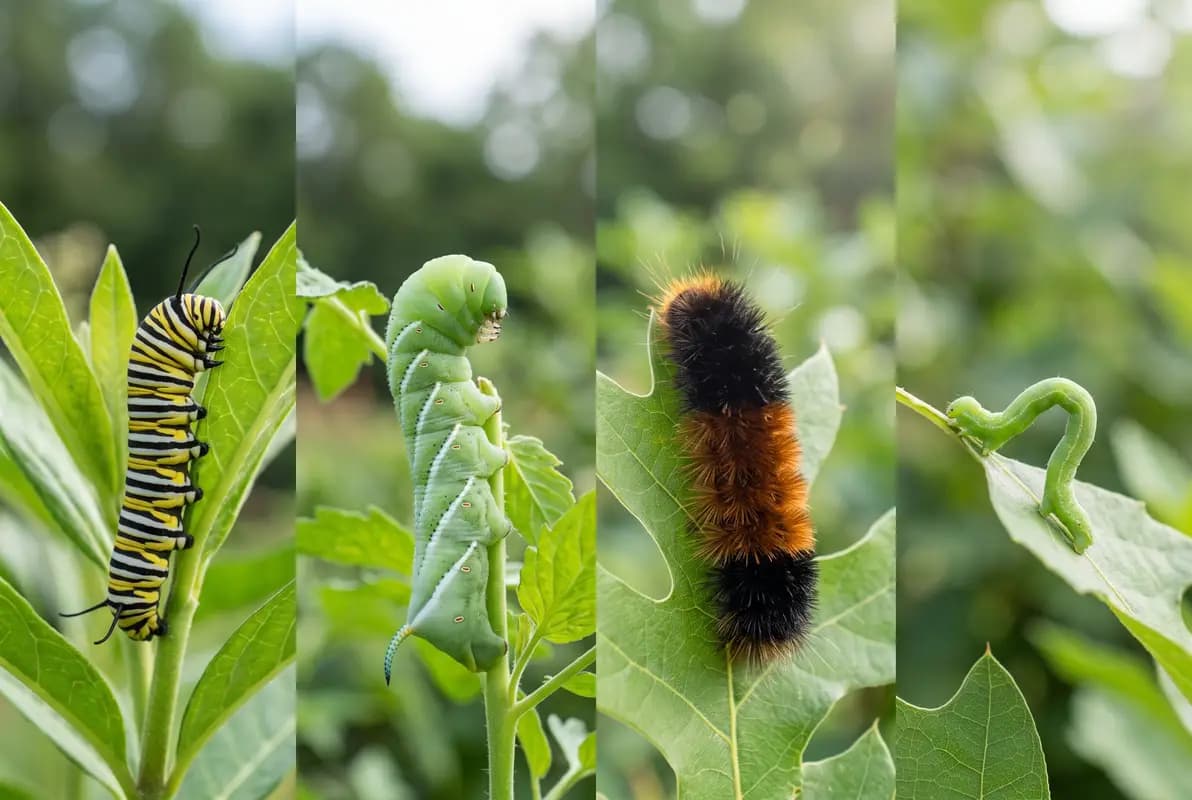
| Monarch | Yellow, black and white stripes, two pairs of black tentacles | Milkweed | No |
| Black swallowtail | Green with black bands and yellow dots | Parsley, dill, carrot, fennel | No |
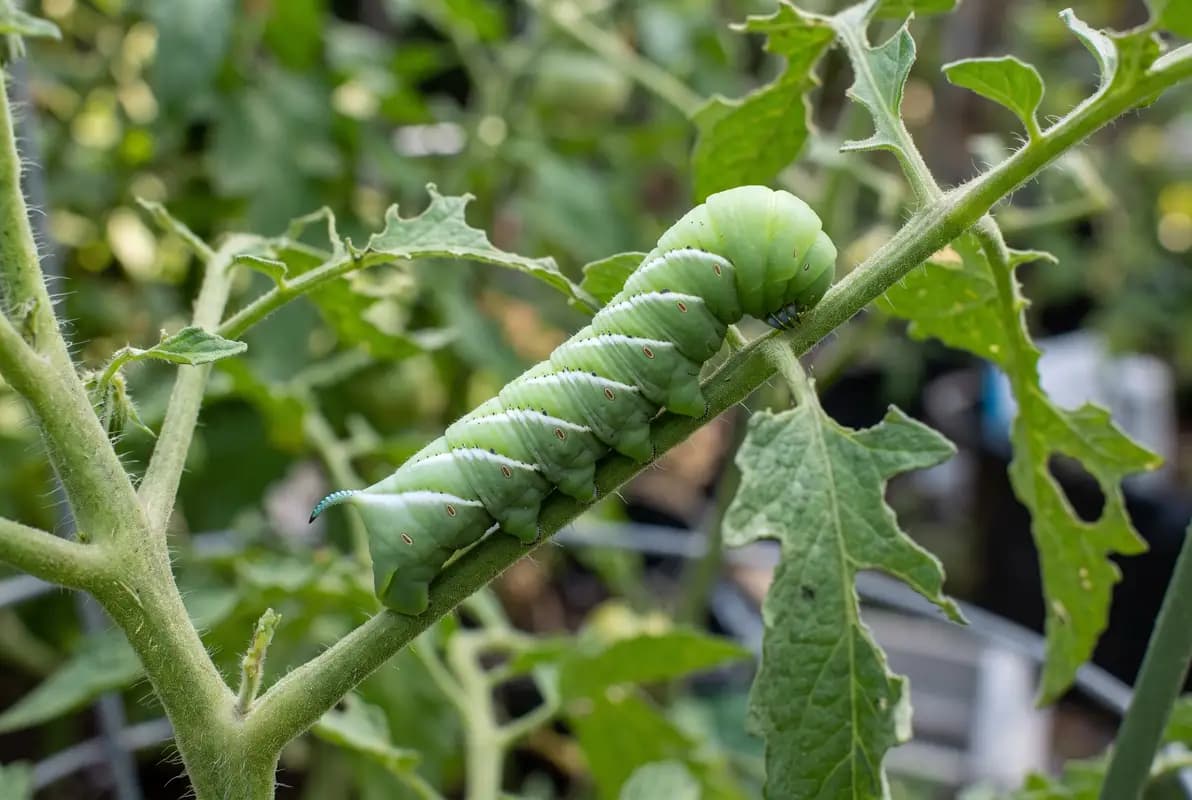
| Tomato or tobacco hornworm | Large, green, white stripes, a horn on the tail | Tomato, pepper, potato | No |
| Woolly bear | Fuzzy, black at both ends with a rusty brown middle | Walking across paths in autumn | No, hairs may irritate |
| Cabbage white | Small, velvety green | Cabbage, broccoli, kale | No |
| Inchworm | Thin, green or brown, moves by looping | Trees and shrubs | No |
| Eastern tent caterpillar | Dark with a white stripe and blue spots | Silk tents in tree forks in spring | No |
| Spongy moth | Hairy, with blue and red dots along the back | Oak and many other trees | Hairs can cause rashes |
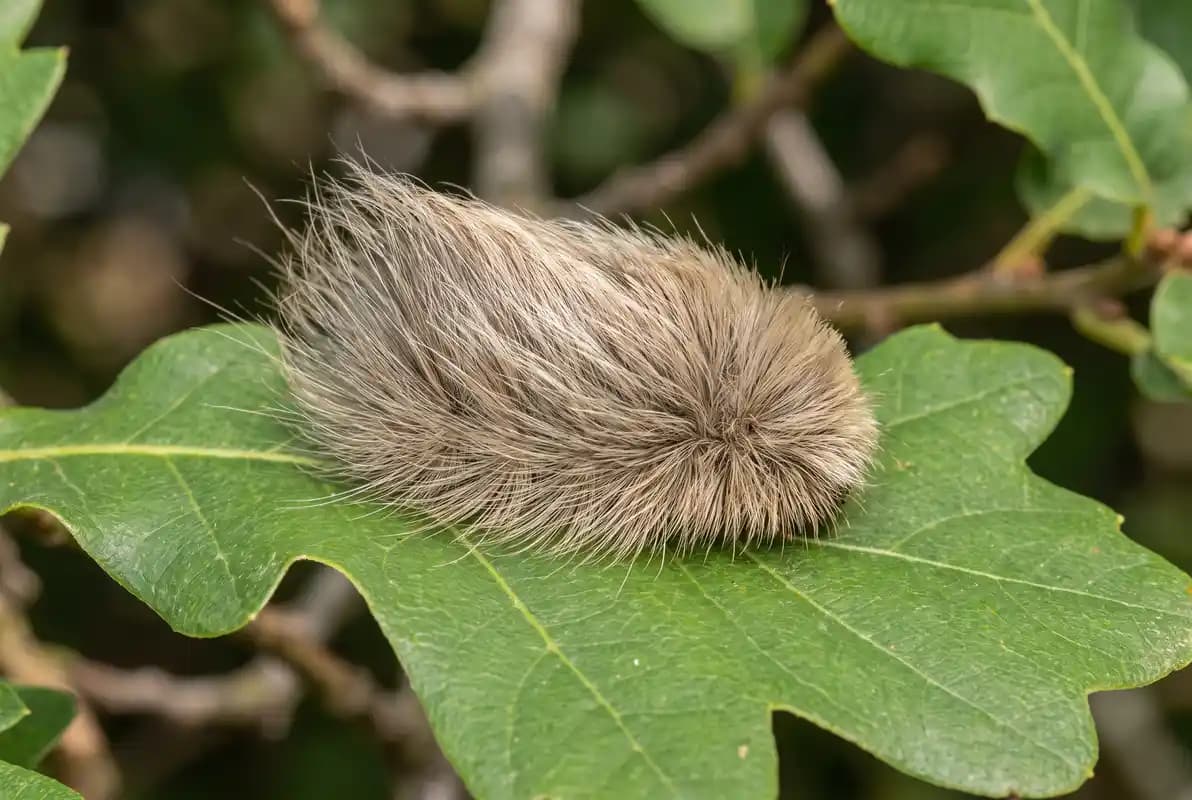
| Puss caterpillar (asp) | Teardrop shaped, covered in long, soft looking hair | Oak, elm, citrus and other trees | Yes, very painful |
| Saddleback | Green saddle-shaped patch, brown ends, spiny horns | Many trees and shrubs | Yes |
Found a caterpillar and not sure if it stings? Upload a photo to the free ScanaBug Insect Identifier to get the species and a safety rating before you touch it.
Stinging Caterpillars: The Asp and Others to Avoid
Stinging caterpillars have hollow spines or hairs connected to venom glands, and touching them can cause sharp, burning pain. The safest rule is simple: do not touch fuzzy or spiny caterpillars with bare hands unless you know what they are. The best known stinging species include:
- Puss caterpillar (asp): the larva of the southern flannel moth. It looks like a soft tuft of fur, but the hair hides venomous spines, and it is one of the most venomous caterpillars in the United States.
- Saddleback: green with a brown saddle shaped spot and spiny horns at both ends.
- Io moth: bright green with clusters of branching spines and a red and white stripe along each side.
- Processionary caterpillars: found in parts of Europe, they shed tiny hairs that cause rashes, eye irritation and breathing problems.
Most stings cause pain, redness and swelling. If you are stung, remove any caterpillar without bare hands, press sticky tape over the area to lift out broken spines, then wash with soap and water and apply a cold pack. Get medical help for severe pain, swelling of the face or throat, or trouble breathing. To check a sting mark or rash you are unsure about, use the ScanaBug bug bite identifier.
What Do Caterpillars Eat?
Most caterpillars eat leaves, and many feed on only one plant or plant family, which is one of the best identification clues you have. Monarch caterpillars eat only milkweed, black swallowtails eat the carrot family (parsley, dill, fennel), cabbage whites eat cabbage and kale, and hornworms eat tomato and pepper leaves. Not all caterpillars eat leaves: clothes moth caterpillars eat wool, and pantry moth caterpillars eat stored grains.
Garden Pests: Cutworms and Other Problem Caterpillars
Some caterpillars cause real damage in gardens and farms:
- Cutworms: gray or brown caterpillars that curl into a C shape and chew through young seedlings at ground level at night.
- Hornworms: large caterpillars that can strip tomato plants of leaves in a few days.
- Cabbage worms: small green caterpillars that chew holes in cabbage, kale and broccoli.
- Armyworms: caterpillars that move in large groups and eat lawns and crops.
Pick caterpillars off by hand, cover young plants with fine mesh, and place a cardboard collar around seedling stems to block cutworms. A natural bacterium called Bt targets caterpillars, but it also kills butterfly caterpillars you may want to protect, so use it only on affected plants.
From Caterpillar to Butterfly
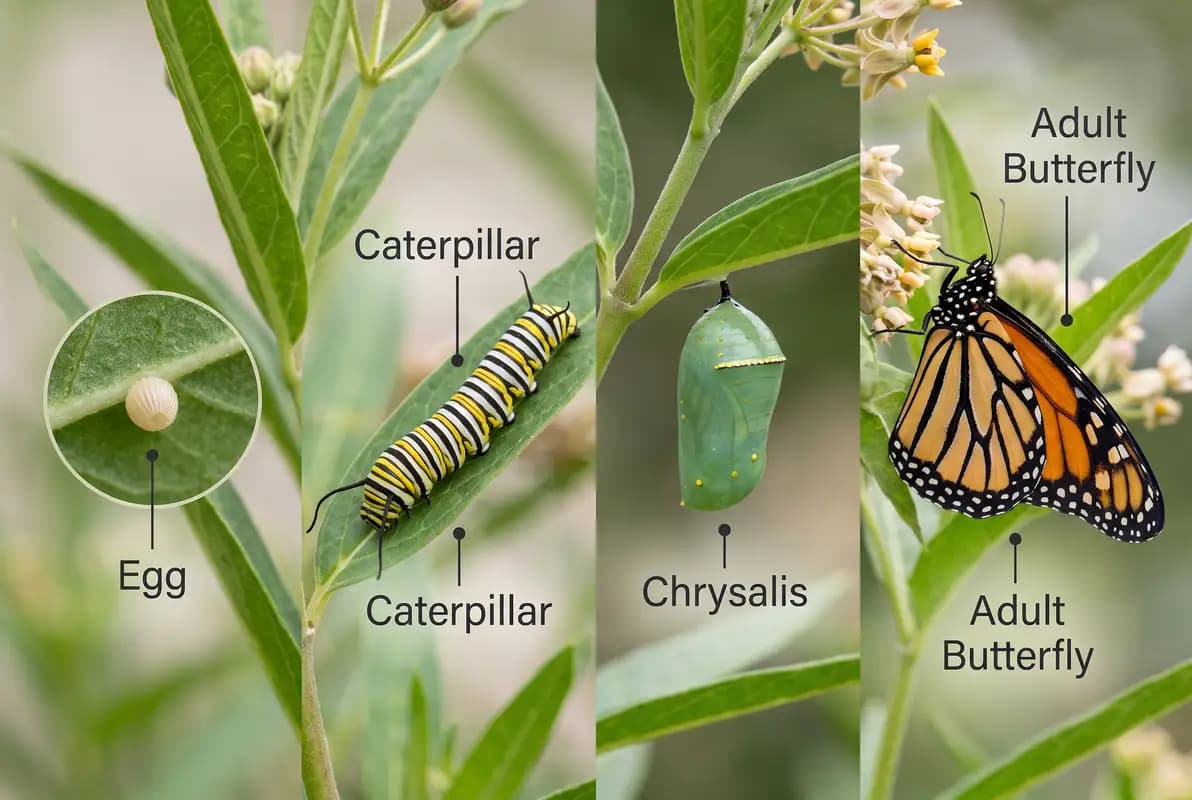
A caterpillar turns into a butterfly or moth through complete metamorphosis, which has four stages: egg, larva, pupa and adult. The caterpillar is the larva, and its main job is to eat and grow, shedding its skin about four or five times. When fully grown, it forms a pupa: butterflies form a hard chrysalis, while most moths spin a silk cocoon. For a monarch, the caterpillar stage lasts about two weeks, and the chrysalis stage about one to two weeks before the butterfly emerges.
Are Caterpillars Insects?
Yes, caterpillars are insects. They are the larval stage of butterflies and moths, which belong to the insect order Lepidoptera. A caterpillar has six true legs on its thorax, a head with chewing jaws and a segmented body, just like other insect larvae. The extra fleshy legs on the abdomen are prolegs, which disappear when it becomes an adult.
Frequently Asked Questions
Sources and References
- University of Florida, IFAS Extension. Puss Caterpillar, Megalopyge opercularis, Featured Creatures.
- NC State Extension. Puss Caterpillar. North Carolina State University.
- Wagner, D. L. 2005. Caterpillars of Eastern North America. Princeton University Press.
- UK Forestry Commission. Oak Processionary Moth (Thaumetopoea processionea) guidance.
- Gullan, P. J. and Cranston, P. S. 2014. The Insects: An Outline of Entomology, 5th edition. Wiley Blackwell.