Bee Identification: Bumblebees, Honey Bees and Carpenter Bees
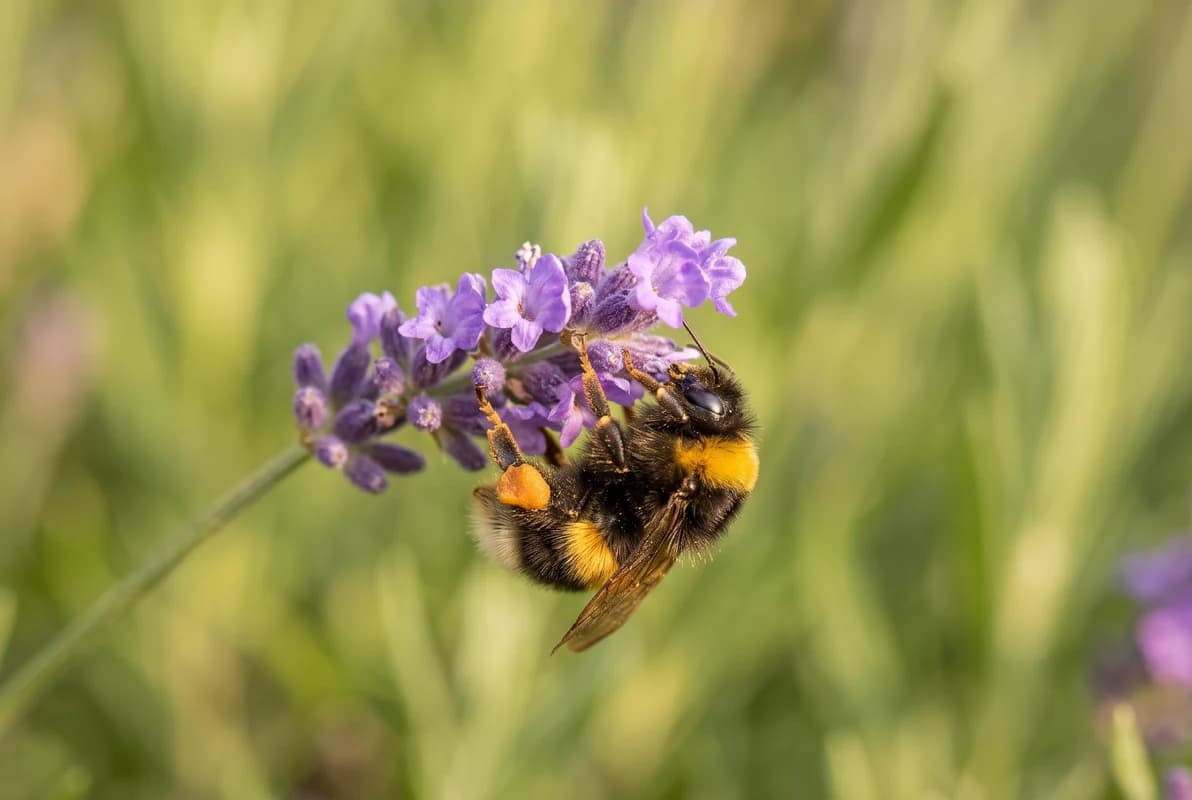
A bumblebee insect is a large, round, very fuzzy bee with bands of black and yellow, orange, white or red. It belongs to the genus Bombus, which has more than 250 species around the world. This guide shows you how to recognize one, how it differs from honey bees and carpenter bees, and when its sting or nest matters.
What Does a Bumblebee Look Like?
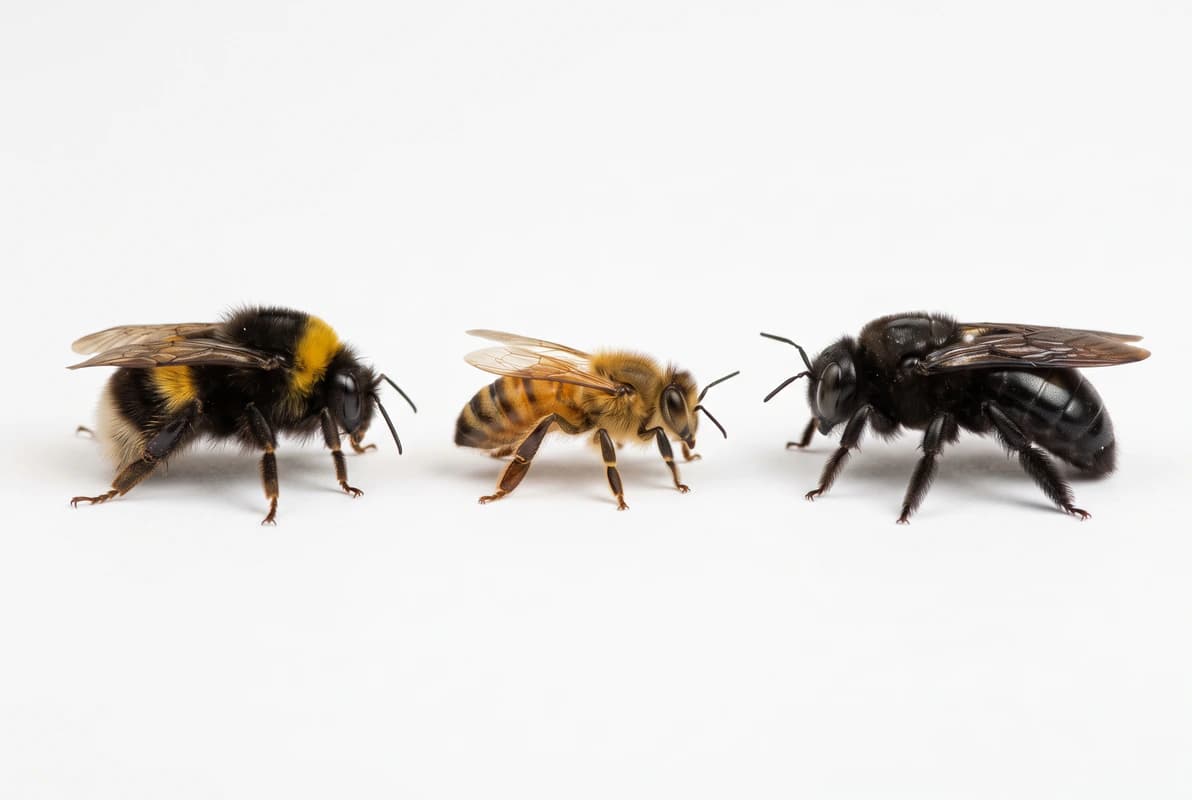
A bumblebee is a plump, hairy bee about 1 to 2.5 cm (0.4 to 1 inch) long, with a body covered in dense, soft hair. Queens are the largest, workers are smaller and males fall in between. Look for these features:
- A round, fuzzy body with hair covering the abdomen, not just the thorax.
- Color bands in black with yellow, orange, white or red, depending on the species.
- Pollen baskets on the back legs, which look like shiny flat areas packed with pollen.
- Slow, loud, buzzing flight from flower to flower.
Bumblebees can fly in cooler weather than most bees. They warm up by shivering their flight muscles, which lets them feed on cold mornings and in cloudy weather.
Bumblebee vs Honey Bee vs Carpenter Bee
These three bees are the most commonly confused. The table below shows the clearest differences.
| Feature | Bumblebee | Honey bee | Carpenter bee |
|---|---|---|---|
| Body shape | Round and chunky | Slim | Large and chunky |
| Hair | Thick hair all over, including the abdomen | Short, sparse hair | Hairy thorax, shiny bare black abdomen |
| Typical color | Black with yellow, orange, white or red bands | Golden brown with dark bands | Black with a yellow thorax |
| Nest | Small colony in the ground or compost | Large colony in a hive or tree hollow | Round tunnels drilled into bare wood |
| Colony size | A few dozen to a few hundred | Often tens of thousands | Solitary, though many may nest close together |
| Sting | Females can sting more than once | Workers die after stinging people | Females rarely sting, males cannot |
The quickest check is the abdomen. If it is fuzzy, you are likely looking at a bumblebee. If it is shiny and bald, it is probably a carpenter bee.
Is that fuzzy bee a bumblebee? Upload a photo to the free ScanaBug Insect Identifier and find out, with a safety rating.
Black Bumblebees and Other Color Forms
Bumblebee colors vary a lot by species and region, so color alone is not a reliable guide. Some species are mostly black, while others show bright orange or red tails. If you see a large, all black bee with a shiny abdomen, it is far more likely to be a carpenter bee than a bumblebee. A black bumblebee still has dense hair over its whole body.
Queens, Workers and Males: How to Tell Them Apart
A bumblebee colony has three kinds of bees, and each shows up at a different time of year.
- Queens are the largest. In early spring, the big, slow bumblebees zigzagging low over the ground are queens searching for nest sites.
- Workers are smaller females that collect pollen and nectar. From late spring through summer, most bumblebees on flowers are workers.
- Males appear in mid to late summer. They have no pollen baskets and no stinger, and often have a yellow tuft on the face.
Do Bumblebees Sting?
Yes, female bumblebees can sting, but they rarely do unless their nest is disturbed or they are pressed against skin. Unlike honey bees, bumblebees have a smooth stinger, so they can sting more than once without dying. Most stings cause short, sharp pain, redness and swelling that fade within a day or two. Swelling of the face, lips or throat, trouble breathing or hives spreading across the body need emergency care. To check a sting mark you are unsure about, use the ScanaBug bug bite identifier.
Bumblebee Nests: Where They Live
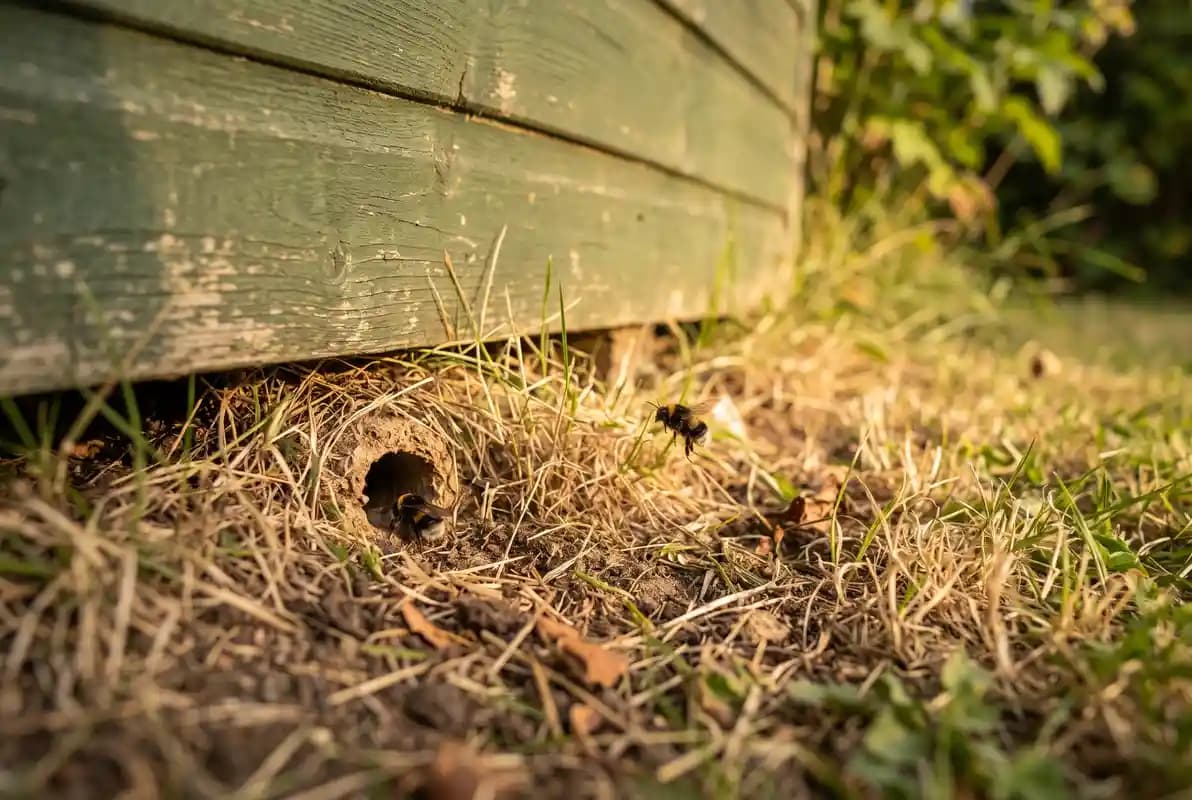
Bumblebees live in small yearly colonies, usually in or near the ground. A queen that survived winter starts a new nest in spring, often in an empty rodent burrow, under a shed or in a compost pile. By late summer the colony produces new queens and males, and only the new mated queens survive winter. That short life means a bumblebee nest in your yard will be gone by autumn on its own, so if it is not in a busy spot, the simplest choice is to leave it alone.
Insects That Look Like Bumblebees
Several harmless flies copy the bumblebee's fuzzy look to scare off predators, including hoverflies, bee flies and bumblebee robber flies. The fastest way to tell them apart is to count wings: flies have one pair, while bees have two pairs. Flies also never carry pollen baskets.
Why Bumblebees Matter
Bumblebees are some of the most important wild pollinators. They are especially good at buzz pollination, vibrating their flight muscles to shake pollen loose from flowers such as tomatoes, blueberries and cranberries. Many species are declining: in 2017, the rusty patched bumblebee became the first bee in the continental United States listed as endangered. You can help by planting flowers that bloom from early spring to late autumn, avoiding pesticides on flowering plants, and leaving some bare ground and rough grass for nesting.
Frequently Asked Questions
Sources and References
- Smithsonian Institution, National Museum of Natural History. Wasps, Ants, and Bees, BugInfo.
- Smithsonian Institution, National Museum of Natural History. Benefits of Insects, BugInfo.
- US Fish and Wildlife Service. Rusty Patched Bumble Bee (Bombus affinis) endangered species listing, 2017.
- Williams, P., Thorp, R., Richardson, L. and Colla, S. 2014. Bumble Bees of North America. Princeton University Press.
- Goulson, D. 2010. Bumblebees: Behaviour, Ecology, and Conservation, 2nd edition. Oxford University Press.