State Insects of All 50 States, Including the Texas State Insect
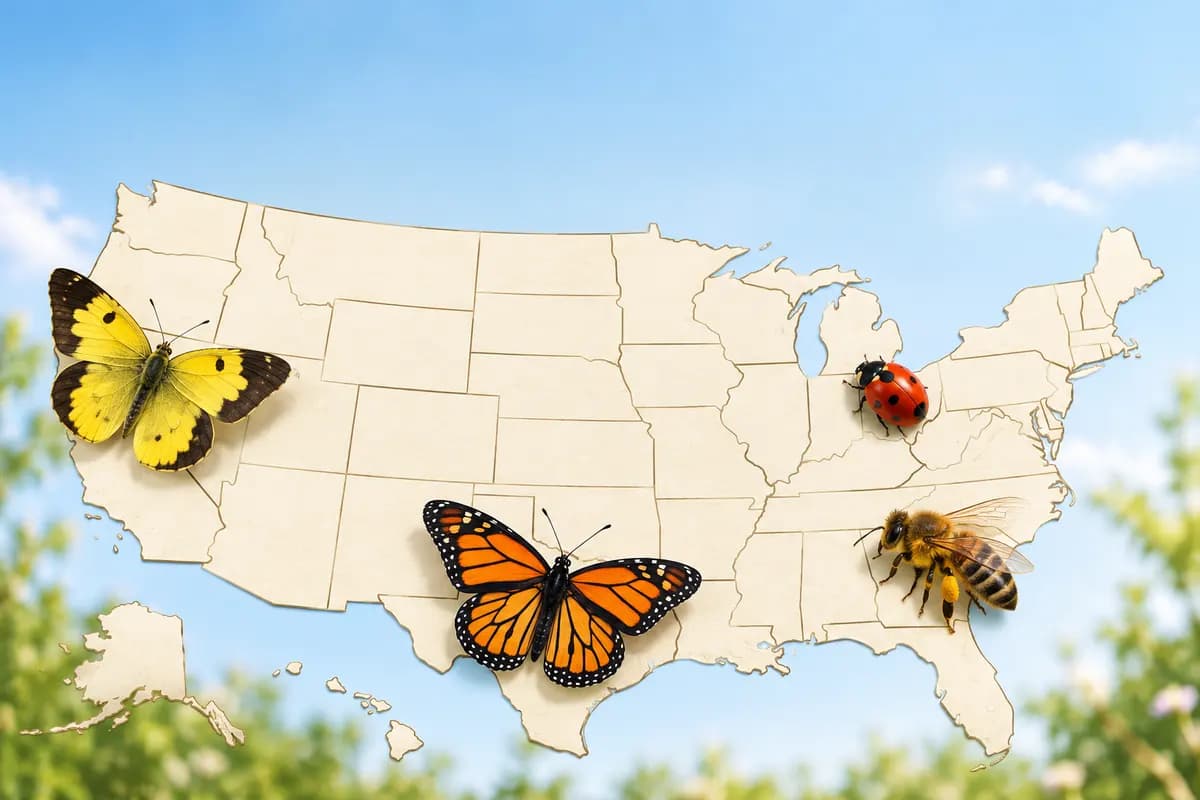
Forty eight US states have an official state insect or state butterfly. Only Iowa and Michigan have never named one, according to the Smithsonian Institution. The honey bee is the most common choice, and monarch butterflies and ladybugs come next. Below you will find the full list, the stories behind the most unusual picks, and a fast way to identify any insect you think might be your state's symbol.
What Is a State Insect and How Are They Chosen?
A state insect is an official symbol chosen by a state legislature, the same way a state bird or state flower is chosen. Most are adopted through a bill that lawmakers introduce, debate and vote on.
Many of these bills started in classrooms. Students often research a local insect, write to their representatives and speak at hearings. Some states name more than one insect, such as a general state insect, a state butterfly and a state agricultural insect. Tennessee holds the record with four: the firefly, the ladybug, the honey bee as its agricultural insect and the zebra swallowtail butterfly.
California was the first state to pick one. Its choice came from a 1929 poll of entomologists working in the state.
Full List of Official State Insects
The table below lists every state and its official insect or insects, based on the Smithsonian's state insect records.
| State | Official insect | Insect group |
|---|---|---|
| Alabama | Monarch butterfly and eastern tiger swallowtail | Butterflies |
| Alaska | Four spot skimmer dragonfly | Dragonfly |
| Arizona | Two tailed swallowtail | Butterfly |
| Arkansas | Honey bee | Bee |
| California | California dogface butterfly | Butterfly |
| Colorado | Colorado hairstreak | Butterfly |
| Connecticut | European praying mantis | Mantis |
| Delaware | Convergent ladybug and tiger swallowtail | Beetle and butterfly |
| Florida | Zebra longwing | Butterfly |
| Georgia | Honey bee and tiger swallowtail | Bee and butterfly |
| Hawaii | Pulelehua (Kamehameha butterfly) | Butterfly |
| Idaho | Monarch butterfly | Butterfly |
| Illinois | Monarch butterfly | Butterfly |
| Indiana | Say's firefly | Beetle |
| Iowa | None | None |
| Kansas | Honey bee | Bee |
| Kentucky | Viceroy butterfly | Butterfly |
| Louisiana | Honey bee | Bee |
| Maine | Honey bee | Bee |
| Maryland | Baltimore checkerspot | Butterfly |
| Massachusetts | Ladybug | Beetle |
| Michigan | None | None |
| Minnesota | Monarch butterfly | Butterfly |
| Mississippi | Honey bee and spicebush swallowtail | Bee and butterfly |
| Missouri | Honey bee | Bee |
| Montana | Mourning cloak | Butterfly |
| Nebraska | Honey bee | Bee |
| Nevada | Vivid dancer damselfly | Damselfly |
| New Hampshire | Two spotted ladybug and Karner blue butterfly | Beetle and butterfly |
| New Jersey | Honey bee | Bee |
| New Mexico | Tarantula hawk wasp | Wasp |
| New York | Nine spotted ladybird beetle | Beetle |
| North Carolina | Honey bee | Bee |
| North Dakota | Convergent lady beetle | Beetle |
| Ohio | Ladybug | Beetle |
| Oklahoma | Honey bee and black swallowtail | Bee and butterfly |
| Oregon | Oregon swallowtail | Butterfly |
| Pennsylvania | Firefly | Beetle |
| Rhode Island | American burying beetle | Beetle |
| South Carolina | Carolina mantis and eastern tiger swallowtail | Mantis and butterfly |
| South Dakota | Honey bee | Bee |
| Tennessee | Firefly, ladybug, honey bee and zebra swallowtail | Beetles, bee and butterfly |
| Texas | Monarch butterfly | Butterfly |
| Utah | Honey bee | Bee |
| Vermont | Honey bee and monarch butterfly | Bee and butterfly |
| Virginia | Tiger swallowtail | Butterfly |
| Washington | Green darner dragonfly | Dragonfly |
| West Virginia | Monarch butterfly | Butterfly |
| Wisconsin | Honey bee | Bee |
| Wyoming | Sheridan's green hairstreak | Butterfly |
Other lists sometimes differ slightly, because some count only the "state insect" title and leave out state butterflies. States can add or change symbols at any time, so your state legislature's website has the latest version.
Which State Insect Is the Most Popular?
The honey bee is the most popular state insect, chosen by 16 states when you count Tennessee's agricultural insect title. Lawmakers usually point to its value as a crop pollinator and to the honey and beeswax it produces.
The honey bee is not native to North America. European settlers brought it to the colonies in the early 1600s, and it is now one of the most important farm insects in the country.
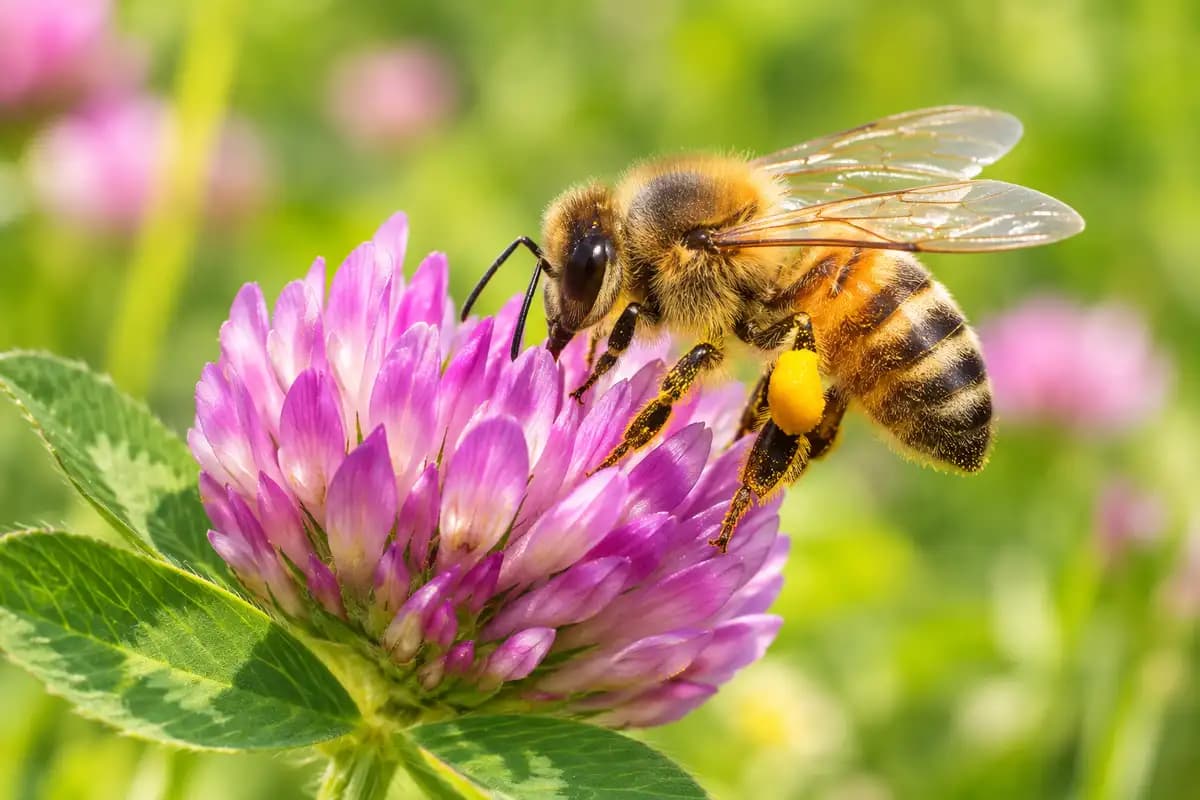
The monarch butterfly and the ladybug tie for second place, with seven states each. Ladybugs earn their spot by eating aphids and other plant pests, which is why gardeners love them.
Unusual State Insect Picks
Some states chose insects that are rare, oddly named or found almost nowhere else.
Texas: The Monarch Butterfly
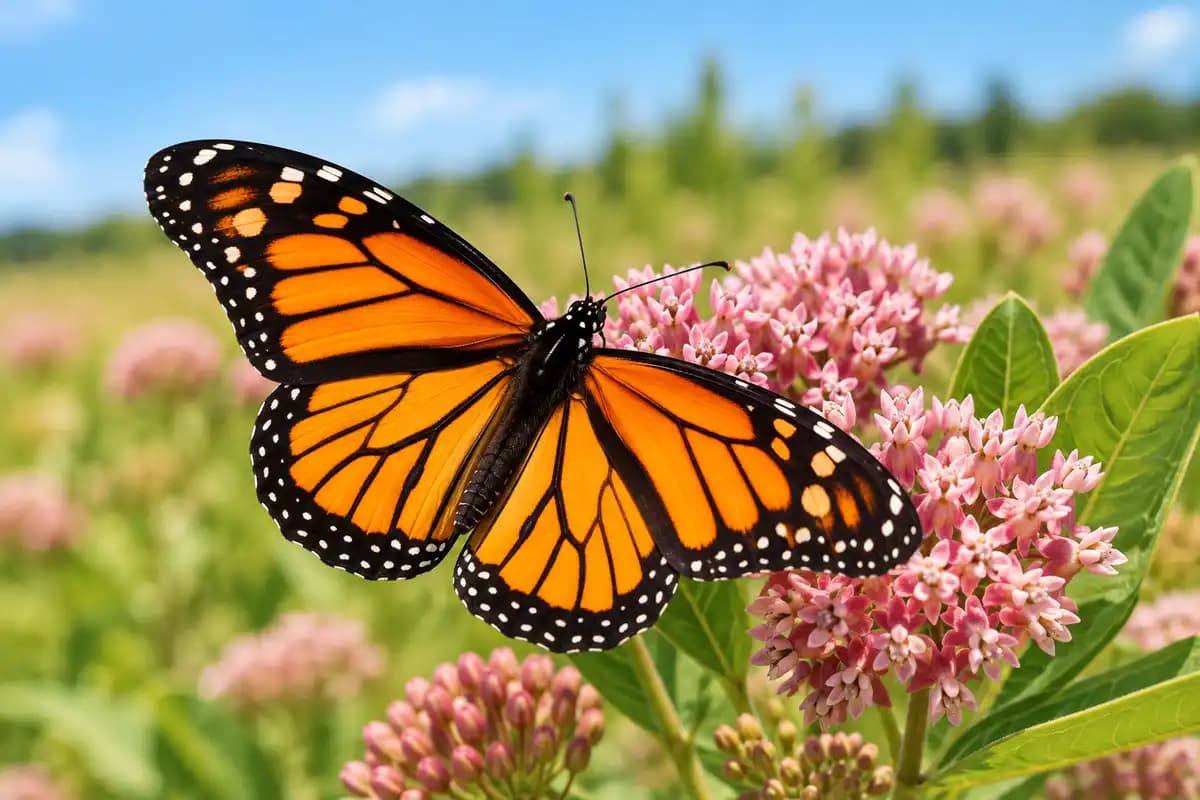
The Texas state insect is the monarch butterfly, adopted in 1995. Texas sits on the main migration route that monarchs use each spring and fall as they travel between the northern United States, Canada and their winter sites in the mountains of central Mexico.
California: The Dogface Butterfly
The California state insect is the California dogface butterfly (Zerene eurydice). It gets its name from the yellow pattern on the male's front wings, which looks like the side view of a dog's head. Females are mostly yellow with a small black spot. The species lives only in California.
New Mexico: The Tarantula Hawk Wasp
New Mexico picked the tarantula hawk, a large wasp with a dark blue body and bright orange wings. The female stings a tarantula, which paralyzes it, and lays an egg on it to feed her young. Its sting is known as one of the most painful insect stings, so give it space.
Connecticut and South Carolina: Mantises
Connecticut chose the European praying mantis, and South Carolina chose the Carolina mantis. Both are predators that help control garden pests.
Indiana, Pennsylvania and Tennessee: Fireflies
Three states honor fireflies, which are soft bodied beetles that flash light from their abdomens to find mates. Indiana chose Say's firefly, named after Thomas Say, a naturalist often called the father of American entomology. Say did much of his later work in New Harmony, Indiana.
Alaska, Washington and Nevada: Dragonflies and Damselflies
Alaska picked the four spot skimmer, Washington picked the green darner and Nevada picked the vivid dancer damselfly. All three are fast flying hunters that catch mosquitoes and other small insects in midair, and they spend their early lives underwater as nymphs.
Rhode Island: The American Burying Beetle
Rhode Island chose the American burying beetle, a protected species under the US Endangered Species Act. These orange and black beetles bury small dead animals to feed their young. Block Island, off the Rhode Island coast, holds one of the last natural populations in the eastern United States.
Which States Do Not Have an Official State Insect?
Iowa and Michigan are the only two states without an official state insect. Washington, D.C., is not a state, but it has not named one either. Any of them could adopt one in the future through a new bill.
How to Identify Your State Insect by Photo
The fastest way to check if an insect is your state's symbol is to photograph it and run the image through the ScanaBug insect identifier. For the best result, follow these steps:
- Take a sharp photo from above with the wings clearly visible.
- Take a second photo from the side to show the body shape.
- Note where you found it, such as a flower, tree or porch light.
- Compare the result with close lookalikes before you decide.
Lookalikes matter here. Kentucky's viceroy butterfly looks very much like the monarch, but the viceroy is smaller and has a black line across its hind wings.
Frequently Asked Questions
Sources and References
- Smithsonian Institution, National Museum of Natural History. State Insects, BugInfo Information Sheet 158.
- Smithsonian Institution, National Museum of Natural History. Monarch Butterflies, BugInfo.
- Texas State Library and Archives Commission. Texas State Symbols.
- US Fish and Wildlife Service. American Burying Beetle (Nicrophorus americanus) species profile.
- Gunder, J. D. 1929. A state butterfly for California. Pan-Pacific Entomologist, Volume 6, Number 2.