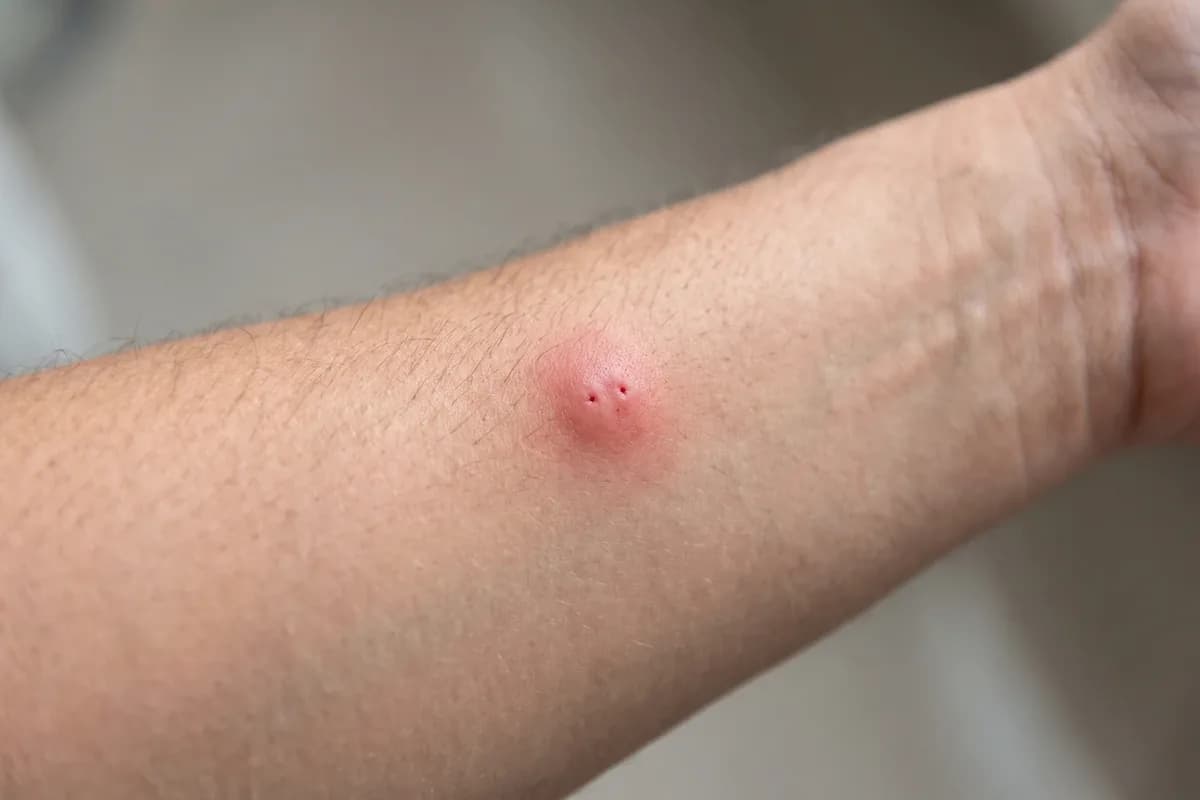
Brown Recluse Bite: Pictures, Symptoms and Care
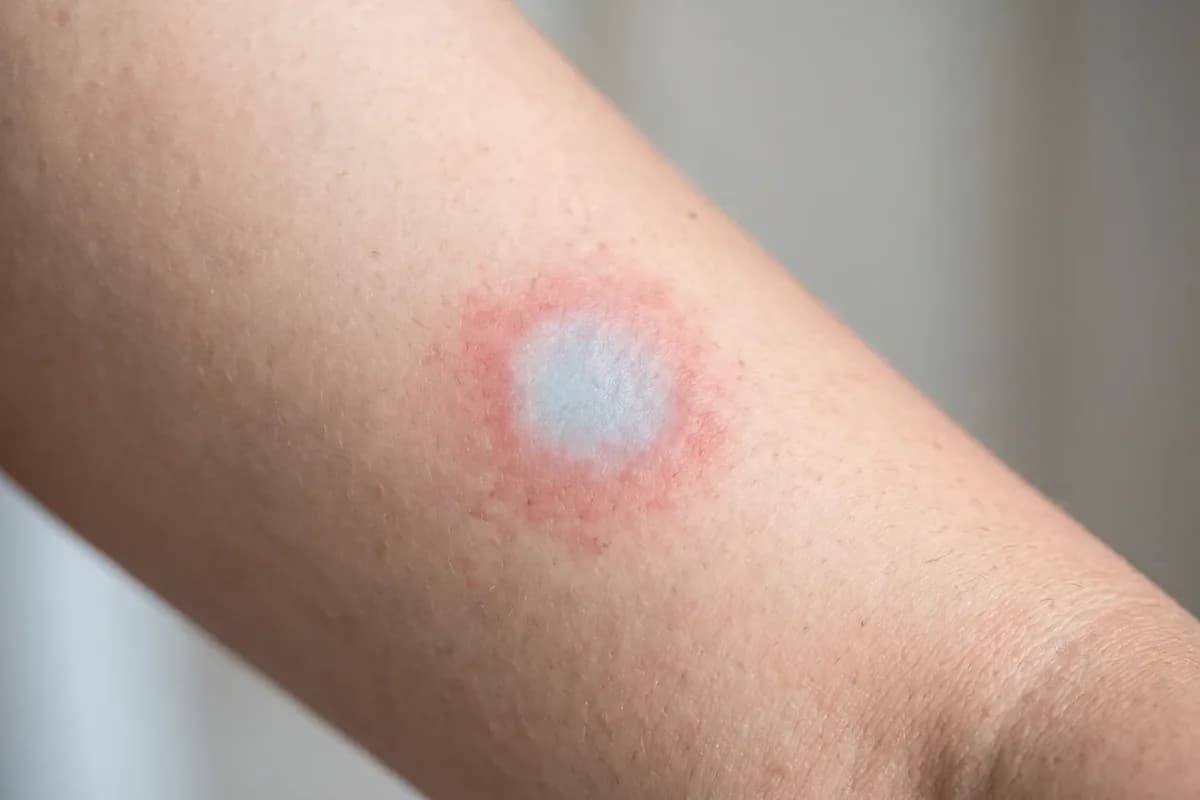
A brown recluse bite often starts as a small, painless or mildly stinging spot that turns red and tender over several hours, sometimes with a pale or bluish center and a red ring around it. Most bites stay mild and heal on their own, but a small share damage the skin and form an open sore over one to two weeks. Bites are rare, because the spider is shy and bites only when trapped against skin. This guide shows what recluse bites look like, the usual symptoms, how they differ from other bites and what to do.
What Does a Brown Recluse Bite Look Like?
A typical recluse bite is a single, flat or slightly sunken spot that is pale, blue or purple in the middle with redness around it. Doctors sometimes call this the "red, white and blue" look: a red ring, a pale area and a bluish center.
- One bite, not several: these bites are almost always single wounds.
- Flat, not raised: the spot is usually flat or sunken, not a tall bump.
- Dry, not oozing: the wound is usually dry. Pus or oozing points to another cause.
- Not red in the center: the middle tends to be white, blue or purple rather than red.
- A small blister: a clear or blood tinged blister may form at the center within a day.
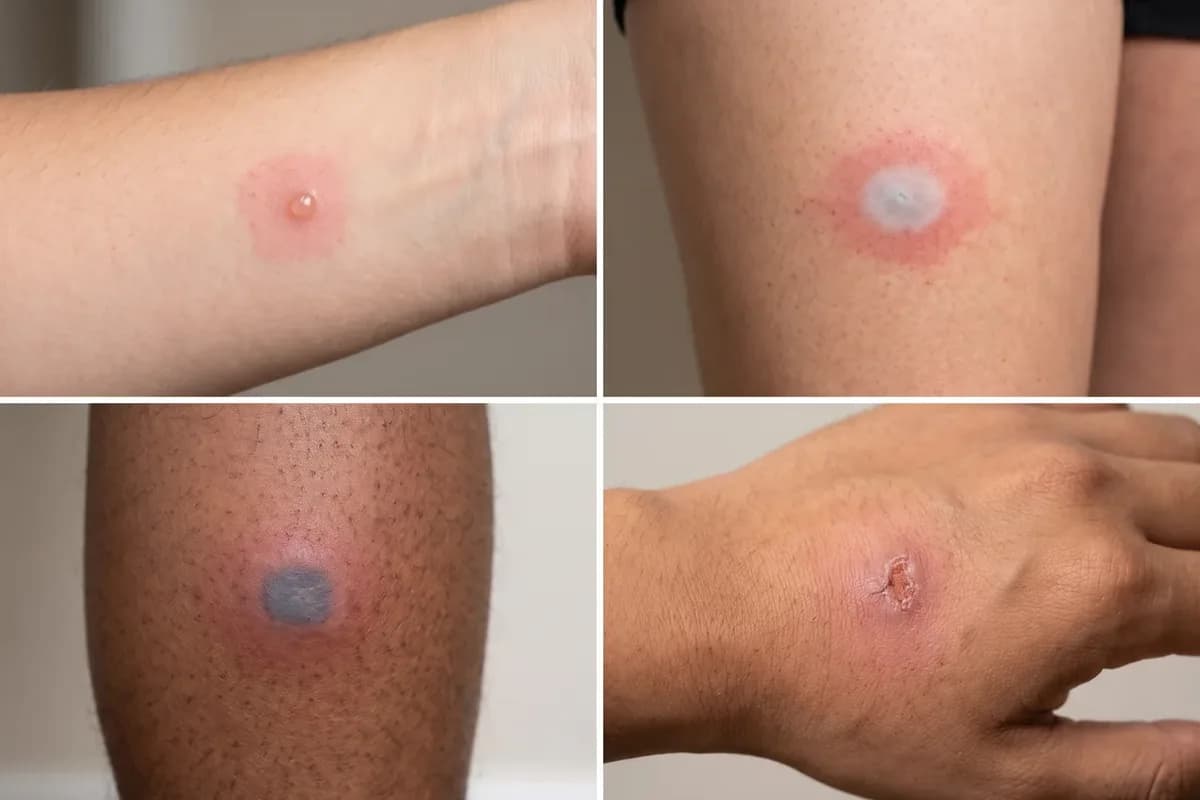
Many bites never go beyond a small red bump or a pink patch with a tiny blister that fades in a week or two. Pictures online often show the worst cases, so a mild bite can look much less alarming than people expect.
Brown Recluse Bite Symptoms
The most common symptoms are mild pain that starts a few hours after the bite, redness, itching and tenderness around the spot. Many people do not feel the bite itself.
| Time after the bite | What you may notice |
|---|---|
| First hours | Often no pain, or a mild sting. Some people never feel it. |
| 2 to 8 hours | Pain, itching and redness grow. The area may feel warm and tender. |
| Day 1 | A pale or bluish center with a red ring, sometimes with a small blister. |
| Day 2 to 3 | The center may darken to blue, purple or dark gray if the skin is damaged. |
| Day 7 to 14 | In more serious cases the center breaks down into an open sore (ulcer). |
| Weeks to months | Most wounds heal within about three months. Mild bites heal much sooner. |
Symptoms Beyond the Skin
Rarely, venom causes symptoms across the body, called systemic loxoscelism. Signs include fever, chills, body aches, nausea, a rash and, in rare cases, damage to red blood cells that can make urine dark. These reactions are more common in children and need emergency care. For a full timeline with each stage, see our guide to the stages of a recluse bite.
Brown Recluse vs Other Bites
Most wounds people blame on recluses are something else, especially outside the spider's south central United States range. UK Entomology notes that recluse bites are rare even where the spiders are common.
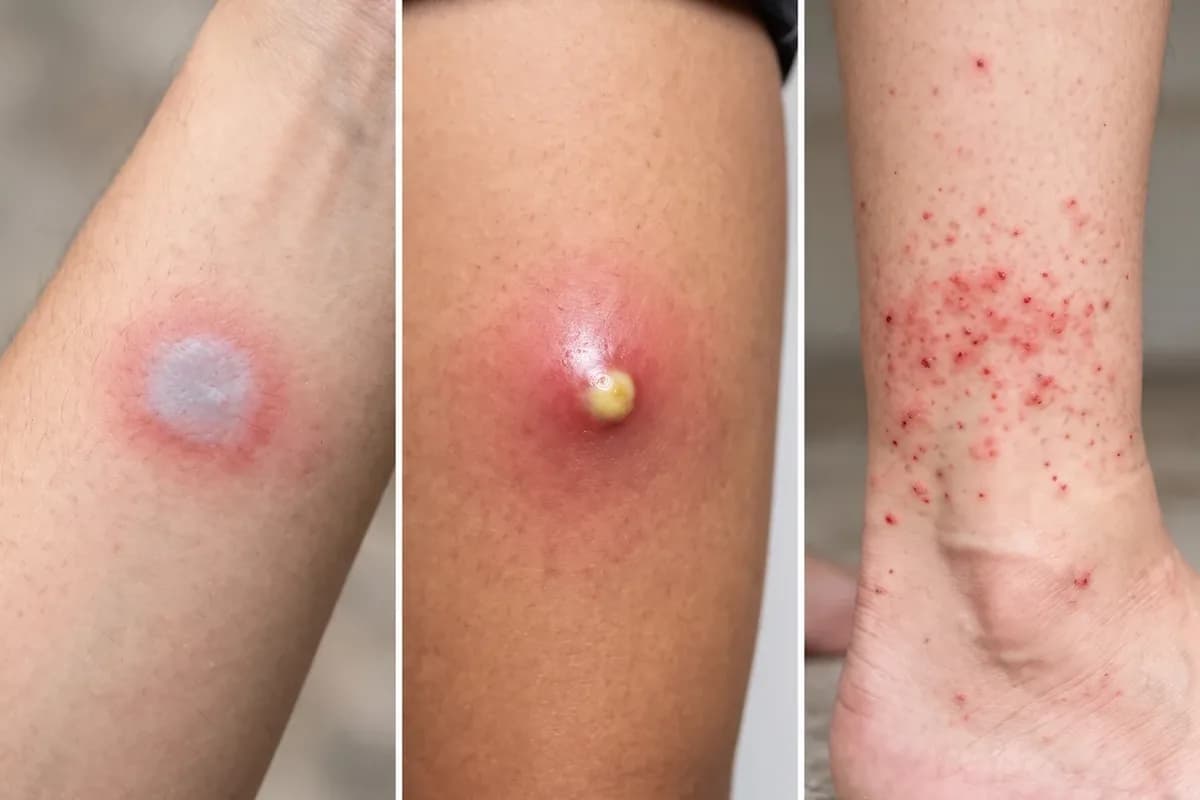
| Bite or condition | How it usually differs from a recluse bite |
|---|---|
| Black widow bite | Little skin change, but pain and cramps spread within an hour |
| Wolf spider bite | Painful red bump that fades in a day or so, no dark center |
| Skin infection (staph, MRSA) | Raised, hot, swollen bump with pus, often growing fast |
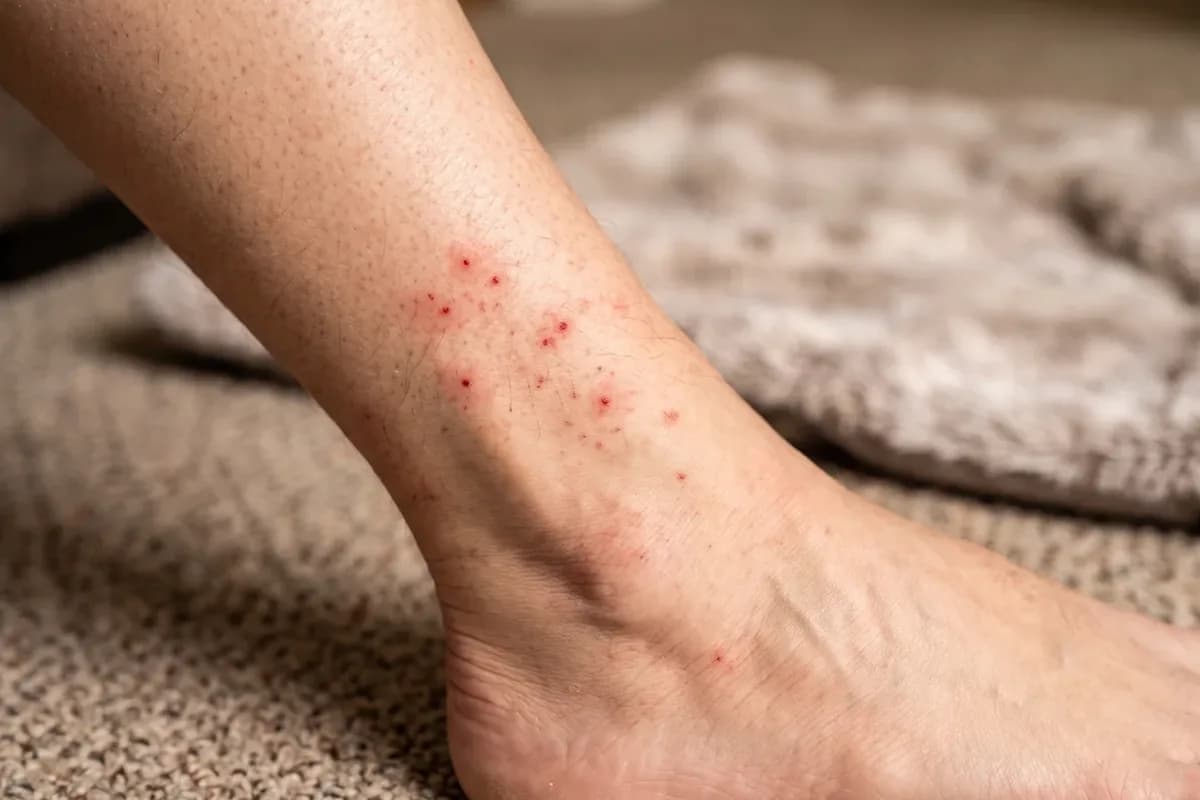
| Flea, bed bug or mosquito bites | Several itchy bites in a group or line |
| Tick bite with Lyme rash | A ring that keeps growing for days, often with flu like symptoms |
| Shingles | A painful band of blisters on one side of the body |
Brown Recluse vs Black Widow Bite
A recluse bite mainly affects the skin over hours and days, while a black widow bite mainly affects the nerves within an hour. Widow bites leave little mark but cause spreading pain, cramps and sweating. Recluse bites cause local skin changes and rarely affect the whole body.
How Rare Are Recluse Bites?
Bites are uncommon, even in homes full of these spiders. The spider is shy, hunts at night and bites only when pressed against skin.
- A famous example: entomologists Vetter and Barger reported a Kansas home where 2,055 brown recluses were collected, yet none of the family members living there were bitten.
- Range matters: outside the spider's range a true bite is very unlikely.
- Diagnosis: many wounds called recluse bites turn out to be infections or other conditions.
Who Gets Bitten and How to Prevent Bites
Most people bitten live inside the spider's range and were bitten at home while dressing, sleeping or cleaning storage areas. Simple habits cut the risk:
- Shake out shoes, gloves and clothes that have been on the floor or in storage.
- Keep beds away from walls and tuck bedding up off the floor.
- Store items in sealed plastic tubs rather than cardboard boxes.
- Wear gloves when moving boxes, firewood or stored items.
- Place sticky traps along walls and behind furniture to check for spiders.
Recluse fangs are too small to bite through clothing, so most bites happen on bare skin inside clothes or bedding.
What to Do Right Away
If you think a recluse bit you, clean the bite, keep it cool and still, and get it checked by a doctor, especially if it changes over the next day.
- Catch the spider if it is safe. Place it in a jar or take a clear photo.
- Wash the bite gently with soap and water.
- Apply a cold pack wrapped in a cloth to ease swelling. Do not use heat.
- Keep the area still and raised if the bite is on an arm or leg.
- Take a pain reliever such as acetaminophen or ibuprofen if needed, following the label.
- Mark the edge of the redness with a pen so you can see if it spreads.
What Not to Do
- Do not cut the bite or try to suck out venom.
- Do not apply heat, home remedies or tight bandages.
- Do not pop a blister or pick at a scab.
There is no commercially available recluse antivenom in the United States, so treatment focuses on wound care. Our spider bite treatment guide covers what doctors do and home care.
When to See a Doctor
See a doctor the same day if the bite might be from a recluse and it is getting worse, and go to emergency care for any symptoms that affect the whole body.
- Same day: a center that turns blue, purple or black, a blister that grows, redness that spreads past the pen mark or pain that keeps increasing.
- Same day: any suspected bite on a child, an older adult or someone with a weak immune system.
- Emergency: fever, chills, vomiting, a body wide rash, dark or red urine, yellow skin or eyes, or trouble breathing.
This information is for general education and is not medical advice.
Not sure what bit you? Upload a clear photo to the free ScanaBug Bug Bite Identifier for an instant answer with the likely cause and a danger level.
Frequently Asked Questions
Sources and References
- University of California Riverside, Department of Entomology. What Is Not a Recluse Bite.
- University of Kentucky Entomology. Brown Recluse Spider (ENTFACT 631).
- Vetter RS, Isbister GK. Medical Aspects of Spider Bites. Annual Review of Entomology, 2008.
- CDC National Institute for Occupational Safety and Health. Venomous Spiders at Work.
- Vetter RS, Barger DK. An Infestation of 2,055 Brown Recluse Spiders and No Envenomations in a Kansas Home. Journal of Medical Entomology, 2002.
- American Academy of Dermatology. Tips to Prevent and Treat Bug Bites.