Brown Recluse Bite Stages: Day by Day Timeline
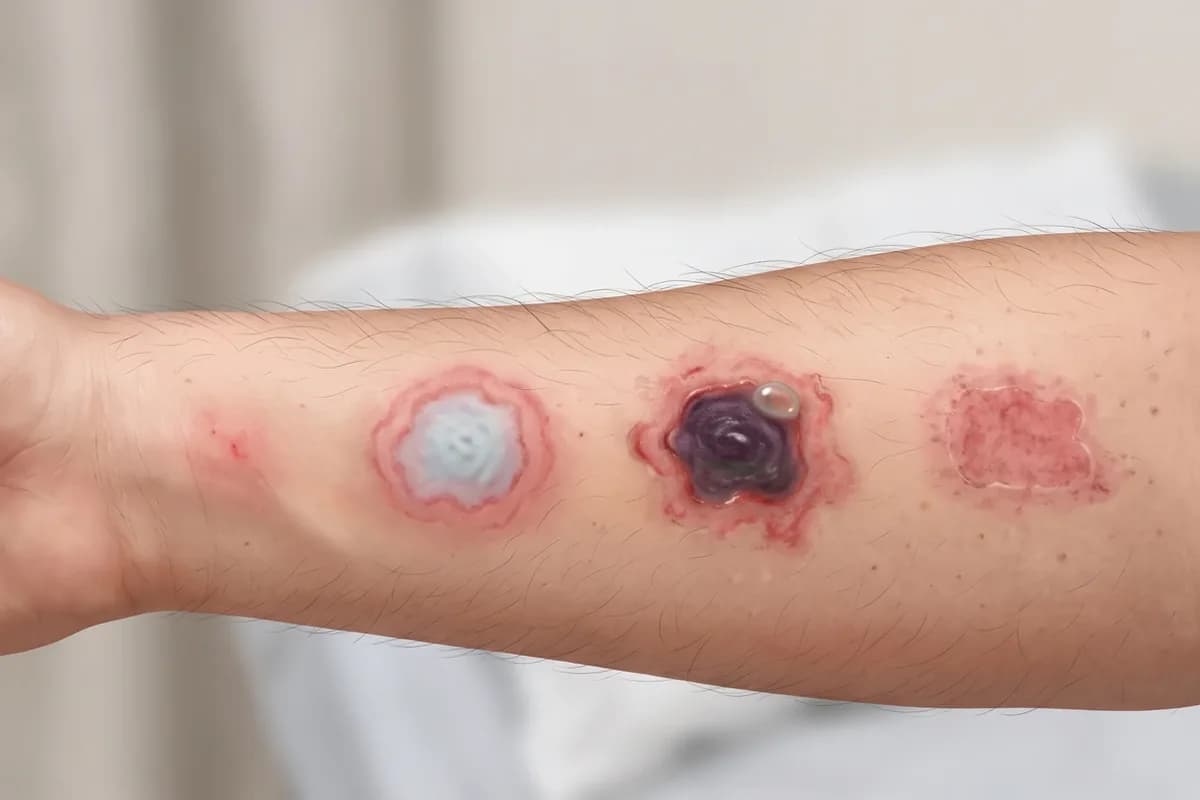
Brown recluse bite stages usually follow a pattern: a painless or mildly stinging spot on day 1, a pale or bluish center with a red ring by day 2, and then either steady healing or, in a smaller share of bites, a darkening center that breaks into an open sore after one to two weeks. Most bites stay mild and heal within a few weeks. Bites that damage the skin can take up to about three months to close. This guide walks through each stage, shows how mild and severe bites differ and explains when to get care.
Brown Recluse Bite Stages at a Glance
This table summarizes how a typical recluse bite changes over time. Every bite is different, and many stop at the early stages.
| Stage | Time after the bite | What you may see | What you may feel |
|---|---|---|---|
| 1. The bite | First minutes to hours | Small red mark or nothing | Often nothing, or a slight sting |
| 2. Early reaction | 2 to 8 hours | Redness, swelling, a pale center | Burning pain and itch that grow |
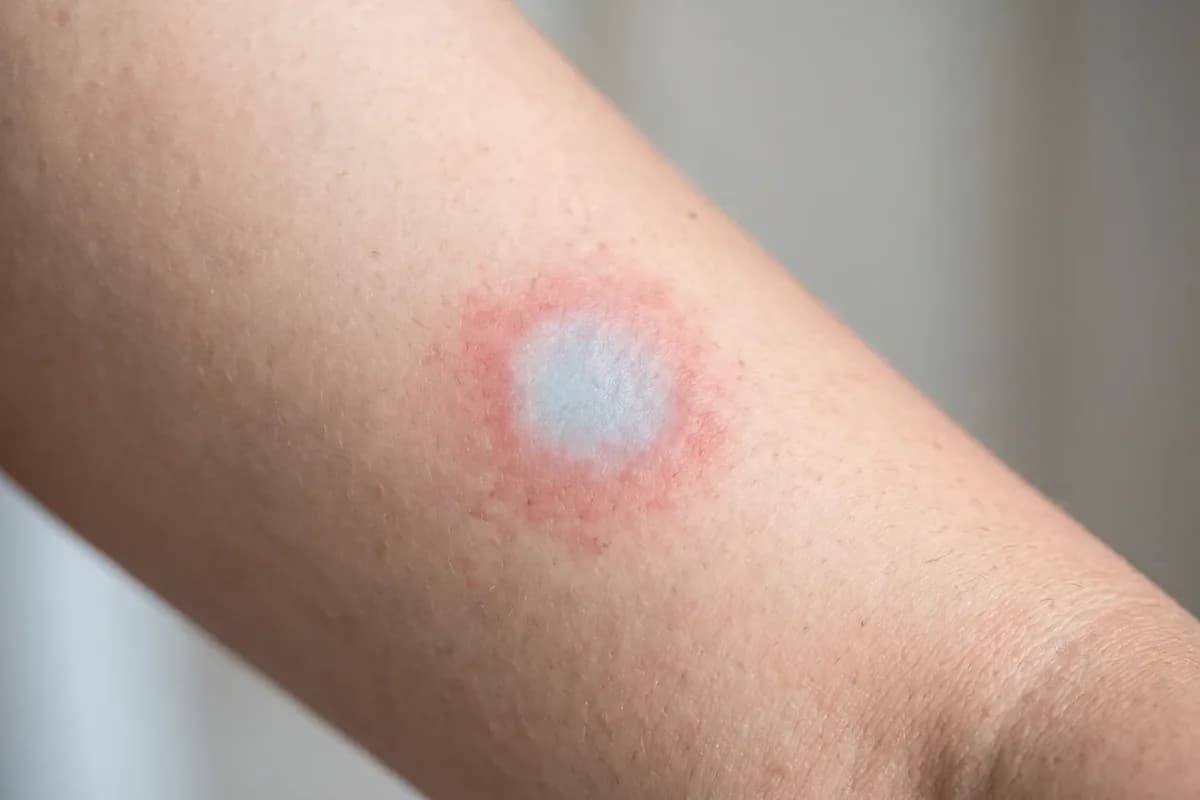
| 3. Red, white and blue | Day 1 to 2 | Bluish or pale center, red ring, maybe a blister | Tenderness and aching |
| 4. Darkening | Day 3 to 7 | Center turns purple or black (dead skin) | Pain may ease as skin numbs |
| 5. Ulcer | Week 1 to 3 | Dark crust falls away, leaving an open sore | Soreness |
| 6. Healing | Weeks to about 3 months | Sore fills in, may leave a scar | Little pain |
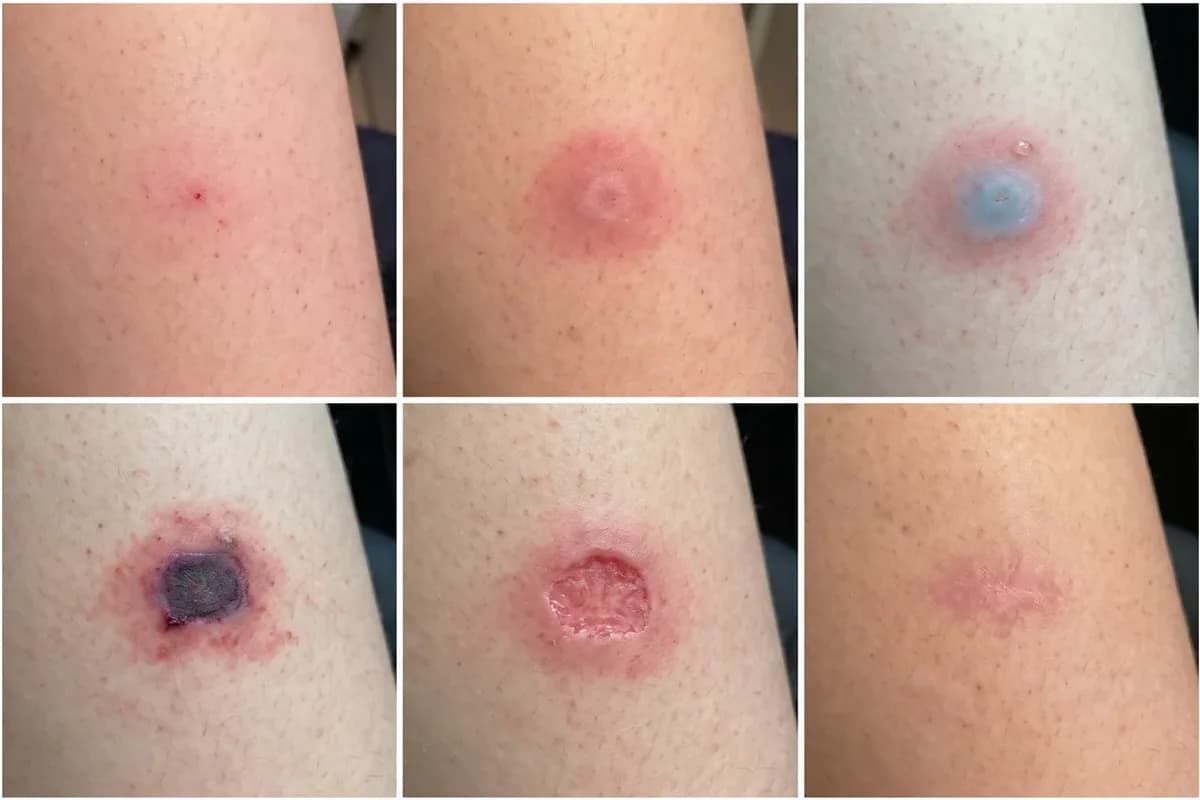
Day 1: The Beginning of a Brown Recluse Spider Bite
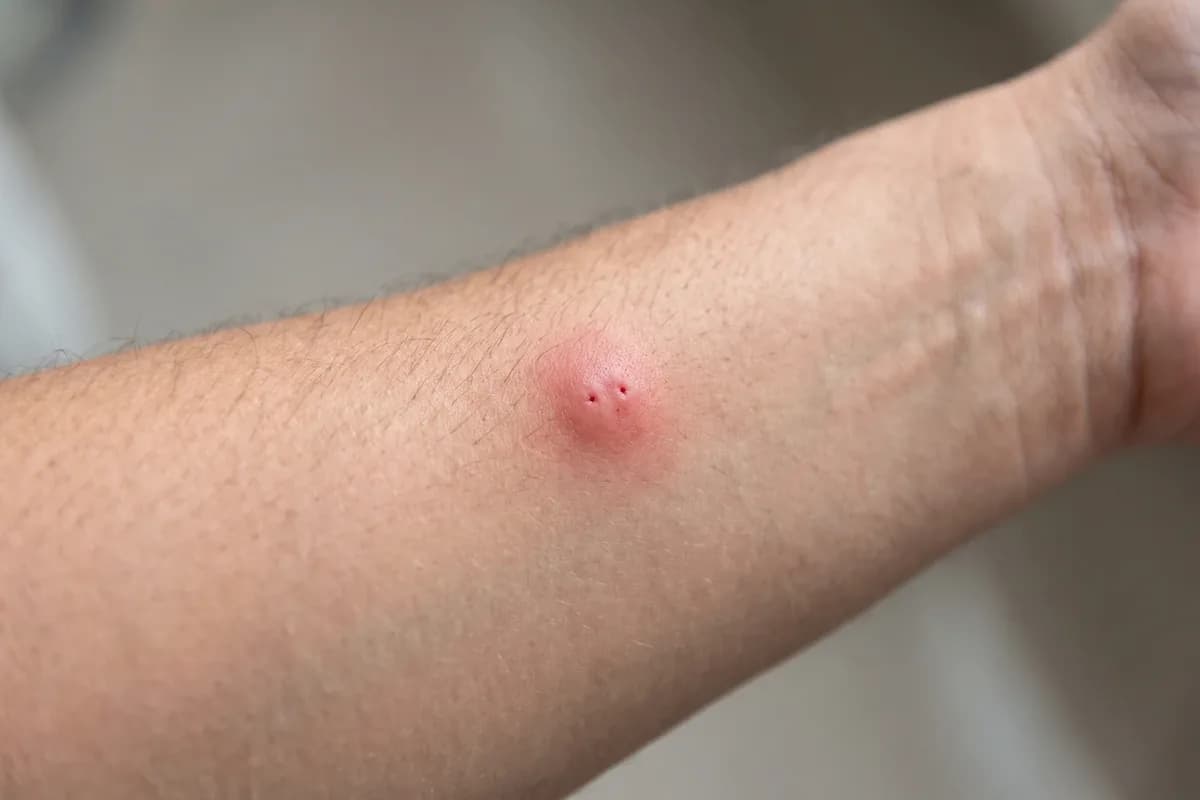
On day 1, a recluse bite often looks like nothing more than a small red mark or a tiny bump, and many people do not feel the bite at all. The bite may feel like a sharp sting or nothing, with pain usually starting within the first several hours.
- First minutes: a small red spot, a pinprick feeling or no sensation.
- 2 to 8 hours: burning pain, itch and redness grow, and the area may swell and feel warm.
- End of day 1: the center may look pale or bluish with redness around it, and a small blister can form.
Some people also feel chills, sweating, nausea or a mild fever on the first day. A child with these signs should be seen by a doctor the same day.
Day 2 to Day 3: The Red, White and Blue Stage
By day 2 or 3, a bite that is going to cause skin damage often shows a clear pattern of a red outer ring, a pale middle and a blue or purple center. A small blood blister can look like a bull's eye.
- Center: turns blue, purple or gray, and may sink slightly below the skin.
- Edge: a red, sometimes irregular ring that may spread downward on the body because of gravity.
- Blister: may fill with clear or bloody fluid.
Many mild bites never reach this stage. They simply stay as a red bump that fades over days. Recluse bites are usually flat or sunken, dry and not red in the center, which helps tell them from infections.
Day 3 to Day 7: Darkening and Necrosis
In a smaller share of bites, the center darkens to purple or black between days 3 and 7 as the venom damages small blood vessels and the skin dies. This dead tissue is called necrosis, and the dark, dry crust that forms is called an eschar.
- The black center is often surrounded by red skin that may still be tender.
- Pain can lessen as nerves in the dead skin stop working.
- The area usually stays dry. Oozing pus points to infection.
This is the stage most people picture when they think of recluse bites, but it happens in only a minority of cases. Any darkening center needs a doctor's care.
Week 1 to Week 3: Ulcer Stage
The dark crust usually loosens and falls away between about one and five weeks after the bite, leaving an open sore called an ulcer. Ulcers usually form between days 7 and 14. The ulcer may be shallow or, in severe bites on fatty areas such as the thighs and buttocks, deeper. Keeping it clean and following a doctor's wound care plan helps prevent infection and supports healing.
Healing Timeline: Weeks to Months
Most recluse bites heal within one to three weeks, and even serious ulcers usually close within about three months. Larger wounds heal from the edges inward and often leave a scar.
- Mild bites: a red bump or small blister that fades in one to three weeks with no lasting mark.
- Moderate bites: a small dark center that crusts and heals in a few weeks, sometimes with a small scar.
- Severe bites: an ulcer that takes up to about three months to heal; a few people need plastic surgery later to improve the scar.
Surgery, when needed, is usually delayed until the wound has stopped changing. Body wide symptoms, such as fever, dark urine or yellow skin, are rare but can appear in the first days and need emergency care.
Mild vs Severe Progression
Most recluse bites follow the mild path. Bites are rare, and most heal within about three weeks.
| Feature | Mild bite | Severe bite |
|---|---|---|
| Day 1 | Small red bump, mild pain | Spreading pain, pale or blue center |
| Day 3 | Fading redness | Purple or black center, blister |
| Week 2 | Nearly healed | Open ulcer |
| Final result | No scar | Scar after up to 3 months |
For pictures and general information, see our main guide to the brown recluse bite.
What Doctors Do at Each Stage
Care focuses on the wound and on watching for problems, because there is no commercially available recluse antivenom in the United States.
- Early stages: cleaning, cold packs, rest and pain relief, with a check of the wound over the next days.
- Darkening and ulcer stages: regular wound care and dressings. Surgery, if needed at all, is usually delayed until the wound stops changing.
- Infection at any stage: antibiotics are used only if the wound becomes infected.
- Body wide symptoms: blood and urine tests and hospital care for fever, dark urine or yellow skin.
Our guide to spider bite treatment explains home wound care and what to expect at appointments.
Stages That Point to Something Else
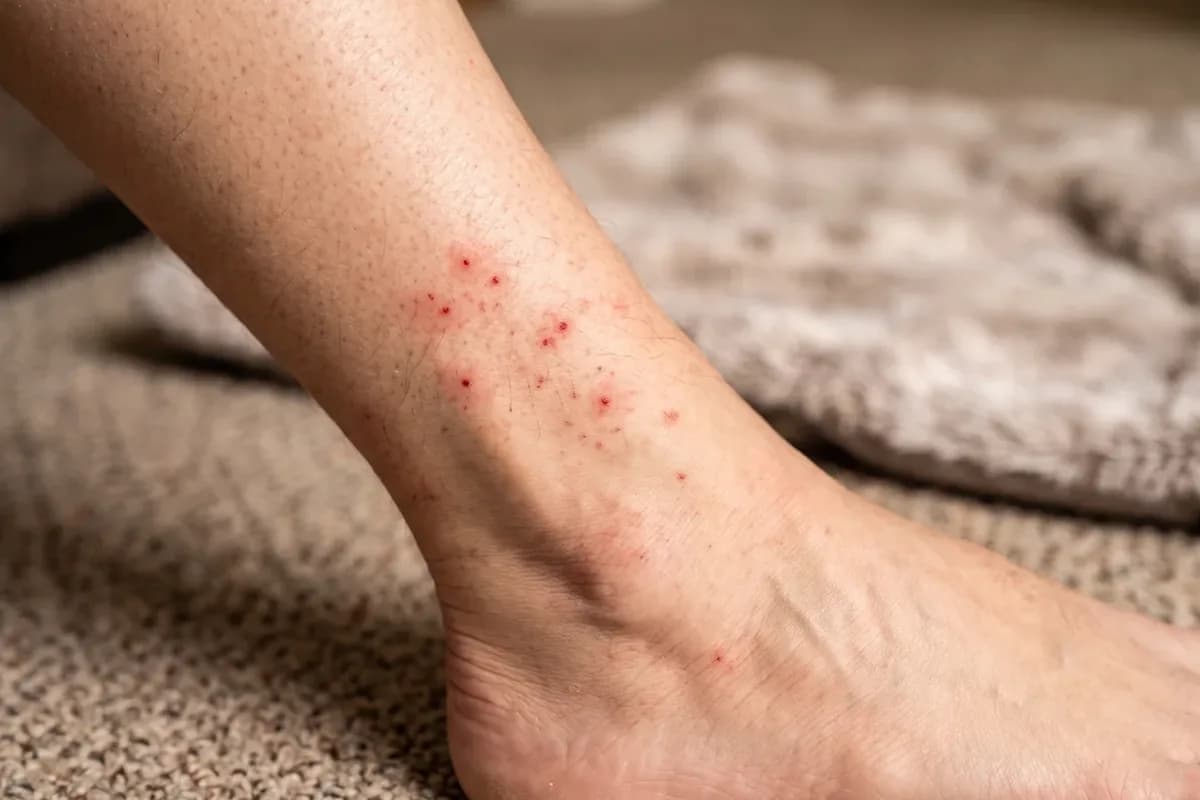
Many wounds that seem to follow these stages are actually skin infections, especially staph and MRSA. Infections usually grow fast, are raised and hot, have a red center and drain pus, while recluse bites are usually flat, dry and pale or blue in the middle.
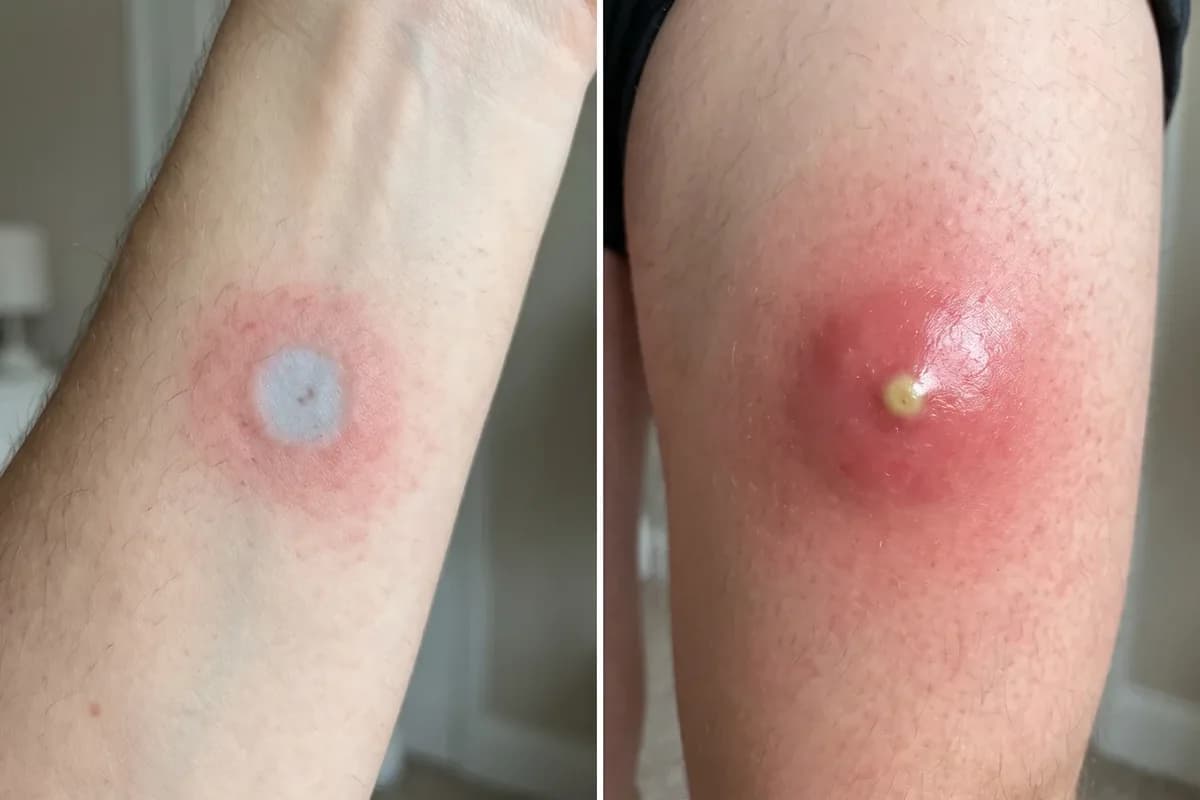
- Several sores at once point away from a recluse.
- A bump that is raised more than about 1 cm (3/8 in) is unlikely to be a recluse bite.
- A sore that forms in winter or outside the spider's range is unlikely to be a recluse bite.
Our guide to spider bites explains other common mix ups, and our Bug Bite Identifier can compare a photo with other bites.
When to Get Care at Each Stage
- Day 1: see a doctor the same day for a suspected bite in a child, an older adult or anyone who feels unwell, has a fever or chills.
- Days 2 to 3: see a doctor if the center turns blue, purple or black, a blister grows or redness spreads.
- Days 3 to 7: a dark center needs medical wound care; do not cut or pick it.
- Any stage: get emergency care for fever, vomiting, a body wide rash, dark urine, yellow skin or eyes.
For first aid steps such as washing, cooling and raising the limb, see our guide to spider bite treatment. This information is for general education and is not medical advice.
Worried about how your bite is changing? Upload a clear photo to the free ScanaBug Bug Bite Identifier for an instant answer with the likely cause and a danger level.
Frequently Asked Questions
Sources and References
- University of California Riverside, Department of Entomology. What Is Not a Recluse Bite.
- MedlinePlus, US National Library of Medicine. Brown Recluse Spider.
- University of Kentucky Entomology. Brown Recluse Spider (ENTFACT 631).
- Vetter RS, Isbister GK. Medical Aspects of Spider Bites. Annual Review of Entomology, 2008.
- CDC National Institute for Occupational Safety and Health. Venomous Spiders at Work.