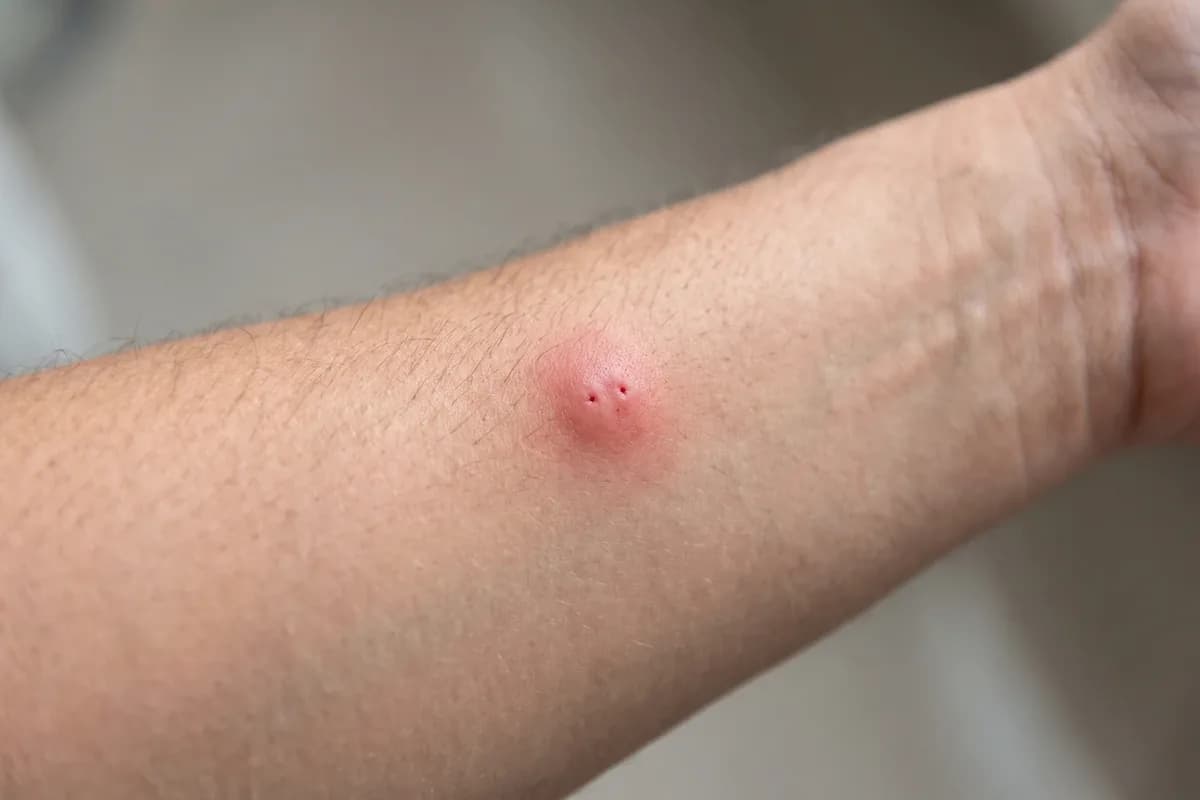
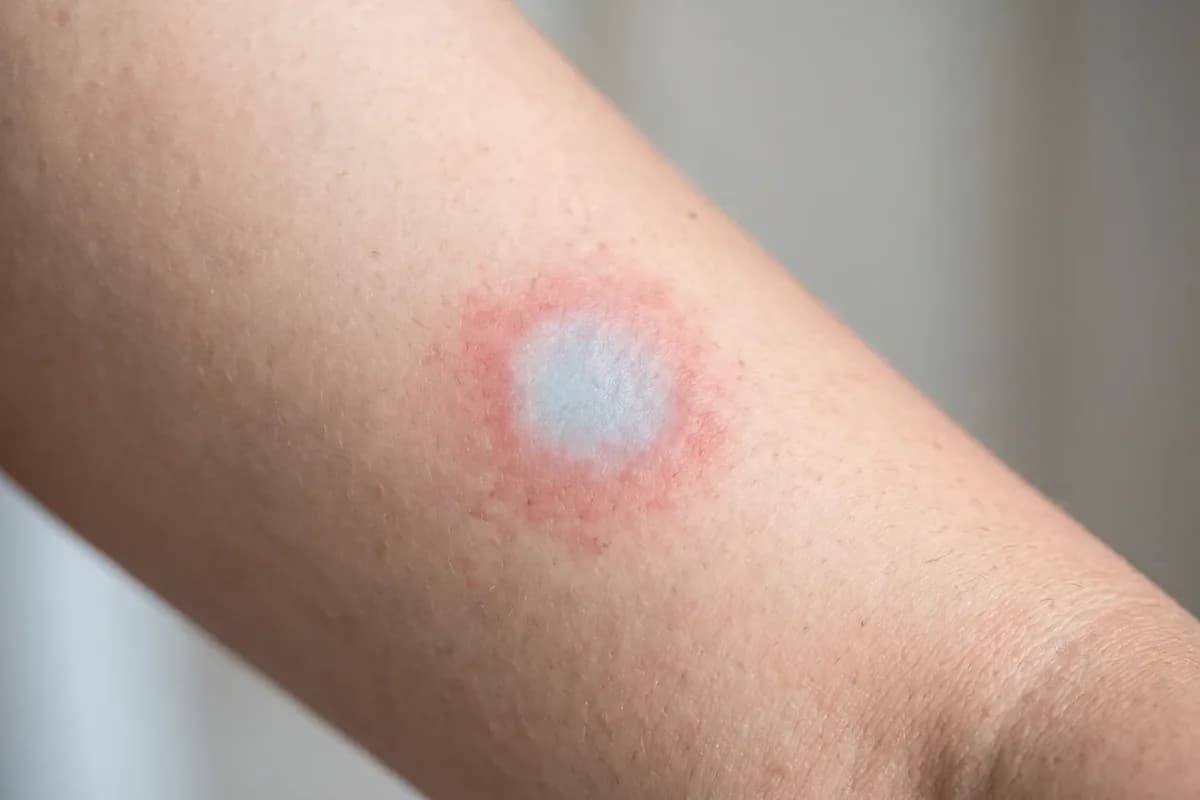
Flea Bites on Humans: Pictures and Symptoms
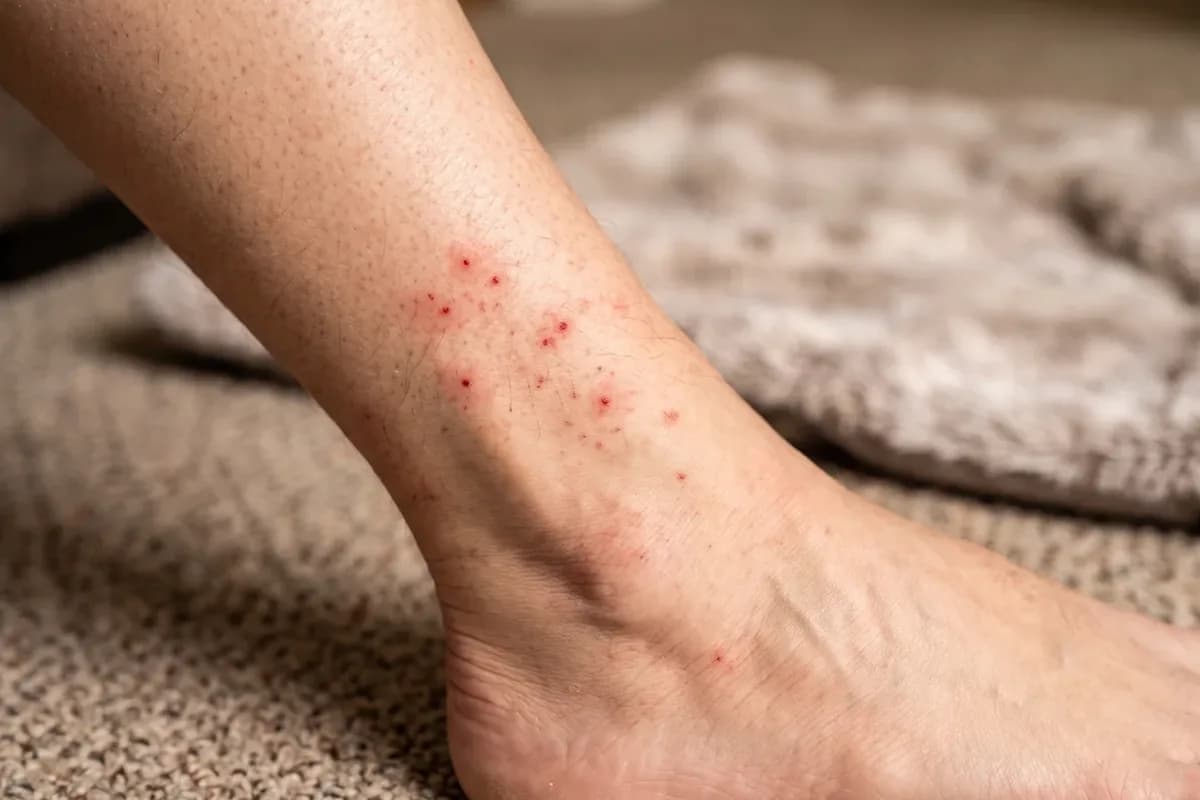
Flea bites on humans look like small, very itchy red dots, often in groups of three or four or in a short line, with a red halo around each one. They appear most often on the ankles, feet and lower legs because fleas jump up from carpets, bedding and pets. Most come from the cat flea (Ctenocephalides felis), which lives on both cats and dogs. This guide shows what a flea bite looks like, where bites appear, who gets bitten most, how to find where the fleas are coming from and how to stop new bites.
What Do Flea Bites Look Like?
A flea bite looks like a tiny red spot, about 1 to 3 mm (under 1/8 in) across, with a slightly larger red halo around it and little swelling.
- Size: smaller than most mosquito bites, like a pinpoint or a small freckle.
- Center dot: a darker red dot in the middle where the flea pierced the skin.
- Halo: a pink or red ring around each bite.
- Groups: three or four bites close together, or several in a short line.
- Itch: strong and starts within minutes, often lasting several days.
Fresh Bites vs Older Bites
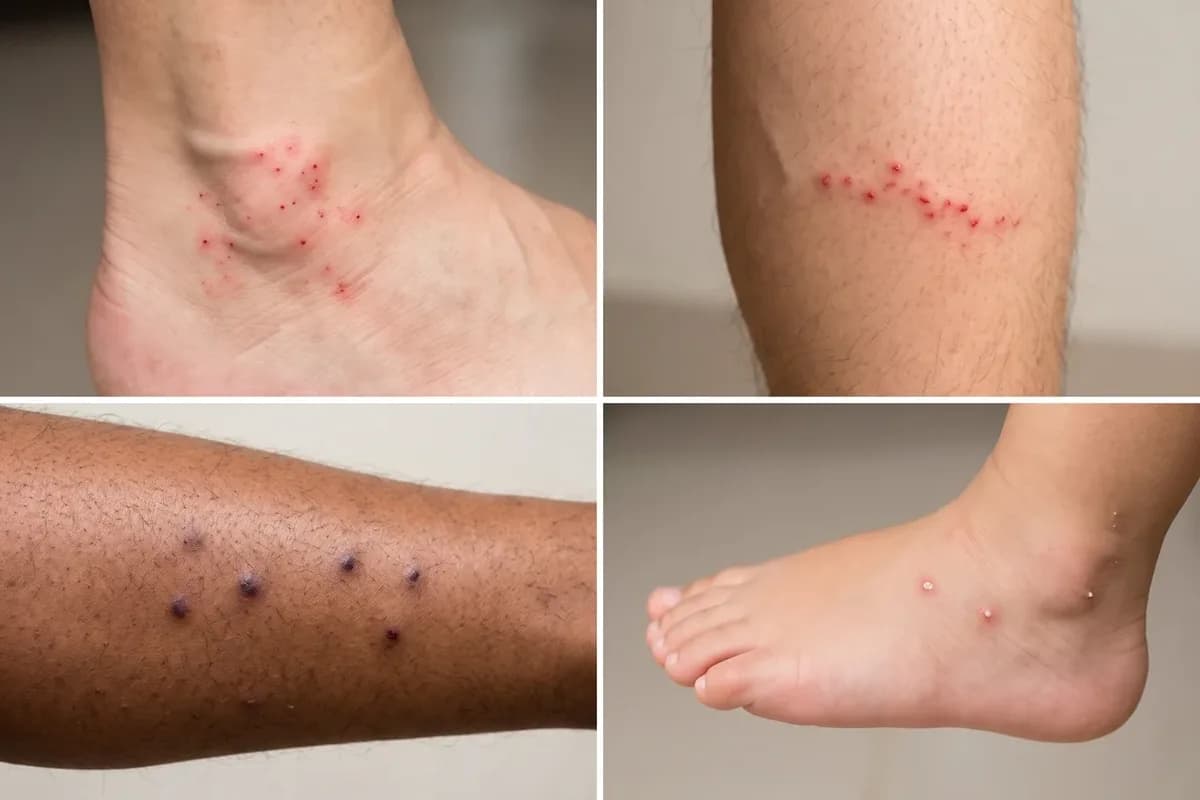
Fresh bites are bright red, slightly raised and very itchy, with a clear center dot. After a day or two they flatten, the halo fades and the spots may darken or form tiny scabs from scratching. Seeing both fresh and older bites together usually means fleas are still active in the home.
Flea Bites on Black and Brown Skin
On darker skin, the bites may look like small purple, dark brown or gray spots rather than red ones, and the halo can be hard to see. The pattern, the itch and the location on the lower legs are the most reliable clues. Dark marks can stay for weeks after the bites heal.
Where Do Fleas Bite Humans?
Fleas bite people mostly below the knee, on the ankles, feet and lower legs, because they jump up from the floor, rugs and pet bedding. They also bite the waist, buttocks, thighs and lower belly, where clothing fits closely.
| Body area | Why bites appear there |
|---|---|
| Ankles and feet | Fleas jump up from carpet, rugs and floors |
| Lower legs and calves | Easy to reach from the floor and pet beds |
| Waist and waistband | Fleas crawl up under clothing and stop where it is tight |
| Thighs, buttocks and lower belly | Common when sitting or lying on furniture with pets |
| Arms and hands | From holding or petting an infested animal |
| Neck, face and scalp | Less common, mostly in children or people sleeping with pets |
Bites on the arms, face and upper body are more common in children, babies and anyone who sleeps with a pet, because fleas can reach them more easily.
The Flea Bite Pattern: Groups of Three and a Center Dot
The classic flea pattern is a small group of three or four bites close together, or a short zigzag line, each with a red dot in the middle. Fleas often bite several times while moving across the skin, which creates this grouped look.
- Mosquito bites: larger, puffier single welts on any bare skin, often after time outdoors.
- Bed bug bites: rows or clusters on skin left bare in bed, such as arms, neck and face, often showing up a day or more later, with no clear center dot.
- Spider bites: usually one bite, not a group.
- Chigger bites: very itchy bumps where clothing presses on skin, such as the sock line and waistband.
- Tick bites: usually a single bite, often with the tick still attached.
If the pattern does not match any of these, compare a clear photo with other bites in our Bug Bite Identifier.
How to Know If Fleas Are Biting You
Put the clues together: the pattern on your skin, where the bites are and signs of fleas in the home.
- Check the pattern: small, very itchy red dots with a halo, in groups of three or four or a short line.
- Check the location: mostly ankles, feet and lower legs, or the waist and thighs after sitting on furniture.
- Watch your pets: scratching, chewing at fur or dark specks in the coat that turn reddish when wet.
- Do the white sock test: walk through carpeted rooms and see if tiny dark insects jump onto your socks.
- Ask around the house: if several people have similar bites on the lower legs, fleas are likely, though some people never react.
Who Gets Bitten Most?
Anyone can be bitten by fleas, but children, babies, pet owners and people sensitive to flea saliva tend to notice them most. Two people in the same house can react very differently, because the itch and redness come from each person's immune response, not from the bite alone.
Flea Bites on Kids and Babies
Children often get more bites because they play on floors and hold pets. Their bites can look bigger and itchier, and some form small blisters. Keep nails short to limit scratching. A baby under one year old with bites, or any child with bites that look infected, should see a doctor or pharmacist.
Fleas From Pets: Finding the Source
Most fleas that bite people come from pets, especially cats and dogs, but they can also come from wild animals such as rodents, opossums or stray cats living near the home. The cat flea is the most common species on both cats and dogs.
- Check your pets. Comb fur over a white paper towel and look for tiny dark specks. If the specks turn reddish when wet, they are flea droppings.
- Try the white sock test. Walk through rooms and the yard in white socks; fleas jump on and are easy to see.
- Check pet resting spots. Bedding, rugs, sofas and car seats where pets sleep hold the most eggs and larvae.
- Think about empty homes. People moving into a home where pets lived can be bitten by fleas that hatch from cocoons after weeks or months.

Why Bites Keep Coming Back
Adult fleas are only part of the problem. Females lay about 20 to 50 eggs a day, which fall into carpets and bedding, and the full life cycle can take about 18 days indoors. Cocoons can wait up to 12 months and hatch when they sense movement, warmth or vibration. Treating pets with a veterinarian approved product and vacuuming often for at least two weeks are the key steps.
How to Stop the Bites at Home
The bites stop only when the fleas on pets and in the home are gone, so treat the animals and the house at the same time.
- Treat every cat and dog in the home with a flea product recommended by a veterinarian.
- Vacuum carpets, rugs, sofas and floor cracks every day or two, and empty the vacuum outside.
- Wash pet bedding, throw rugs and blankets in hot water.
- Keep vacuuming for at least two weeks, because new adults keep hatching from cocoons.
- Discourage stray cats and wild animals from resting under decks and in crawl spaces.
If bites continue after a few weeks, a licensed pest professional can treat carpets with products that stop larvae from developing. Always follow the product label.
How to Prevent Flea Bites
The best prevention is keeping fleas off your pets and out of the house, all year round.
- Treat pets regularly with a veterinarian recommended flea product, on schedule.
- Vacuum often: carpets, rugs, furniture and pet resting spots, to remove eggs, larvae and debris.
- Wash pet bedding and throw rugs regularly.
- Keep stray cats, rodents and opossums from living under decks, porches and in crawl spaces.
- Protect your legs: long trousers tucked into socks reduce ankle bites, with repellent on exposed skin.
After a move into a home where pets lived, vacuum thoroughly before unpacking, because cocoons left behind can hatch when people arrive.
Flea Bite Symptoms and Can Flea Bites Make You Sick?
Most bites cause only itching and small red bumps for several days. Fleas can carry bacteria that cause diseases such as typhus and, rarely, plague, but these infections are uncommon in most homes.
- Itching: the main symptom, often lasting up to five days per bite.
- Allergic reaction: some people develop flea allergy dermatitis, with large, very itchy red patches or small blisters.
- Skin infection: scratching can break the skin and let bacteria in, causing warmth, swelling and pus.
- Tapeworm: pets, and occasionally young children, can pick up tapeworm by swallowing an infected flea. Ask your vet about deworming if your pet has fleas.
For itch relief, a cold pack, 1% hydrocortisone cream or an oral antihistamine can help, following the label. See our bug bite relief guide for step by step care. See a doctor for bites that look infected, spread or come with fever, rash or swollen glands. This information is for general education and is not medical advice.
Not sure if fleas bit you? Upload a clear photo to the free ScanaBug Bug Bite Identifier for an instant answer with the likely cause and a danger level.