Mosquito Bites: Pictures and What They Look Like
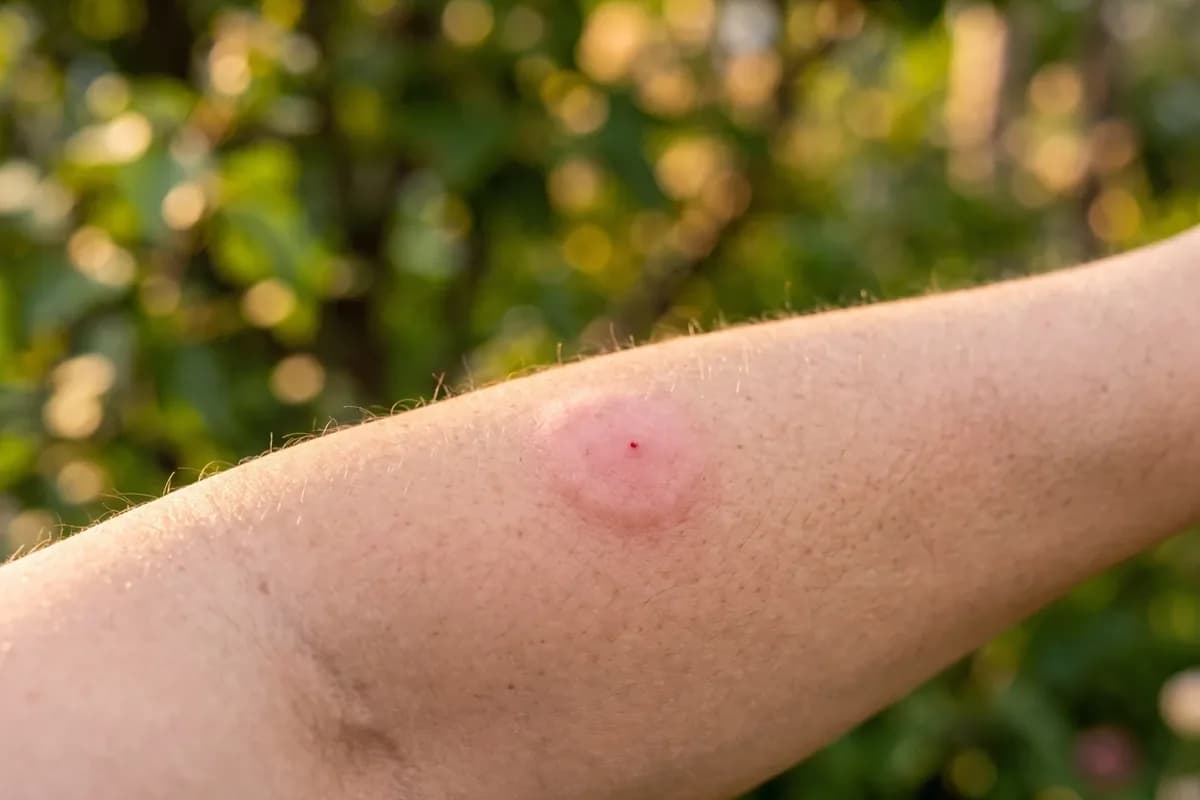
Mosquito bites look like round, puffy, pink or red bumps that appear within minutes and itch right away, often with a tiny dot in the center where the mosquito fed. A day later the bump may turn harder and reddish brown, and most bites fade within three to four days. Only female mosquitoes bite, because they need blood to make eggs. This guide shows what a normal bite looks like, how it changes, how to tell it from an allergy, an infection or another bug and when a bite can be dangerous.
What Does a Mosquito Bite Look Like?
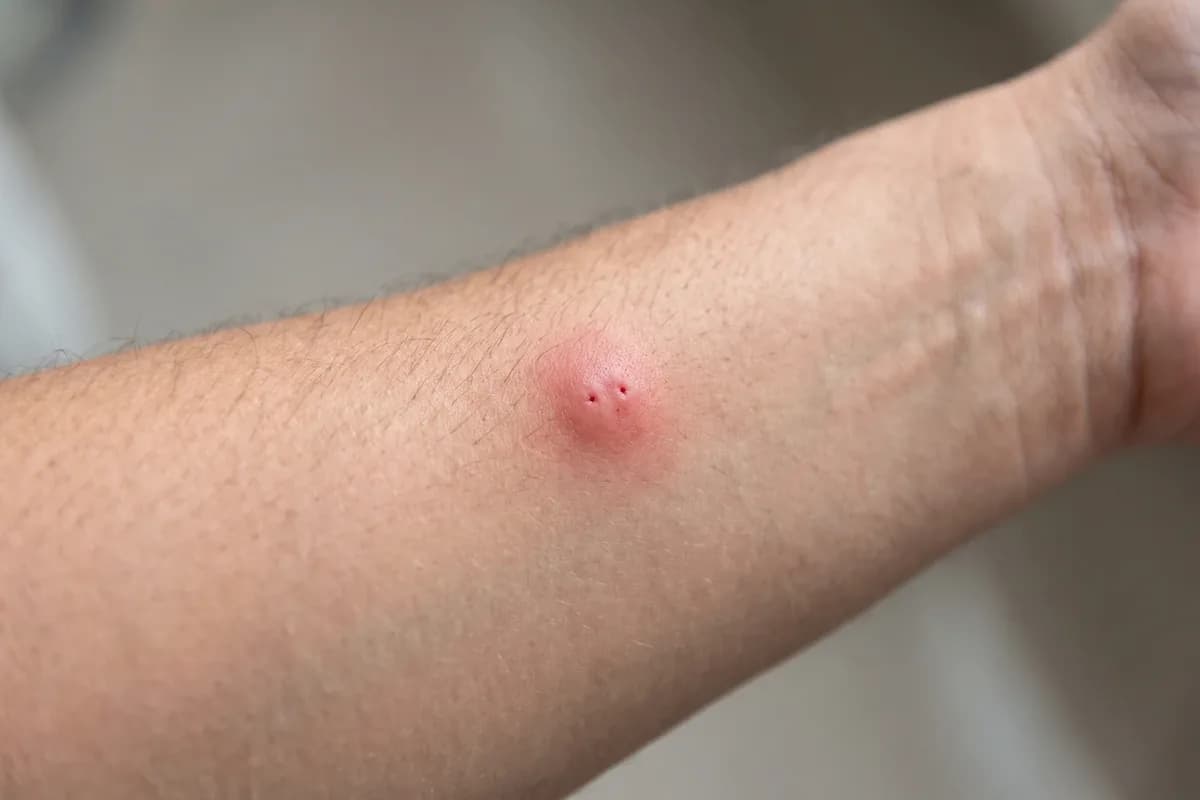
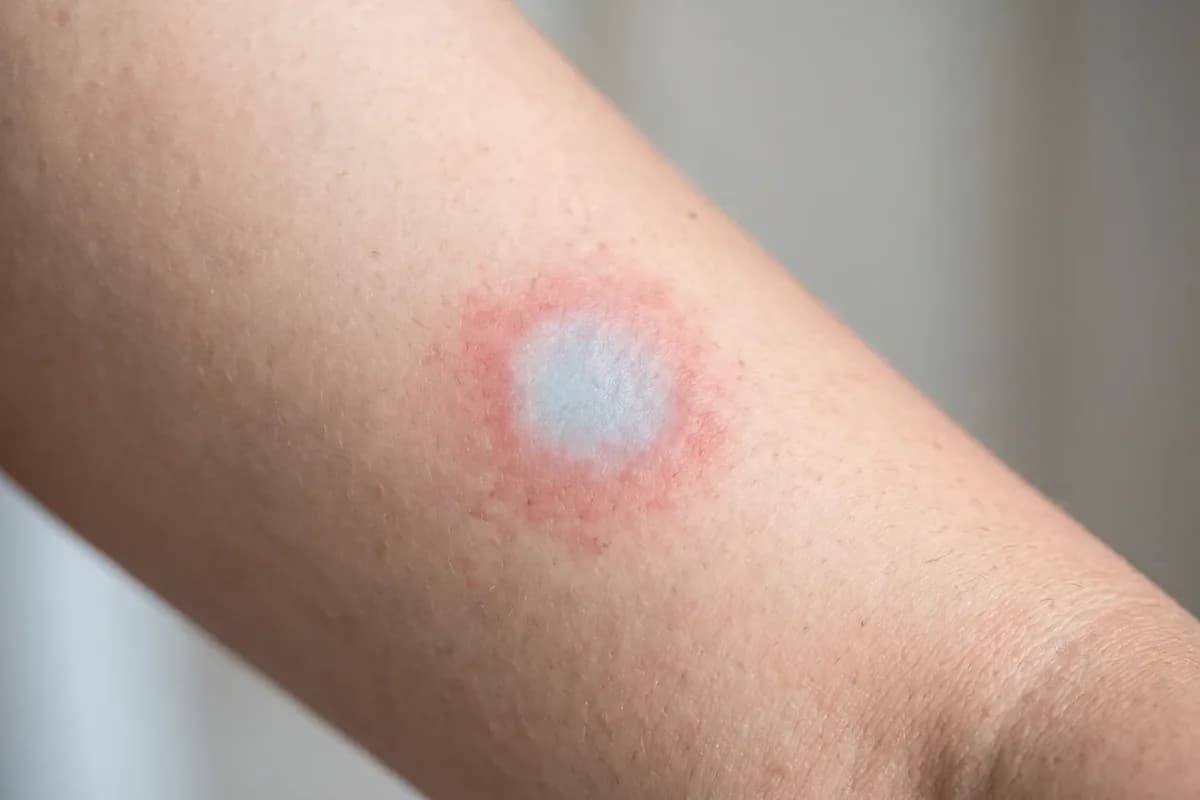
A typical mosquito bite is a soft, raised, round welt about 5 to 20 mm (1/4 to 3/4 in) across, pale or pink in the middle and redder at the edges, that appears within minutes and then, a day or so later, becomes a hard, itchy, reddish brown bump.
- Shape: round or slightly oval, smooth and puffy, like a small hive.
- Color: pink to red, with a pale center when fresh.
- Center dot: a tiny red point where the mouthparts pierced the skin.
- Pattern: single bites scattered on any bare skin, such as arms, legs, neck and face.
- Timing: appears within minutes of being outdoors, mostly at dawn, dusk or night.
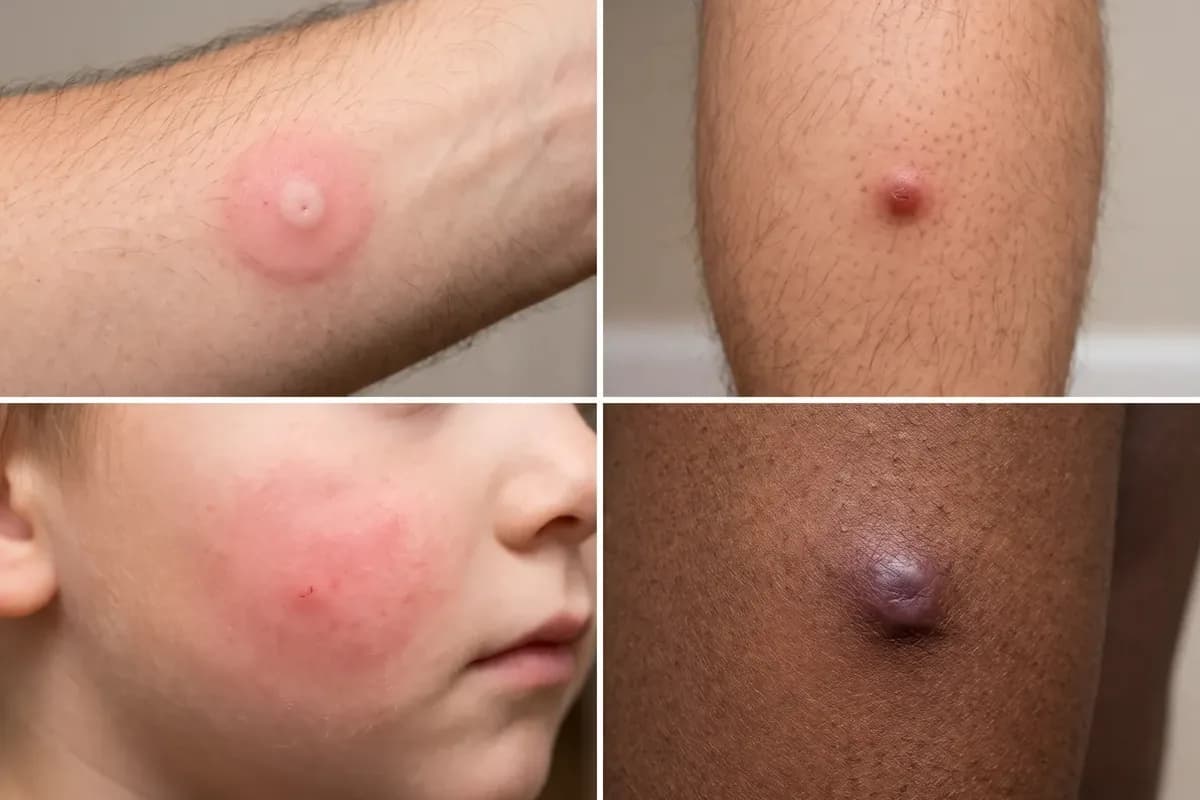
Mosquito Bites on Dark Skin
On brown and black skin, a mosquito bite may look purple, dark brown or skin colored rather than red, and the swelling is easier to feel than to see. After the bite heals, a dark spot can stay for weeks or months. Because redness is harder to see, check for spreading warmth, swelling or pain to spot an infection early.
Mosquito Bite Stages: How a Bite Changes
| Time | What you see | What you feel |
|---|---|---|
| Minutes | Puffy pale or pink welt with a red edge | Sudden itch |
| Hours | Welt spreads a little and turns redder | Itch peaks |
| Day 1 to 2 | Smaller, harder, reddish brown bump | Itch comes and goes |
| Day 3 to 4 | Flat pink or brown mark | Little or no itch |
| Weeks | Faint mark, darker on brown and black skin | None |
Why Do Mosquitoes Bite and Why Does It Itch?
Female mosquitoes bite because they need protein from blood to develop their eggs; males feed only on plant nectar. They find people by sensing the carbon dioxide we breathe out, body heat, sweat and skin odors. When a mosquito feeds, it injects saliva that keeps blood from clotting, and your immune system reacts to proteins in that saliva by releasing histamine, which causes the bump, redness and itch.
Common Mosquitoes That Bite People
- Aedes mosquitoes, including the Asian tiger mosquito, have black and white striped legs and bite during the day. They can spread dengue, Zika and chikungunya.
- Culex mosquitoes bite mostly at dusk and night and can spread West Nile virus.
- Anopheles mosquitoes bite mostly at night and spread malaria in tropical regions.
A tiger mosquito bite looks like any other mosquito bite. The species matters only for the diseases it may carry, not for the look of the bump.
Where and When Do Mosquitoes Bite?
Mosquitoes bite any bare skin, but ankles, lower legs, arms and the neck get bitten most because they are often uncovered. Many species are most active at dawn and dusk, while Aedes mosquitoes also bite during the day.
- Outdoors: near standing water, long grass, shady gardens and wooded areas.
- Indoors: at night through open windows or torn screens, often around the face, arms and feet of sleeping people.
- Seasons: warm, wet months in cooler regions, and all year in the tropics.
- After rain: wet weather fills containers and low spots with water, so biting often rises a week or two later.
Bites on the Face, Eyelids and Hands
Bites in places with thin, loose skin often swell much more than bites on the arms or legs. An eyelid bite can puff the eye partly shut by morning. These reactions look alarming but usually settle within a few days with cold packs. Swelling with fever, pain on moving the eye or spreading redness needs a doctor.
Normal Mosquito Bite vs Allergy
A normal mosquito bite stays small, itches and fades within a few days, while an allergic reaction is larger, hotter and lasts longer. The most common strong reaction is a large local swelling, sometimes called Skeeter syndrome, which is especially common in young children.
| Sign | Normal reaction | Large local or allergic reaction |
|---|---|---|
| Size | Pea to coin sized | Larger than about 5 cm (2 in), may spread |
| Feel | Itchy, soft or slightly hard | Hot, firm, tender, sometimes blistered |
| How long | 3 to 4 days | Up to a week or more |
| Body | No other symptoms | Sometimes low fever or swollen glands |
Very rarely, a person has a severe allergic reaction with hives all over the body, swelling of the face or throat or trouble breathing. That is an emergency. For itch and swelling at home, see our guide to mosquito bite relief, and for big reactions, our guide to mosquito bite allergy.
Bites That Look Like Mosquito Bites but Are Not
Several other bites and skin conditions look like these bites, and the pattern and place are the best clues.
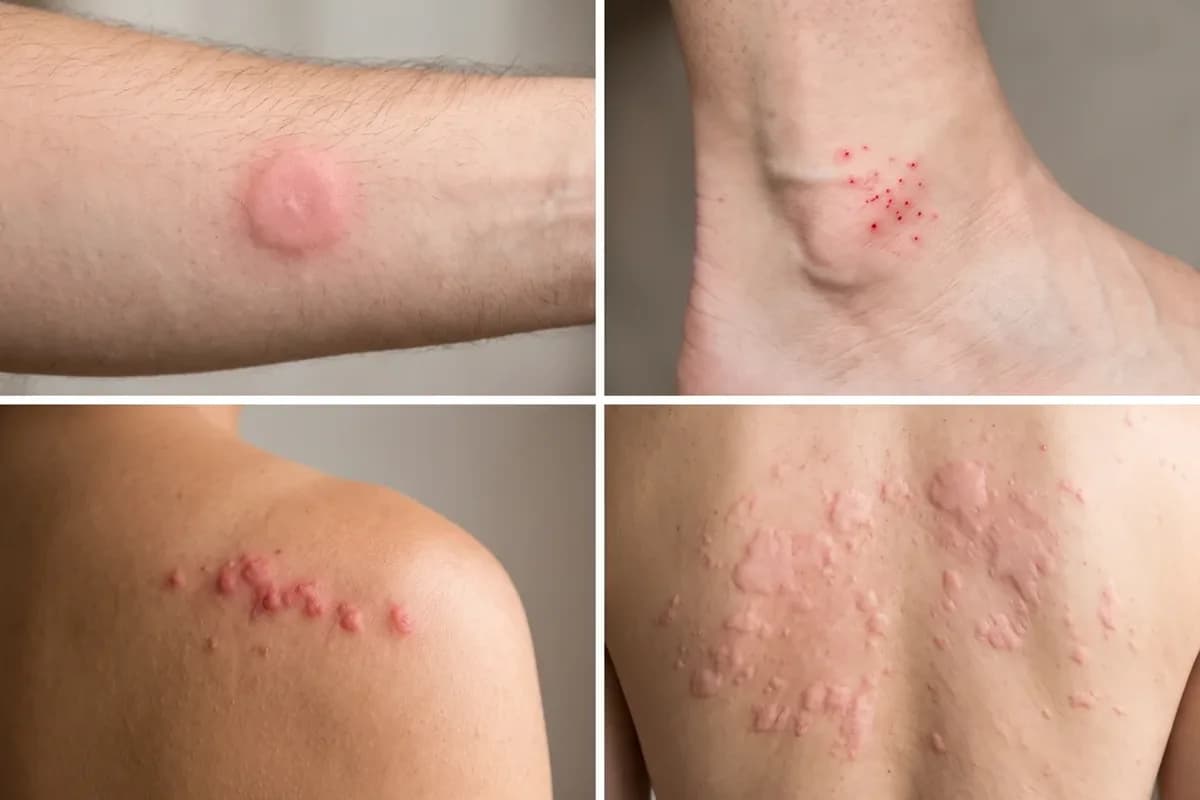
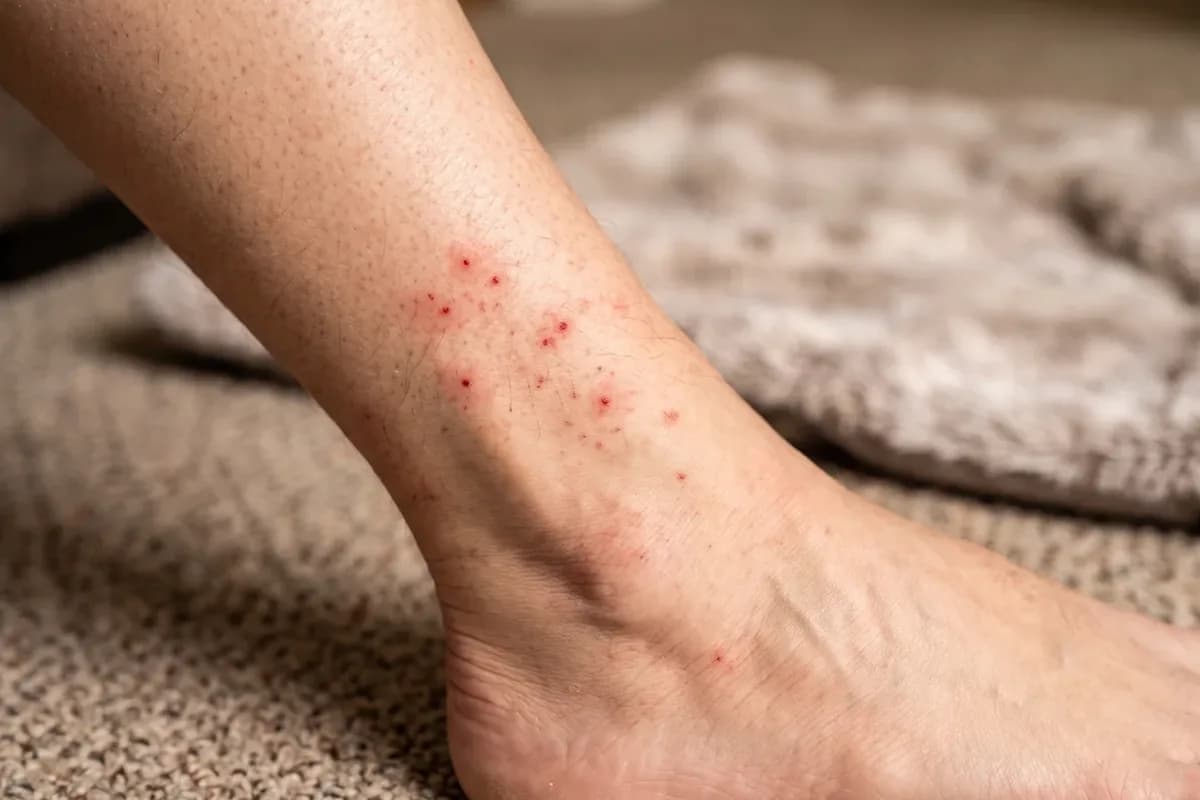
- Flea bites: smaller, in groups of three or four, mostly on the ankles and lower legs, often indoors.
- Bed bug bites: rows or clusters on skin left bare in bed, often appearing a day or more after sleeping.
- Chigger bites: very itchy bumps where clothing presses on skin, appearing hours after time in long grass.
- Spider bites: usually a single bite, sometimes with two puncture marks.
- Hives: raised welts that appear and move around the body within hours, often without any bug.
If you are not sure, a clear photo can be compared with common bites in our Bug Bite Identifier. See also our guide to flea bites.
Infected Mosquito Bites
A bite can get infected when scratching breaks the skin and lets bacteria in. Infection usually shows up a day or more after the bite, as the skin gets worse instead of better.
- Spreading redness or warmth, or a red streak spreading from the bite.
- More swelling and pain than before.
- Pus, yellow fluid, oozing or a wound that will not close.
- Feeling unwell, such as a high temperature with swollen glands.
Keep nails short, wash bites daily and cover any scratched bites.
When Are Mosquito Bites Dangerous?
A mosquito bite is dangerous mainly when the mosquito carries a virus or parasite, which can cause illness days to weeks later even though the bite itself looks normal. The World Health Organization lists mosquitoes among the most important carriers of human disease worldwide.
- West Nile virus: most people have no symptoms, but some get fever, headache and body aches.
- Dengue, Zika and chikungunya: spread by Aedes mosquitoes in warm regions, with fever, rash and joint or muscle pain.
- Malaria: spread by Anopheles mosquitoes in tropical areas, causing fever, chills and sweats.
You cannot tell from the bite itself whether a mosquito carried a disease. Watch for fever, rash, severe headache or joint pain in the two weeks after bites, especially after travel, and tell a doctor where you have been. This information is for general education and is not medical advice.
Not sure what bit you? Upload a clear photo to the free ScanaBug Bug Bite Identifier for an instant answer with the likely cause and a danger level.