How to Check Your Home for Bugs: A Room by Room Guide
Most home bug problems are found by accident, a single sighting that makes you wonder what else might be there. A proper check takes about 20 minutes and covers the specific spots where pests actually hide, rather than a quick glance around the room. This guide walks through each area of the home in order.
Found something already? Identify it with the free AI Bug Identifier before reading further.
What You Need Before You Start
- A flashlight, since most hiding spots are dim or fully dark
- A flat tool such as a butter knife or old credit card, for checking behind baseboards and under appliances without moving them fully
- Your phone camera, to photograph anything you find for identification
Kitchen
Check under the sink first, since the combination of moisture and dark enclosed space makes it the single most common kitchen hiding spot. Pull items out rather than just looking past them. Check behind and underneath large appliances, especially the refrigerator and stove, where crumbs and warmth collect. Open the pantry and check the back corners of shelves and inside any opened dry goods such as flour, cereal, or grains, since pantry pests live and breed directly inside food packaging. Look along the base of cabinets for small dark droppings, which are usually the first sign of a cockroach or pantry pest problem before you ever see the insect itself.
Bedroom
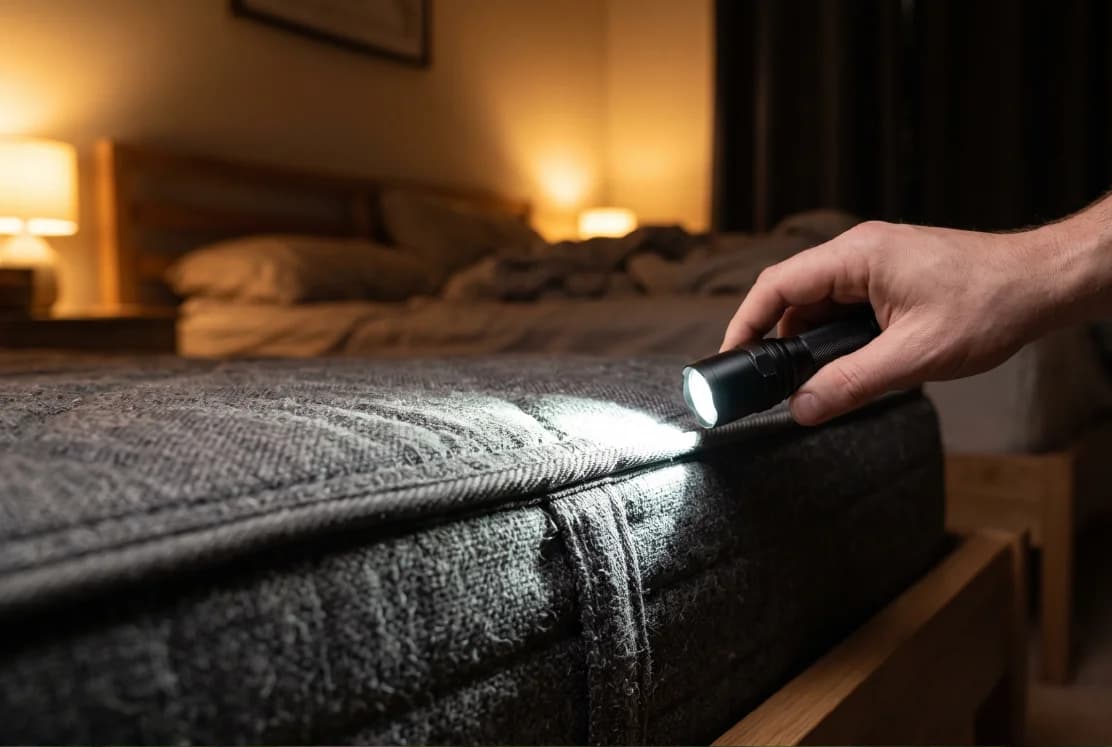
Pull back the sheets and check the mattress seams, tufts, and the corners where the mattress meets the box spring, using the flashlight closely. This is the most important bedroom check, since bed bugs live almost exclusively in these seams during the day. Look for tiny rust colored spots on the sheets, small dark droppings along the seams, or shed pale skins near the mattress edge. Check behind the headboard if it is mounted against the wall, and inside any nearby electrical outlet plates, both common secondary hiding spots.
If you wake up with unexplained bites in a line or cluster, use the Bug Bite Identifier to help narrow down the likely cause based on the bite pattern.
Bathroom
Check around the base of the toilet, inside the cabinet under the sink, and along the bathtub or shower drain edge. Bathrooms attract moisture loving pests such as drain flies and silverfish rather than food pests. A small moth-like insect resting on the wall near a drain is almost always a drain fly. Silverfish are silver-grey, wingless, and fast moving, usually spotted at night near damp floor edges or inside stored towels.
Living Areas and Carpets
Check along carpet edges where they meet the wall, particularly in corners and under furniture that is rarely moved. Carpet beetle larvae and their shed skins collect in these undisturbed edges. Check inside any wool or natural fiber items stored in the room, including rugs folded in a closet. Look under sofa cushions and along the frame seams, another common hiding spot for a range of household insects.
Closets and Storage Areas
Storage areas are dark, undisturbed, and often hold fabric and cardboard, which makes them a leading hiding spot across several pest categories. Check stored clothing, particularly wool, silk, or fur items, for small holes or larvae, a sign of carpet beetles or clothes moths. Check the corners and undersides of cardboard boxes, favored by spiders including brown recluse, which prefer dark undisturbed spaces exactly like this. Shake out or inspect anything that has not been moved in several months before storing it again.
What to Do When You Find Something
Photograph it clearly before doing anything else, since a live sample is not necessary for identification and handling an unfamiliar insect is not worth the risk. Upload the photo to the free AI Bug Identifier at the top of the homepage to get the species name, a danger classification, and clear next steps in seconds. A single sighting of a common household insect rarely needs professional treatment, while droppings, shed skins, or multiple sightings across different rooms are the signals that usually do.
Not sure what you found? Use the free AI Bug Identifier at the top of the homepage. If it turns out to be a bite rather than the insect itself, the Bug Bite Identifier can help pinpoint the likely cause from the bite pattern.
Frequently Asked Questions
Sources and References
- Centers for Disease Control and Prevention. Bed Bug FAQs. cdc.gov
- Penn State Extension. Stored Product Insects and Carpet Beetles. extension.psu.edu
- National Pest Management Association. Pest identification and prevention resources. npma.org