Complete Garden Insect Identification Guide: Friend or Foe
Not every bug in your garden is a problem. Some are actively protecting your plants from the ones that are. This guide covers the most commonly found garden insects, grouped by what they actually do, so you can tell at a glance whether to leave one alone or take action.
Not sure what you found? Use the free AI Bug Identifier to get a species name and a beneficial-or-pest classification in seconds.
How to Tell a Beneficial Insect From a Garden Pest
Three quick checks cover most cases before you need a closer look. First, check what it is doing: an insect actively eating another insect, sitting still on a leaf without visible damage nearby, or moving quickly between plants hunting, is more likely beneficial. Second, check the damage pattern: chewed leaf edges, holes, or wilting point to a plant feeding pest, while an insect simply present with no plant damage nearby often is not the cause. Third, check the numbers: a single insect rarely signals a problem, while a cluster or repeated daily sightings in the same spot usually does.
Beneficial Garden Insects Worth Protecting
Ladybugs (Coccinellidae)
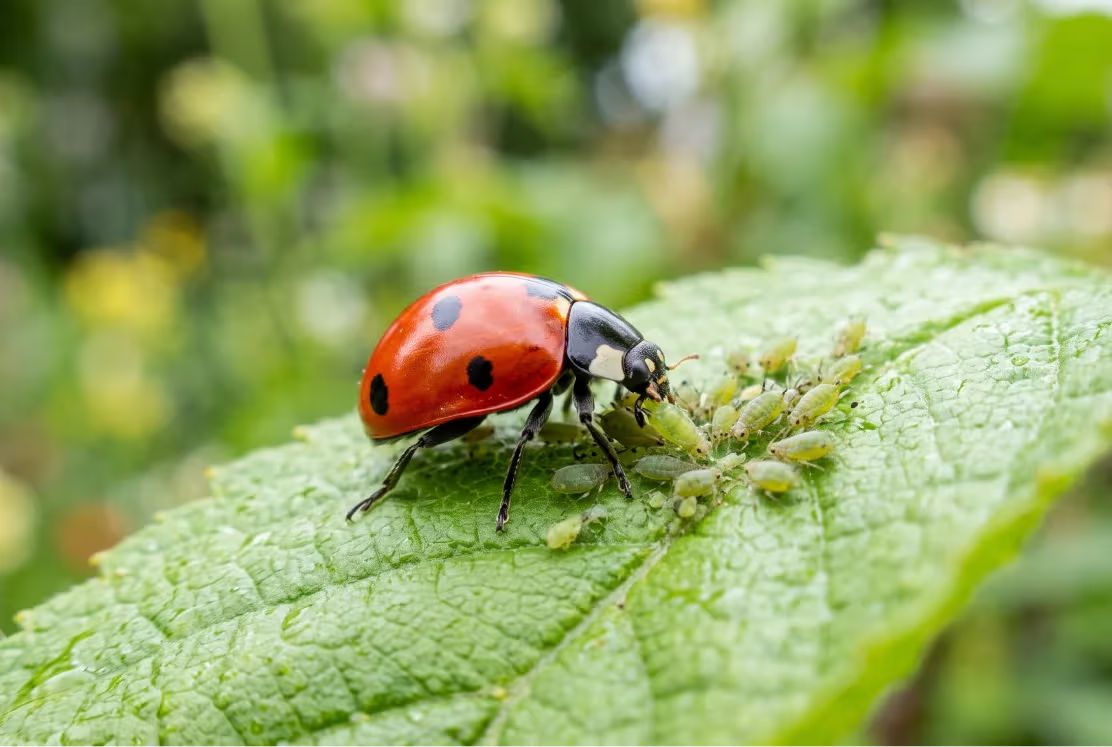
Round, domed, most often red or orange with black spots, though color varies by species. Both adults and larvae eat aphids, mites, and scale insects in large numbers. A garden with a healthy ladybug population needs far less pest intervention. See our full guide on what ladybugs eat for more detail on their diet and life cycle.
Lacewings (Chrysopidae)
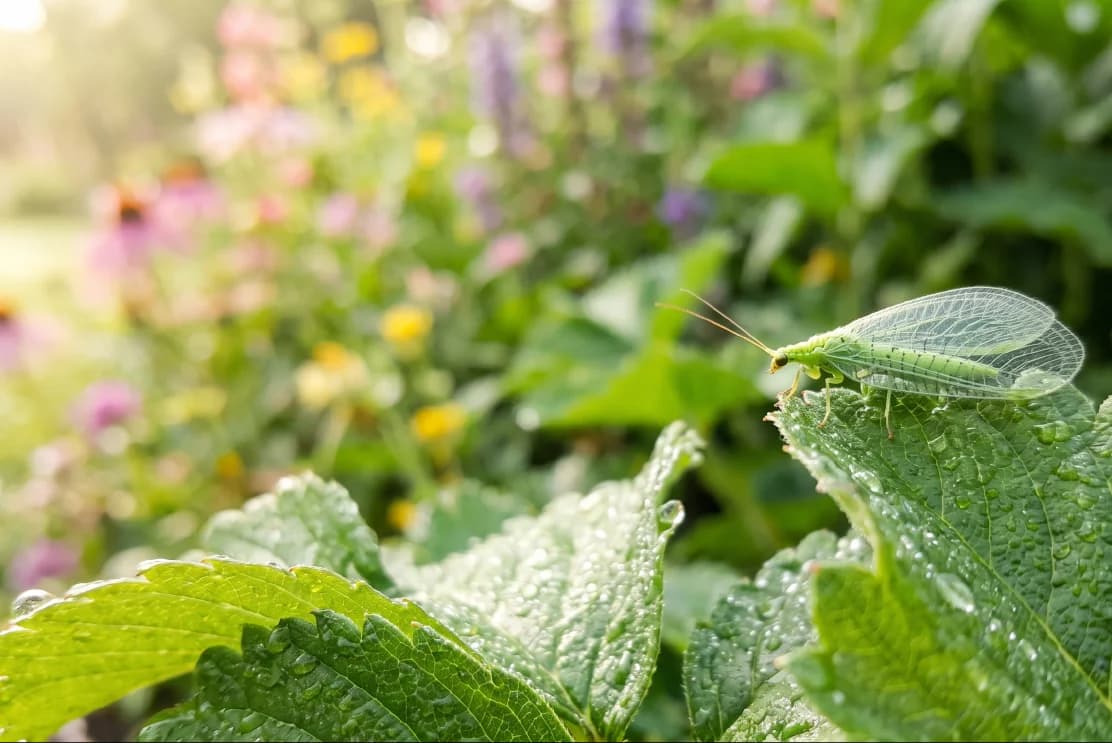
Pale green, with large delicate transparent wings held tent-like over a slender body. Lacewing larvae are especially aggressive predators, sometimes called aphid lions, and will eat aphids, mites, and small caterpillars. Adults are less predatory and often feed on nectar and pollen.
Ground Beetles (Carabidae)
Dark, glossy, fast moving beetles usually found under mulch, stones, or garden debris rather than on plants themselves. Ground beetles hunt slugs, snails, cutworms, and other soil dwelling pests at night, which is why they are rarely seen during the day.
Praying Mantises (Mantidae)
Long, slender, green or brown, with the distinctive raised front legs held in a folded position. A generalist predator that eats a wide range of insects, including some beneficial ones, so their overall garden impact is more neutral than most other predators on this list, but they rarely cause direct plant damage.
Common Garden Pests to Watch For
| Pest | Appearance | Damage Sign | What to Do |
|---|---|---|---|
| Aphids | Small, soft bodied, green, black, or pink, in dense clusters | Curled or yellowing leaves, sticky residue | Encourage ladybugs and lacewings, or spray with water first |
| Japanese beetles | Metallic green body, copper wing covers | Skeletonized leaves, veins left intact | Hand pick in early morning, use targeted traps away from plants |
| Slugs and snails | Soft bodied, no legs visible, leave a slime trail | Irregular holes in leaves, especially at night | Remove hiding spots, use copper tape barriers, or beer traps |
| Spider mites | Tiny, barely visible without magnification, fine webbing | Fine speckled yellowing, webbing on leaf undersides | Increase humidity, rinse plants, introduce predatory mites |
| Whiteflies | Tiny white moth-like insects, rise in a cloud when disturbed | Yellowing leaves, sticky honeydew residue | Yellow sticky traps, encourage natural predators |
How to Identify an Unfamiliar Garden Bug by Photo
If you find something in the garden that does not match the species above, the fastest way to get an accurate answer is a photo. Upload a clear photo to the free AI Bug Identifier at the top of the homepage and get the species name, a beneficial or pest classification, and next steps in seconds. This is especially useful for garden insects at the larval stage, since larvae often look completely different from the adult insect and are easy to misidentify without help.
For a deeper dive into insect life stages, eggs, and larvae identification specifically, see the full Insect Identifier guide.
Frequently Asked Questions
Sources and References
- Royal Horticultural Society. Beneficial Insects in the Garden. rhs.org.uk
- University of California Agriculture and Natural Resources. Natural Enemies Gallery. ipm.ucanr.edu
- Cornell University College of Agriculture and Life Sciences. Biological Control. biocontrol.entomology.cornell.edu